| | | | | Hi there,
My youngest son asked Santa for a robot to do his chores. Not a toy robot. A real, fully operational robot to take care of the stuff he doesn’t want to do.
To be clear, this kid has never scrubbed a floor or folded a piece of laundry. His chore list consists of cleaning his room and putting dishes in the sink after meals. But he still wanted the dang robot. Why? Because small, annoying tasks, while necessary, keep us from doing the fun things.
And it got me thinking: What would happen if we were honest about the part of our jobs we wish could magically just be done for us?
I’ll go first. For me, it’s the planning and the follow-up tracking. Need a collaborative strategy session? Want to talk about a nuanced comms request? I’m your girl. But mapping out a multichannel plan with 23 spreadsheet line items, links, metrics, and updates? HARD PASS.
And most AI tools and planners only chip away at that load — they don’t solve it.
But that’s about to change.
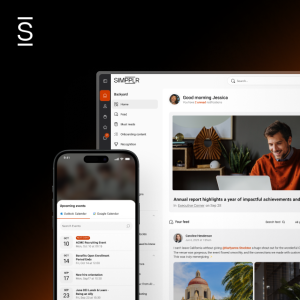
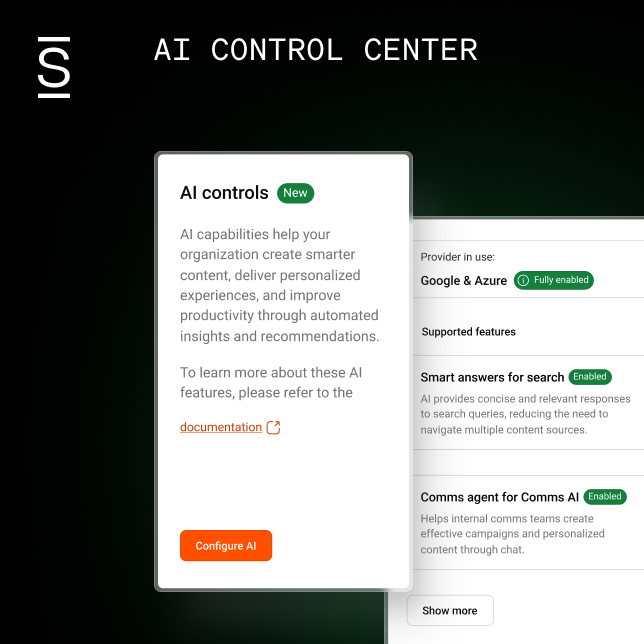
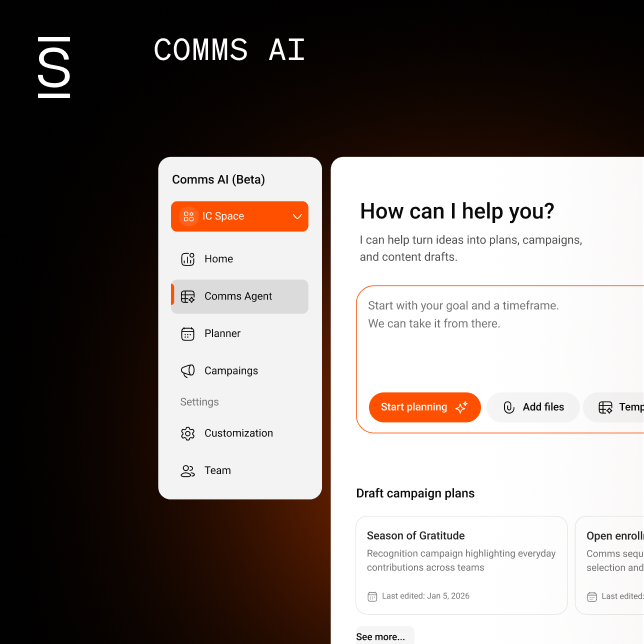
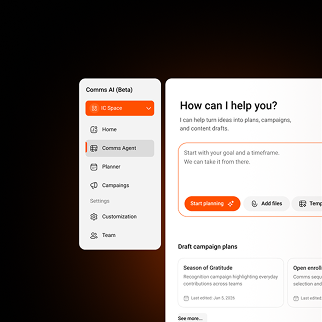
I’ve been working with Carolyn and teams across Simpplr on Comms AI — a generative AI tool built for us, with an integrated planner that helps you create, track, and manage campaigns in one place. It protects your sanity and your strategy, and it can tie your work to the outcomes that matter most.
And for those of you weirdos folks out there who love planning but dread drafting, you’re covered too. Comms AI learns your voice, channels, and preferences — and builds content and comms plans in seconds. Dreamy, right?
Whether you’re a strategist or a spreadsheet slayer, we built this for you. No hype. No gimmicks. Just peace of mind and space to focus on the work that really matters.
I’ve got more AI goodness below — including a tip on what I prioritize when I finally face my own invisible demons and sit down to plan and track. Let’s go. | | |
| |
| | | | | | | Your new AI colleague has entered the chat
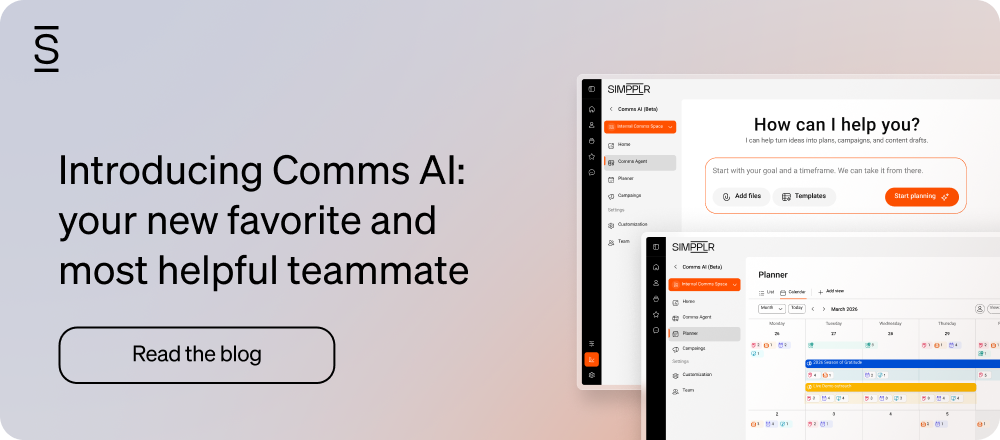
It’s true. We built Comms AI to do what no other AI tool could — lighten the load that’s been bogging us all down for years. It’s so much more than a writing assistant. It’s a fully integrated campaign planner, content drafter, and channel publisher. It’s the built-in side-kick you’ve always needed but never had (until now).
And the IC world is already buzzing. We just shared how it works and why it matters in our latest blog for Ragan Communications. If you’ve ever dreamed of handing off the nitty-gritty coordination chaos so you can focus on strategy, clarity, and storytelling … well, your dream is coming true. See for yourself! | | |
| |
| | | | | | Agentic AI, explained (finally)
AI isn’t just popping up to help with quick tasks anymore — it’s starting to run workflows, adapt in real time, and lighten the load in ways that actually matter. But not all AI is built for comms. In her latest blog, Carolyn breaks down what “agentic AI” means and why it’s the shift we’ve been waiting for: from task-level helpers to true comms partners that know your workflows, stay in your voice, and help you move fast without losing the plot (or your employees’ trust).
You’ll get five use cases you can implement right now, a roadmap that won’t make you cry, and a smart reminder that successful AI isn’t about doing everything — it’s about doing the right things better. It just might change how your team works, thinks, and breathes this year.
| | |
| |
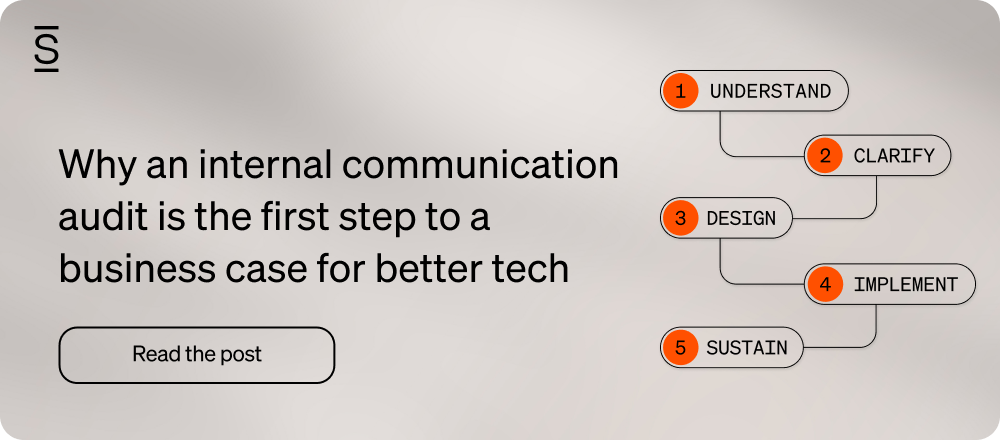
| | | | | | Want a seat at the table? Start with an audit, not a hunch
If you’ve ever struggled to prove the value of internal comms, this is the blog to bookmark. Andrea Greenhous, founder of Vision2Voice Communications, breaks down how to turn a communication audit into a strategic asset — one that uncovers what’s working, what’s missing, and how to build a business case that actually lands.
This isn’t just about cleaning up cluttered channels. It’s about tying your work to measurable outcomes. Andrea walks you through what to audit, how to share insights with leadership, and how to use those insights to influence smarter decisions across the org. If audits usually give you the ick, this is for you!
| | |
| |
| | | | |
The Excel ick is real — but so is your impact
I unearthed my dirty laundry by admitting that planning, tracking, and measuring aren’t exactly my love language. But deep down, I know they’re nonnegotiables. If we want a seat at the table, we have to show the scope of our work and the impact it creates.
As Carolyn often says when she’s trying to push me to track, planning isn’t about control. It’s how communicators make sure the right work gets seen, felt, and acted on — not just shipped.
So here’s a quick glimpse at how I plan, track, and measure:
- Plan: Start the year by setting internal comms goals that ladder up to company priorities. Even if one or two live outside that framework, the goal is to speak the language of the business. The more clearly your work connects to company impact, the stronger your story when reporting up.
- Track: Before I got my hands on our Comms AI planner, I was in the trenches with Excel (yuck). Every Slack post, intranet page, newsletter, email, all-hands — all of it got its own line item. I logged logistics, audience, partner team, IC goal, and the related company goal. Bonus: links to final content or comms plans made it easy to reference later.
- Measure: Now it’s showtime. I pull performance data from Simpplr — content views, engagement, sentiment, open/click rates. But I don’t stop there. I cross-check against my tracker to see how many touchpoints tie back to core business goals. That’s the story execs want to hear: not just how many clicks but how your work moved the needle.
I don’t have a magic metric that guarantees a standing ovation from your C-suite. But I can promise they’ll start leaning in when you show them how your work supports their goals. |
|
|
|
| |
| | |
Each quarter (and definitely at year-end), I drop my tracker and analytics into an AI tool and ask it to summarize what I actually accomplished — patterns, highlights, proof points. Don’t forget to include the praise you’ve picked up along the way from emails or recognition tools. It’s all part of the value story — for you and for the tools you use or want to be using. |
|
|
| | |
| |
| | | | | | | | | | | Newsletter wrap-up
My son was a little disappointed when Santa didn’t deliver the robot he wanted to do his chores. But I get it — even at 6, he’s already dreaming of automating the stuff that feels annoying, tedious, or just plain boring.
Same, kid, same.
There’s a reason this “Friends” moment lives rent-free in my head every time I think about comms tracking and measurement:
| | |
| |
| | | | But something’s shifting. I’ve found that the right automation — the kind that supports my brain, not replaces it — actually helps me reclaim energy and stay accountable. With Comms AI, I still get to lead with empathy and strategy, but now I have a tool that helps me track, measure, and plan without burning me out. It provides support without overreach. Structure without smothering. And that’s the sweet spot.
Before I sign off, what’s the one part of your job you’d happily hand off to a (trustworthy, competent, emotionally intelligent) robot? I genuinely want to know — drop me a message on LinkedIn. Let’s normalize talking about the stuff we don’t love too.
But you know what I think we can all agree that we do love? The people. It’s why we’re here. So when you’re feeling overwhelmed — before you open your tracker or dive into metrics — pause and remember your why. Your work matters. Keep going. Show your worth. Let AI lighten your load. But keep bringing the heart, the insight, the meaning. You’ve got this!
| | |
| |
| | | |
Regan Zuege
Internal Communications Manager
P.S. Be sure to sign up to get more emails like this! And connect with me on LinkedIn. |
|
|
| | |
| |
| | |
|
|