



Introduction to Simpplr and SharePoint
Who runs the intranet, comms or IT?
- When a page needs an update, how many people need to be involved before it goes live?
- If IT deprioritizes intranet work, does employee communications come to a halt?
What happens to content accuracy as the intranet grows?
- Three years from launch, how confident are you that what employees find will still be accurate?
- When no one owns a page anymore, how is ownership reassigned?
Will employees use it or work around it?
- If employees can’t find what they need in under 30 seconds, where do they go instead?
- What does your intranet adoption rate look like 18 months after go-live and who’s responsible for improving it?
What is Simpplr?
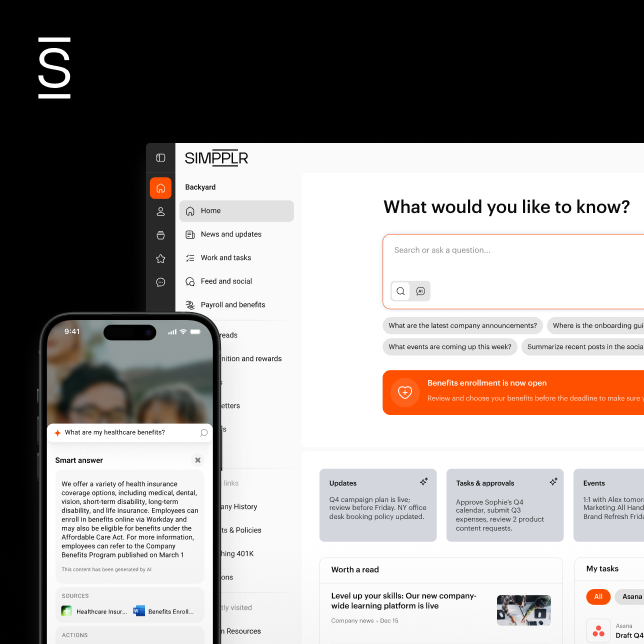
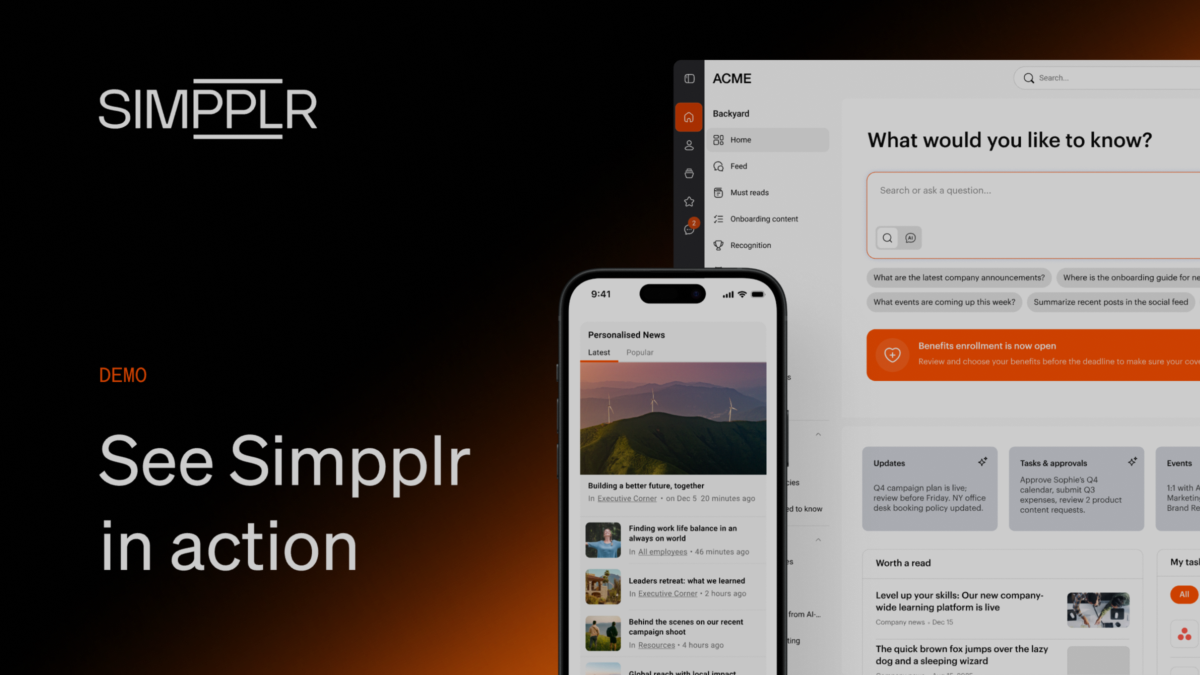
Simpplr is a leading AI-powered employee experience and intranet platform built to connect, align, and engage workforces at scale. By unifying the employee experience, Simpplr delivers a modern, personalized intranet that uses AI to surface relevant information when employees need it most. The platform empowers organizations to share knowledge, streamline communication, and foster alignment across teams.
Built with enterprise-grade security, Simpplr is trusted by more than 1,000 global organizations and over 2 million active users. With 5x higher adoption rates than the industry average, the platform helps drive meaningful engagement and productivity. Simpplr also offers exceptional scalability and flexibility through more than 200 out-of-the-box integrations, along with actionable insights that help organizations continuously improve the employee experience.
What is Microsoft SharePoint?
Microsoft SharePoint is a content management and collaboration platform within the Microsoft 365 suite that organizations use to create sites, store documents, and share information across teams.
However, SharePoint is not a purpose-built intranet platform. Organizations often rely on additional configurations, third-party tools, or implementation partners to deliver employee communications, engagement, personalization, and governance capabilities.
For organizations evaluating intranet solutions, that distinction matters. While SharePoint provides a strong content management foundation, creating a complete employee experience typically requires additional investment beyond SharePoint itself.
Simpplr vs. SharePoint: competitive insights from industry analyst reviews
Analyst evaluations offer a structured view to compare platforms across capabilities, strategy, and customer outcomes. Here is what leading analysts have found when assessing both platforms.
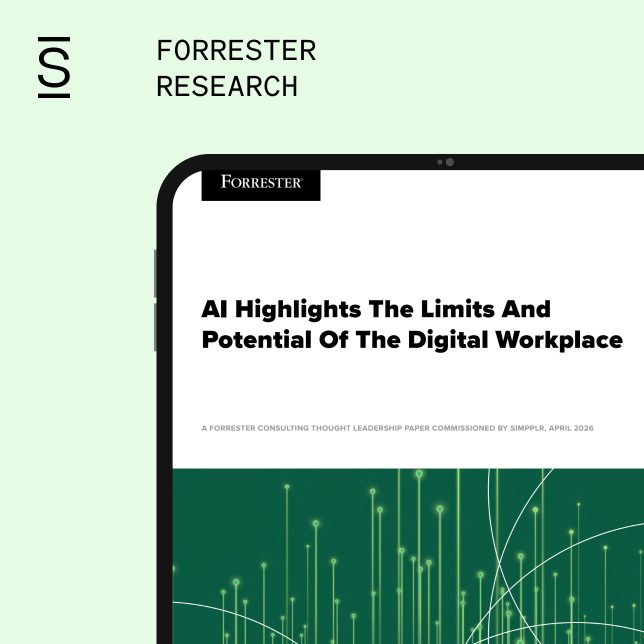
The Forrester Wave™: Intranet Platforms, Q2 2026
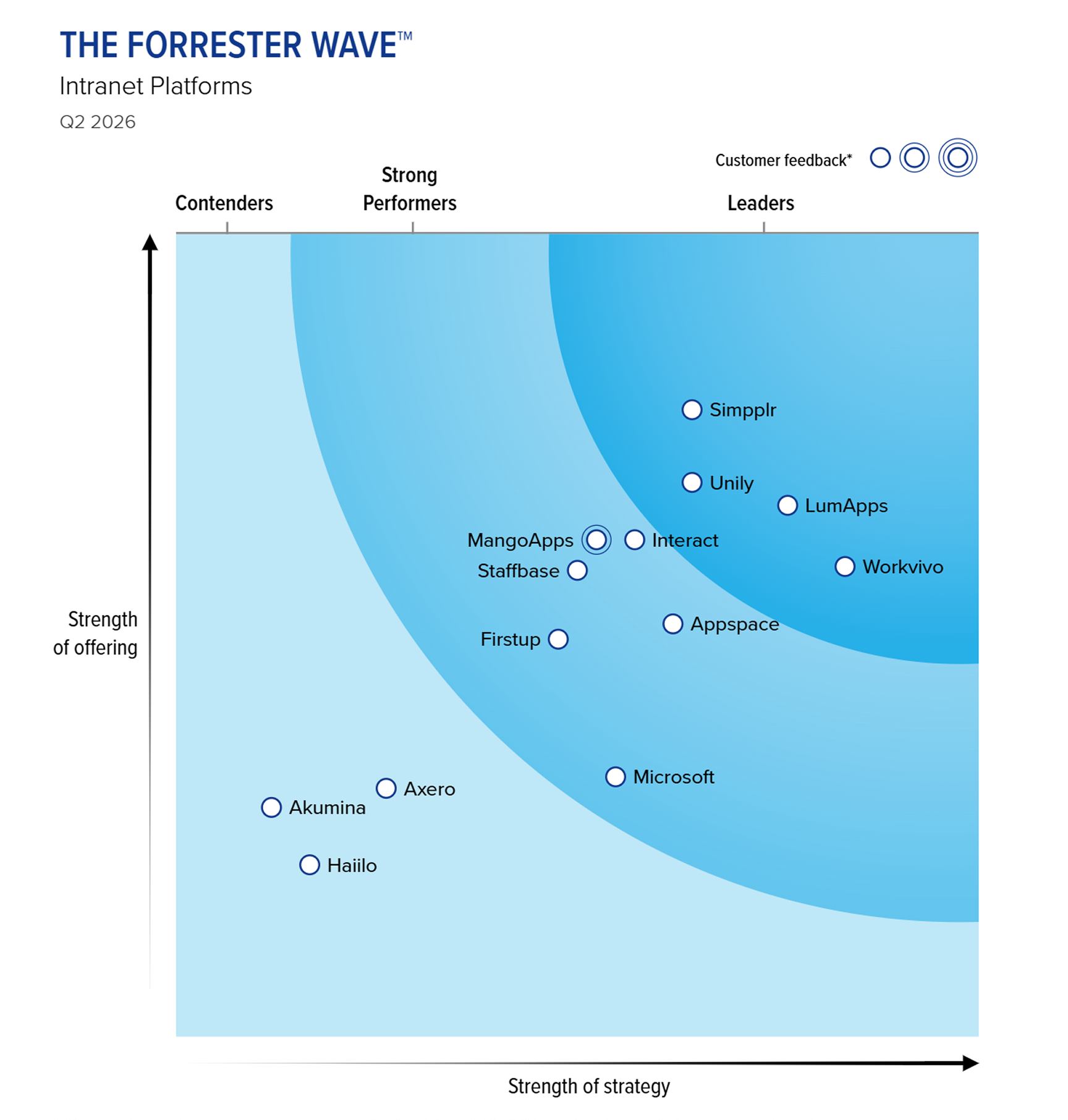
Simpplr was named a Leader in The Forrester Wave™: Intranet Platforms, Q2 2026, while Microsoft was positioned a Contender.
Forrester evaluated 13 vendors across 28 criteria spanning Current Offering and Strategy. Microsoft was assessed based on its broader Microsoft 365 intranet offering, which combines SharePoint with employee communications and engagement capabilities from Viva. Simpplr, by contrast, was evaluated as a purpose-built employee experience and intranet platform.
The difference was most evident across key intranet capabilities. Simpplr received the highest possible score (5.0) in ten criteria compared to lower scores for Microsoft.
- Metadata: Simpplr: 5, Microsoft: 3
- Application integration: enterprise integration: Simpplr: 5, Microsoft: 3
- Governance: Simpplr: 5, Microsoft: 1
- Reporting analytics: Simpplr: 5, Microsoft: 1
- Personalization: Simpplr: 5, Microsoft: 1
- Internal communications: Simpplr: 5, Microsoft: 1
- Rewards and recognition: Simpplr: 5, Microsoft: 1
- Campaigns and calendaring: Simpplr: 5, Microsoft: 1
- Innovation: Simpplr: 5, Microsoft: 3
- Adoption: Simpplr: 5, Microsoft: 1
| Key Criteria | Simpplr | Microsoft |
|---|---|---|
| Metadata | 5 | 3 |
| Application Integration: Enterprise Integration | 5 | 3 |
| Governance | 5 | 1 |
| Reporting Analytics | 5 | 1 |
| Personalization | 5 | 1 |
| Internal Communications | 5 | 1 |
| Rewards and Recognition | 5 | 1 |
| Campaigns and Calendaring | 5 | 1 |
| Innovation | 5 | 3 |
| Adoption | 5 | 1 |
Forrester analysts praised the transformation of intranets into “AI-powered intelligent experience platforms that unify people, information, apps, and agents.”
Simpplr received the highest possible score for AI-enabled search and reporting analytics, with Forrester citing its “robust set of dashboards and reports.” The report also highlighted the platform’s automated governance engine, which can “detect inactive content and provide next best actions to authors.” This can help organizations maintain content quality and trust as content volumes grow.
Microsoft scored well in content management, collaboration, and employee listening through Glint. However, Forrester analysts cautioned that it lags in “internal communication tools, support for employee journeys, segmentation tools, and reporting.”
For large and midmarket organizations, this gap is significant. The report identified governance, reporting, and AI as areas where Simpplr performed strongly.
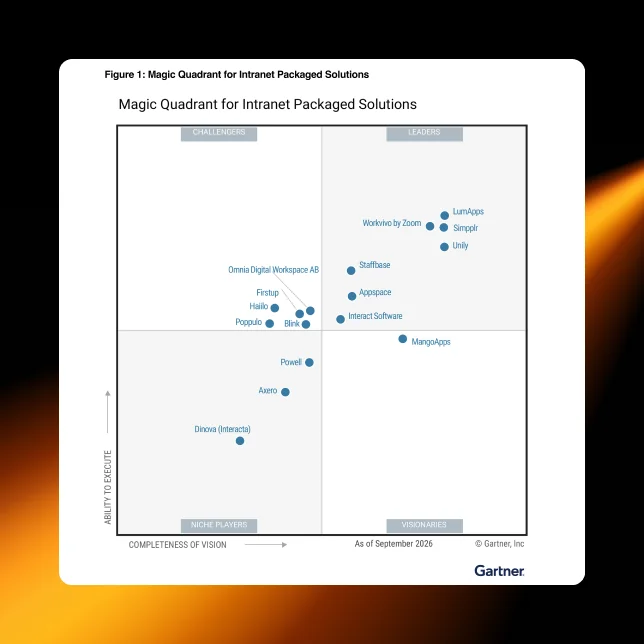
2026 Gartner® Magic Quadrant™ for Intranet Packaged Solutions
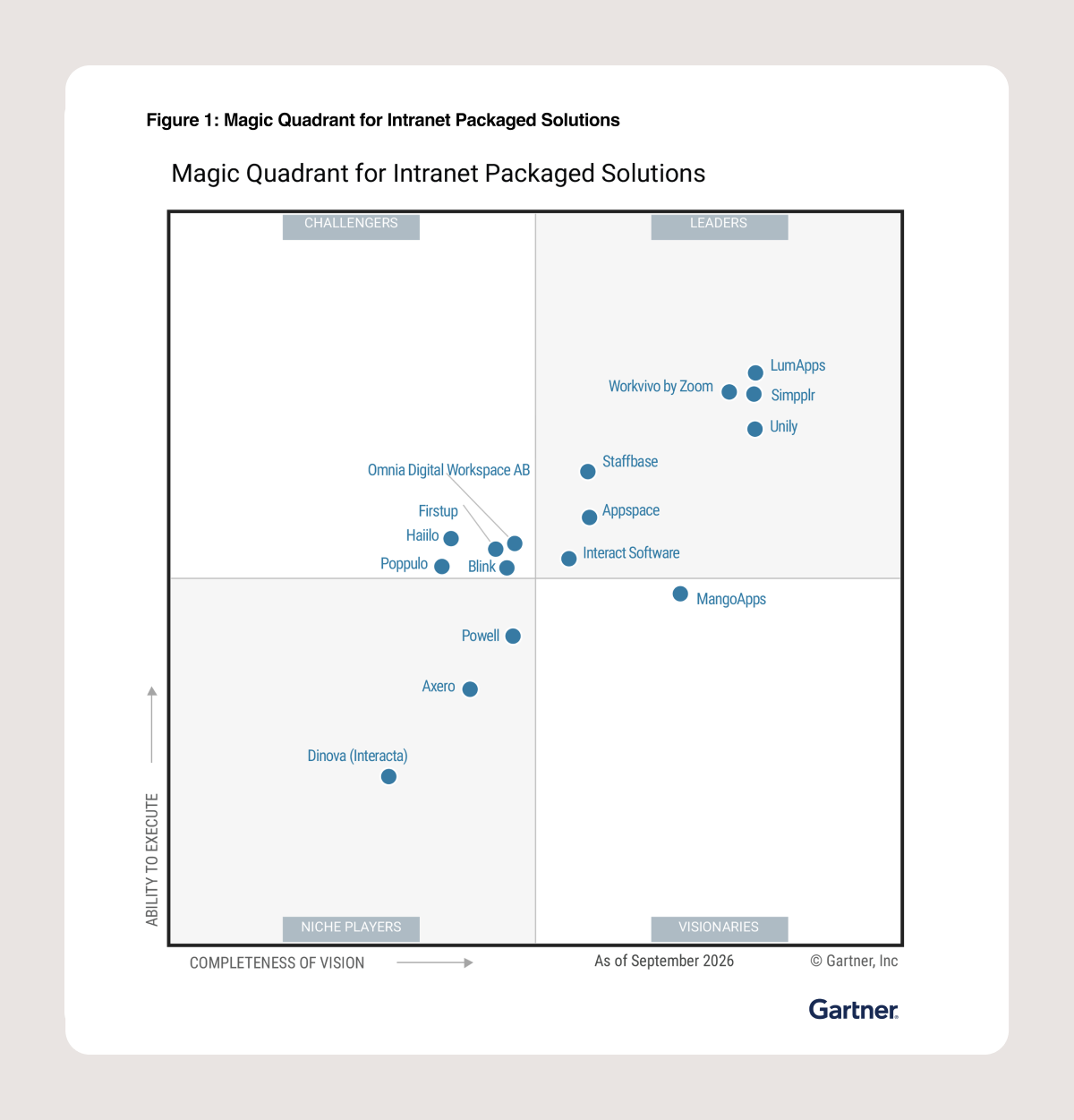
The 2026 Gartner® Magic Quadrant™ for Intranet Packaged Solutions assesses vendors on both Ability to Execute and Completeness of Vision. The latest report, published in September 2026, named Simpplr a Leader for the fourth year in a row.
Microsoft was not included in the Magic Quadrant because SharePoint does not meet Gartner’s criteria for an intranet packaged solution (IPS). Gartner’s 2026 report defines a packaged solution as “a holistic, fit-for-purpose approach to an employee intranet,” one that excludes “intranet products requiring developers to build the solution.” It lacks the packaged capabilities needed to effectively engage all workforce segments, particularly frontline workers.
Simpplr takes a different approach. Gartner highlights Simpplr’s “trend visibility,” noting that “its ability to see market patterns early helps accelerate innovation delivery, as seen with AI product advancements for employee communications and governance.”
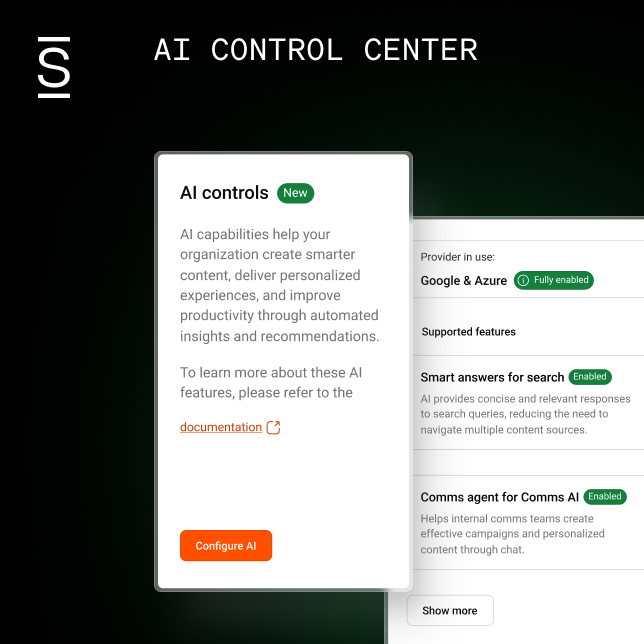
The report also recognized Simpplr’s governed approach to AI, noting recent innovations that include “an AI control center to unify governance, security and configurations.”
G2 Grid® Report for Employee Intranet Software | Spring 2026
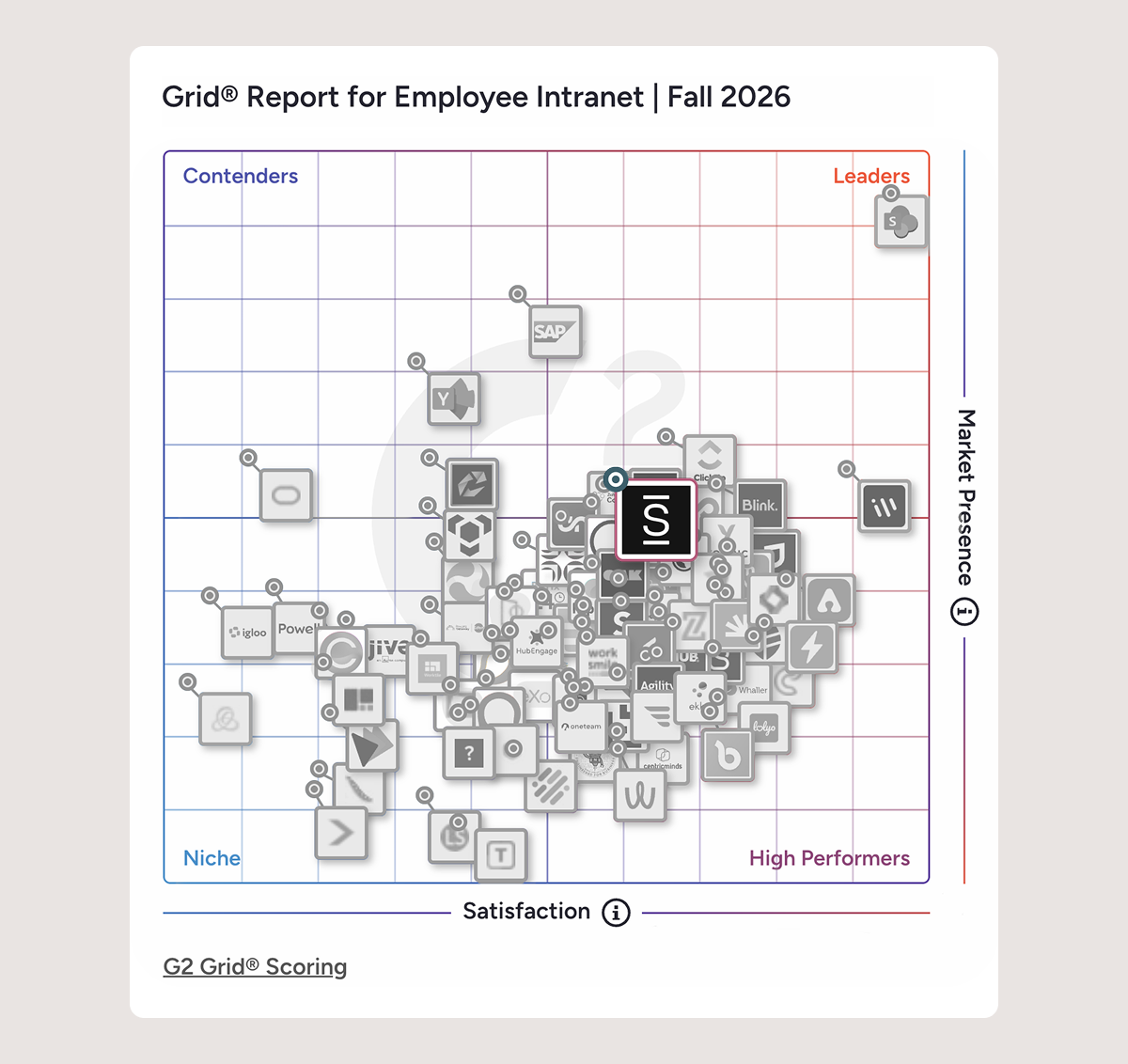
The Fall 2026 G2 Grid® Report for Employee Intranet Software ranks intranet platforms across two key dimensions: Customer Satisfaction (based on user reviews) and Market Presence (based on factors such as market share, seller size, and social impact). G2 evaluates more than 200 vendors using an algorithm that combines verified customer reviews with data from third-party sources through July 28, 2026.
Out of 200+ vendors, only eight are positioned in the Leaders quadrant. Based on the evaluation, Simpplr and Microsoft SharePoint are positioned as Leaders.
Customer satisfaction is where the difference becomes most apparent. Simpplr received higher scores than SharePoint across every category evaluated by G2.
Simpplr:
- Quality of support: 94%
- Ease of use: 94%
- Meets requirements: 91%
- Ease of administration: 91%
- Ease of doing business with: 95%
- Ease of setup: 89%
SharePoint:
- Quality of support: 82%
- Ease of use: 81%
- Meets requirements: 87%
- Ease of administration: 79%
- Ease of doing business with: 85%
- Ease of setup: 78%
| G2 User Satisfaction Categories | Simpplr | SharePoint |
|---|---|---|
| Quality of Support | 94% | 82% |
| Ease of Use | 94% | 81% |
| Meets Requirements | 91% | 87% |
| Ease of Administration | 91% | 79% |
| Ease of Doing Business With | 95% | 85% |
| Ease of Setup | 89% | 78% |
The same trend appears in overall customer sentiment:
- 98% of Simpplr users rated the platform 4 or 5 stars, compared with 83% of SharePoint users
- 97% believe Simpplr is headed in the right direction, versus 75% for SharePoint
- 92% would recommend Simpplr to others, compared with 81% for SharePoint
While SharePoint ratings benefit from Microsoft’s market presence, G2 reviewers consistently rate Simpplr higher for usability, administration, support, and overall customer satisfaction.
SharePoint pros and cons
SharePoint is widely recognized for its document management, collaboration, and Microsoft 365 integration capabilities. However, user reviews and analyst assessments reveal a mixed experience for use cases critical for an intranet.
Here’s what customers and analysts highlight about the Microsoft SharePoint experience.
SharePoint pros
1. Centralized document management
Organizations can create a centralized repository for files, policies, and team resources while maintaining version control, permissions, and collaboration workflows across departments.
“Microsoft SharePoint provides a centralized and structured platform for document management and internal collaboration. Its strong integration with Microsoft 365 tools like Outlook, Teams, and OneDrive makes file sharing and version control seamless.” — Senior International Business Development Specialist, 2026
2. Familiar user experience for Microsoft users
Organizations that already use Microsoft 365 can quickly adopt SharePoint. It integrates seamlessly with familiar tools such as Teams, OneDrive, and Outlook. By keeping content, communication, and collaboration within a single ecosystem, SharePoint helps employees work more efficiently with minimal disruption.
“I really appreciate the seamless integration with the rest of Microsoft 365 (Teams, OneDrive, Outlook, etc.), which makes collaboration feel natural and keeps everything in one secure ecosystem.” — Sysadmin/Operations ATS, 2026
3. Strong collaboration tool
Collaboration remains one of SharePoint’s strongest capabilities. Users frequently cite its ability to bring teams, documents, and workflows together in a centralized workspace, making it easier for employees to share information and work together.
The platform serves as a “highly effective collaboration tool. Implementation is straightforward, and its endless customizability allows it to be used daily throughout our business.” — IT Manager, 2025
SharePoint cons
1. Poor analytics and insights
SharePoint provides basic reporting capabilities, but organizations often need additional tools to measure content performance, employee engagement, and intranet adoption.
Customers in The Forrester Wave 2026 report expressed “dissatisfaction with technical support, the generic nature of analytics/reporting, and the need to use multiple admin interfaces.”
2. Inefficient search
Finding information in SharePoint can become challenging when content is spread across multiple sites and repositories. Without consistent governance and information architecture, employees may spend more time searching for information than using it.
“SharePoint administrators fail to organize information effectively into well-structured pages, which results in content being scattered and difficult to locate. In these situations, finding specific documents or information becomes confusing and takes much longer.” — Technical Engineer, 2026
3. Complex administration across multiple tools
Managing a SharePoint-based intranet often requires administrators to work across multiple Microsoft products and interfaces. As environments grow, governance, communications, permissions, and analytics may be managed across different systems, increasing operational complexity.
“SharePoint can be challenging to learn at first, especially without experienced administrators. Managing site layouts, permissions, and navigation requires planning, and deeper customization often needs extra tools or technical knowledge. The overall experience can also depend heavily on how well the platform is set up and maintained.” — Security Analyst, 2025
4. Limited design flexibility
SharePoint’s default web design supports common use cases but can limit design flexibility. Organizations seeking custom layouts, stronger branding, or consistently responsive experiences often need additional development to move beyond the platform’s standard templates and design capabilities.
“Sometimes the design flexibility feels limited, especially when trying to push more custom or polished layouts beyond the default web parts. It can also feel a bit restrictive or inconsistent when spacing, alignment, and responsiveness don’t behave as expected. Lastly, managing content and navigation across pages can get messy if the structure isn’t set up carefully from the start.” — Graphic Designer, 2026

Steve Tisa
Information Systems Architecture
Why organizations choose Simpplr over SharePoint
For enterprise buyers, the real differentiator lies in how each platform performs across critical intranet capabilities. Here’s how the two compare.
1. A complete employee experience vs. a content management platform
Simpplr brings communication, knowledge management, AI-powered search, and workflows into a single system. The platform is purpose-built to support how employees get work done and stay informed. HR and internal communications teams can manage it directly — no IT required.
SharePoint provides a robust foundation for content storage and collaboration, but delivering a full intranet experience requires building on top of it through Viva add-ons, custom development, or third-party tools. That build burden falls on IT and rarely ends at initial deployment.
According to the 2026 Gartner Magic Quadrant report, an intranet packaged solution is “a holistic, fit-for-purpose approach to an employee intranet,” and the definition excludes “intranet products requiring developers to build the solution.” For organizations evaluating the total cost of ownership, that dependency is a significant factor.
2. Analytics, insights, and data-driven decisions
Simpplr provides advanced built-in analytics that allow communications and HR teams to track content performance, employee engagement, and sentiment without routing requests through IT or building custom reporting infrastructure.
Forrester calls out Simpplr’s “robust set of dashboards and reports” as a key differentiator. The platform received the highest possible score for reporting analytics in the Forrester Wave evaluation.
SharePoint’s analytics capabilities are broad but generic. Forrester identifies reporting as one of the areas where Microsoft lags. G2 users reflect the same pattern. Their ease-of-administration score of 79% points to friction in day-to-day management. For teams that want to refine communication strategies and measure engagement, SharePoint’s native reporting often requires supplementation with external tools.

Carrie L. Birkhofer
President and CEO, Bay Federal Credit Union
3. Governance and content quality at scale
Intranet content decays. Pages go stale, ownership becomes unclear, and employees stop trusting what they find. Managing content governance at scale requires more than manual reviews.
The Forrester Wave report listed content governance as one of Simpplr’s strengths. The platform’s automated governance engine detects inactive content and provides next-best actions to authors.
SharePoint supports content publishing and permissions management, but automated governance is not a native capability. The absence of proactive governance means more manual oversight for organizations managing content across multiple business units, brands, or geographies.

Michelle Webb
Executive Director of Employee Experience
4. Deployment speed and IT independence
Deployment is faster and simpler with Simpplr. Prebuilt templates, native integrations, and flexible administration tools help communications and HR teams manage the platform without extensive IT involvement. This enables faster launches, easier scaling, and measurable outcomes without the heavy operational burden.
SharePoint deployments typically require partner-led implementation. Forrester notes that “customers should prepare to work with partners rather than Microsoft’s own professional services for intranet deployments” and that the platform’s adoption programs are not tailored to intranet use cases. SharePoint’s 78% ease-of-setup score on G2 reflects a deployment experience that requires more investment than most intranet buyers anticipate.

Amit Bhatnagar
Senior Director of IT Applications, Nutanix
How to choose between Simpplr and SharePoint
For many organizations, the decision isn’t Simpplr or SharePoint. It’s how to get more value from both. SharePoint remains a powerful platform for document storage, content management, and Microsoft 365 collaboration. The challenge is helping employees quickly find the information they need, stay informed, and navigate an increasingly complex digital workplace.
Simpplr fills that gap. The AI-powered employee experience platform delivers personalized experiences, enterprise search, automated content governance, actionable analytics, and more than 200 integrations. Instead of relying on multiple products and custom development, organizations can launch more quickly and reduce administrative overhead. Employees get a central place to find information and stay connected to their work.
Ready to give your teams the employee experience they deserve? Request a demo today.
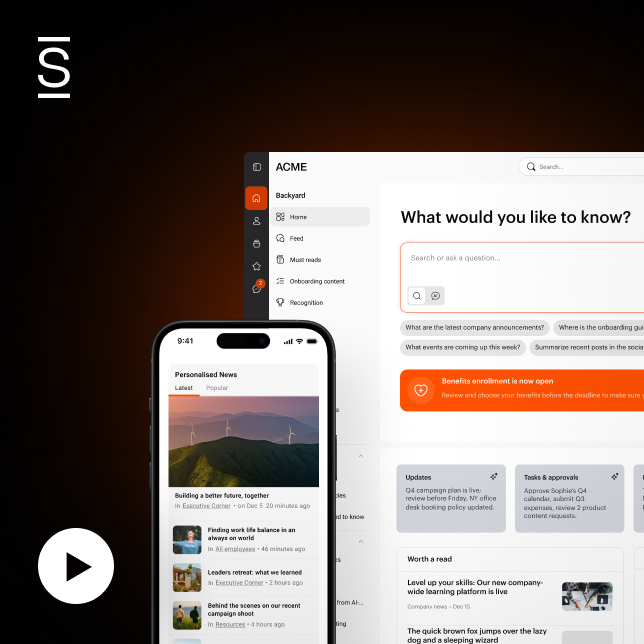
Watch a 5-minute demo
See how the Simpplr employee experience platform connects, engages and empowers your workforce.
- #1 Leader in the Gartner Magic Quadrant™
- 90%+ Employee adoption rate