




Internal comms is broadly valued and widely considered effective by practitioners and leaders. But it’s also hitting the same structural barriers it has been for years, limiting how much the function can scale. The organizations breaking through this ceiling share a set of operating conditions, and Simpplr’s latest research makes it clear what those conditions are and how unevenly distributed they remain.
2026 State of Internal Communications Report
2026 State of Internal Communications Report
Table of contents
Simpplr commissioned an independent survey of nearly 450 IC practitioners across North America, along with a companion survey of 75 C-suite leaders, for our latest research report, State of Internal Communications 2026.
The research points to six operating conditions that separate IC programs that scale from those that plateau: leadership engagement, clear ownership, credible measurement, audience targeting, frontline-ready delivery, and the right technology.
None of those conditions are new to anyone working in IC. What’s changed is how clearly this year’s data shows how unevenly distributed they remain, and what that divide means for IC moving forward.
IC is effective, valued, and running in place
There’s good news for IC: 71 % of respondents rate their IC function as established or excellent, and 92% of executives are satisfied with their IC teams. When both practitioners and leadership share that confidence, it carries weight in budget and planning conversations because it’s not often that a function’s self-assessment and its executive evaluation align so closely.
The people doing this work are also largely happy doing it. Eighty-one percent say they would choose a career in internal communications again — and those who rate their IC function highly are significantly more likely to feel that way.
But year-over-year momentum has slowed. In 2025, more than half (54%) of respondents said IC had improved over the prior year. This year, that figure dropped to 33%.
That’s partly a sign of maturity. Organizations that have built an effective IC function reach a point where the work shifts from building to sustaining. But stability shouldn’t be mistaken for progress. The organizations moving from stable to accelerating are the ones improving measurement, targeting, leadership engagement, and technology — all key differentiators in stronger IC programs.
Where IC sits shapes what it can do
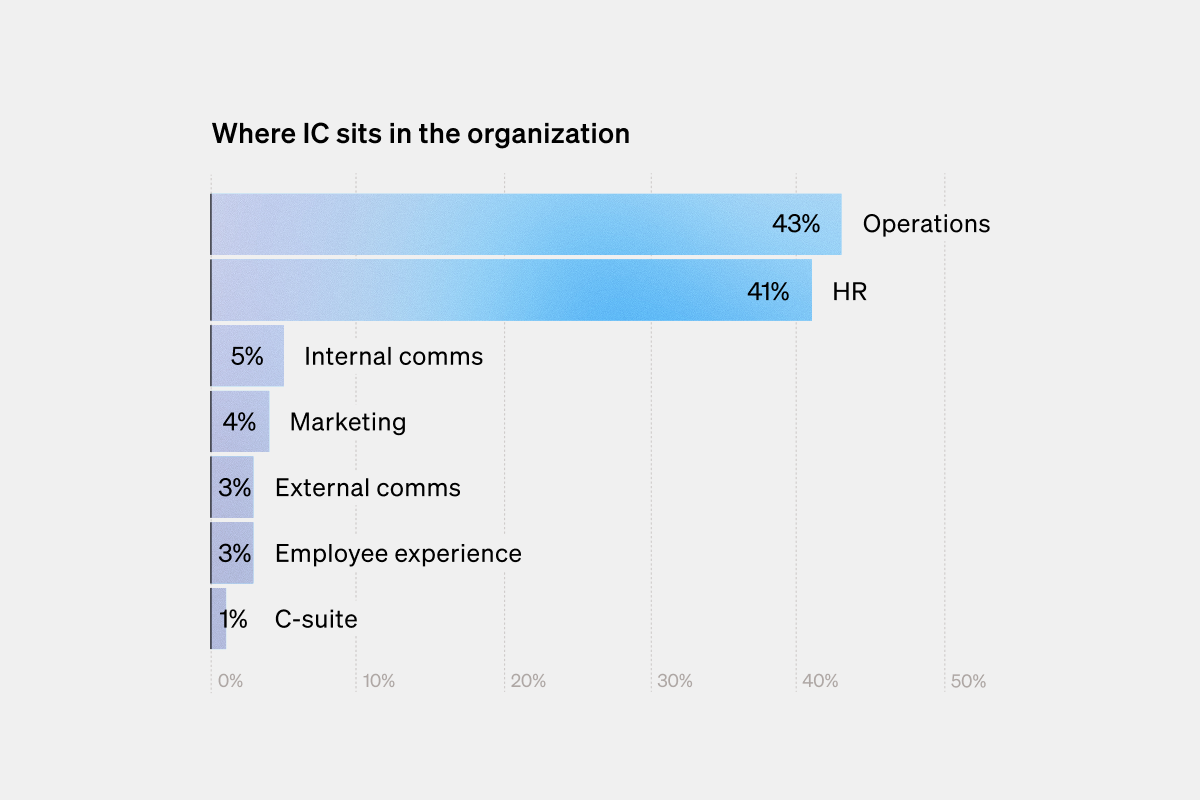
The 2026 research showed IC more often embedded within existing business functions than standing alone: 43% sit within Operations and 41% within HR. Where IC sits determines who owns what, who coordinates with whom, and what the function is expected to deliver.
82% of IC professionals agree with their department positioning, and of those who disagree, 29% believe IC should sit under HR
IC reporting structures have changed little year over year. Embedded models put IC close to leadership and business priorities, but they also create overlap with HR, Marketing, and Operations, which can muddy ownership and accountability.
Executive data underscores a framing gap
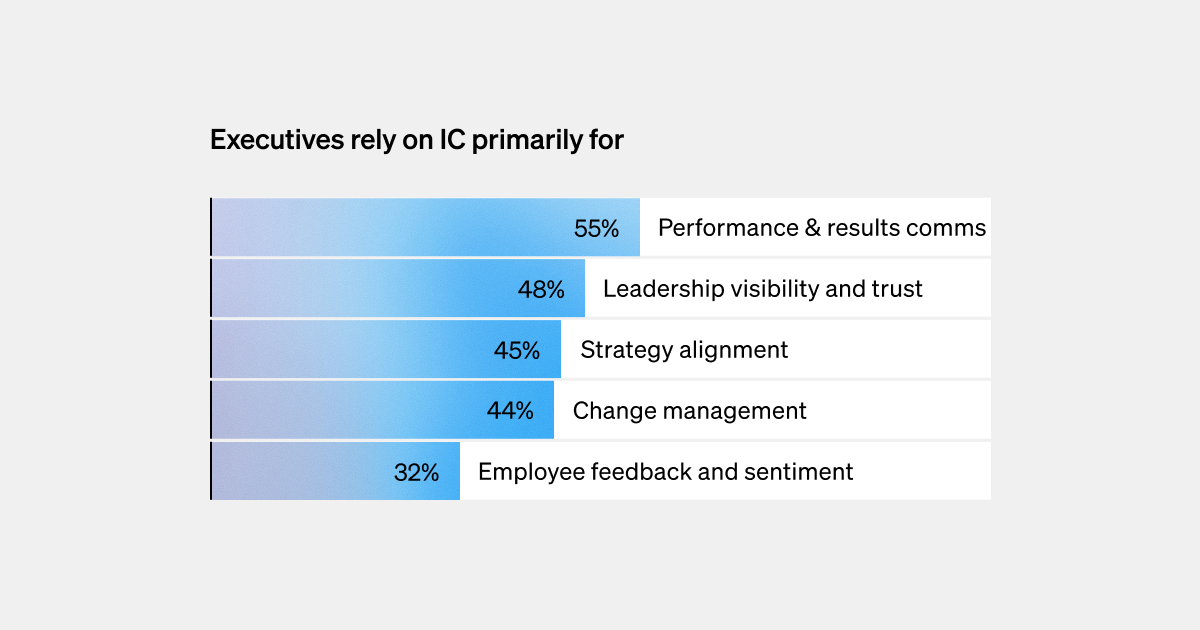
Executives primarily rely on IC for performance and results communications, leadership visibility and trust, and strategy alignment. Only a quarter list strengthening company culture and employee engagement in the top three uses for IC, which differs significantly from how practitioners typically talk about their own priorities.
This pattern — spanning alignment, performance, visibility, and change communications — explains why IC is typically embedded near Operations and HR. It also suggests that IC teams pitching for resources will get further when they speak in terms of performance, alignment, and visibility rather than in terms of culture and engagement, which executives value but don’t prioritize.
Why some programs grow and others plateau
The data consistently shows that a specific set of operating conditions separates IC programs that scale from those that stall. Leadership engagement, measurement capability, audience targeting, and frontline reach all function as multipliers — or, when absent, as ceilings.
Leadership engagement is present but uneven
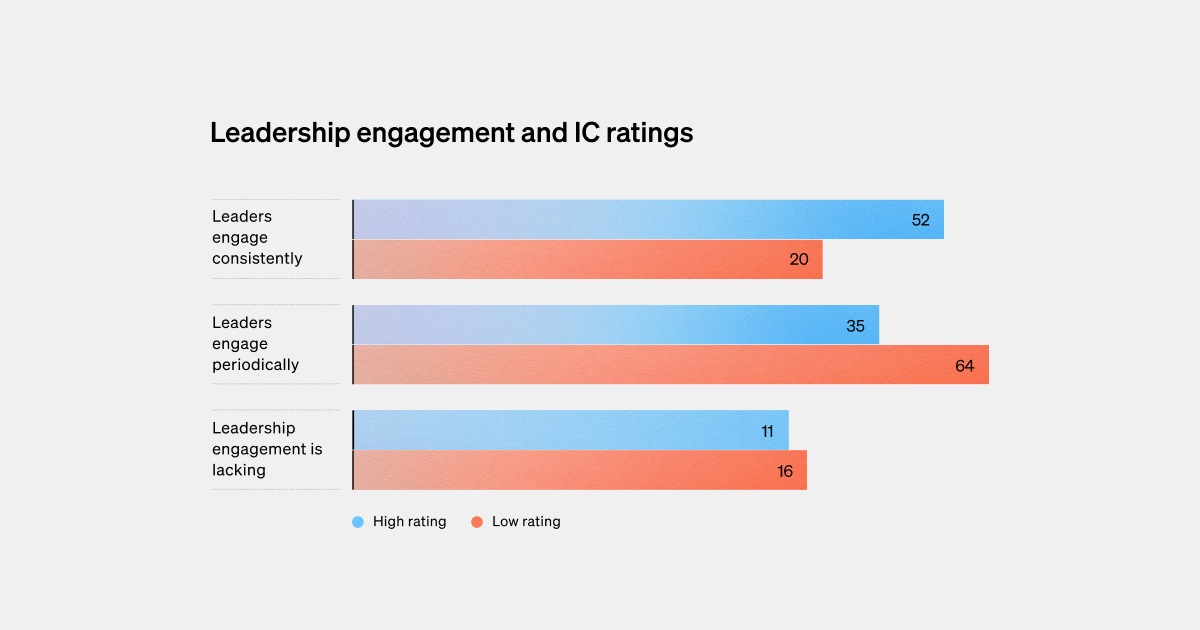
When asked how well leadership engages with IC, the responses split almost evenly between consistent and periodic engagement (43% each) — with a meaningful minority (12%) reporting none at all.
This distribution matters: Consistent leadership engagement correlates directly with higher IC effectiveness ratings.
But awareness alone isn’t enough. Regular briefings keep executives informed but don’t give them a reason to stay invested. When leaders have a stake in how IC success is defined and measured, the engagement tends to follow.
Measurement is improving but falls short of expectations
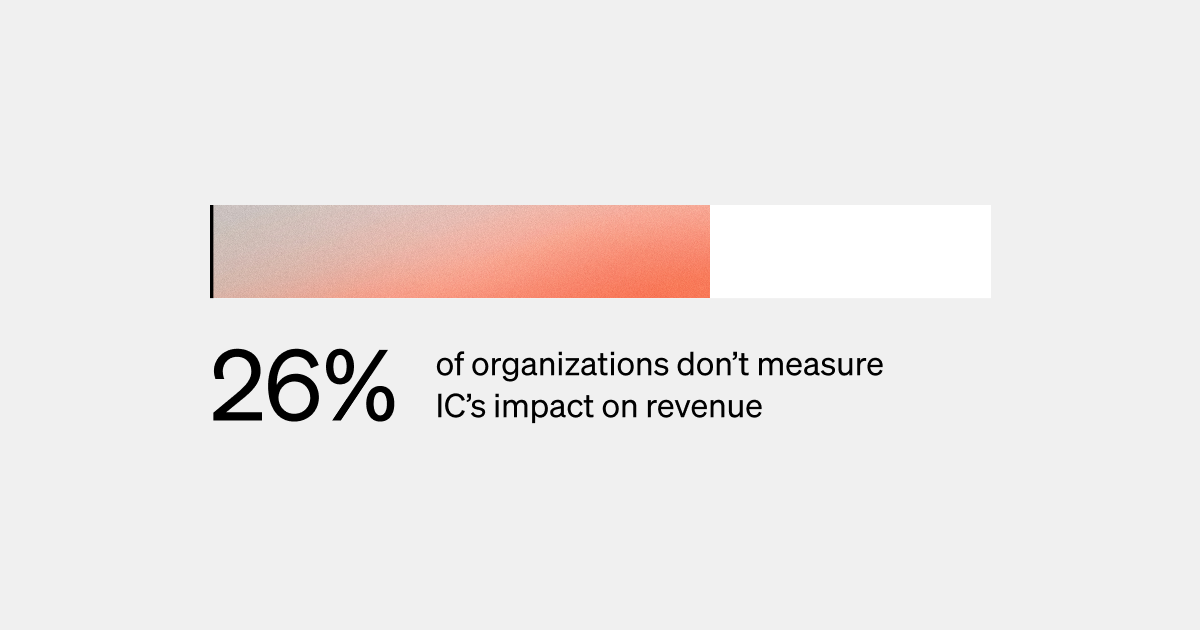
The vast majority of executives (89%) say IC should be measured in business terms like revenue or productivity, and 64% say “yes, definitely” to that question. But most teams aren’t yet set up to deliver on that expectation: 26% of organizations don’t measure IC’s impact on revenue at all, and 19% don’t measure the function’s impact on productivity.
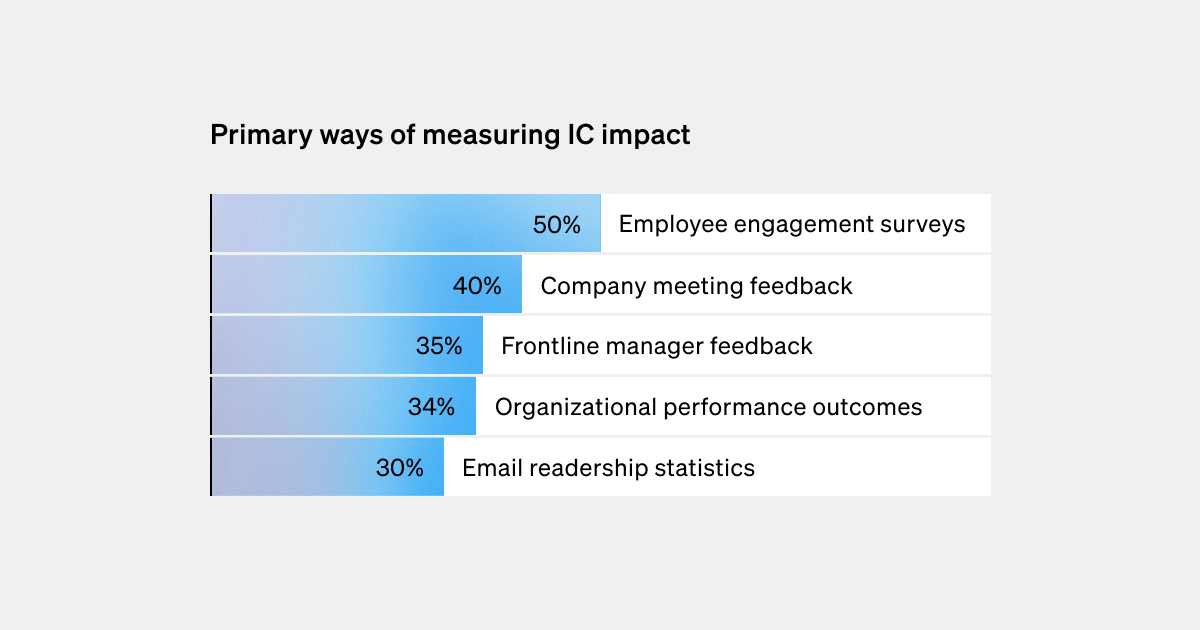
The most common measurement method across all categories is employee surveys and self-reported proxies. That’s a striking gap given how much performance data organizations already collect and how accessible measurement tools have become.
The most consistent explanation is structural: unclear ownership of metrics, lack of agreement on what IC success means, and limited bandwidth on small teams. Before investing in measurement tools, IC teams should define what success means in their organizations with input from the CFO, CTO, and other key leaders.
Targeting is what sets mature IC apart
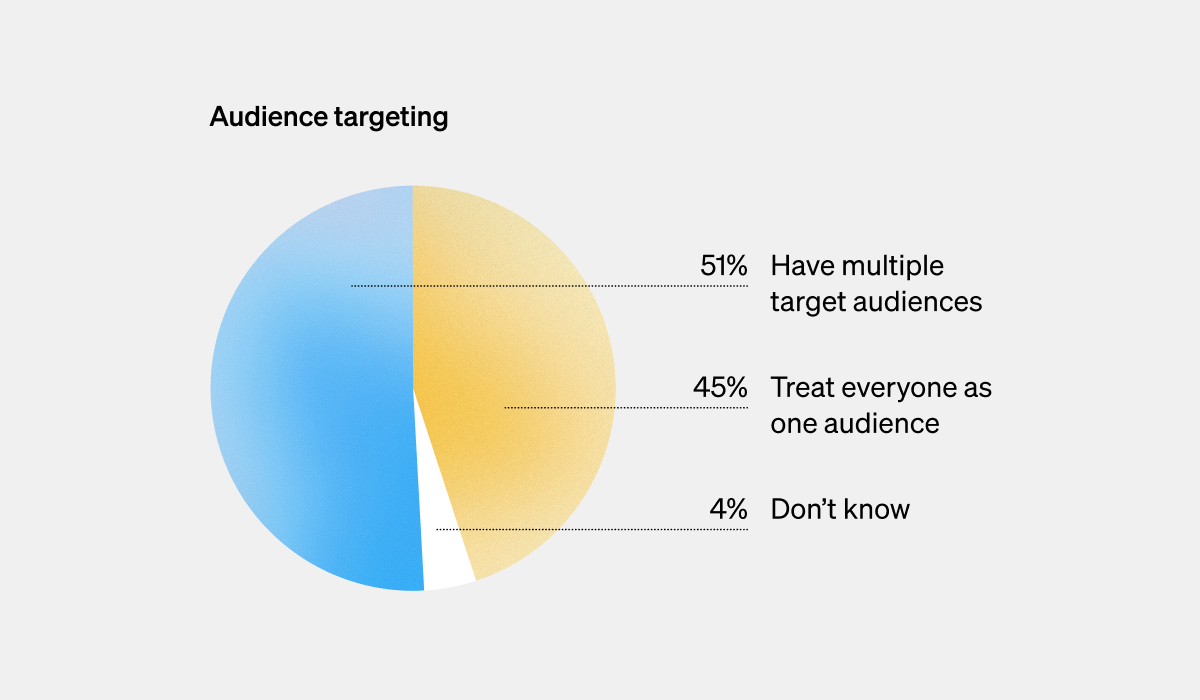
Just over half of organizations (51%) target specific audiences, while 45% treat their entire workforce as one uniform audience. In 2026, when every consumer message is tailored to the individual, treating an entire workforce as one audience is a significant lag.
It shows up in consumption data, too: 42% of respondents say companywide update consumption is just 50–74% of employees.
A quarter to half of employees not reliably receiving major company updates is an operational problem. It requires infrastructure decisions to solve it, not better messaging.
Audience segmentation should be a priority investment. Sending the right information to the right people is the difference between comms that land and comms that get ignored.
Frontline reach is a structural problem, not a strategy problem
Among the respondents, 41% said half or more of their workforce lacks a dedicated computer. Email and intranet — the two primary comms channels — both depend on computer access that a significant portion of the workforce might not have.
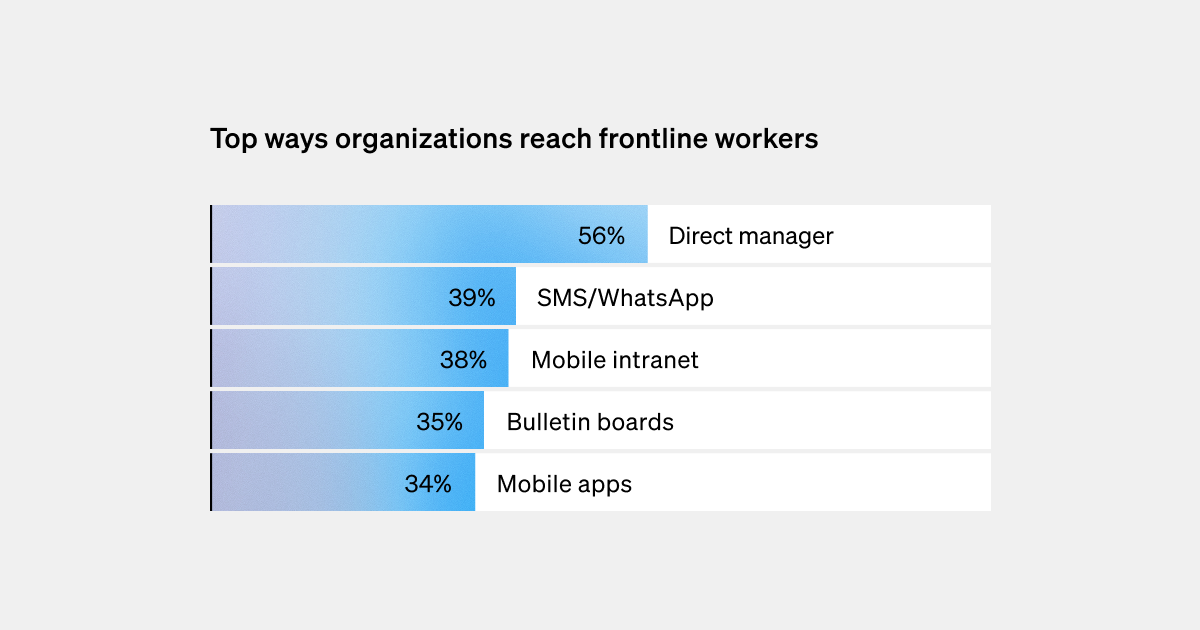
The most common methods for reaching frontline workers reflect that constraint. When direct manager communication is the primary channel for reaching a deskless workforce, consistency becomes impossible to guarantee.
For organizations with a majority-deskless workforce, mobile-first delivery and intranet infrastructure are the baseline for consistent frontline reach.
Technology enables the conditions that support IC
The technology IC teams work with either supports their effectiveness or introduces friction that limits it. That relationship shows up consistently in the data — not as a simple cause-and-effect but as part of the broader operating environment that accompanies stronger IC programs.
Platform choice affects IC performance
Only 14% of respondents lack an intranet entirely. Those with an intranet rate IC effectiveness 5 percentage points higher than those without. But not all intranets are created equal.
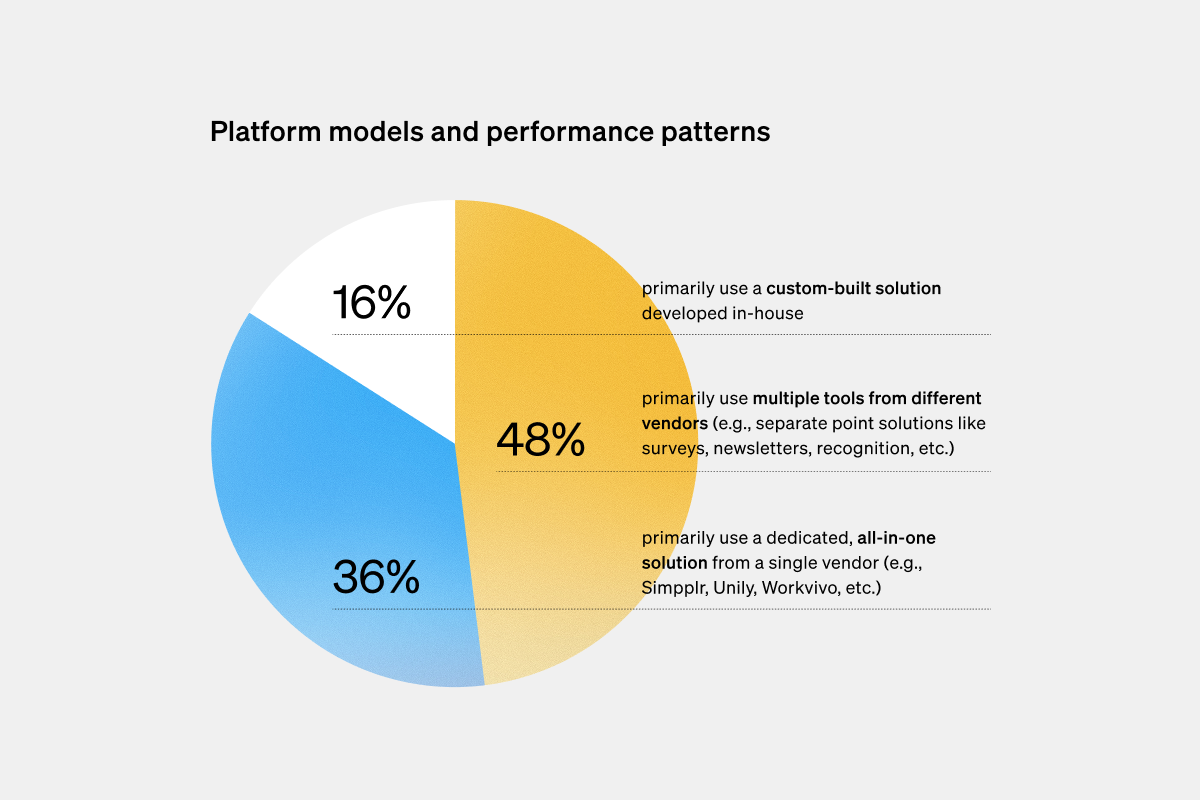
The performance differences are meaningful. Organizations using an all-in-one solution rate IC effectiveness 10 percentage points higher than those with multivendor setups. They also report stronger companywide message consumption — reaching 75–100% of employees at a rate of 32%, compared to 22% for multivendor environments.
Most multivendor tools were added over time without a unified strategy, and many no longer work well together. The proliferation of ungoverned AI tools is likely to make the problem worse.
IC teams should audit what their current stack supports, including targeting, analytics, mobile access, and self-service. If those capabilities are split across tools that don’t integrate well, it shows up in reach, measurement, and employee experience.
AI has moved from experiment to routine
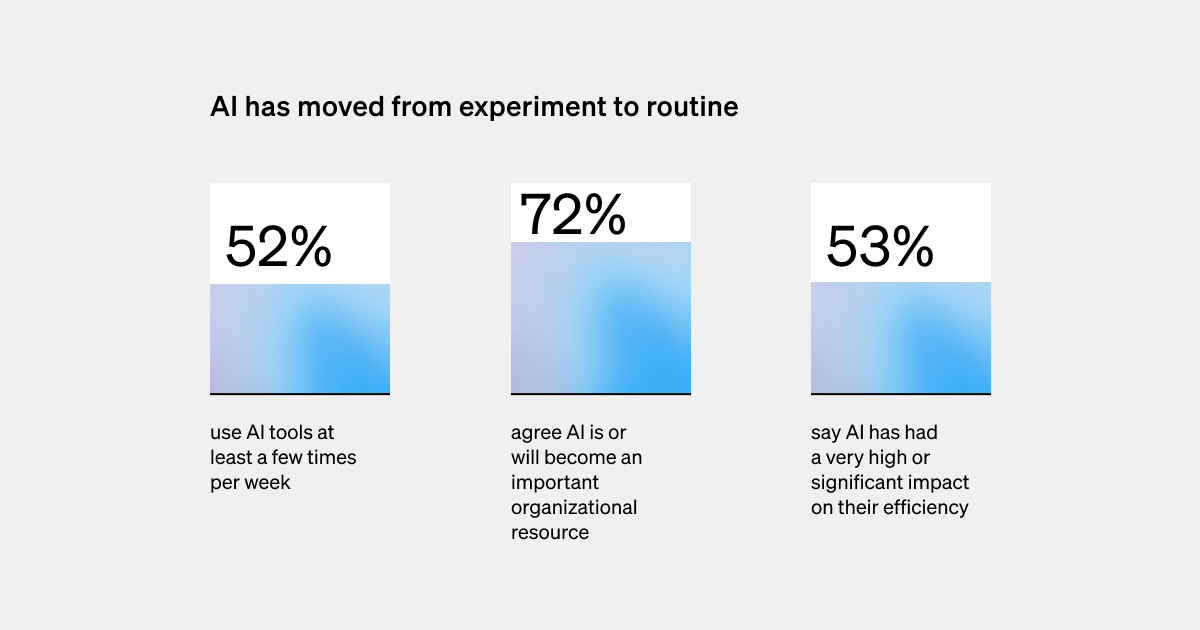
AI is now a routine part of IC work. More than half of practitioners (52%) use AI at least a few times a week, and 53% report a very high or significant impact on their efficiency, particularly in content strategy, planning processes, and channel strategy.
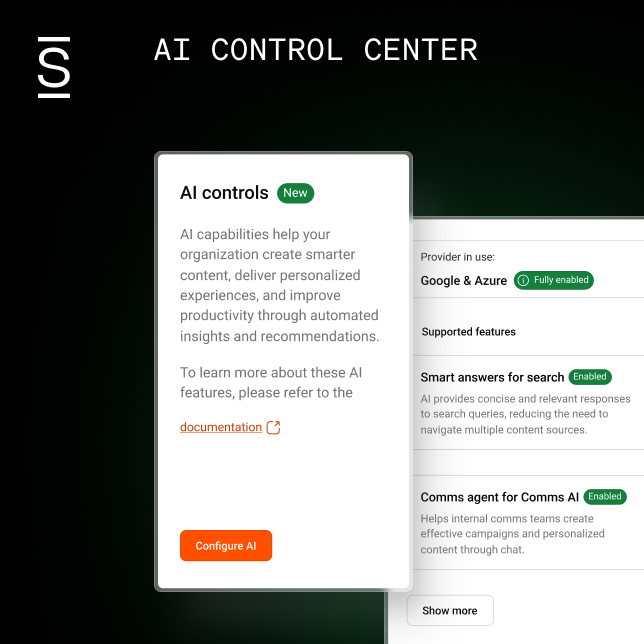
But IC professionals aren’t just using AI — they’re enabling it across the enterprise. Nearly half of teams are involved in AI rollouts, and 40% are heavily or solely involved in creating AI strategies and adoption workstreams. That puts IC in a position to shape how AI takes hold across the organization with a stake in the outcome beyond their own workflows.
That leverage comes with tension. Those closest to AI adoption are the most anxious about their job security (29%), and more than a third said reliance on AI was the reason their organization planned to reduce headcount. That anxiety comes from knowing exactly what these tools can do.
Flat staffing and rising expectations are straining IC teams
The major headcount story for 2026 is stability, not expansion. Just 27% of teams expect to add headcount in 2026, down from 38% in 2025. But only 9% expect to reduce headcount.
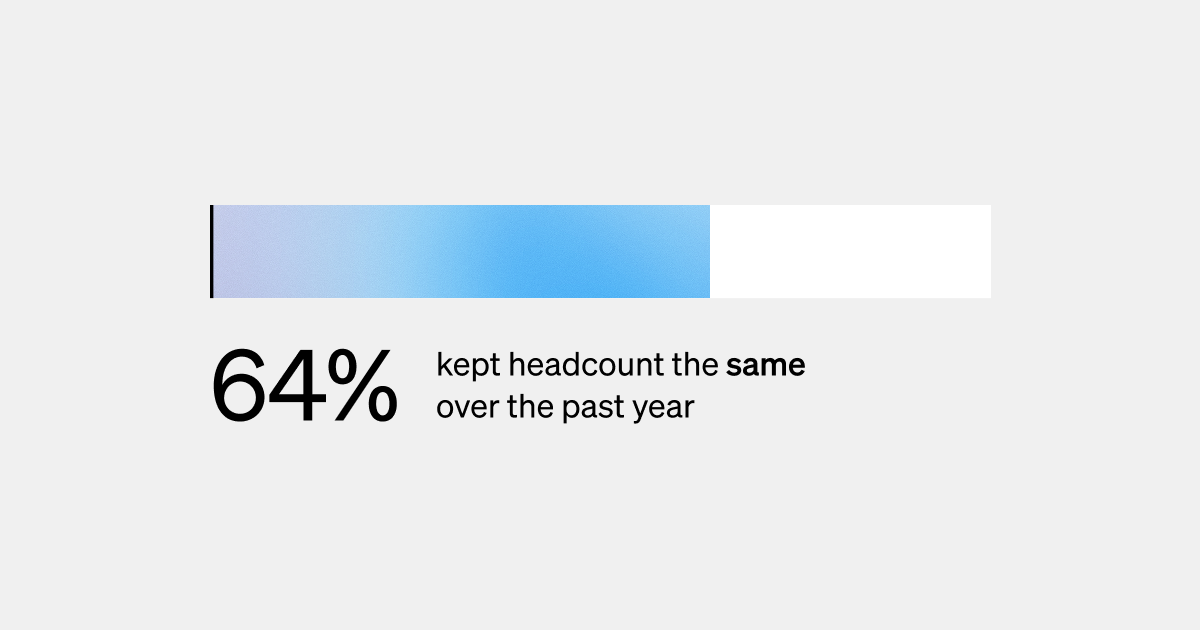
A drop in hiring optimism is landing at the same time IC scope is expanding. AI rollouts, adoption, and enterprise strategy are all significant additions to the IC portfolio that efficiency gains haven’t yet offset.
Flat headcount, expanding scope, and rising expectations are adding to the pressure IC teams have already been feeling.
There’s a telling divide in the executive data. Almost all C-suite executives (96%) support increased IC investment, with two-thirds saying “yes, definitely.” But that support isn’t translating into increased staff. Whether investment is flowing to technology rather than people, decisions are being made below the C-suite, or there’s simply a lag between stated intent and operational execution, the gap is real. And it may lead to burnout if IC teams are stretched too thin.
The operational gaps are knowable and closable
The conditions that differentiate stronger IC programs aren’t new, and this year’s data makes them harder to ignore. Leadership engagement, clear ownership, credible measurement, audience targeting, frontline-ready delivery, and unified technology have surfaced as differentiators across multiple editions of this research.
What’s changed is how clearly the data shows what closing those gaps looks like in practice. For IC teams, that’s a more useful starting point than asking whether the problem is talent or motivation — the data suggests it usually isn’t.
The function has earned its stability. Now the question is what comes next. For most IC teams, that means building the operational infrastructure to scale without adding headcount. AI efficiency and smarter measurement are where the most immediate gains are.
Download the full State of Internal Communications 2026 for an in-depth look at the research and recommendations for IC teams ready to scale.
Want to see how Simpplr’s modern intranet can transform your internal communications? Request a demo today.
Watch a 5-minute demo
See how the Simpplr employee experience platform connects, engages and empowers your workforce.
- #1 Leader in the Gartner Magic Quadrant™
- 90%+ Employee adoption rate