Newsletter July 2026


Hi,

Change can be hard, you know? I learned at a young age I wasnt a huge fan.

I was 10 years old. My mom thought it would be fun to surprise me and my brothers with a tiny, precious miniature dachshund puppy. Heidi weighed two pounds, was covered in spots, and immediately wanted to lick my face.

I wasnt sad. I just hadnt been given any warning. My young brain couldnt catch up.

Fast forward to today, and your girl has seen A LOT more change, and work is no exception. It comes faster than ever, and it rarely arrives one change at a time. AI. Reorganizations. Return-to-office policies. New leaders. New priorities. Before weve fully processed one thing, another shows up.

And I dont think the hardest part is the change itself. Its how people experience it.

Thats where we come in.

One of the most important things we do as communicators isnt announce change — its help people understand it. We create clarity when things feel uncertain, build trust when questions outnumber answers, and help people catch up before asking them to move forward.

This month, I pulled together a few resources and practical tips to help you do exactly that.


NL-jul-2026-Section-1-webinar-image-top.png


Hit play now, thank me later.

I’m 100% guilty of registering for a virtual event, getting too busy to attend, and then letting the replay email collect dust in my inbox until I eventually admit defeat. Please don’t be me.

The full replay of our Employee Comms & Experience Virtual Summit is now available, and it’s absolutely worth your time. I still reference my notes from several of the sessions because they were packed with practical ideas I could actually use — from smarter ways to use AI and improve the employee experience to proving the impact of our work and hearing how other communicators are tackling the same challenges we all face.

If you missed it in May (or only caught part of it), consider this your sign to hit play.


NL-jul-2026-Section-2-blog-image-top.png


Stop writing the AI announcement. Start leading the conversation.

If you want a case study in everything we just talked about, look at AI. New tools, new policies, new pace, all landing at once. Most employees are getting the news in pieces and from leaders who haven’t aligned on the story yet.

This blog breaks down why IC is becoming the critical function in any AI rollout, not the one who writes the announcement afterward. Read it for the strategic angle and for the reminder that your job isn’t to explain the tool. It’s to help your org figure out what it means for the people using it.


NL-jul-2026-Section-3-blog-image-top.png


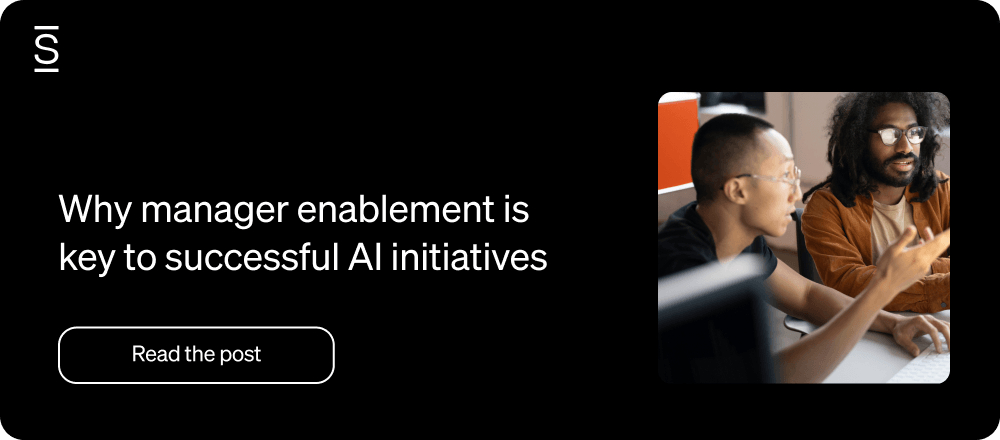
The missing piece to a successful AI rollout.

You can lead the AI conversation, but you can’t be in all of them. Employees are going to talk to their managers about AI long before they read the all-company email. And if those managers don’t have the language, the context, or the confidence to engage, the conversation happens anyway, just less effectively.

This article is about why manager enablement is the difference between an AI rollout that lands and one that stalls before it reaches the people doing the work. IC’s job isn’t to own those manager conversations but to make sure managers are ready to have them.


Quick tip

The best change comms start before the first draft

When leadership hands you a change to communicate, your first instinct might be to open a blank doc and start writing. But the one step that has more impact than any sentence you’ll write: getting your leadership team aligned on the story before you tell it.

Next time, you’re handed a change, send a calendar invite for a 30-minute alignment session. Ask leadership to answer five questions together:

  • What’s the story so far?
  • Where are we right now?
  • Where are we headed?
  • What needs to be true for this to land?
  • What do we want our people to feel, believe, and do?

Don’t move forward without answers. Don’t accept “we’ll figure it out as we go.” Because when leaders skip this step, employees fill in the gaps themselves, and they rarely fill them in favorably.

You’re not slowing down the process. You’re saving the rollout. Most failed change comms are an alignment problem disguised as a writing problem.


Quick move

Want to make sure the five questions stick? A few low-lift ways to bake the alignment into the work:

  • Send the five questions to leaders ahead of the meeting so they show up thinking.
  • Write the agreed-on answers into a one-page “change story” doc and circulate for sign-off.
  • Ask each leader to summarize the change in their own words and look for drift.
  • Use the five questions as the structure of your all-company message.
  • Hand managers quotable answers they can use word-for-word in team conversations.
  • Pre-test the draft with a few employees who’ll push back

Then keep the doc handy. You’ll need it three weeks from now when the story starts wandering.


Customer voices


Section-6-customer-voices-Pikeville.png


More from Simpplr


NL-jul-2026-Section-7-blog-employee-well-being-thumbnail.png
NL-jul-2026-Section-7-blog-employee-wellness-thumbnail.png


NL-jul-2026-Section-7-blog-IC-professionals-thumbnail.png
NL-jul-2026-Section-7-blog-recognition-more-meaningful-thumbnail.png


We live through every change twice.

A couple of years ago, I gave my husband permission to one day surprise me with a dog. I’ll keep you posted on how I react this time around. I still don’t love the idea, but I’m trying to crush the control freak within me. Wish me luck.

But I know that change is inevitable. The hard truth is the speed of change isn’t slowing down. It’s only multiplying.

Here’s the truth: as internal comms and HR leaders, we live through every change twice. First as employees. Then as the people responsible for helping everyone else understand it.

We process the uncertainty, answer the questions, absorb the emotions, coach the leaders, write the messages, and somehow find the energy to reassure everyone else while we’re still making sense of it ourselves.

That’s not nothing.


PhMeJozWAOHle.gif


So whatever change you’re helping lead right now (or the one that’s coming you don’t yet know about), give yourself the same grace you’re probably giving everyone around you.

The fact that you keep showing up for your people while you’re also living through it is the actual job, even when no one names it that way.

Keep the resources that serve you. Let the rest go. And find the people who make the work feel lighter.

Oh, and if a surprise puppy ever lands on your doorstep, I hope you cry actual tears of joy.


Regan-BW-headshot.jpg

Regan Zuege
Internal Communications Manager

P.S. Be sure to sign up to get more emails like this! And connect with me on LinkedIn.


Copyright © Simpplr 2026, All rights reserved.

+1.877.750.8330