



IT leaders today face a paradox: AI budgets are climbing while employee satisfaction with workplace technology remains flat, or even declines. The problem isn't a lack of innovation. It’s fragmentation.

The IT leader’s AI playbook for digital employee experience
The IT leader’s AI playbook for digital employee experience
Table of contents
- 1 The efficiency trap: When AI makes work harder, not easier
- 2 Phase 1: Foundation building with immediate wins (months 1-6)
- 3 Phase 2: Strategic integration and debt reduction (months 7-18)
- 4 Phase 3: Autonomous experience and competitive advantage (months 19+)
- 5 How Simpplr equips IT leaders for digital transformation
As organizations race to adopt AI, they’re layering point solutions on top of bloated and disconnected tech stacks. Point solutions and middleware can help automate tasks or enhance search capabilities, but they often introduce integration overhead, governance risks, and hidden costs.
Each new tool promises efficiency gains, but combined they amplify friction: Employees toggle between disconnected systems, re-create context across platforms, and lose productivity to digital sprawl.
94% of IT leaders plan to boost AI investments in the coming year, with roughly 40% expecting to increase their AI budget by more than 50%.
Poor digital employee experience drives turnover in competitive labor markets and erodes trust in IT’s ability to deliver value. The sustainable advantage comes from strategic integration — connecting AI capabilities across your existing digital workplace in ways that reduce friction rather than multiply it.
This playbook provides a four-phase approach that balances automation with augmentation, addresses security and compliance requirements, and delivers measurable ROI through quick wins that scale into intelligent integration.

The efficiency trap: When AI makes work harder, not easier
Organizations measure AI success by counting automated tasks and reduced processing times, yet these efficiency gains often come at the expense of employee experience. A chatbot resolving 80% of password resets sounds impressive until employees bypass it entirely, preferring to wait 30 minutes for human support over navigating frustrating automated responses.
This creates “experience debt” — the hidden cost of implementations that work technically but fail practically. Like technical debt, experience debt compounds over time. It trains employees to work around systems rather than with them, resulting in shadow IT solutions, and reducing confidence in future technology initiatives.
Fragmentation multiplies experience debt
The challenge intensifies with fragmented AI deployments. Employees interact with separate AI assistants for IT support, HR queries, and internal communications, each with different interfaces and capabilities. Consider an employee seeking parental leave information. They might need three different AI systems, each providing partial answers. Rather than reducing cognitive load, fragmented AI multiplies it.
The average company has more than a 100 SaaS applications, so effective AI for digital employee experience must reduce interfaces rather than increase them. The difference between organizations that scale successfully and those that struggle comes down to mindset: automation versus augmentation.
Automation delivers short-term productivity gains but rarely builds trust, engagement, or resilience. Augmentation helps people focus on what humans do best — connecting, creating, and leading through change. Organizations need both, but efficiency-first implementations that prioritize automation over augmentation create technical debt disguised as innovation.
Phase 1: Foundation building with immediate wins (months 1-6)
Phase 1 focuses on building credibility through rapid, visible wins that demonstrate AI’s value while establishing organizational confidence. Target high-volume, low-complexity pain points that generate immediate measurable impact without requiring extensive integration or change management.
Start with quick ROI demonstrations
Password resets offer immediate ROI. Organizations often spend significant IT resources on password-related tickets that follow predictable patterns. An AI assistant that reliably handles password resets, account unlocks, and assists with related authentication issues can reduce Tier 1 support tickets by up to 60%. Employees experience faster resolution (minutes instead of hours), IT teams enjoy reduced workload, and leadership sees clear cost savings and ROI.
Similar quick wins include automating responses to common policy and procedural questions, providing instant access to frequently needed documents, and streamlining routine service requests.
The productivity impact is substantial: Employees spend an estimated two hours every week searching for content and communications. Even a 20% improvement multiplied across the organization delivers significant productivity savings.
Evaluate your current tech stack strategically
Before adding new platforms, assess whether existing systems already offer underutilized AI capabilities that could deliver quick wins. However, don’t let this assessment become an excuse to preserve legacy systems that create friction. The goal is strategic consolidation — maximizing what works while retiring what doesn’t. Balance fiscal responsibility with the willingness to replace tools that drain IT resources or that employees actively avoid.
Communicate wins in business terms
Calculate and communicate hard savings from these early wins with specific metrics leadership values.
These metrics should include:
- Support cost reduction through decreased ticket volume
- Employee time savings from faster resolution
- Reduced shadow IT usage as AI provides reliable alternatives
Share these successes broadly through stories showcasing how AI helped real employees solve real problems.
Audit current digital friction and technical debt
Map how employees actually work, not how systems are designed to work. This audit reveals where to focus Phase 2 integration efforts.
Key questions to answer:
- Where do employees pay the highest productivity tax switching between fragmented systems?
- Which processes force unnecessary approval loops or require navigating multiple systems?
- What legacy systems require expensive maintenance and custom integrations?
- Where is the overlap in your tech stack, and what can be eliminated?
Establish baseline metrics for employee satisfaction, support ticket volume, time-to-resolution, and productivity. These benchmarks prove ROI as you progress through later phases.
Establish AI data governance without creating bottlenecks
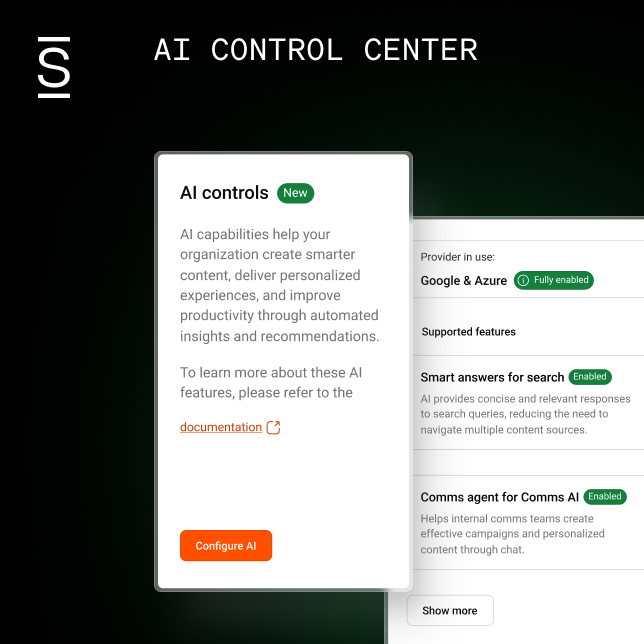
Focus governance on data security, privacy, and compliance. Establish clear policies around what data AI systems can access, how it’s used, and how information is protected.
Critical governance controls include:
- Data leakage prevention: Define what happens to sensitive data processed by AI systems, especially when using third-party services, and establish clear boundaries to prevent exposure.
- Shadow AI management: Provide governed AI capabilities so employees use sanctioned, secure alternatives instead of unauthorized gen AI tools
- Vendor compliance: Ensure your AI vendor provides SOC2, GDPR compliance, and relevant industry-specific certifications that meet regulatory requirements
- AI-powered permissions: Build unified identity management and permission models that enable intelligent, role-based access while respecting existing security frameworks
These concerns aren’t theoretical. Among IT leaders, 40% cite security of new AI applications as a primary concern, while 41% worry about employees not following the right IT protocols.
Balance governance with usability
Research shows that 64% of IT leaders report difficulty finding individuals to conduct AI training. And 44% say their teams already spend more than half their time on training and education. This underscores Phase 1’s focus on intuitive, low-training AI implementations that demonstrate value without overwhelming already-stretched resources.
Security and privacy controls should work invisibly from the employee perspective while providing robust protection behind the scenes.
Once you’ve demonstrated AI’s value through quick wins and established governance frameworks, Phase 2 addresses the larger challenge: enterprise software sprawl. The same fragmentation that made Phase 1’s point solutions necessary now becomes the problem to solve.
Phase 2: Strategic integration and debt reduction (months 7-18)
Phase 1 builds credibility and establishes governance. Phase 2 tackles the root cause of digital friction: the average organization’s 130+ SaaS applications that fragment employee experience and drain IT resources.
This reality is driving change. More than half (51%) of IT leaders are planning to consolidate their app portfolio, and 23% expect significant simplification. However, Phase 2 requires careful balance. Research shows that 76% of IT leaders report that striking the right balance between business innovation and operational excellence remains an ongoing challenge.
Reduce integration tax through intelligent consolidation
AI reduces reliance on complex integrations for routine tasks. Rather than building expensive custom integrations, AI can intelligently route information, retrieve data across platforms, and present unified interfaces. This doesn’t replace APIs entirely, but significantly reduces dependence on them for everyday workflows, lowering cost and complexity.
Vendor consolidation becomes feasible when moving from fragmented point solutions to platforms delivering multiple capabilities. The right employee experience platform with native AI capabilities can replace several standalone tools and provide easy ways to complete operations from other critical platforms.
Evaluate total cost of ownership beyond license fees:
- Implementation time and project management overhead
- Ongoing maintenance and support requirements
- Integration costs (both initial and recurring)
- Training requirements across multiple tools vs. single platform
Establish architecture principles that prevent future debt:
- API-first architecture that avoids proprietary integration approaches
- Open APIs that protect future flexibility and ecosystem extensibility
- Native integrations that work out of the box while maintaining architectural flexibility
Avoid implementation pitfalls that create new technical debt
IT leaders must guide their teams to scale responsibly with the right set of tools. Before selecting any platform, map actual employee workflows in detail.
Solutions must address real-world patterns, not theoretical ideal states. Integration debt compounds quickly if Phase 2 replaces systems without genuine consolidation. Swapping old tools for new ones simply trades one set of integration challenges for another.
Common traps that undermine consolidation:
- Building it yourself: Custom software built internally often seems logical until you realize it’s a trap with a never-ending investment of time, resources, and money. Avoid this by selecting the right commercially available platforms.
- Overengineering: Starting with complex use cases instead of simple wins leads to unreliable systems that erode trust. Build complexity gradually.
- Ignoring adoption patterns: Deploying AI without understanding how employees actually work guarantees low adoption and continued shadow IT.
- Vendor lock-in risks: Building dependencies that limit future flexibility. Prioritize platforms with native integrations AND open APIs to protect future flexibility.
Scale personalization that managers notice
Phase 2 extends AI beyond simple automation into intelligent, context-aware support. Role-based intelligence transforms AI from generic assistant to knowledgeable colleague — new sales representatives receive different onboarding support than engineering hires. Proactive support anticipates needs based on role transitions, project deadlines, and organizational changes.
Manager enablement deserves particular attention, as managers represent a force multiplier. AI that helps managers support teams more effectively — reminding them of important follow-ups and reducing administrative burden — allows managers to focus on people leadership.
Partner with HR to identify specific manager pain points AI can address:
- One-on-one preparation and follow-through
- Performance feedback documentation
- Team communication consistency
- Development planning and career conversations
Establish measurement frameworks that prove business value
Phase 2 requires demonstrating clear business value beyond IT efficiency metrics. Connect AI implementation to outcomes that matter to the C-suite.
Financial impact indicators:
- Employee retention rates: Track retention improvements and calculate savings based on stats that indicate replacing an employee costs 150-200% of annual salary
- IT efficiency gains: Measure support ticket volume reduction (40-60% possible), mean time to resolution improvements, and training cost reductions
- Consolidation savings: Document reduced licensing costs, lower maintenance expenses, and faster deployment cycles
Employee experience indicators:
- Satisfaction scores: Assess digital workplace satisfaction scores to demonstrate whether AI genuinely improves experience
- Efficiency metrics: Measure task completion time improvements, self-service adoption rates, and cross-platform workflow efficiency
- System friction: Track how many systems employees must access for common workflows — fewer touchpoints signal better integration
Strategic business indicators:
- Time-to-productivity for new hires: Measure how AI-enhanced onboarding accelerates productivity ramp-up for employees joining the organization
- Internal mobility: Track internal promotion and transfer rates as indicators of employee development and career growth opportunities
- Innovation capacity: Monitor how workflow improvements free employee time for strategic work rather than administrative tasks
Compile these metrics into regular executive reports demonstrating AI’s comprehensive business impact. Raw numbers matter less than demonstrable impact on organizational priorities. If leadership focuses on growth, emphasize productivity and innovation metrics. If retention drives strategy, lead with employee satisfaction and turnover improvements.
Phase 2 delivers measurable ROI through consolidation and intelligent integration. Phase 3 transforms AI from a productivity tool into a strategic differentiator — delivering employee experiences that competitors struggle to match.
Phase 3: Autonomous experience and competitive advantage (months 19+)
Phase 3 transforms AI from a productivity tool into a strategic differentiator — delivering employee experiences that competitors struggle to match.
Deploy advanced capabilities that differentiate your organization
Predictive employee support moves beyond reactive assistance to anticipate and prevent problems before employees encounter them. If a system change typically generates 50 support tickets, predictive AI alerts affected employees proactively with relevant guidance, preventing frustration before it occurs.
Cross-platform intelligence learns from employee behavior across all integrated systems, understanding individual work patterns and preferences. This enables AI to suggest optimizations and provide personalized guidance considering the complete employee journey, not just isolated interactions within single applications.
Examples of autonomous orchestration:
- Expense approvals: Route to appropriate managers automatically based on amount and category
- Equipment requests: Trigger procurement workflows without manual handoffs
- Security provisioning: Access permissions adjust automatically based on role changes
- Onboarding workflows: Multi-step processes complete without IT intervention
Continuous experience optimization represents Phase 3’s most transformative capability. AI actively experiments with interface variations and workflow adjustments, continuously improving employee experience based on real usage patterns and outcomes.
Enable change through thoughtful AI design
Phase 3 success requires AI that employees adopt naturally, without extensive training. Consumer-grade interfaces that work intuitively reduce training burden while accelerating adoption. This doesn’t mean dumbing down capabilities — it means designing experiences that guide employees naturally toward effective use.
Consumer-grade interfaces don’t mean ungoverned AI. While the user experience should feel seamless, the underlying AI requires robust governance, guardrails, and oversight. Clear policies, security boundaries, and ethical guidelines ensure AI serves organizational interests while respecting employee privacy and data protection requirements. The goal is making governance invisible to employees while maintaining rigorous controls behind the scenes.
Traditional training faces barriers including time constraints and perceived irrelevance to current roles. While 57% of IT leaders plan to upskill or reskill current employees to address talent scarcity, organic adoption strategies often prove more effective.
Strategies for organic adoption:
- Daily interactions: Build AI literacy through consistent, helpful experiences rather than classroom sessions
- Internal champions: Identify and empower employees who become AI advocates within their teams
- Peer learning: Let adoption spread through demonstration rather than top-down mandates
Cultural transformation emerges gradually as employees shift from “fighting the system” to “the system helps me” — creating a workforce that views technology as enabling rather than impeding their work.
Maintain architectural flexibility as AI scales
Avoid overengineering. Starting with complex use cases before mastering simple ones leads to unreliable systems that erode trust. Build complexity gradually, proving value at each stage.
Continuously monitor how employees really use AI capabilities versus how designers hope they use it. Real usage patterns reveal friction points, disconnects, and optimization opportunities that theoretical planning misses.
Adjust implementations based on observed behavior rather than assumed workflows. Maintain architectural flexibility ensuring advanced capabilities don’t create dependencies limiting future options.
Phase 3 delivers autonomous capabilities that create lasting competitive advantage. But sustainable success requires assessing your organization’s readiness and choosing the right platform to execute this strategy.
How Simpplr equips IT leaders for digital transformation
AI strategies fail or succeed based on execution. Each phase in this playbook depends on delivering AI-enabled employee experiences without increasing platform sprawl, integration overhead, or governance risk.
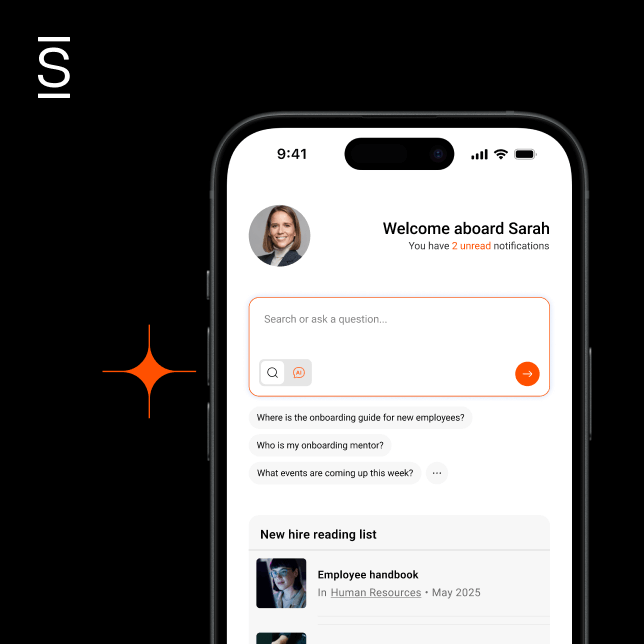
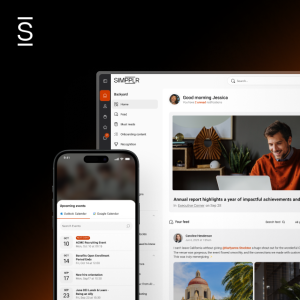
Simpplr’s AI-powered employee experience platform addresses these challenges by serving as a unifying layer across communications, knowledge, and AI assistance — not another point solution.
In Phase 1, Simpplr enables quick wins like self-service support and faster information access without introducing new tools or training burdens.
In Phase 2, the platform reduces fragmentation by integrating and unifying employee experience and AI access across existing systems, lowering integration tax and operational complexity.
In Phase 3, it supports role-aware, intelligent experiences that scale personalization while maintaining enterprise-grade security and governance.
Simpplr reduces ongoing IT dependency while preserving architectural flexibility through open APIs and native integrations. Organizations using Simpplr report significant improvements in productivity, engagement, and satisfaction scores.
For IT leaders, the question is whether to continue orchestrating AI across fragmented systems or execute an integrated digital employee experience strategy that compounds value over time.
Ready to find out how Simpplr supports IT’s digital transformation? Request a demo today.
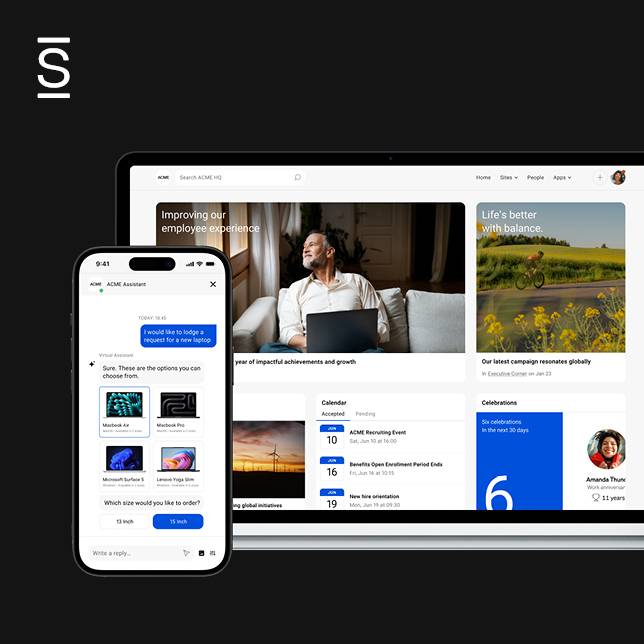
Watch a 5-minute demo
See how the Simpplr employee experience platform connects, engages and empowers your workforce.
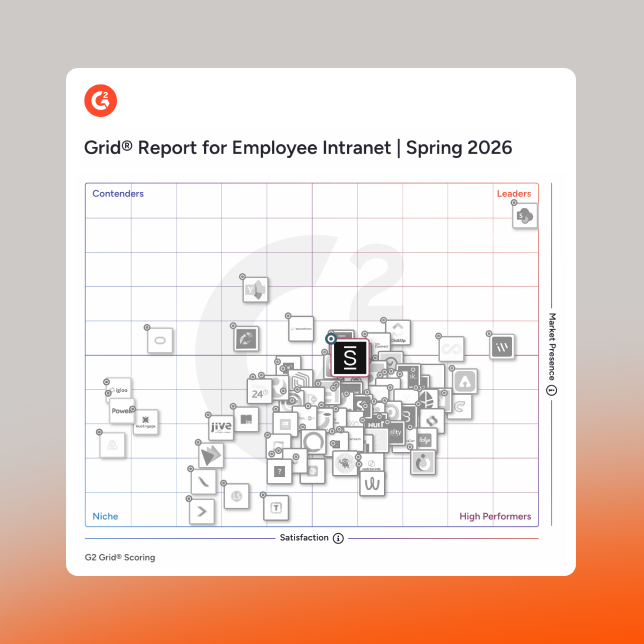
- #1 Leader in the Gartner Magic Quadrant™
- 90%+ Employee adoption rate