


An employee handbook is a formal document that outlines an organization’s policies, expectations, and values for its workforce.
It serves as the primary reference point employees turn to for questions about how the company operates — from time-off policies to workplace conduct standards. More than a rulebook, a well-crafted handbook communicates who the company is and how it expects people to work together.
Handbooks have also changed significantly in form. The handbook that worked for a fully in-office team in 2015 likely needs a significant rethink. Remote and hybrid workforces, flexible scheduling, AI tool usage, and more diverse, distributed teams have all introduced policy territory that older handbooks simply don’t cover.
Modern handbooks also look different structurally. The shift from static printed PDFs to digital, searchable documents that update in real time matters as much for compliance as it does for usability — employees can only follow policies they can find.
What’s the difference between an employee handbook and a policy manual?
Employee handbooks and policy manuals often get conflated, but they serve different purposes. A policy manual is an internal operations document — detailed, procedural, and written primarily for HR and management to administer consistently. An employee handbook is written for employees. It’s accessible, conversational, and designed to be understood without an HR background. When a handbook reads like a legal manual, employees stop reading — and a handbook nobody reads doesn’t protect anyone.
Why do companies need a staff handbook?
A staff handbook gives employees a clear, consistent reference for how the company works. It defines what’s expected, what support is available, and how issues are handled, thus reducing confusion, ensuring fairness, and aligning everyone with the organization’s goals and standards.
A well-built handbook serves three distinct purposes.
Legal protection through an employee handbook
A handbook is one of the most practical legal safeguards for an organization. It communicates the terms of employment where applicable, documents the company’s stance on harassment and discrimination, and creates a record that policies were communicated to employees.
Better onboarding experiences
New employees arrive with a lot of questions and sometimes not enough context. A handbook answers the most common ones before they become friction points — how time off works, what the review process looks like, what’s expected in terms of communication and conduct. That clarity accelerates time-to-productivity and reduces the burden on managers who otherwise field the same questions across every new hire cohort.
An employee handbook that communicates company culture
This is where most handbooks miss the biggest opportunity. Organizations treat the handbook as a legal exercise and forget to use it as a cultural one. The policies an organization chooses to formalize — and the tone in which they’re written — communicate what the company values. A handbook that only covers what employees can’t do tells a different story than one that also articulates how people are expected to support each other, grow, and contribute.

What key sections should an employee handbook include?
An employee handbook contains various sections like company overview/mission, employment status & legal notices, code of conduct/ethics, compensation & benefits (payroll, leave), attendance, EEO/anti-harassment & safety/security, IT/acceptable use & privacy, performance/discipline & complaints, remote work/travel/expenses, drug-free & dress code, and an acknowledgment form.
While every organization will tailor content to its size, industry, and culture, there’s a core set of sections that every handbook should cover — both for legal defensibility and employee clarity.
Essential legal sections
Company policies form the nonnegotiable baseline of any handbook and should be reviewed by employment counsel before publishing or updating. Legal requirements vary by jurisdiction, so treat this list as a starting point rather than a complete inventory.
The legal baseline every handbook needs:
- At-will employment statement (where applicable)
- Equal employment opportunity (EEO) policy
- Anti-harassment and anti-discrimination policies
- Family and Medical Leave Act (FMLA) notice
- Workers’ compensation rights
- FLSA employee classification (exempt vs. nonexempt)
What to keep in mind when building this section:
- Federal requirements: State and local laws frequently go further and vary significantly by jurisdiction
- Remote, hybrid, and in-office teams: Depending on where employees are physically located they may be subjected to different guidelines
- Global teams: Employment law varies dramatically across countries and often requires jurisdiction-specific addenda or separate documentation entirely
- Optional but strongly recommended: Social media policies, AI and technology use guidelines, and bring-your-own-device (BYOD) policies are increasingly expected, especially for distributed workforces
Employment policies and procedures
Beyond legal requirements, the handbook needs to cover how work operates day to day. This includes attendance and work hours, remote and hybrid work expectations, the performance review process, and disciplinary procedures. These sections set the baseline for consistent, fair management across the organization. They also give managers something concrete to point to when expectations aren’t being met.
Compensation and benefits overview
This section should cover pay schedules, employee classification, benefits eligibility and enrollment windows, and leave policies including PTO, sick leave, and company holidays. It doesn’t need to replicate the full benefits guide. It should tell employees what they need to know and where to find the rest.
Code of conduct and workplace expectations
This section covers professional behavior standards, conflict of interest policies, technology and social media use, and confidentiality obligations. A strong code of conduct doesn’t just list what’s prohibited. It articulates the standard of behavior the organization holds itself to collectively and that distinction changes how employees receive it.
Company culture and values
This is the section most handbooks either skip entirely or reduce to a mission statement copied from the website. Done well, it gives employees real context about how the organization expects people to show up — not just what the company does, but what it values.
What a strong employee handbook culture section covers:
- Mission and values in context: Mission, vision, and core values with enough explanation that they mean something beyond a tagline
- DEI in practice: Commitments and what they look like day to day, not just in policy language
- How teams work together:Collaboration and communication norms, what responsiveness looks like, and how conflict is handled
- Growth and development: The organization’s philosophy on career progression and learning
- Recognition and feedback: How the company acknowledges good work and delivers honest input through robust feedback loops
- Internal resources: Employee assistance programs, mental health benefits, ERGs, and internal communities

7 steps to writing an employee handbook
Writing a handbook from scratch — or overhauling one that’s not up-to-date — is manageable when you break it into clear stages. Each step below builds on the one before it.
1. Audit existing employee handbook policies
Before writing anything new, take stock of existing policies, documents, and procedures. Identify what’s current, what’s outdated, and what’s missing entirely. This audit becomes the foundation for everything that follows.
2. Identify your jurisdictional requirements
Map out where your employees are located — by state, country, or work arrangement — and confirm what legal requirements apply in each. Do this early, before content is drafted. A last-minute legal check at the end is a reliable way to trigger rewrites.
3. Align stakeholders before drafting the employee handbook
Bring in legal department, HR leadership like your CHRO, and other senior leadership before a single word is written. Agreeing on scope, tone, and nonnegotiables upfront prevents significant rewrites later.
4. Gather employee input on culture sections
For sections covering values, collaboration norms, and workplace culture, employee input adds authenticity. Surveys, focus groups, or simply talking to team leads can highlight tone, language, and priorities that resonate with the workforce.
5. Speak directly to employees
Craft your handbook in plain language rather than legalese. Every employee should be able to understand the handbook regardless of their familiarity with HR or legal terminology.
A financial services firm and a creative agency may use different examples and vocabulary, but both should explain policies simply and avoid jargon. Aim for clarity that reflects your culture, not a one-size-fits-all template.
6. Conduct a formal legal review
Once a draft is complete, legal should review every policy. Pay particular attention to sections covering leave, discrimination, termination, and classification. This is non-negotiable before distribution.
These sections directly implicate statutory rights and high‑risk areas (e.g., discrimination, leave entitlements, termination standards, and worker classification), an attorney must verify compliance to avoid unenforceable provisions and costly claims. Skipping legal review exposes the company to regulatory penalties, litigation, and reputational harm that far outweigh the time and cost of review.
7. Build in a feedback loop before finalizing the employee handbook
Before the handbook goes live, pilot it with a small group — new hires, managers, or a cross-functional team. Their questions and points of confusion are exactly what the final document needs to address. If something trips people up in review, it will trip up every new employee after launch.
The goal isn’t a perfect handbook on the first pass. It’s a document that’s accurate, accessible, and defensible — and one you’re committed to keeping that way.
Mistakes to avoid when writing an employee handbook
Even well-resourced handbook projects can produce a document that creates more problems than it solves. The mistakes below are worth checking explicitly, when building a handbook for the first time and when reviewing an existing one for updates.
Check for these common handbook mistakes:
- Policies too broad or too rigid: Overly broad policies are hard to enforce consistently. Overly rigid ones leave managers no room for judgment. Both create problems when a situation doesn’t fit neatly into what’s written.
- Treating it as a one-time project: A handbook that isn’t regularly updated stops being useful and starts being a liability. Outdated policies that contradict current law or practice can undermine the legal protection the document is supposed to provide.
- Burying critical policies: Dense paragraphs that employees won’t read are as good as no policy at all. If the information is important, it needs to be accessible.
- Ignoring location-based differences: Remote and out-of-state employees may have different legal protections than in-office staff. A handbook written only for headquarters creates gaps that surface when facing a complaint, investigation, or lawsuit.
- Skipping the acknowledgment process: If you can’t prove an employee received the handbook, it offers limited legal protection. Digital acknowledgment through your intranet or HRIS reduces the risk of facing legal challenges.
Once the handbook is written and these pitfalls are avoided, the work shifts to keeping it current.
When should an employee handbook be updated?
A handbook is not a set-it-and-forget-it document. HR leaders should conduct a full review at least once a year and add it into the annual HR calendar alongside other recurring milestones helps ensure it doesn’t get pushed aside.
Annual reviews catch gradual drift. But some changes can’t wait. Certain events warrant immediate attention regardless of where you are in the review cycle.
Update the employee handbook right away when:
- Laws change: New federal, state, or local legislation affecting employment, leave, classification, or workplace conduct requires a prompt policy review
- The organization changes: Restructuring, merger and acquisitions, or a shift to hybrid or remote work can introduce policy territory the existing handbook doesn’t cover
- Internal policies change: Shifts in management, evaluation, or compensation require updates so the handbook matches practice and avoids confusion and legal risk
Letting updates accumulate is one of the more common handbook mistakes. The longer the gap between what the handbook says and how work operates, the less useful the document becomes.
Communicating handbook changes to employees
Updating the document is only half the job. Employees need to know what changed and why, particularly when updates affect policies they interact with regularly. Swap out the document quietly and most employees will never know the change happened.
A brief announcement through internal communications channels, paired with a summary of what was updated, goes a long way.
For significant changes, ask employees to acknowledge the updated handbook. It creates a clear record that the new policies were received and understood.
How to distribute and enforce an employee handbook effectively
Writing a great handbook means little if employees can’t find it when they need it. Most organizations distribute their handbook the same way: a PDF attached to an onboarding email or a printed copy handed over on day 1.
Both approaches share the same problem. They treat the handbook as a one-time delivery rather than an ongoing resource. Employees rarely save the file somewhere useful. When a policy question comes up six months into the job, most won’t remember where to look.
Enforcement has the same problem. A handbook protects the organization only if policies are applied consistently. Consistent application requires that managers know what the handbook says. Without accessible, up-to-date documentation, policy interpretation becomes inconsistent across teams — and inconsistency is where disputes start.
How an intranet simplifies employee handbook distribution
A static file sent once is a very different from a living resource employees can access at any point in their tenure. An intranet makes the handbook searchable, ensures it’s kept current, and puts it in the same environment employees already use every day. Policy updates can be pushed as announcements. Acknowledgments can be collected and stored automatically. Employees can find what they need without submitting an HR ticket.
Employees use a handbook that lives where they already work. One that requires a separate login or a folder hunt mostly doesn’t.
The handbook is only as good as what employees do with it
Getting the content right is the hard part. Making it accessible is what determines whether any of that work pays off. An employee handbook that’s accurate, well-structured, and regularly maintained gives HR leaders something to stand behind. The organizations that treat it as a living document rather than a compliance checkbox are the ones that get the most value from it.
How Simpplr supports employee handbooks
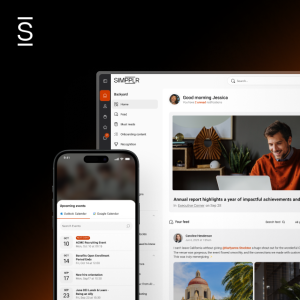
Simpplr brings handbook content, policy updates, and employee communications into one platform. All the resource employees need is in the same place they already go for company news, updates, and recognition.
What that looks like in practice:
- Always-current handbook access: Employees find the latest version through enterprise search rather than an outdated copy buried in a folder
- Targeted policy communications: The right employees get push updates at the right time through personalized announcements rather than organization-wide emails that get ignored
- Instant answers via EX Agent: Employees get answers to routine policy questions without submitting an HR ticket, freeing HR teams to focus on work that requires their expertise
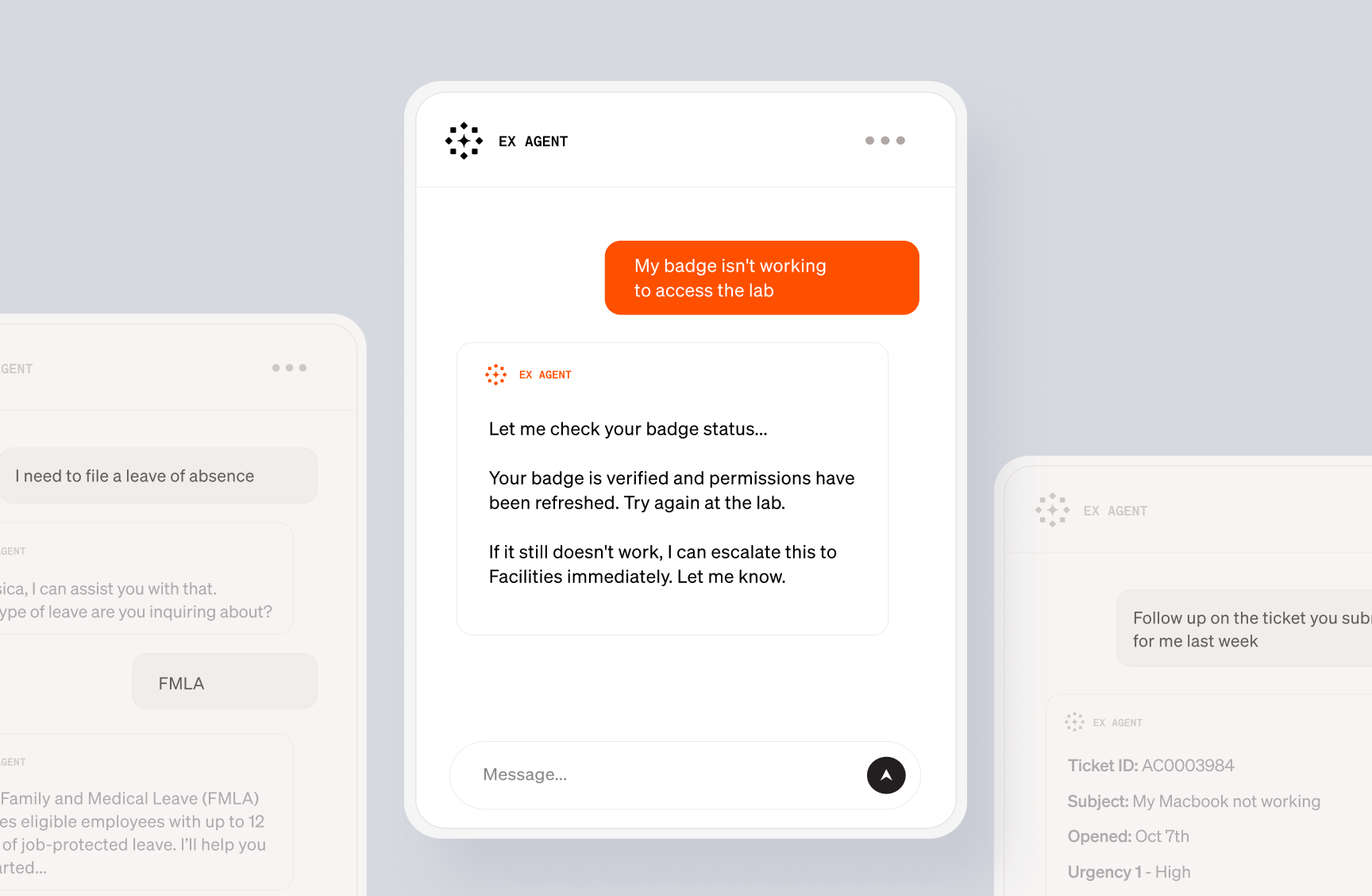
Together, these capabilities keep employees informed and self-sufficient while enabling HR to drive consistency, compliance, and engagement from a single source of truth.
Ready to see how Simpplr can help your organization get more out of its employee handbook? Book a demo to see the platform in action.
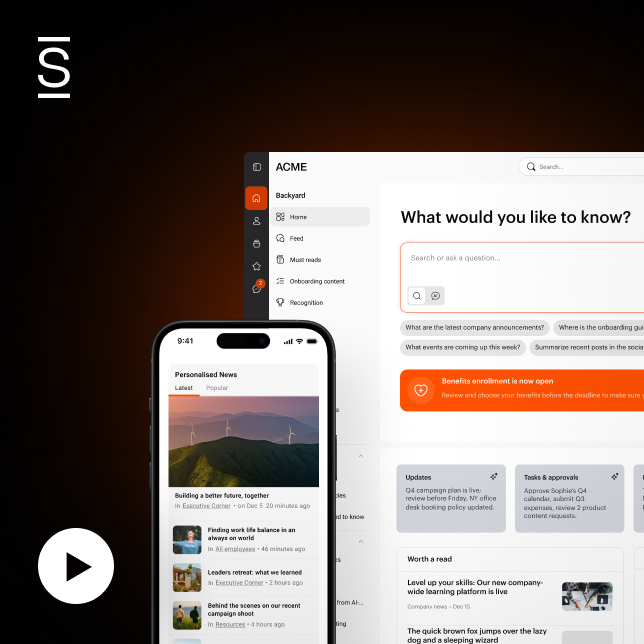
Watch a 5-minute demo
See how the Simpplr employee experience platform connects, engages and empowers your workforce.
- #1 Leader in the Gartner Magic Quadrant™
- 90%+ Employee adoption rate
About the author

Sanjoli Arora
Sanjoli Arora is an SEO & Website Analyst at Simpplr, where she works on keeping the website healthy, search-optimized, and conversion-ready. With prior experience leading content and SEO strategy at B2B SaaS startups, she blends creativity with data to drive organic growth. Based in Gurgaon, she’s also the voice behind Conscious Charcha, a digital publication navigating sustainable living. When she’s not optimizing pages, you’ll find her chasing great coffee spots or grooving to Bollywood music. Connect with Sanjoli on LinkedIn.