



Internal communications professionals are happy in their jobs. They feel valued and secure. Most would choose this career again. But the outlook for the IC function in 2026 is more complicated than those facts suggest.

The good news and growing pressures for IC professionals in 2026
The good news and growing pressures for IC professionals in 2026
Table of contents
- 1 IC professionals are committed and satisfied in their roles
- 2 The work isn’t frustrating, but the walls around it are
- 3 A widening gap and a growing blind spot
- 4 The added pressures IC teams face in 2026
- 5 The conversation IC teams need to have next
- 6 How Simpplr helps IC teams scale without burning out
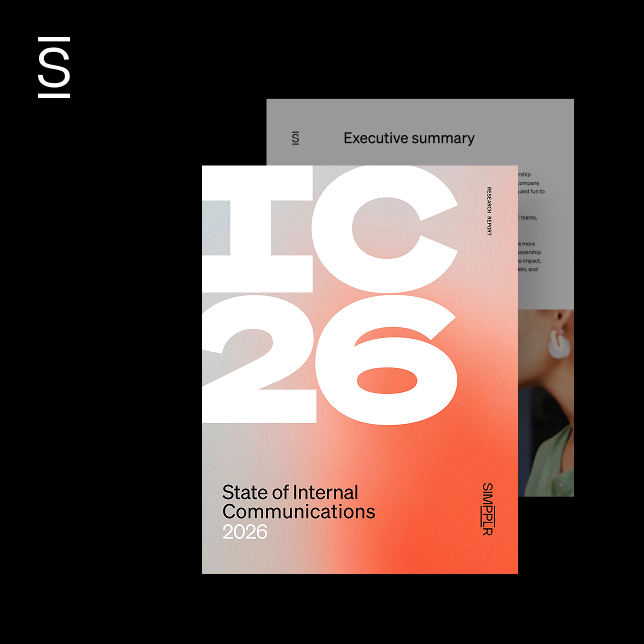
The data from Simpplr’s 2026 State of Internal Communications report backs that up: IC is broadly effective, executives are satisfied, and career commitment is strong. But underneath those top-line numbers is a more nuanced picture where rising expectations, flat resources, and structural friction are creating more and more pressure, which IC teams might already be feeling.
The conditions around the work — staffing, scope, and structural support — aren’t keeping pace with what’s being asked of IC teams. The risk of burnout is building, which poses dangers for IC professionals and organizations alike if not addressed.
IC professionals are committed and satisfied in their roles
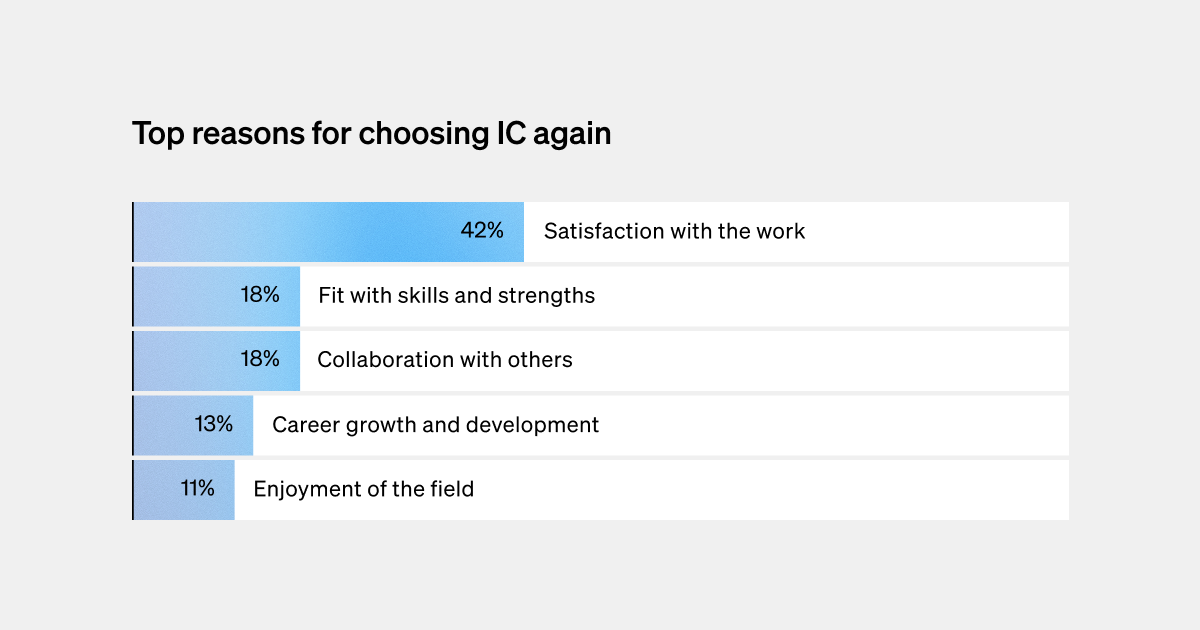
The hard numbers paint a positive picture of the feelings of more than 450 IC professionals in North America going into 2026. They’re happy in their roles: 81% would choose IC again, and 38% said “definitively.” The most common reasons for choosing a role in IC again indicate that IC practitioners have a strong sense of purpose, feel a good fit with the work, and see solid career growth potential.
Top three reasons IC respondents would choose their roles again:
- Satisfaction with the work: 42%
- Fits with skills and strengths: 18%
- Collaboration with others: 18%
IC practitioners feel secure in their roles as well. More than 7 in 10 respondents (71%) rated their level of job security as excellent or above average, and only 2% as poor.
92% of executives are satisfied with the work their IC teams do as well, and 61% call IC a critical strategic driver. Those are compelling statistics that attest to how far IC’s credibility has come and its strong position today.
But the challenge IC professionals face in 2026 isn’t whether their work matters — to them or to their organizations. It’s whether the conditions in which they work will keep pace with what’s being asked of them.
And those conditions are complicating the rosy picture we just painted.

The work isn’t frustrating, but the walls around it are
IC professionals are clear on what inspires them at work. Helping people feel informed and connected tops the list (35%), followed by change and crisis management (22%), and influencing culture and engagement (18%).
Intriguingly, creativity and storytelling ranked lowest on the list. While IC professionals are creative crafters of stories, the sense of purpose they feel at work seems paramount.
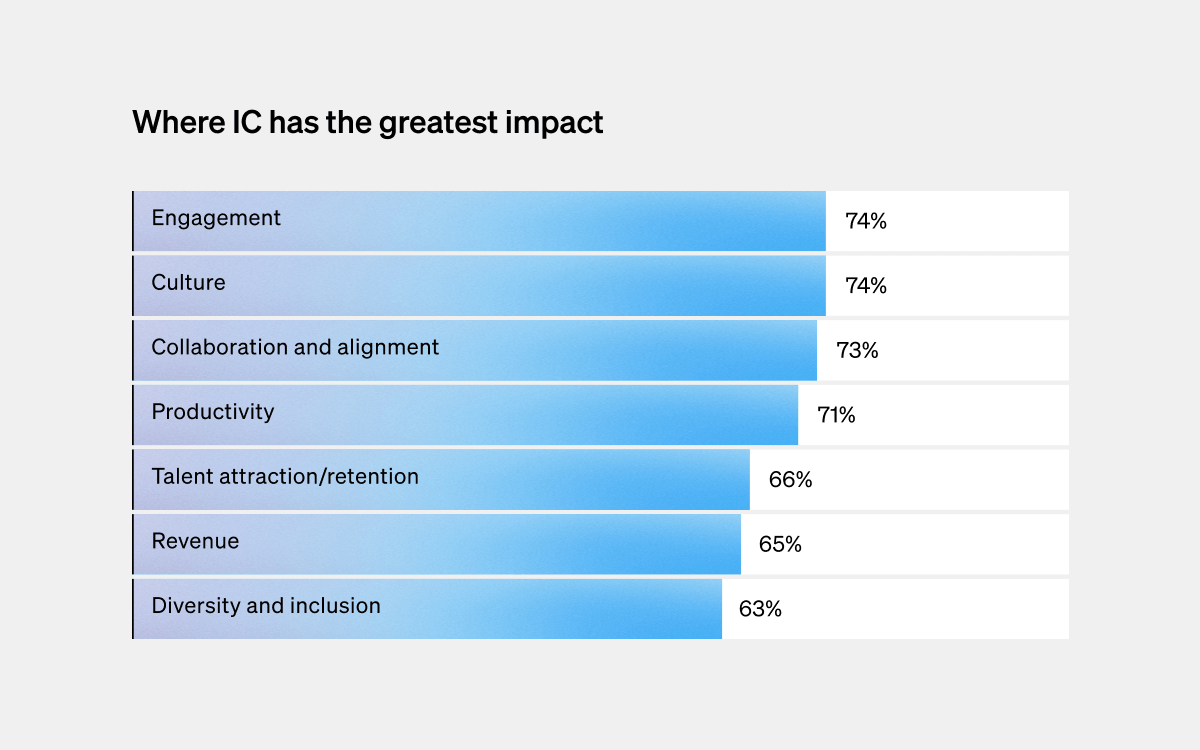
Respondents felt strongly that IC impacts all seven metrics surveyed:
- Employee engagement: 74%
- Culture: 74%
- Collaboration and alignment across departments: 73%
- Employee productivity: 71%
- Ability to attract and retain talent: 66%
- Business revenue: 65%
- Diversity and inclusion: 63%
Despite the positivity and sense of purpose IC professionals feel about their day-to-day work, there are real pain points in the data too.
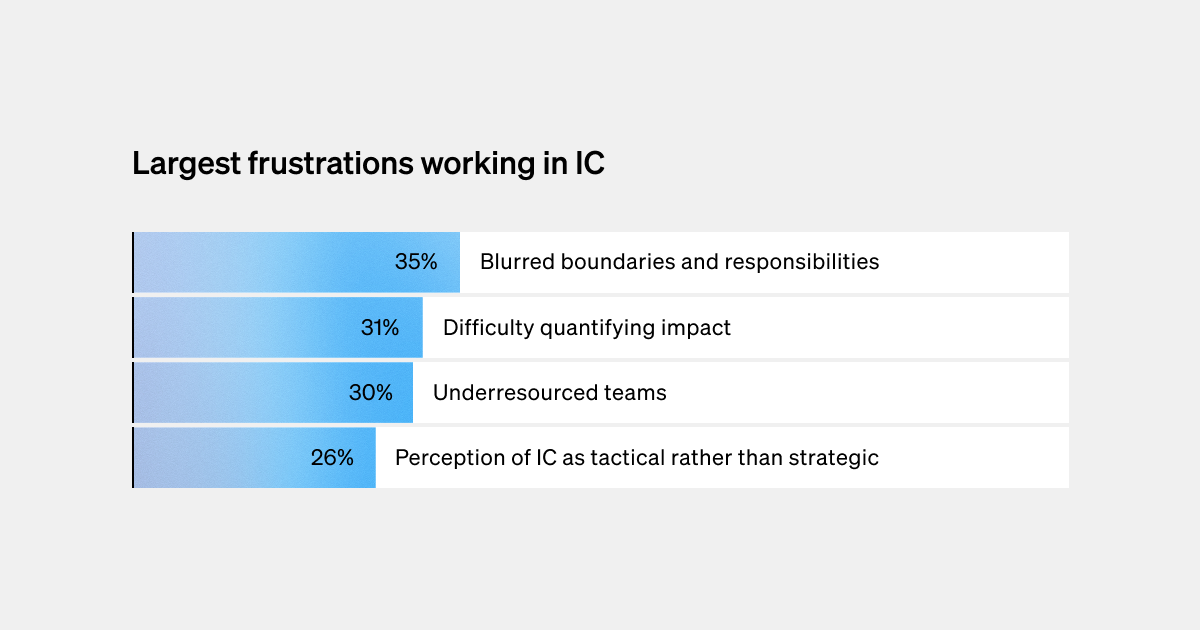
The biggest challenge, noted by 35% of respondents, is blurred boundaries with HR, PR, and Marketing. This is a constant struggle, as experienced IC professionals well know, but it’s no less acute in 2026.
The overlap of responsibilities between multiple functions is partly an advantage. It reflects IC’s cross-functional relevance and value as it’s pulled into projects as a trusted partner. But it also means that IC is prone to absorbing responsibilities without the corresponding authority or resources needed to do the job properly.
A related tension fueling this frustration is the number of executives who still view their IC function as primarily supportive or administrative rather than as a strategic partner. That stings for IC teams who don’t feel their larger-level contributions and expertise are noticed, but it’s also potentially leaving those IC teams underresourced. That’s a business risk that organizations should take seriously.
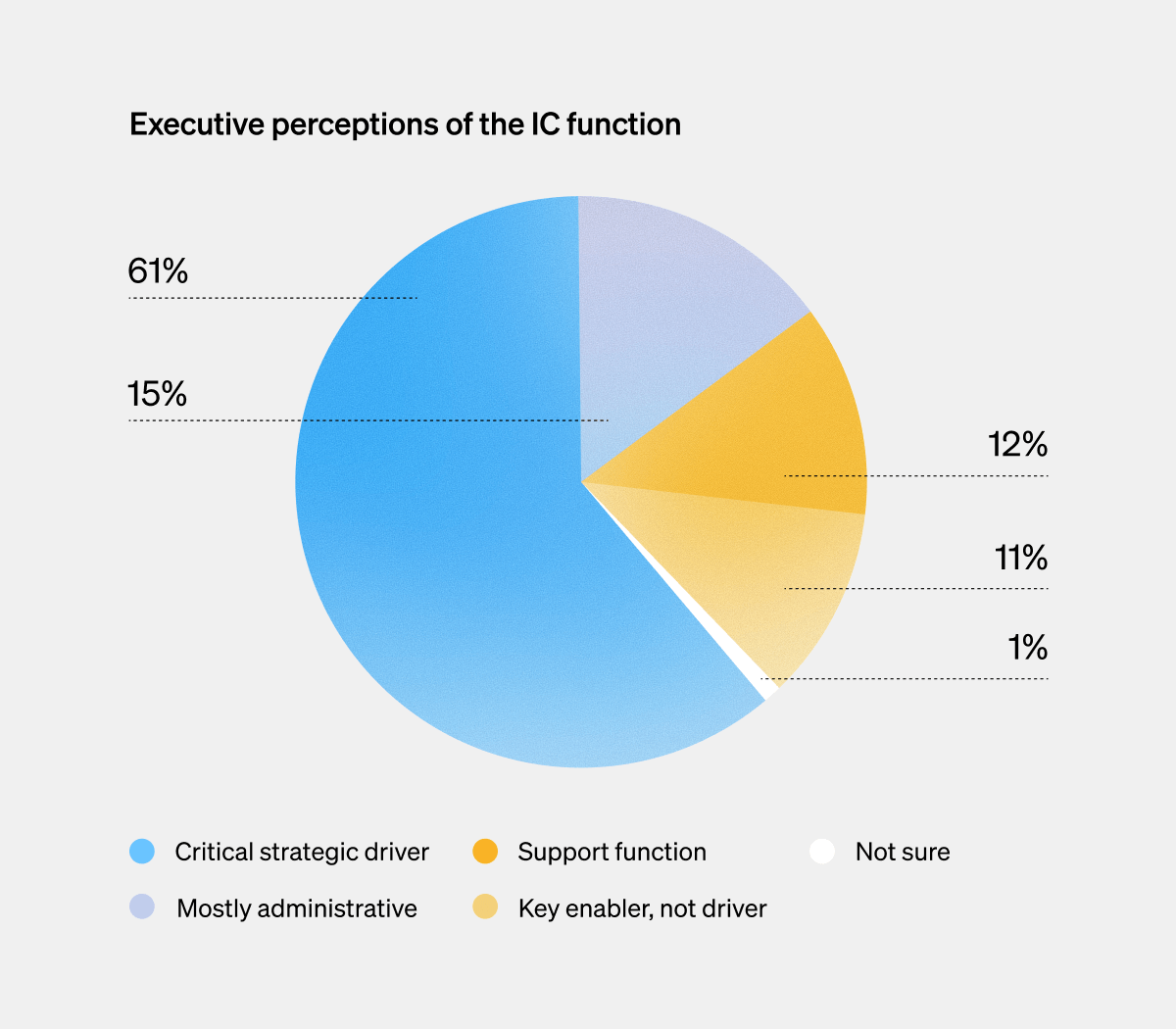
The feeling of purpose and connection keeps IC professionals in the field. The structural friction of those blurred boundaries, increasing responsibilities, and still-lagging recognition of their critical role is what wears them down. Anyone designing IC roles, setting expectations, or creating budgets should keep that important distinction in mind.

A widening gap and a growing blind spot
The report data tells us that leaders and IC professionals want the same things. When asked where their IC teams could improve, executives said they want to see clearer, more consistent communication, two-way feedback, data-driven insights, and faster execution.
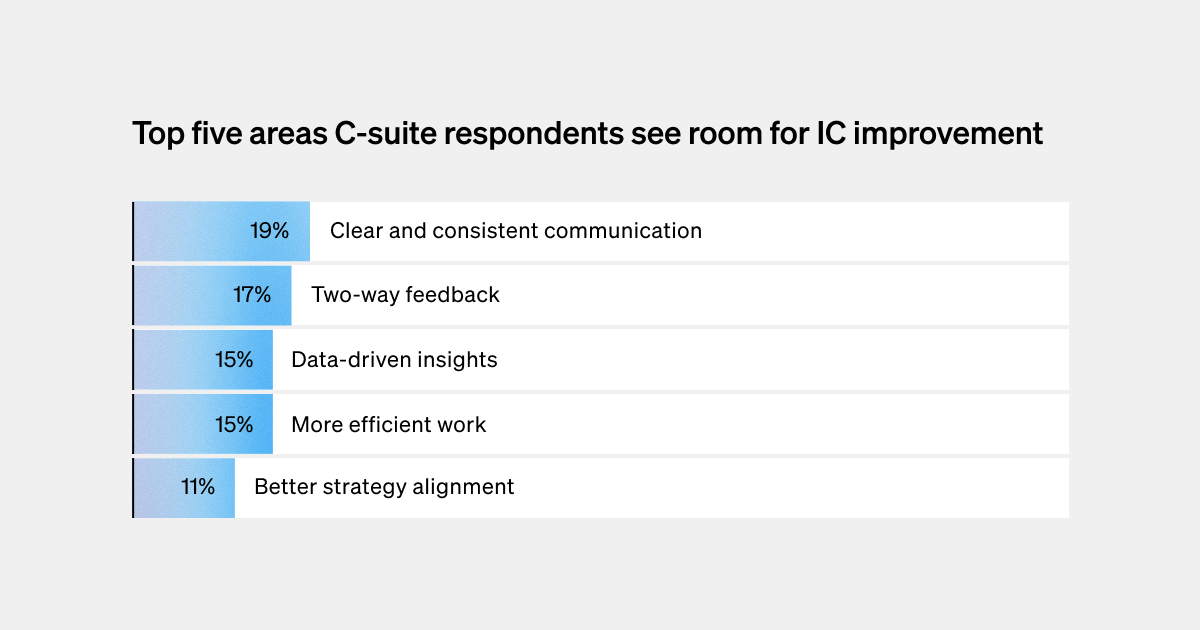
These are the same things IC professionals also want to prioritize. So why are both sides still far apart on solutions for these long-standing issues?
What leaders say, and what budgets tell us
There’s more tension than explanation in the data. For example, 96% of surveyed executives said they support increased investment in IC. But respondents who said their organization intended to add headcount in 2026 dropped to just 27%, down from 36% in 2025.
That seemingly expansive and supportive executive mood is not borne out in actual budgets. Instead, it’s adding to IC’s struggles: 30% of respondents said their largest frustration is their underresourced team, which is expected to support bigger and broader initiatives without the capacity to do so.
The space between tech needs and actual spending
Perhaps that budget increase is going to tech instead of headcount, which wouldn’t be unprecedented as AI use and investment rises. But even there, it’s not going where IC needs it most.
While 89% of executives said IC should be measured in business metrics, 31% of IC respondents said it’s difficult to quantify impact. Nearly a third (27%) said they lack the right tools or tech to measure these numbers.
This blind spot — executives demanding metrics that IC teams aren’t enabled to access — can be addressed with technology and the right level of investment. But if it’s important to both sides, why do so many IC teams still lack access to those critical analytics and tools?
The added pressures IC teams face in 2026
Flat headcount plus expanding scope plus rising expectations isn’t a new formula for experienced IC teams. We’ve been here before during every downturn when told to do more with less. But the pressures this time around are intensifying, and AI is the accelerant. IC teams aren’t tasked just with communicating about AI, including the cultural and change management implications of enterprise AI use. Among the respondents, 40% said they are heavily or solely involved in creating the AI strategy, and 40% in creating AI adoption workstreams. That’s exciting and valuable work, but it’s also a significant expansion of scope.
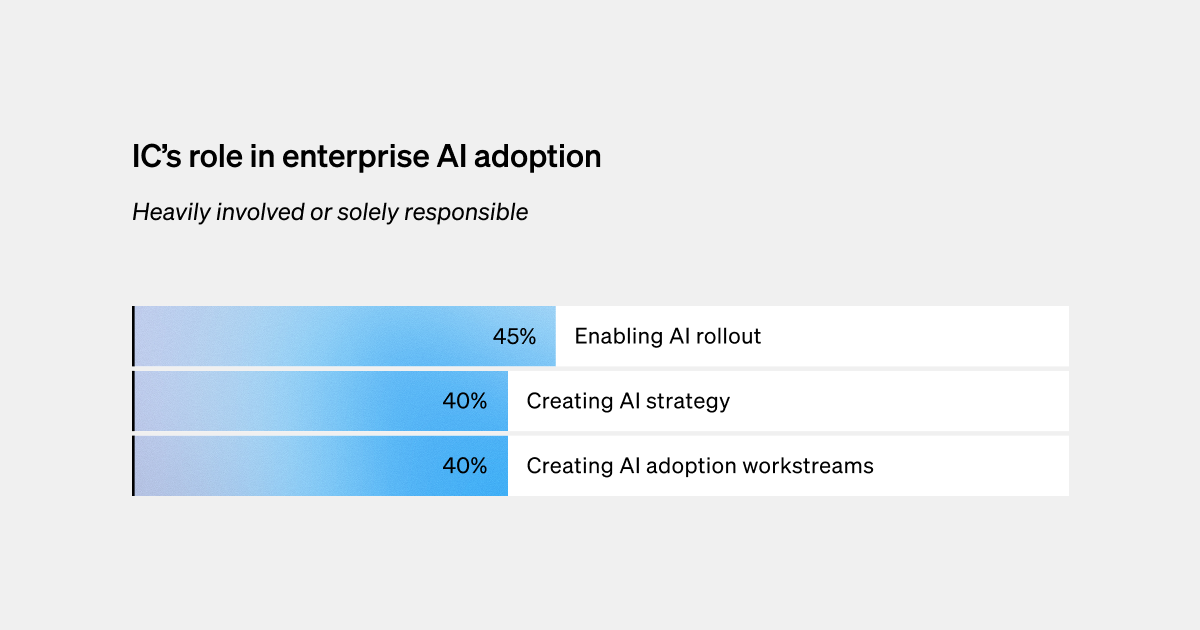
The increase in scope, combined with little to no added resources, stretches IC teams thin:
- Only 59% of respondents rated work-life balance as excellent or above average, the lowest ranked metric out of eight measured in this question
- Only 46% said their team is definitely adequately staffed, and 64% said their headcount stayed the same over the past year
- Almost half (49%) of respondents expecting headcount decreases this year cited a decreasing emphasis on a dedicated IC function as the cause
In sum, workload pressure is increasing, but resources aren’t. IC’s value as a strategic partner means it’s in demand across the organization, which is good for the function’s credibility but bad for its capacity. Work-life balance is an issue even in the top-performing IC functions, which ranked lowest among those who rated their function highly.
The slower momentum is partly a sign of maturity, but it also reflects a function that’s absorbing more responsibilities without the structural support to sustain it.
The risk here isn’t just that IC professionals end up working too much overtime, although that may be a real issue. It’s a business risk as well as a personal one because, as those professionals burn out, experienced practitioners leave the organization and sometimes even the field. Organizations lose the institutional knowledge that made the function effective in the first place. And everyone is left worse off.

The conversation IC teams need to have next
The data in the 2026 report validates what you already know as an IC professional: The work matters to both you and your organization, leadership recognizes that value, and it’s worth sticking with the career if it’s a good fit. But the structural pressures facing IC teams are real, and they’re not self-correcting. Waiting patiently for headcount to catch up with scope isn’t a strategy for success.
What can you do? Use the executive data to your advantage. When leadership names the same problems you do, that’s your opening for a structural conversation — about metric ownership, role boundaries, and what increased investment looks like in practice.
How Simpplr helps IC teams scale without burning out
The challenge isn’t proving IC’s value anymore — it’s sustaining and scaling that value as expectations rise and resources stay flat. That’s where the right platform makes a measurable difference.
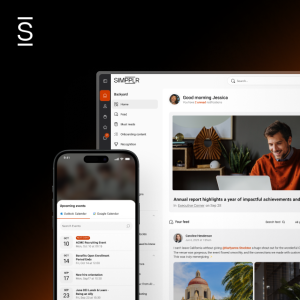
Simpplr is designed to address the pressures highlighted in this year’s report:
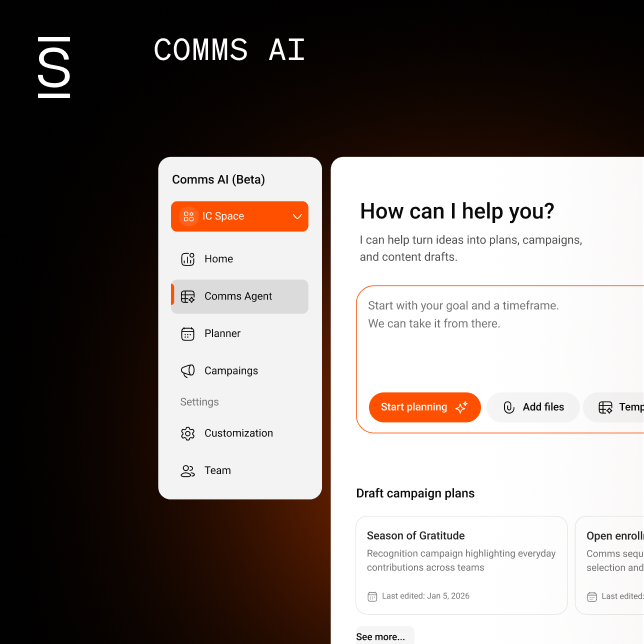
- Less time executing, more time on strategy. Plan, create, launch, and optimize campaigns in one place. Comms AI handles time-consuming tasks like content creation, approvals, audience targeting, and scheduling.
- Eliminate cross-functional friction. Bring IC, HR, and leadership into a shared workspace where roles, approvals, and messaging are aligned. This reduces confusion and duplication that comes with blurred boundaries.
- Turn IC into a measurable business driver. Built-in analytics connect communications to engagement, alignment, and business outcomes. Get the data you need to meet executive expectations and prove impact with metrics.
In a year where IC teams are being asked to take on more than ever, success depends on the right foundation. Simpplr gives IC teams the structure, visibility, and efficiency they need to thrive under today’s IC operating conditions.
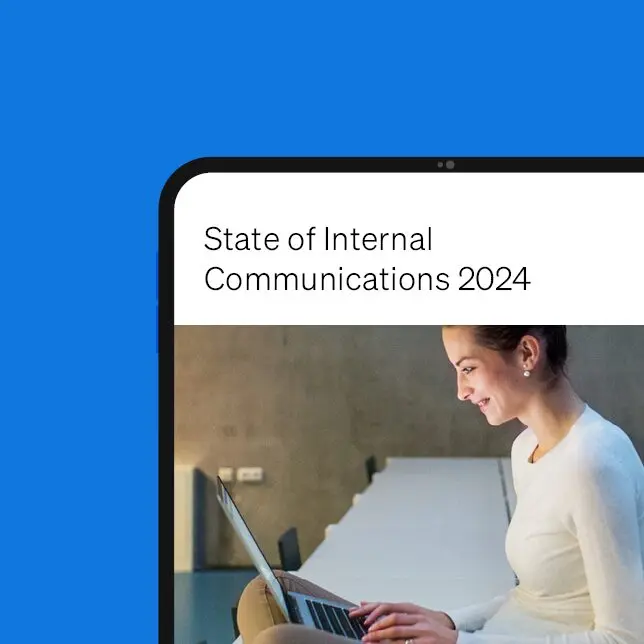
For the complete research findings, download a complimentary copy of the 2026 State of Internal Communications report.
Ready to find out how Simpplr can help you improve your employee experience? Request a demo today.
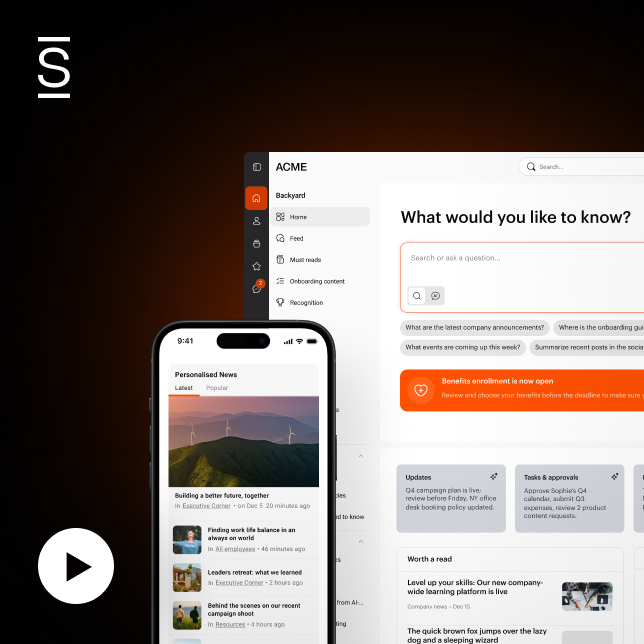
Watch a 5-minute demo
See how the Simpplr employee experience platform connects, engages and empowers your workforce.
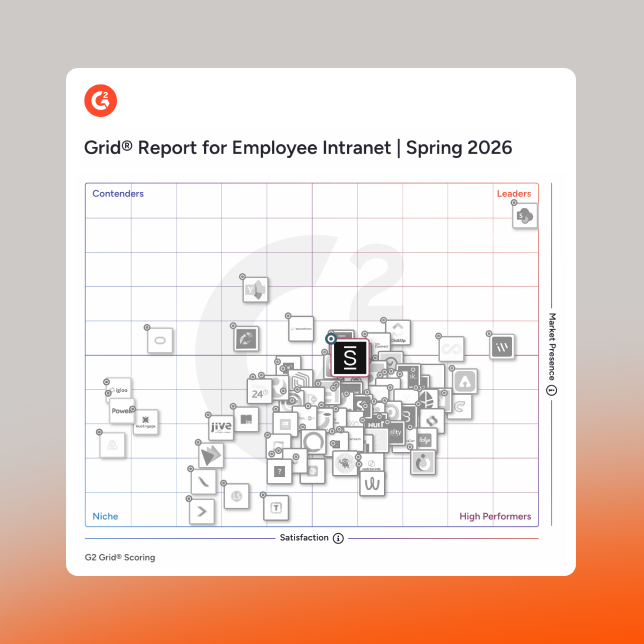
- #1 Leader in the Gartner Magic Quadrant™
- 90%+ Employee adoption rate