




The talent you can’t afford to lose is already looking at the door. They’re watching AI reshape their industry and wondering if your organization can keep up. If your retention strategy hasn’t evolved, you’re already behind.
How AI will transform your talent retention strategy
How AI will transform your talent retention strategy
Professionals with strong AI credentials are commanding eye-watering offers, and “hot skills” have always been where some of our highest retention risk resides. But what’s different now is that AI isn’t just creating competition for specialized talent. It’s fundamentally changing what drives retention for your entire workforce.
In the first part of this two-blog series, we explored the five core drivers of retention: career development, holistic well-being, quality managers, flexible work arrangements, and competitive compensation. Now let’s explore how AI is transforming each of these fundamentals and what that means for your talent strategy.

AI’s opportunity and disruption
The World Economic Forum (WEF) Future of Jobs Report 2025 predicts that by 2030 — not that far away! — AI and other technologies will create 170 million new roles globally, while causing 92 million existing jobs to become redundant.
The impact of AI will result in a net increase of 78 million jobs or roughly a 78% increase in job creation over job destruction.
Of course, these aren’t direct exchanges happening in the same locations and impacting the same jobs. The real challenge is about the gap between where jobs vanish and where they are created, and between the skills our current workforce possesses and the skills that new roles require.
The shift in workforce skills and talent strategy
AI is rapidly reshaping how we think about talent strategy — from automating work to fundamentally altering job composition, skills, and processes. As AI takes over routine cognitive tasks, the debate has shifted to what skills our people need to build and adapt. Human-centric abilities like critical thinking, creativity, and emotional intelligence are rising in value as we learn to work effectively with AI tools. This is where we’re seeing terms like “superworker” and “superagency” emerge.
Leadership awareness gaps in the age of AI
McKinsey reports that three times more employees are already using generative AI for their work than leaders imagine. This gap underscores the need to ensure that we upskill leaders in this AI-enabled world at the same time we reskill our workforce. Yes, it is a little like riding a unicycle while juggling and balancing a bucket of water on your head without spilling any. But we have to do more in parallel. Thankfully, AI can help us with that too.
Responding to AI acceleration without panic
Despite all the hype, breathe a little easier — McKinsey also reports that while companies are investing in AI, only 1% believe their investment has reached maturity. So we have time, but not time to stand around. Innovation cycles are accelerating.
I recall when I first moved to the Bay Area in the dot-com boom. Tech startups bragged about developing in “web years,” which were talked about in quarters, rather than 12 months. Fast forward, and this starts to feel slow.

How AI will transform talent retention strategies
The progress of AI in the workplace is already changing the way we work, and it will also reshape the drivers of employee retention. Instead of simply automating tasks, AI will become a powerful force that reshapes employee expectations and the strategies companies use to meet them.
I think there are four primary ways that the drivers of employee retention will continue to evolve as AI progresses. These center around personalized experiences, AI-augmented management, skills-based careers, and human-AI collaboration.
Personalized experiences will become paramount
In the past, employee retention strategies were often “one-size-fits-all,” with standard benefits packages, companywide programs, and limited personalization. Then we started talking about “flexible benefits” and more choice, and we’ve continued down the path of increasing personalization. AI will accelerate this progression by enabling a hyperpersonalized employee experience.
Consider personalized career coaching: AI analyzes an employee’s skills, aspirations, and performance to recommend specific training, mentorship pairings, and internal opportunities tailored to their unique goals. AI-driven systems could also monitor for signs of burnout, then offer personalized wellness resources or adjust workloads proactively.
Feeling seen and supported as an individual — with technology that adapts to you rather than forcing you to adapt to it — will become a top retention driver.
AI drives personalization at scale. The tech we use in our everyday lives has largely outstripped our general workplace tech experience. Arguably since 2007 — the year the iPhone was born — the tech in our pocket has shaped our expectations of intuitive user experience, one-stop-shopping (Amazon anyone?), and personalized experiences.
This means we need to embrace technologies that gather insights in real time and “learn” our users. We’re used to the recommendation engines in social applications, streaming services, and the like. Our workplace technology needs to serve up these more personalized experiences as well.
We’ve also probably become way too comfortable with accepting data-use terms and conditions, especially when it means an application “learns us.” By learning our preferences, these platforms deliver up increasingly relevant content and fulfill unmet needs we didn’t know we had. For most of us, our first exposure to machine learning and generative AI, whether we knew it or not, wasn’t in the workplace, but now it’s expected inside and outside work.
AI will augment people management
By this, I don’t mean a cyborg, although the science nerd in me is open to that eventuality! We know the role of the manager is already a critical retention driver, but what I mean by AI-augmented management is that AI will change how managers operate.
AI will continue to improve at automating many administrative and data-gathering tasks, freeing up managers to focus on what humans do better: empathy, coaching, and enabling performance.
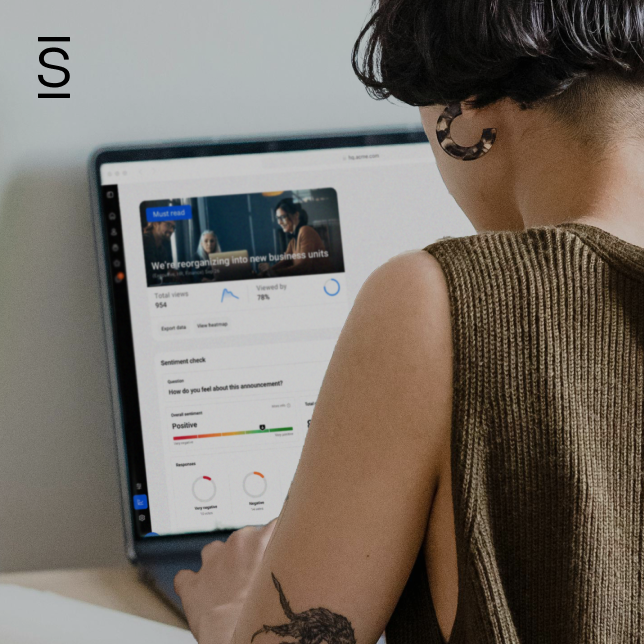
Imagine a manager supported to be an exceptional coach and mentor, further augmented by AI that provides real-time, data-driven insights into team sentiment, performance trends, and potential flight risks. These kinds of innovations allow managers to have more meaningful, proactive conversations, intervening before a small problem becomes a reason for someone to leave.
The manager’s ability to use these AI tools ethically and effectively will be a key skill. But it starts with enabling our managers with better insights and better training.
Career progression will shift from titles to skills
The concept of a fixed job description is already fading, but AI will accelerate its demise in many sectors. As AI automates routine tasks, employees will need to continuously upskill and reskill to remain relevant.
This shift turns career development into a core, ongoing activity rather than a periodic review a couple of times a year. AI-powered talent marketplaces will match employees with short-term projects and “gigs” across the company that align with their skills and interests.
An employee’s ability to constantly grow and evolve their role within the organization, driven by AI recommendations, will be a major reason to stay.
Career development is already a powerful driver of retention, but in the AI-era, its nature will fundamentally transform. In the past, career development was often about moving up a predefined hierarchy of job titles, such as analyst to senior analyst or manager to senior manager.
For some time now the ladder has been replaced by the lattice and in the AI era, this model of career progression will accelerate. Retention will increasingly depend on an employee’s ability to constantly learn and apply new skills, making them more valuable to the company and the broader job market.
Human-AI collaboration will define the best workplaces
For some, the progress of AI brings fear of job replacement. However, companies that manage this transition well will shift the focus from human vs. AI to human plus AI. At Simpplr we talk about our platform being where engagement meets productivity — striking the balance between enabling what makes each of us unique while leveraging AI for productivity, efficiency, support, and more. This approach will make human-AI collaboration our primary modus operandi.
An increasingly strong retention driver will be the opportunity to work with AI to solve complex, creative problems. The most attractive companies will be those that empower employees with AI tools, allowing them to offload tedious tasks and focus on work that requires uniquely human skills like creativity, emotional intelligence, and critical thinking. In many sectors, companies will retain their employees not by the promise of a stable, static job but by the excitement of a dynamic role where they can use AI to do more meaningful and impactful work.
The AI hype is at fever pitch, but we tend to overestimate the present and underestimate the future.
For example, when I was a kid, flying cars were apparently not too far off, and I should have been flying one for decades by now. Even now, they are still only in the experimental stage. Autonomous cars or fully electric cars hadn’t been imagined in my childhood projections, yet here we are.
The same goes for AI in the workplace. History has shown that the future comes faster than you think and can surprise you with things we’ve not imagined yet. The cycles are shortening, so the very real gains of human-plus-AI aren’t that far off. We just need to sort through the hype and place our confidence in companies that are truly innovating and delivering in a direction aligned to what we care about in our organizations.
The path forward for employee experience professionals
We can see the early signs of how AI is changing so many aspects of the workplace. If we believe all the hype, these changes are just around the corner. I believe we have longer to adjust but whatever the time horizon, the mantra has to be: Embrace change, embrace AI technology, keep the human experience front and center, and we won’t go too far wrong.
Embracing AI while prioritizing human experience
It’s called artificial intelligence for a reason. In my view, it will never replace real human intelligence. That said, it is no substitute for real stupidity, so learning and skill building aren’t relics of the past, despite some overhyped predictions. Knowledge will still matter — not simply the ability to ask a good prompt and gain (seemingly) the “right” answer. More importantly, it’s knowledge to interrogate and evaluate what AI is providing in a rounded way.
What does it mean when we say we need to prioritize the human experience? For me, it centers on how we embrace the best of what AI can help us do better, faster, more efficiently, while aligning to our higher purpose as organizations (and societies, in the wider context). Ethics, trust, and transparency are rightly being talked about more. I don’t think we’re heading inevitably toward a dystopian future where the robots take over.
Provided we keep debating these bigger issues — alongside the practical ones, such as user experience, upskilling and reskilling, governance, and policies — we have the opportunity to genuinely harness the best of AI while prioritizing the human experience.
People will also see and remember how their organizations reacted to AI advances. The best talent will continue to have more choices. They will vote with their feet if they see irresponsible, unethical, and negative impacts of AI on themselves or their colleagues. By embedding ethics in design, empowering the workforce, and designing for positive human experience, organizations and policymakers can create an AI-enabled future that drives both technological progress and sustainable human progress.
Building AI-human collaboration capabilities
Employee retention isn’t going to become obsolete either. The “robots” aren’t going to take over all of our jobs. In fact, the “rise of the robots” will place a greater premium on human skills in certain jobs and, as we’ve seen from the WEF research, create jobs we haven’t even imagined yet.
The impact of AI on retention will be shaped by themes like personalized employee experiences, AI-augmented management, and skill-based career paths. This isn’t just about implementing new technology but using these innovations to create a more dynamic and engaging workplace.
When placing a bet on the human race to adapt and thrive, my money is all-in on us. Instead, the retention drivers will shift. While in the short term AI may reduce the voluntary turnover of employees who are motivated by stability and frozen in fear, it will likely increase attrition of highly skilled human-AI collaborators who are motivated by growth, purpose, and the opportunity to work with the best tools.
How Simpplr AI can help talent retention
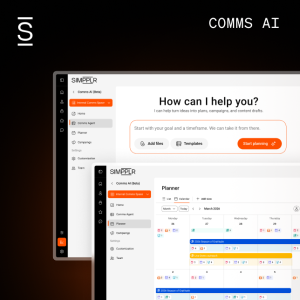
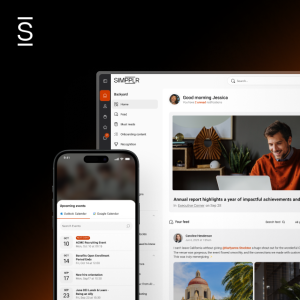
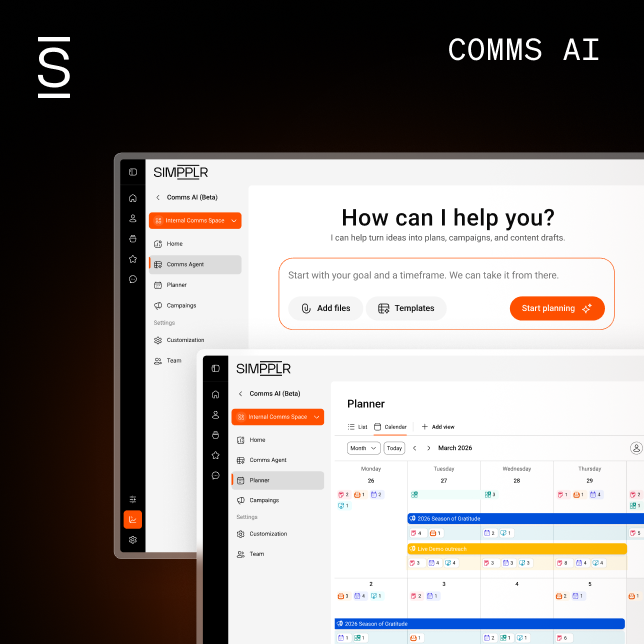
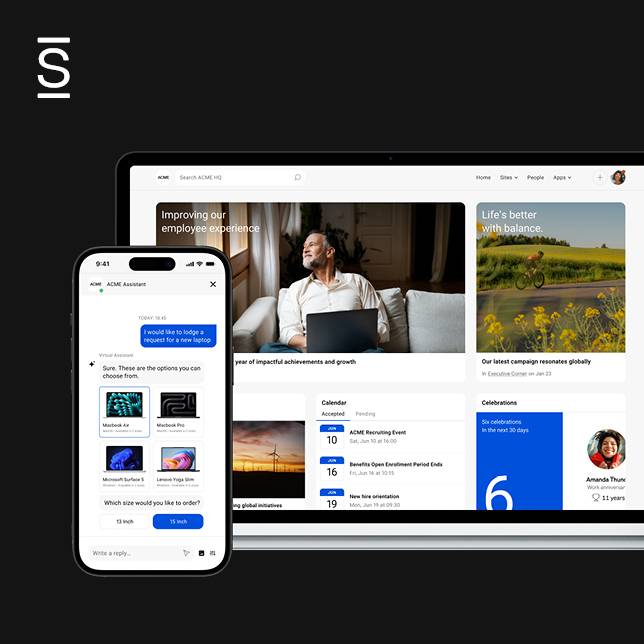
Retention strategies only work if employees can easily access and use them. Simpplr’s AI-powered employee experience platform makes that possible by unifying communication, knowledge, and workplace services in one place.
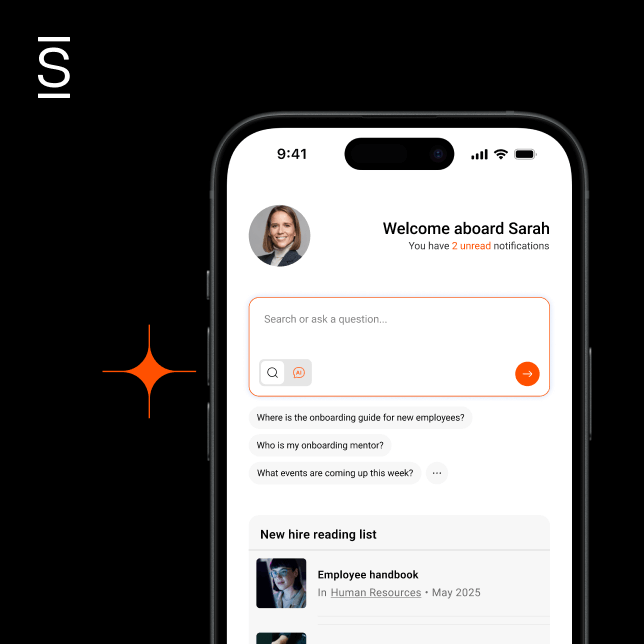
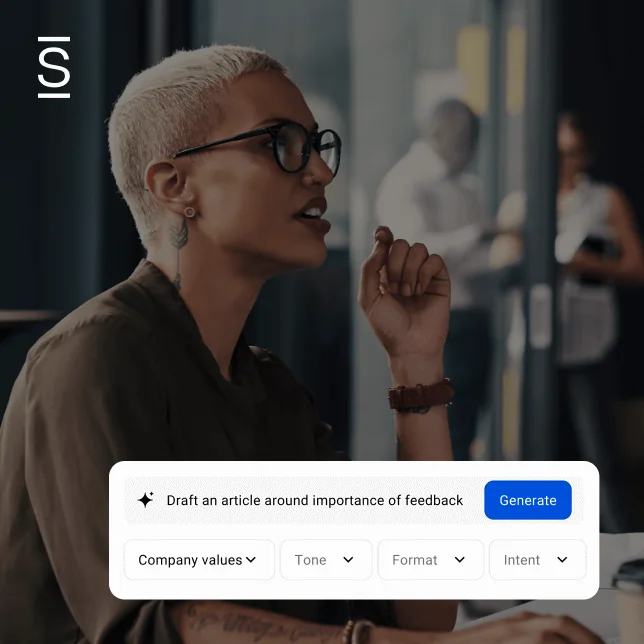
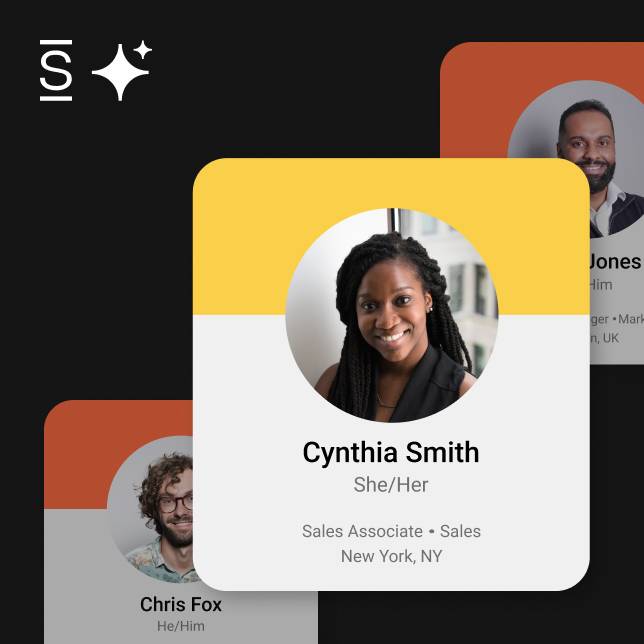
The platform uses AI to personalize what each employee sees based on their role, interests, and goals. That means relevant learning opportunities, internal job openings, and resources surface when people need them — not buried in an intranet they never visit. Employees have centralized access to training and resources. Managers get real-time insights into team sentiment and engagement, allowing them to intervene before small problems become resignation letters.
This isn’t another point solution to manage. It’s the digital hub where employees stay connected to their work and their future with your organization. The AI learns each person, serves up what matters to them, and makes flexibility actually work across distributed teams.
Ready to learn how Simpplr can support your talent retention strategy? Request a demo today.
Watch a 5-minute demo
See how the Simpplr employee experience platform connects, engages and empowers your workforce.
- #1 Leader in the Gartner Magic Quadrant™
- 90%+ Employee adoption rate