

Search is the invisible first draft of every project — the step before the step. Across three months and 5.76 million searches, Simpplr data shows how well organizations are helping people find what they need and where they still fall short.
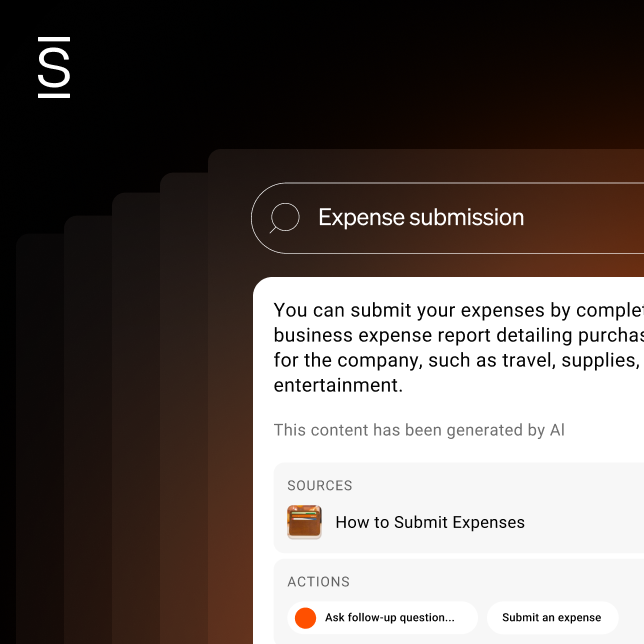
The state of enterprise search in employee experience platforms, Q1 2026
The state of enterprise search in employee experience platforms, Q1 2026
Think about the last time you kicked off a new project. Before you even began planning, you almost certainly searched for information. What documents already exist? Who has worked on something like this before? Who are the subject matter experts, the key stakeholders, the people who can tell you how this connects to the bigger picture? Search is the first act of nearly every piece of knowledge work. It’s “the work” before the work actually begins.
That makes enterprisewide search one of the most important — and most overlooked — parts of the employee experience. When it functions as it should, it disappears into the flow of work. When it doesn’t, every project starts with friction.
In this post, we’re pulling back the curtain on how enterprise search is evolving in the age of AI. To ground it in reality rather than opinion, we looked at how people search inside a modern, AI-powered intranet — aggregated across every Simpplr customer over a three-month window, from February 1 to April 30, 2026.

The size of the dataset
Over the three-month period, Simpplr customers ran more than 5.76 million searches, driven by over 302,000 monthly active users. This wasn’t an experiment or a survey. It revealed the day-to-day behavior of hundreds of thousands of employees doing real work. It’s a large enough sample to say something meaningful about where enterprise search stands today and where it’s headed. Here’s what the data revealed.
How employees search today
Search behavior starts in different places and looks for different things depending on who’s asking and why. Two patterns stood out in the data: where people go first when they need an answer and what kind of questions they’re asking. Together, they paint a picture of how search habits are evolving inside a modern intranet.
Where employees begin
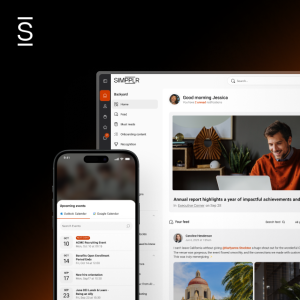
Every search starts somewhere, and where it starts tells you what employees trust. We found that 54.5% of search queries began on the intranet home page, and another 18.8% started on departmental or function-specific pages. Together, nearly 3 out of 4 searches originate from within the organization’s own trusted environment, not a generic web engine or a scattered set of tools.
This means employees increasingly treat the intranet as the central hub of organizational knowledge. It’s where they go first when they need an authoritative, company-specific answer. Search isn’t a feature bolted onto the intranet. It’s becoming the reason people show up.
What employees are looking for
Because employee experience platforms grow out of IT and HR workflows, that’s exactly where a lot of the demand lives. Queries about benefits, holidays, travel policies, and similar topics accounted for roughly 2% of all search volume across our customer base. Though it’s a small slice by percentage, it represents a steady, high-intent stream of everyday questions whose answers keep employees productive.
But most organizations dramatically underutilize what their search systems can do. The majority of interactions are still simple keyword lookups — a few words typed into a box — rather than the richer, question-based queries that AI-powered search is built to handle. The capability is there, but the habit hasn’t caught up yet. This represents one of the biggest untapped opportunities in the digital employee experience.
How well search performs
Providing people with a search function is one thing. Ensuring they find what they need is another. The clearest signal that search is working is whether people click on the results and how quickly. Click-through rate at rank K (CTR@K) tells us how often users found what they were looking for within the top K results — the fewer clicks it takes to get there, the better the search.
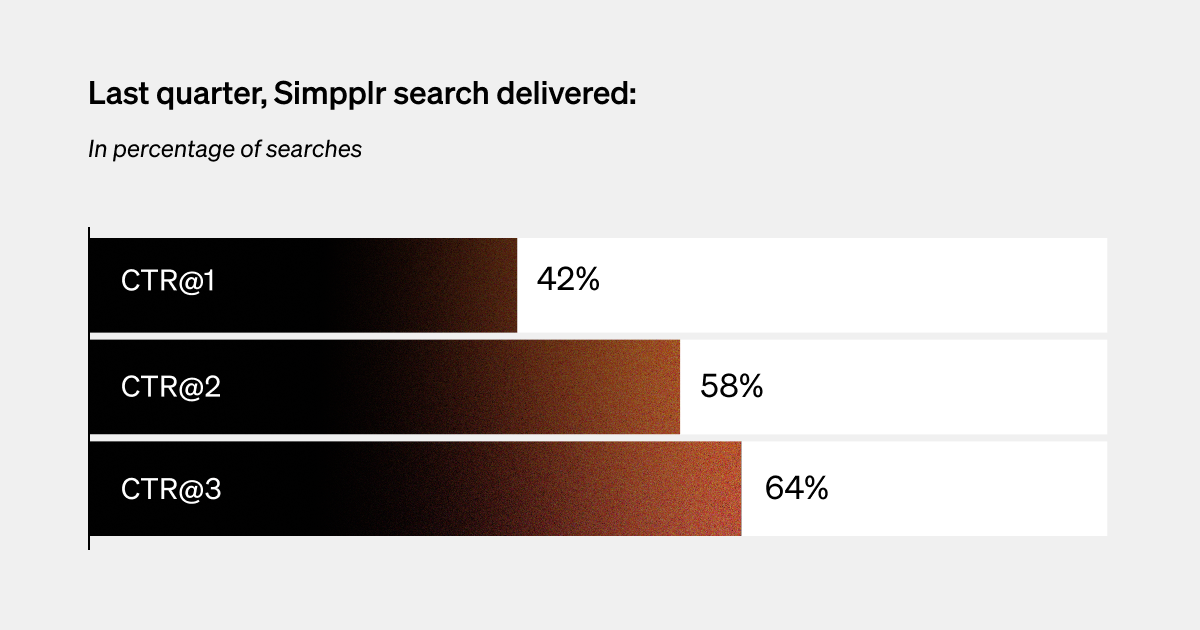
In plain terms: 42% of the time, the first result was the one people wanted. Widen that to the top three results, and the number jumps to 58%. By the top five, it reaches 64%. Nearly 2 out of 3 searches ended with someone finding what they needed, often within a click or two.
To appreciate how strong that is, consider everything good search has to reconcile in a fraction of a second. This includes the user’s role and geography, the author and content credibility, the semantic meaning behind the query, and how that person has engaged with similar content in the past.
Landing the right answer at the top 42% of the time, under those constraints, is a sign that users are getting real value from every search.
These numbers are even more impressive when you remember that an AI-generated smart answer sits above the search links on every single query. This means many users get their answer before they ever reach the results these rates measure.
What employees click and why it’s not always a document
Click behavior also reveals intent. For 56% of searches, users clicked on content — an article or an intranet page. No surprise there. But for 20% of searches, users clicked on a person.
That’s a subtle but important signal. People are using search to find the subject matter expert, the person who can answer a question that no published content covers yet. Search, in other words, is increasingly the org chart of expertise — the fastest way to find who knows something, not just what’s written down.
The rise of the smart answer
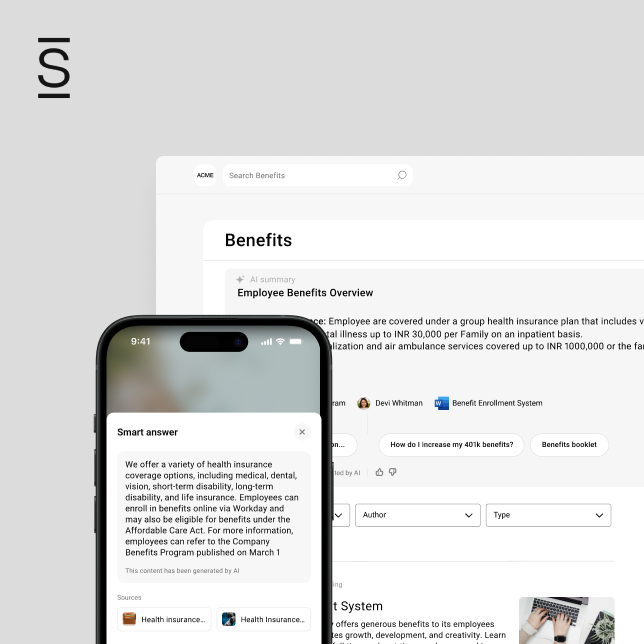
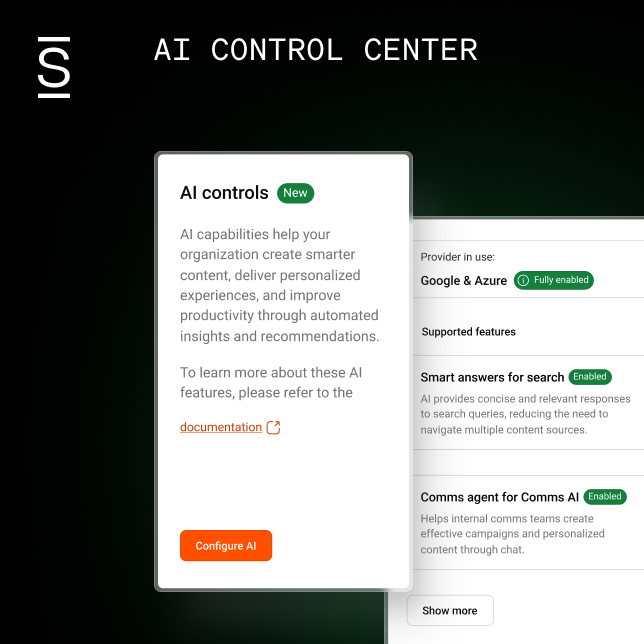
Many modern search systems now open with an AI-generated summary of the top results. At Simpplr, we call it the smart answer. And 42% of the time, users told us the smart answer helped resolve their query. They found what they needed without ever clicking into the underlying content.
This is a fundamental shift in what search is for. Instead of offering up a list of links and leaving you to synthesize the results, smart answers read, summarize, and then point you to the next step through associated links. Less digging, faster resolution, and answers that never require leaving the platform.
Speed people don’t have to think about
None of this matters if search is slow. Employees expect search to keep pace with their thinking. The data shows Simpplr search does just that: 95% of searches went from query to resolution in about four seconds, and half resolved in just two seconds. Fast enough that search stays invisible — part of the flow of work rather than an interruption to it.
When search comes up empty
No search system is perfect. Search is a living system. As your people’s needs evolve and your content does as well, the two are never in exact sync. Across all Simpplr customers, 12% of searches ended in zero results. A user typed a word or a phrase, and nothing came back.
But a zero-result search isn’t a dead end — it’s a signal. Every one of those queries appears on a dedicated admin dashboard, turning gaps into a to-do list.
Treat that dashboard as a content roadmap. Work with the relevant subject matter experts to create the content those unanswered questions are asking for, and each gap you close makes the next search a little smarter.
What this means for your organization
Employees start their day on the intranet, trusting it as the front door to what the organization knows. They’re finding the right answer fast, whether that’s a document, a smart answer, or the name of an expert who can help. And when they don’t, the system is honest enough to say so and to hand you the map for fixing it.
Every leader should be able to answer this question: How effective is your organization at helping people find what they need? Most can’t say because they’ve never measured it. If you’d like to find out where your organization stands, and how Simpplr can help your people spend less time searching and more time working, let’s talk.
Ready to find out how Simpplr can help you improve your enterprise search experience? Request a demo today.
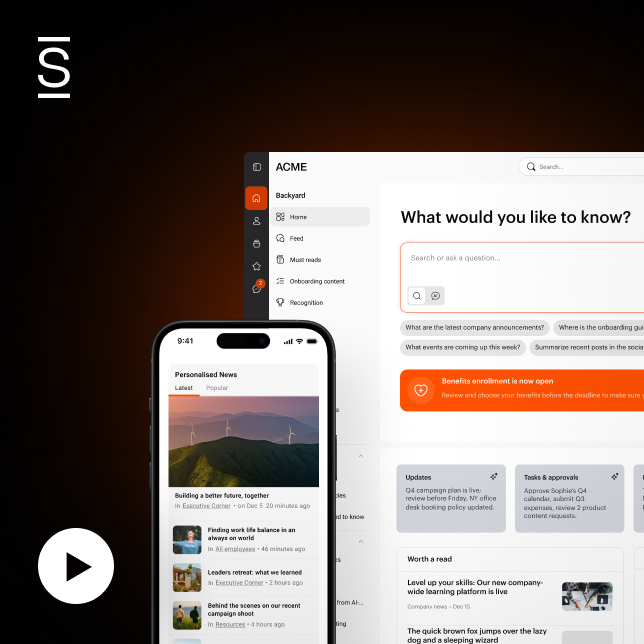
Watch a 5-minute demo
See how the Simpplr employee experience platform connects, engages and empowers your workforce.
- #1 Leader in the Gartner Magic Quadrant™
- 90%+ Employee adoption rate