





McKinsey’s 2025 State of AI research lands with a clear message: AI adoption in the workplace is stalling not because of the technology but because of the people. Most organizations are experimenting with AI, but few have scaled it in ways that deliver meaningful value.

A people-centered approach to AI adoption in the workplace
A people-centered approach to AI adoption in the workplace
The barriers McKinsey identifies aren’t technical. They are human: fear, uncertainty, organizational habits, inconsistent leadership messages, and a lack of trust.
As someone who has spent years helping organizations navigate change, this doesn’t come as a surprise. As with all organizational change, introducing new technology without listening to employees, creating clarity about what the technology is there to do, or creating space for dialogue can create anxiety, resistance, and mistrust.
When organizations take the time to engage employees, explain the intent, test ideas together, and build capability step by step, confidence grows and adoption becomes both smoother and more sustainable.
That means AI must be approached as an organizational change program, not as an IT deployment. And internal communications sits at the heart of making that change successful.
Why emotions come before logic: what neuroscience tells us
Neuroscience has shown that during moments of uncertainty, people don’t start with logic — they start with emotion. When faced with ambiguous or high-stakes information, the amygdala activates first, scanning for threat: Is this safe? Is this good for me? Can I trust what I’m hearing?
Only after that initial emotional evaluation do people move to the prefrontal cortex, where reasoning, problem-solving, and analysis happen. This means even the clearest business case can be overridden by a colleague’s emotional response.
AI announcements trigger predictable, deeply human questions:
- Is my job at risk?
- Will my skills become irrelevant?
- Will AI monitor my performance?
- Will I be expected to keep up with something I don’t understand?
- Will this make my work harder or more stressful?
- Is this really about efficiency or cost-cutting?
- Will decisions be made fairly if AI is involved?
Without clear, consistent communication, these questions fill the silence. People create their own explanations.
Where internal communications adds the most value
Confidence is the foundation of AI adoption in the workplace, and internal communications plays a critical role in building it. IC teams help shape the narrative so colleagues move from an emotional “threat response” to a more rational, empowered understanding of what AI actually means for them.
Employees need clear explanations of why AI is being implemented, along with reassurance that AI supports rather than replaces their work. IC explains the purpose behind AI adoption in plain language, connects AI to the organization’s values, and makes the change feel understandable and manageable.
That confidence grows when organizations offer transparency about guardrails and responsible AI principles, backed up by practical examples of how AI will be used day to day. IC helps create the conditions for psychological safety, where people feel able to ask questions without judgment, raise concerns early, and access the right support and training.
People also need time to experiment safely, supported by visible leadership alignment — leaders who openly say, “We’re learning too.” By preparing leaders to communicate clearly and transparently, IC shifts the conversation from anxiety about replacement to clarity about how responsible AI will support work, build capability, and create new opportunities.
When employees have opportunities to influence use cases and space to ask questions without judgment, AI becomes something they feel part of shaping rather than something being done to them.
In short, neuroscience reminds us that people are emotional beings — and understanding is key to adoption. IC is the function that makes that possible. Without this, uncertainty grows, fueling AI resistance, eroding confidence, and slowing adoption.
The four steps to people-centered AI adoption
IC’s role becomes even more powerful when aligned to a clear, structured change process. My four-step model for people-centered AI adoption provides exactly that by guiding leaders to create clarity, build confidence, enable capability, and strengthen trust.
1. Create clarity
Define what AI means for your organization, which tools are being introduced, and why. Replace ambiguity with certainty.
2. Build confidence
Communicate guardrails, responsible AI principles, and practical examples. Show that AI supports rather than replaces people.
3. Enable capability
Give people the skills, training, and time to experiment safely. Prepare people managers to coach, guide, and learn alongside their teams.
4. Strengthen trust
Create consistent open dialogue. Invite feedback. Demonstrate visible leadership alignment and respond to concerns transparently.
Together, these steps shift AI from a technical rollout to a human-centered transformation.
Working in partnership with HR, IT, and Risk
Successful AI adoption is never owned by one function. It depends on HR, IT, Risk, and IC working as a unified team.
Each department plays a critical part in the process:
- HR brings clarity on roles, skills, learning pathways, and employee experience
- IT provides the tools, infrastructure, and technical guardrails
- Risk embeds compliance, data protection, and responsible AI principles
- IC connects everything into a coherent story employees understand and trust
IC translates technical decisions into plain language, aligns leaders, prepares managers, and ensures employees know what’s changing, why it matters, and how they will be supported.
When HR, IT, Risk, and IC collaborate early and consistently, organizations move beyond isolated workflows and create an approach to AI change management that feels safe, transparent, and people-centered — the foundation for sustainable, confident adoption.
Doing change with people, not to them
AI is the biggest shift in organizational life in a generation. The organizations that succeed will be the ones that invest in culture, trust, and learning.
Internal communicators have an opportunity to lead this shift. You can turn uncertainty into clarity, fear into confidence, and confusion into capability. You can build the conditions for responsible AI adoption and shape how people experience this change.
This is the heart of responsible AI adoption: do change with people, not to them.
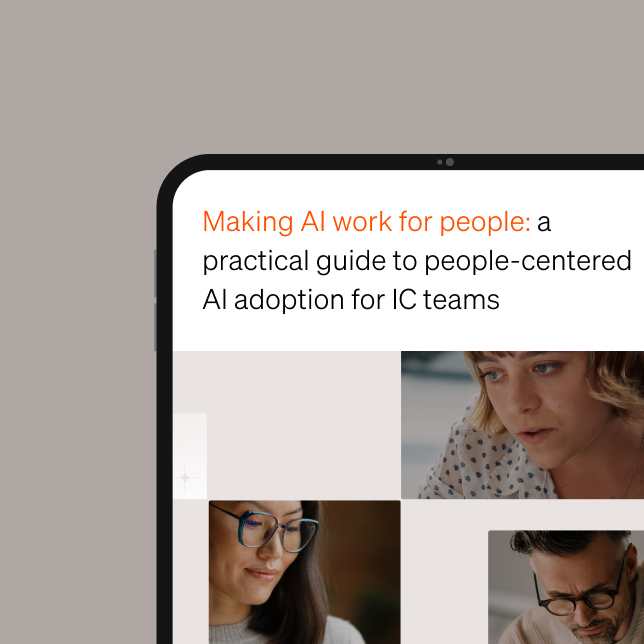
For a deeper look at this process, download the ebook Making AI work for people: a practical guide to people-centered AI adoption for IC teams.
About True
True helps organisations deliver successful change by working with their people, not to them. From AI adoption to digital transformation, we listen deeply, shape meaningful narratives, and enable behavioural change so transformation is understood, adopted, and sustained. Founded by Ann-Marie Blake and Howard Krais, True builds trust and makes change stick. Learn more at true-comms.com.
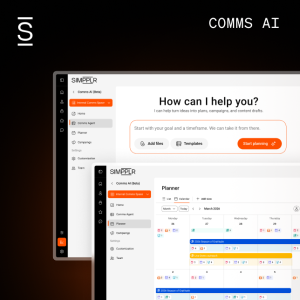
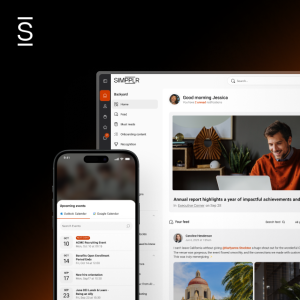
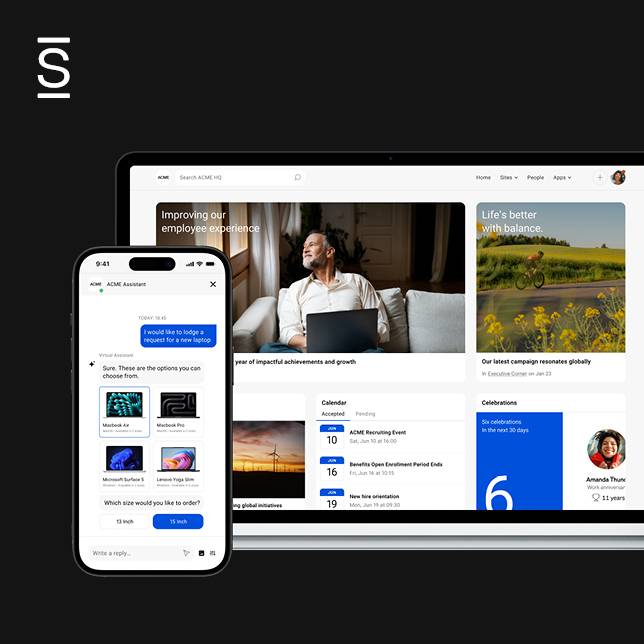
Want to see how Simpplr empowers IC teams to lead change management effectively? Request a demo today.
Watch a 5-minute demo
See how the Simpplr employee experience platform connects, engages and empowers your workforce.
- #1 Leader in the Gartner Magic Quadrant™
- 90%+ Employee adoption rate