

For many organizations, employee newsletters remain one of the most reliable ways to keep employees informed. But too many newsletters have become catch-all containers for every update, announcement, and reminder. When everything is important, nothing feels important.
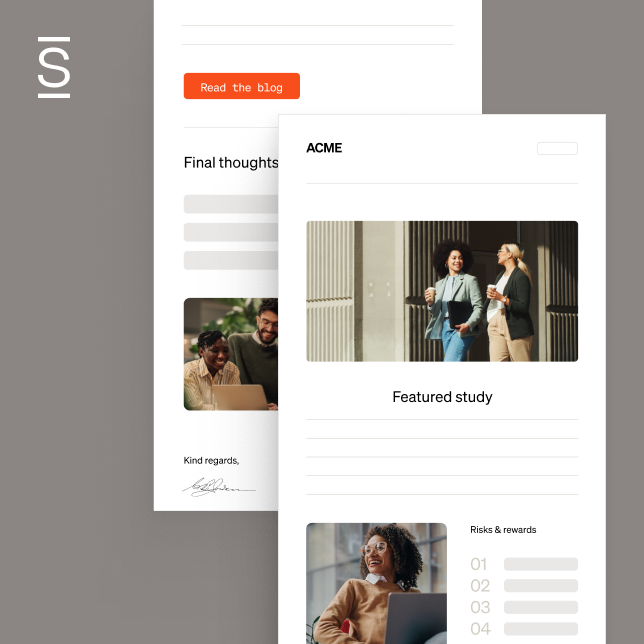
The internal communicator’s guide to employee newsletters
The internal communicator’s guide to employee newsletters
Employees are already navigating overflowing inboxes, nonstop chat notifications, meetings, and competing priorities. Every newsletter must answer one question: Is this worth my attention? The best employee newsletters don’t try to say everything. They help people quickly understand what matters, why it matters, and where to go next.
In this guide, we’ll walk through employee newsletter best practices — from defining a clear strategy and personalizing content to using AI thoughtfully and measuring what drives engagement. Together, these practices transform newsletters from another email into a reliable communication channel employees want to read.

Why employees stop reading newsletters
Every employee makes hundreds of small decisions throughout the day. Read this. Skip that. Respond now. Come back later. Your newsletter enters that same decision queue.
The challenge isn’t that employees don’t want information. It’s that they’re surrounded by it. Every Slack notification, email, meeting invite, and intranet update competes for the same limited attention. Before someone reads a single headline, they’ve already decided whether your newsletter is worth opening.
The newsletter isn’t the final destination
One of the biggest mistakes internal communicators make is treating the employee newsletter as the communication hub itself. Every announcement, policy update, event reminder, and leadership message gets squeezed into a single email until it becomes overwhelming.
Think of your newsletter as the front door to your communication ecosystem — not the entire house. Highlight the stories that deserve attention, then guide employees to the intranet, knowledge base, event page, or resource where they can dive deeper.
When everything makes the newsletter, nothing stands out
Somewhere along the way, many employee newsletters became digital bulletin boards. They exist to document everything that happened instead of helping employees prioritize what matters.
This results in long lists of updates with little context or hierarchy. Employees skim, miss the important pieces, or stop opening the newsletter altogether because they assume every edition looks the same.
Great newsletters make editorial decisions. They don’t just collect information — they curate it.
Employees build habits, and newsletters do too
Every communication channel develops a reputation over time. If employees consistently find useful, relevant information in your newsletter, opening it becomes a habit. If every edition feels repetitive, overly long, or irrelevant to their role, another habit forms: delete, archive, or mark to read later.
That’s channel blindness. The newsletter still arrives every week, but employees stop noticing it because they’ve learned it’s rarely anything worth interrupting their day.
The good news is that most employee newsletter problems aren’t content problems — they’re strategy problems. Once you’re clear on the purpose of your newsletter and the audience it serves, every decision becomes easier: what to include, what to leave out, how to personalize it, and how to measure success.
Start with strategy before scheduling
One of the biggest mistakes communicators make is asking “How often should we send our newsletter?” before asking “What is our newsletter supposed to accomplish?”
Cadence matters, but it’s not where strategy begins. Before you write a single headline or choose a send date, you need clarity on your newsletter’s purpose. Every decision that follows — from how often you send it to what content makes the cut — should support that purpose.
A well-defined strategy also makes the hard decisions easier. It helps you say no to content that doesn’t belong, prioritize what employees need most, and create a newsletter people trust because it consistently delivers value instead of simply filling space.
Define your newsletter’s job before you write a word
A newsletter without a clear purpose quickly becomes a dumping ground for every announcement, reminder, and request. That’s when employees stop seeing it as a credible resource and start seeing it as just another email.
Here’s how to craft an employee newsletter with intention:
- Give your newsletter one primary job. Is it meant to keep employees informed, align them around priorities, reinforce culture, or drive action? It can support multiple goals, but one should always lead your editorial decisions.
- Design for your audience, not your org chart. Relevance beats reach. If one newsletter can’t realistically serve everyone, segment your content by role, region, or function so employees see more of what’s relevant to them and less of what isn’t.
- Lead with what employees need most. Borrow from journalism’s inverted pyramid: put the most important, actionable information first, then add supporting context and links to learn more. Don’t make employees hunt for the point.
- Remember that every send is an editorial decision. Sending more newsletters just creates more information overload. Every edition should earn its place in an employee’s inbox by helping them know more with less noise.
Build an editorial process that scales
Your editorial process should make every edition easier to produce. The best calendars create enough structure to keep your newsletter consistent while leaving room to adapt when priorities inevitably change.
Here’s how to create that process:
- Start with one core story. Instead of creating net-new content for every channel, develop one primary message and adapt it for your newsletter, intranet, Slack, or other communications. This creates a more cohesive experience and reduces duplicate work.
- Choose a cadence you can sustain. Whether you publish weekly, biweekly, or monthly matters less than publishing consistently. A realistic schedule creates engaged, expectant readers and is easier for your team to maintain.
- Create predictable content buckets. Mix recurring sections with timely updates so employees know what to expect while leaving space for news that deserves attention.
- Use consistency as a trust signal. Familiar layouts and recurring sections make newsletters easier to scan, helping employees quickly find the information they care about.
- Invite input but keep editorial ownership. Stakeholders should help shape content but not determine every headline. Establish a clear intake process so you can gather updates without turning your newsletter into a collection of competing priorities.
Write to the right audiences
The best employee newsletters don’t try to reach the most people — they try to reach the right people with the right information. Employees are far more likely to engage when content reflects their role, location, interests, and day-to-day work. Personalization is one of the most effective ways to cut through the clutter and make every edition feel worth opening.
Why one-size-fits-all newsletters lose everyone
Every employee experiences your organization differently. A sales rep in the field, an engineer working remotely, a manufacturing employee without regular desktop access, and someone in HR don’t have the same priorities or consume information the same way. Treating them as a single audience often means no one gets exactly what they need.
Here’s how to personalize your employee newsletters:
- Recognize that different employees have different needs. Consider job function, work environment, geography, language, and access to technology.
- Be sure to include your frontline workforce. Employees without regular desktop access need mobile-friendly communications and a consistent place for information.
- Audit before you redesign. Look at engagement by audience, gather employee feedback, and identify where different groups are dropping off.
- Remember representation matters. The stories, visuals, examples, and voices you feature should reflect the diversity of your workforce so more employees recognize themselves in your communications.
Personalization tactics that don’t require a tech overhaul
Personalization shows employees less of the wrong content to increase the relevancy of your comms. And the good news is you don’t need dozens of newsletters or an enterprise-sized communications team.
Here are small changes that make a big impact:
- Start with the employee data you already have. Role, location, department, tenure, language, and work arrangement are often enough to deliver more relevant content.
- Personalize within a single newsletter. Instead of creating multiple versions, use audience-targeted content blocks to show different updates to different groups.
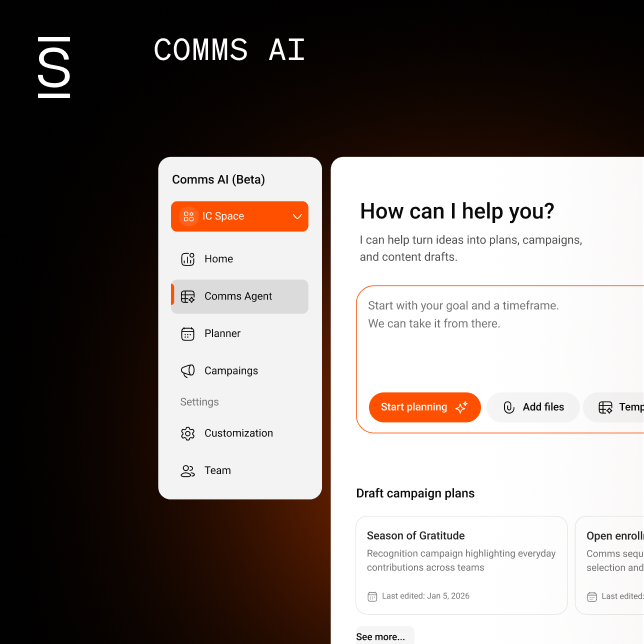
- Use AI to scale thoughtful personalization. AI can help tailor headlines, summarize content, adjust tone, and generate variations for different audiences while communicators do the final review.
Let AI speed up the work, not the thinking
AI has made it easier than ever to draft content, summarize meetings, translate copy, and personalize communications at scale. But the best employee newsletters still rely on something AI can’t replace: human judgment.
The goal is to let AI handle the repetitive work so you have more time to focus on strategy, storytelling, and creating impactful communications.
Use AI for the heavy lifting
The best uses of AI are the most practical. Focus on the duplicative, time-consuming tasks that slow down your workflow so you can spend more time on the work that requires a human lens.
Here are ways to use AI for employee newsletter strategy:
- Use AI to speed up repetitive tasks. Draft first passes, summarize long-form content, generate headline variations, translate copy, and create audience-specific versions more efficiently.
- Protect your voice. Always edit for authenticity before you publish. AI can imitate tone, but it doesn’t understand your culture, your employees, or your organizational context.
- Remember that trust is earned. As AI-generated content becomes more common, employees are increasingly quick to recognize communication that feels generic. A thoughtful, human voice remains one of the strongest ways to build credibility.
Integrate AI without sacrificing authenticity
Authenticity comes from thoughtful review, editorial judgment, and a clear understanding of your audience. Simple habits can help you use AI confidently without losing the voice employees recognize and believe in.
Here’s how AI can support content at scale:
- Build prompts you can reuse. Create prompt templates for newsletter drafts, headline brainstorming, summaries, and recurring sections to save time every edition.
- Repurpose content across channels. Turn a town hall recap into newsletter copy, summarize long updates, or adapt existing content for different audiences.
- Always keep a human in the loop. Editorial review should remain a nonnegotiable final step. Accuracy, context, tone, and trust still belong to the communicator.
Employee newsletter metrics to track
Open rates tell you whether someone opened your newsletter. They don’t tell you whether it was useful to them.
The most valuable newsletter metrics go beyond vanity numbers. They help you understand how employees engage, what they find valuable, and what deserves more (or less) of their attention. Measurement not only helps you evaluate success but also gives you insights to make every edition better than the last.
Use metrics that drive better decisions
The right metrics do more than tell you what happened — they help you decide what to do next. By looking beyond surface-level numbers, you can uncover what’s resonating with employees and continuously improve the experience with every edition.
Here’s how to make your data more actionable:
- Treat open rates as your starting point. A strong subject line gets employees to open your newsletter, but relevant content earns continued engagement.
- Look beyond the click. Which sections consistently get attention? Where do readers stop scrolling? Which links drive meaningful action?
- Pay attention to qualitative feedback. Replies, manager conversations, employee comments, Slack reactions, and intranet discussions often provide context that dashboards can’t.
- Look for trends rather than anomalies. One underperforming issue rarely tells the whole story, so measure over time before changing your strategy.
Create a measurement rhythm, not a report card
The best communicators don’t wait until the end of the year to evaluate their newsletter. They build measurement into their editorial process, using data as a regular feedback loop to refine content, validate decisions, and continuously improve the employee experience.
Here’s how to keep real-time tabs on newsletter performance:
- Review performance on a consistent cadence. Whether it’s biweekly, monthly, or after every few editions, regular reviews help you spot trends early instead of relying on an annual retrospective.
- Follow a simple improvement loop. Start by establishing a baseline, benchmark future performance, test intentional changes, and measure the results. Small, consistent improvements are more valuable than one-time overhauls.
- Use data to make editorial decisions. Analytics shouldn’t just help you optimize what stays. They should also help you identify recurring sections, content types, or even channels that no longer earn their place.
- Turn insights into action. Decide in advance what metrics will trigger a change, whether that’s adjusting your content mix, experimenting with a new format, or retiring underperforming sections.
- Close the feedback loop with employees. If readers share feedback through surveys, comments, or direct conversations, acknowledge it and show how it shaped future newsletters. Employees are more likely to engage when they know their input leads to meaningful change.
Employee newsletter best practices
The best employee newsletters aren’t successful because they’re longer, more frequent, or packed with information. They’re successful when they’re intentional. When you combine a clear strategy, thoughtful editorial decisions, relevant content, personalization, and continuous improvement, your newsletter becomes a credible resource employees know is worth their time.
Make personalization and measurement easier at scale
The best newsletter strategies hold steady even as your organization grows. The right tools make it possible to personalize content, streamline production, measure impact, and connect employees — all without creating significantly more work for your communications team.
Here’s how to scale your employee newsletter:
- Manage one newsletter without creating five. Deliver different content to different audiences through targeted content blocks instead of maintaining multiple versions manually.
- Turn insights into continuous improvement. Use engagement analytics to refine future editions, validate editorial decisions, and identify opportunities over time.
- Reduce production time. Streamline drafting, repurposing, translation, and formatting so your team spends less time building newsletters and more time shaping strategy.
- Keep everything connected. Tie newsletters into your intranet, campaigns, and employee communications ecosystem so employees always know where to go next.
How Simpplr helps
Bringing all of these employee newsletter best practices together also requires the right technology. Simpplr helps internal communicators create more relevant, engaging newsletters by combining personalization, AI, analytics, and content management into a single platform. You can spend less time managing the process and more time creating communications that employees value.
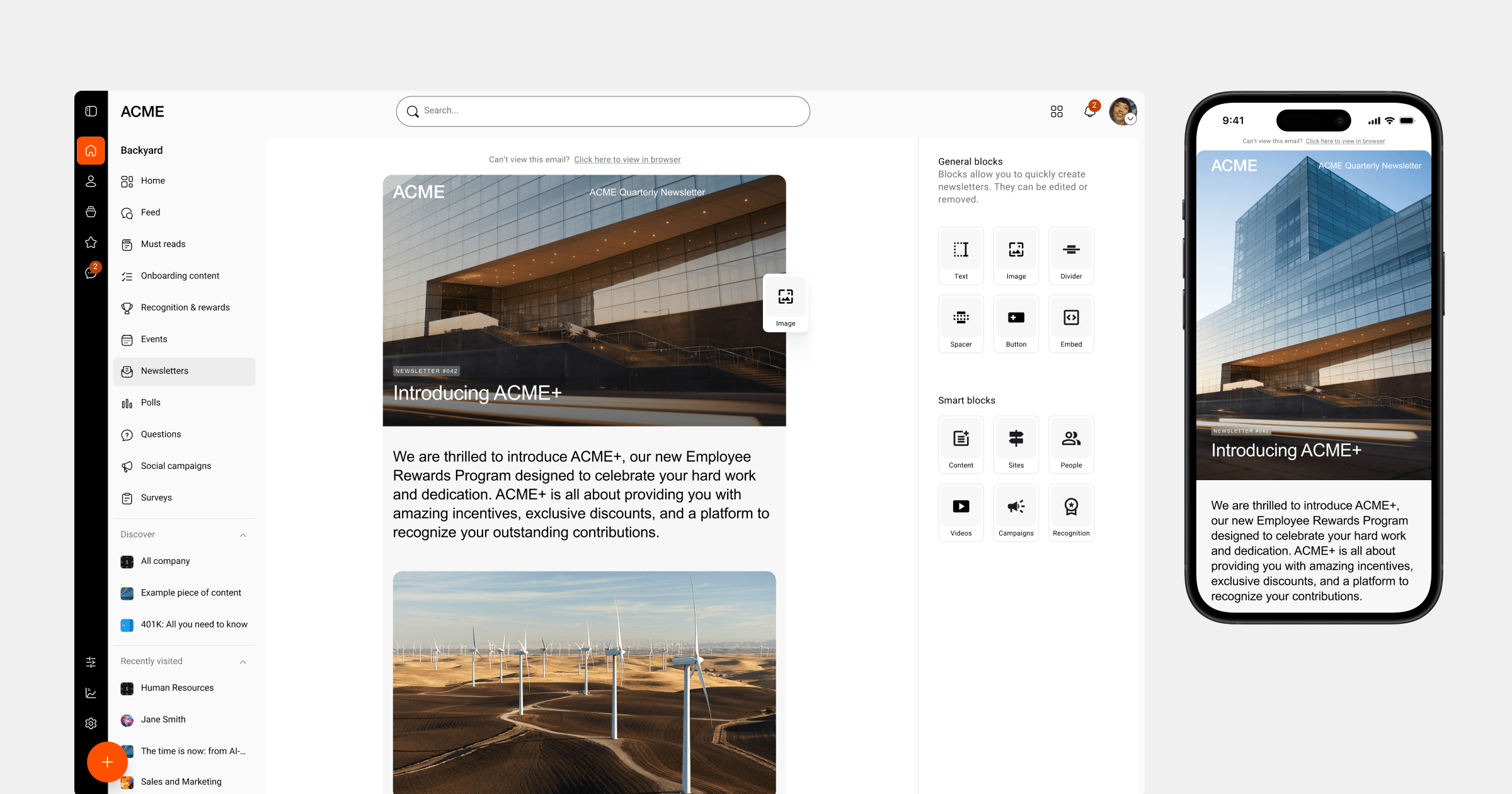
Here’s what you can do with Simpplr Newsletter:
- Personalize every edition. Deliver targeted content to the right employees using audience-based content blocks, ensuring people see the information that’s most relevant to them.
- Generate polished newsletters faster. Use built-in gen AI to draft newsletter copy, generate subject line options, and create concise summaries from your content, giving you a strong starting point while keeping you in control.
- Measure and optimize over time. Track engagement, identify trends, and use insights so you can continuously improve future newsletters.
- Keep communications connected. Publish newsletters alongside your intranet, campaigns, and employee communications so every message points them to the right resources and next steps.
Great employee newsletters aren’t measured by how much information they include but by how effectively they create clarity. When you combine thoughtful strategy, relevant content, and the right technology, your newsletter becomes a trusted resource employees find worth opening.
Ready to find out how Simpplr can help you craft engaging employee newsletters? Request a demo today.
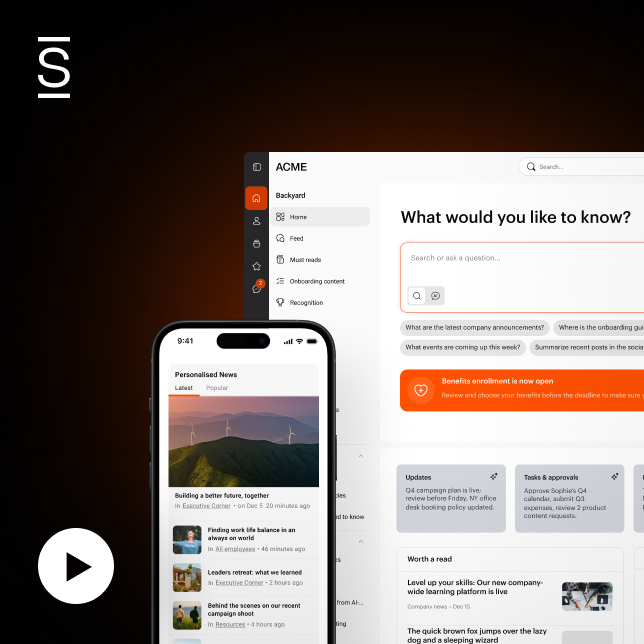
Watch a 5-minute demo
See how the Simpplr employee experience platform connects, engages and empowers your workforce.
- #1 Leader in the Gartner Magic Quadrant™
- 90%+ Employee adoption rate