




TL;DR
Every message internal communicators send spends employee attention, and that attention deserves the same discipline as any budget. The must know, should know, could know framework helps you decide what deserves an interruption, what needs a reliable home, and what simply needs to be easy to find. Pair it with clear channel roles, a prioritization step in your intake process, and AI that adapts one approved source for each audience. Then judge success by what employees understood and did after reading.
Employee attention is the commodity. Are internal communicators spending it well?

By Varun Dev
Last updated November 16, 2026
10 min read
Employee attention is the commodity. Are internal communicators spending it well?
Table of contents
- 1 Follow the attention to see where employees find information
- 2 Give every channel a job in your internal comms strategy
- 3 Decide what deserves an interruption
- 4 Make relevance practical for every audience
- 5 Use AI to make the message work harder
- 6 Start simple with an attention audit
- 7 FAQs about employee attention and internal communication
My almost 13-year-old daughter and I were talking about when she might get a phone. As part of my very compelling case for waiting, I explained what comes with it: notifications, messages, and a whole lot of people who can suddenly reach you.
She stopped me. ‘If you get an email from work, do you get the email AND a notification?’
Yes, I told her. And sometimes I get a Slack message telling me someone sent the email. Then I get a notification about the Slack message.
Her mind was a little blown. Honestly, mine should have been, too.
We’ve become so accustomed to this loop that we barely question it. But as internal communicators, we help create it. Every email, alert, reminder, and announcement asks someone to stop what they’re doing and pay attention to something we’ve decided matters.
Attention is the commodity. And we make decisions about how to spend it every day.
Think about an email that takes one minute to read. If all 10,000 employees read it, that is 10,000 minutes of organizational attention. Nearly 167 hours.
That message might absolutely be worth it. But we should be able to explain why.
We spend plenty of time discussing the budgets we wish we had. Employee attention deserves that same discipline. And I get why we send another reminder. We’re hoping this will be the one people notice. I’ve done it, too.
But hope isn’t a prioritization strategy. Below are five decisions I use to make those calls.
Follow the attention to see where employees find information
We often build communication plans around where we assume employees look. We send an all-company email because, well, that is how we reach everybody. Then we report the open rate and move on.
But an open doesn’t tell us whether someone understood the message or acted on it. It doesn’t tell us how the information reached them, either.
An office employee might read the email. A frontline employee might hear the update in a shift huddle. A manager might notice it in a weekly briefing and go looking for the details later.
Start observing employee attention paths.
- Ask employees where they look when they need this kind of information.
- Check whether they can access it during their working day.
- Look at what happens after they encounter it.
For a travel policy update, success means the employees who travel understand what has changed and can follow the new process. The email is one part of that journey.
Give every channel a job in your internal comms strategy
Every organization has its own channel culture. Some practically live in Teams or Slack. Others rely heavily on managers. Your strategy needs to reflect that reality.
The trouble starts when everything can go everywhere. A benefits deadline, a recognition story, and a birthday celebration arrive with the same signals, and employees have to figure out which deserves their attention.
We think we are giving people options. We may actually be giving them another job: monitor everything, just in case.
Take an inventory of your communication channels, including manager meetings, signage, and the places outside your official plan where people actually get information. For each one, finish this sentence:
“This is where employees go when they need to _____.”
Then decide what belongs there. Be equally clear about what belongs somewhere else.
Choose channels depending on how your organization works
- Your intranet might provide the reliable home for full details
- A newsletter might help people catch up
- A manager briefing might provide context and discussion
The specific choices will differ by organization.
A trustworthy channel teaches employees what they can ignore. That might make us a little uncomfortable — we want people to see our work. But employees should know what can wait without worrying they’ll miss something critical.
Teach them what to expect through how you use each channel, every time.
Decide what deserves an interruption
One framework I’ve used for years sorts communications into three categories: must know, should know, and could know.
Must know: If someone misses it, something breaks
There’s a meaningful consequence for the employee, the business, or the customer. Think of a required benefits decision with a deadline or a critical change to how work gets done. [New] A safety procedure update or a change to when people get paid belongs here, too.
Should know: It helps people do their jobs
Knowing it helps someone work better or understand the business. Missing it won’t create an immediate problem, but the information helps them make decisions and do their job. Quarterly results, a new product launch, or an update to a tool people use every week often fall here.
Could know: It adds value when people find it
Finding it adds value, connection, or context. Recognition, community stories, and optional events often belong here.
The category should guide distribution:
- Must know → Push it to the people affected.
- Should know → Give it a clear home and reinforce it.
- Could know → Make it easy to find.
These are decisions about distribution, not a ranking of how much we value culture or connection. A recognition story can mean a great deal to someone without needing an urgent notification to the entire company.
When we deliver could-know content with must-know urgency, employees learn that an interruption doesn’t reliably mean something needs their attention now. Then a critical update arrives with the same signals as everything else.
And the category can change by audience. A travel policy update might be must know for employees booking travel this week. Everyone else may simply need a reliable place to find it when they need it.
Of course, nobody brings you a communication request and says, “This is only mildly important.” People care about the work they own. They want it seen.
Make prioritization part of the intake
Agree on the definitions with your leaders and build these questions into your intake form.
Ask every requester:
- What happens if the intended audience misses this?
- Who is affected?
- What do they need to know or do?
- By when?
Use those answers to decide whether it’s must know, should know, or could know—and how you’ll distribute it. A requester’s preferred send date alone doesn’t make something urgent.
That gives you something concrete to discuss when a stakeholder asks for an all-company email.
Make relevance practical for every audience
Putting “Hi, Carolyn” at the top of an email does very little for me if the policy inside applies to employees in a state where I do not work.
We usually start communication planning by asking who the audience is. Employee experience adds another question: When will this be useful?
A new hire choosing benefits, a manager helping their team, and an employee on leave may need different information at different times. Their role, location, and working hours matter, too. Can they do what you’re asking when the message reaches them?
45% of organizations treat all employees as one uniform audience. Only 51% target messages to specific audiences (State of Internal Communications 2026).
Before sending, answer these questions from the reader’s perspective:
- Why am I receiving this?
- Why does it matter to me?
- Why now?
- What exactly do I need to do?
Put those answers near the top. If you have 30 seconds of someone’s attention, don’t spend the first 20 explaining why you’re writing. Lead with what they need to know or do. Then give them the context.
Use AI to make the message work harder
AI can turn one announcement into seven versions before you’ve finished your coffee. Before generating them, decide which audiences need a different version and what that version will help them do.
Start with one approved source. Give it an owner and identify who it’s for, its priority, and when it needs to be reviewed or retired. Then use AI to adapt how you introduce it: a manager talking point, a newsletter summary, or a short message directing employees to the details.
Each version should help a specific audience get what they need. Keep the facts, required action, and priority consistent, and point people back to the approved source.
Maintain that source and retire outdated copies. Several published versions of a policy leave employees — and AI tools retrieving the information — to sort out which one to trust.
Start simple with an attention audit
You do not have to rebuild your entire communication strategy tomorrow. Start with one month.
- Categorize what you sent: Pull one month’s worth of communications and categorize each item as must know, should know, or could know.
- Estimate the attention you requested: For each item, estimate the time to read or watch it and multiply that by the number of people you sent it to. That gives you a rough estimate of the attention you requested.
- Look for mismatches: Which could-know messages received broad emails or repeated reminders? Which must-know updates competed for attention in a crowded newsletter? Did the distribution match the priority?
- Ask what happened: For benefits enrollment, partner with HR to track completion. For a process change, work with the team that can tell you whether employees are following it. Opens and clicks provide clues. Understanding and action help you assess the value of the attention you requested.
The message was never the outcome. What happened next was. Attention is the budget we spend to get there.
How Simpplr can help
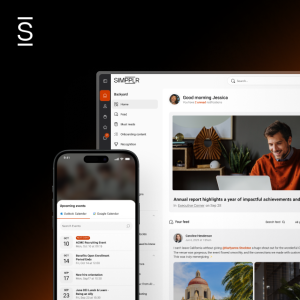
Simpplr gives internal communicators the tools to put this framework into practice. Audience targeting pushes must-know updates to the people affected, and must-read content asks employees to confirm they’ve seen what matters.
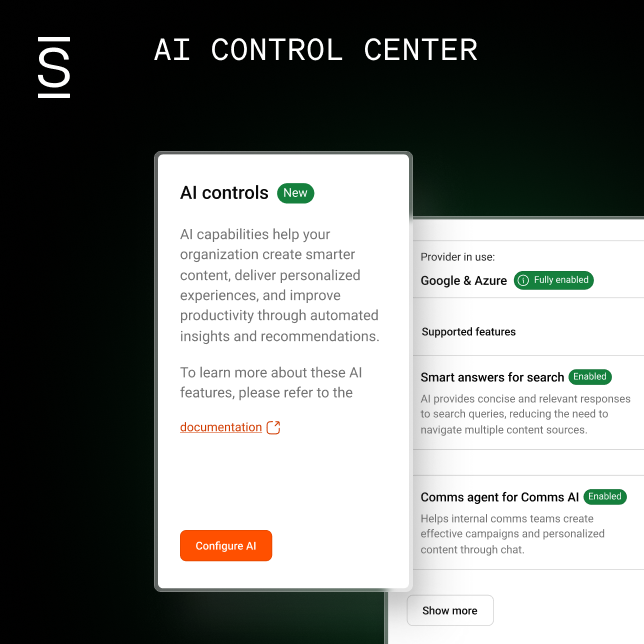
Comms AI helps you plan campaigns across audiences, channels, and timelines, spot conflicts with what’s already scheduled, and adapt one approved message for the intranet, email, and Slack or Teams. Analytics show how each message performed across channels, so you can judge whether the attention you requested paid off.
Ready to see how Simpplr can help you spend employee attention well? Request a demo today.
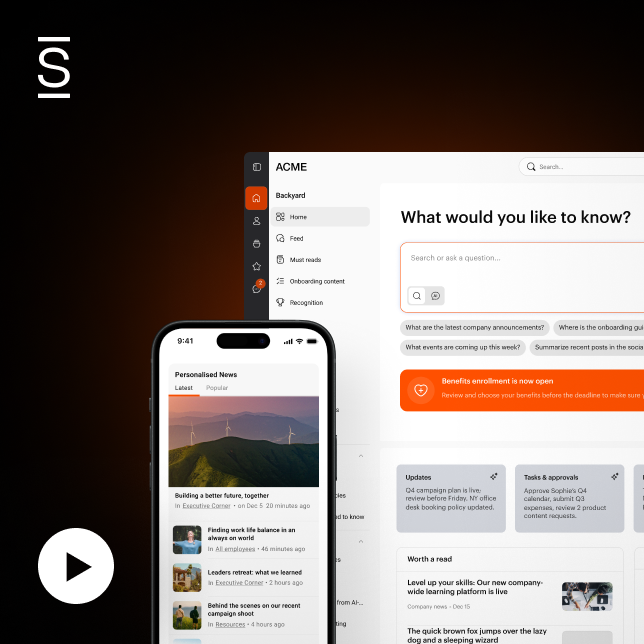
Watch a 5-minute demo
See how the Simpplr employee experience platform connects, engages and empowers your workforce.
- #1 Leader in the Gartner Magic Quadrant™
- 90%+ Employee adoption rate
FAQs about employee attention and internal communication
What is the must know, should know, could know framework?
It’s a way to prioritize internal communications by the consequence of missing them. Must-know messages are pushed to the people affected, should-know messages get a clear home and reinforcement, and could-know messages are made easy to find.
How do you prioritize internal communications?
Start with what happens if the intended audience misses the message, who is affected, what they need to do, and by when. Those answers decide the category and the distribution, rather than the requester’s preferred send date.
How do you measure whether an internal communication worked?
Looking past opens and clicks to understanding and action. Partner with the teams that own the outcome, such as HR for benefits enrollment completion, to see whether employees did what the message asked.