




It’s 9 a.m. on a Wednesday. You announced this year’s company vision and goals on Monday to get everyone excited and aligned. But stats show less than 30% of the company has viewed it. Aside from that one enthusiastic employee commenting, “Can’t wait!” — it didn’t land the way you’d hoped. Leadership needs engagement metrics by the end of the week. You’re feeling deflated and desperate. Sound familiar?
The internal communicator’s guide to employee engagement through storytelling
The internal communicator’s guide to employee engagement through storytelling
Table of contents
- 1 Why traditional internal communications fall flat
- 2 Building a framework for understanding your audience
- 3 Four pillars of analyzing employee personas
- 4 Storytelling strategies for employee communication
- 5 How to adapt storytelling for different message types
- 6 Best practices for channel selection
- 7 Choosing the right tone of voice for internal comms
- 8 How to make content work on different platforms
- 9 Measuring success and continuous improvement
- 10 How Simpplr powers your strategic storytelling
The problem isn’t your messaging. It’s that communication noise has never been louder: 74% of employees say they feel overwhelmed by the volume of company communications. How do we cut through it all to help employees stay informed and engaged? How do we make sure there’s intention behind what we put out there?
Employees need to understand why something matters, how it connects to their work, and what action is expected. This shift requires moving from scattered, inconsistent messages to audience-focused communications designed to resonate.
When storytelling, channel strategy, and timing work together, messages stop adding to the chaos and start creating meaning. The first step is understanding what it costs us when traditional internal communication strategies fall flat.

Why traditional internal communications fall flat
Capturing engagement and driving action in employee communication has become increasingly challenging. The old “let’s just send out an email” or “include this blurb in the newsletter” doesn’t cut it anymore.
The solution isn’t pushing more content. It’s understanding our audiences. We start by identifying what our people have in common, where their needs differ, and what actually matters to them.
When we curate messages with intention and relevance, employees feel more understood. Without audience awareness, even our most important messages will fail to resonate.
The cost of communication noise
If we don’t prioritize messages, select the right channels, and respect our employees’ needs, we risk a lot more than people not “oohing and ahhing” over our latest feel-good employee initiative. And it’s important to understand what’s truly at risk.
Here’s what happens when employees are overloaded:
- Critical information including compliance requirements, HR and Legal policies, and major company news goes unnoticed.
- Required actions on things like open enrollment, mandatory training, or policy acknowledgments don’t happen.
- Employee productivity drops as people struggle to find clear, organized internal information and resources.
- Engagement and satisfaction decline, leading to less motivated teams and increased turnover.
The work we do matters, and we have the power to be a calm, consistent, clear presence — delivering information with care and intent. Let’s look at common missteps when it comes to internal communication strategy.
Common internal communication pitfalls
Internal communication isn’t easy. We’ve all been in a meeting when someone suggests, “Can you just craft a quick email?” — as if message design, channel strategy, and behavior change were as simple as copy-paste-send. But any communicator knows the real struggle lies beneath the surface.
Here are the pitfalls we run into time and time again:
- One-size-fits-all messaging: We treat our audience as one broad group rather than considering the individuals we’re communicating with.
- Wrong channel selection: We assume we know where people go for information or we let stakeholders dictate channel choices for us.
- Poor timing and frequency: We fail to analyze channel trends or identify when employees are most likely to engage or take action.
- Lack of feedback loops: We don’t create two-way communication opportunities to understand what’s hitting the mark, what’s falling short, and why.
Layering on all of these logistical nuances when we’re already stressing over content — well, it’s a lot. So let’s look at how each one can be simplified and conquered. This will help us step out of the “messenger” role and transform into a truly strategic communicator.
Building a framework for understanding your audience
When we try to communicate to everyone, we often end up communicating to no one. Broad, companywide messages force employees to figure out what applies to them — if they engage at all.
A strong internal communication strategy starts with understanding your audiences. By developing meaningful personas and identifying preferred channels, communicators move beyond generic messaging and deliver communication that’s worth attention.
What an employee persona is (and isn’t)
An employee persona is a representative profile; they’re not real people or demographic groups. Personas are designed to reflect common patterns across roles, motivations, pressures, and communication needs within your organization. Their purpose is simple: to help communicators pressure-test messages before they go out the door.
Personas aren’t meant to be perfect or exhaustive. They’re thinking tools that help us ask better questions, anticipate reactions, and design communication that feels intentional rather than generic.
How employee personas are created
Humans are complex. When developing employee personas, the goal isn’t perfection but perspective. We want to build a clear, well-rounded view of our people and what matters to them, professionally and personally.
One of my favorite uses of AI is helping accelerate this work. AI can synthesize inputs like engagement data, survey results, role information, and feedback trends to draft initial persona profiles. From there, I use those personas to pressure-test communication plans and ask questions like: Would this message feel relevant to this persona? Would it prompt action? What questions would this persona have?
AI doesn’t replace human judgment or employee insight. It supports it by helping us move faster and more thoughtfully.
Segment internal audiences
Rather than trying to group every employee, build a set of representative personas that reflect different roles, life stages, working styles, and communication needs. The goal is to cover a range of real-world scenarios so messages hold up across a diverse workforce.
Four pillars of analyzing employee personas
Once personas are outlined, the next step is bringing them to life. These four pillars help turn personas from abstract profiles into practical tools we can actually use.
1. Demographics and psychographics
Demographics provide context (role, level, tenure, location, work environment) while psychographics explain behavior (values, attitudes, what people care about). Together, they reveal why certain messages resonate (or don’t). The goal isn’t to stereotype but to build empathy and awareness.
2. Information needs and priorities
Relevance requires understanding what matters to each persona. What information does this persona need to do their job well? What’s critical versus nice-to-know? What competes for their attention? Factors like how communicative or supportive their manager is can also influence how much context employees need.
3. Communication preferences and habits
This is learned through behavior, not guesswork. Analytics, channel engagement trends, survey data, and feedback help reveal how different personas consume information — whether they prefer quick highlights or deeper context, written updates or visuals, asynchronous or live communication.
4. Motivations and pain points
Motivation determines attention; pain points determine resistance. Understanding what drives a persona (growth, recognition, stability, autonomy, impact) alongside what frustrates them allows us to frame messages with care and intention.
How personas are applied in practice
Personas come before segmentation and channel decisions. Once you understand who you’re designing for, you can then segment audiences appropriately and choose channels based on role, context, and urgency. This is where communication shifts from broadcast to intentional.
Tools that make this possible
Strong personas are informed by real input:
- Employee surveys and focus groups to identify patterns at scale, while focus groups add depth and context.
- Analytics and behavioral data to understand what employees pay attention to and what they ignore.
- Feedback mechanisms and listening tools like comments, reactions, polls, Q&A sessions, and manager feedback create ongoing listening loops.
When we invest in understanding our audience at this level, communication stops being reactive and starts becoming intentional. We’re no longer guessing what might work. We’re designing messages that are far more likely to land.
Storytelling strategies for employee communication
Humans are wired for stories. It’s why we’re captivated by movies, binge TV shows, and lose ourselves in podcasts. Work-related communication is no exception. It can and should tell a compelling story. Stories give the brain structure — a beginning, middle, and end — making information easier to process, understand, and retain.
People are 22x more likely to remember information when it’s delivered as a story rather than a list of facts (Stanford Graduate School of Business).
This is because storytelling activates emotion. Research shows that stories can increase oxytocin production, a hormone linked to trust, empathy, and connection. Those are exactly the qualities we want to foster in a healthy workplace. Stories don’t just inform. They biologically move people toward understanding and belonging.
Emotionally connected audiences are twice as likely to act on a message than those who receive purely informational content (Gallup).
Even communications that feel straightforward (open enrollment, policy updates, organizational changes) benefit from context and empathy. Storytelling works because it aligns with how our brains are wired: We feel first, understand second, and remember what resonates.
The corporate storytelling framework
Knowing why storytelling works is only half the equation. The real value of storytelling comes from applying it consistently in everyday communications without sounding scripted or overproduced.
Effective corporate storytelling doesn’t require creative flair or brand campaigns. It relies on a few simple, repeatable techniques that bring clarity, context, and meaning to our messages. These include structure, characters, conflict, and resolution.
Structure: Present the problem–solution–impact
Every strong story follows a clear arc. Frame messages around what’s happening, why it’s happening, and what it means for employees. This approach helps information land with purpose instead of confusion.
Characters: Make abstract concepts relatable
Stories resonate when employees can see themselves in them. Use familiar roles, teams, or real scenarios to make strategies and changes feel tangible and relevant.
Conflict: Address challenges and obstacles
Conflict doesn’t have to mean drama. It means honesty. Acknowledging uncertainty or difficulty builds trust and signals transparency. This makes employees more receptive to what comes next.
Resolution: Outline clear outcomes and next steps
Every story needs a clear ending. Resolution answers what’s changing, what action is expected, and where employees can go for support, reducing confusion and increasing follow-through.
How to adapt storytelling for different message types
While the structure of a good story stays consistent, the way we apply it should flex based on the message. Your role is to help employees understand why something matters, how it connects to their work, and what it means for them moving forward.
Company updates and announcements
Change can be hard, even when it’s positive. Be honest and empathetic, acknowledge what’s changing and why, and connect the update to the bigger picture so employees understand the impact.
Policy changes and compliance communications
Policies often feel impersonal. Framing them around the problem they solve and the clarity or protection they provide helps compliance feel purposeful rather than performative.
Training and development initiatives
Focus on growth and opportunity. Tell the story of what employees will gain and how it will change the way they work, increasing participation and engagement.
Cultural and values-based messaging
Values come to life through real examples. Highlight moments and behaviors that show culture in action and help employees see how they contribute every day.
Storytelling reminds us that internal communication isn’t about pushing information. It’s about helping people make sense of change. And that’s where real engagement begins.
Best practices for channel selection
Storytelling gives messages meaning, but even the strongest story can fall flat if it’s delivered in the wrong place or in the wrong tone. Channel selection and tone of voice are what determine whether a message feels timely or disruptive, clear or confusing, authentic or disingenuous. To communicate with real impact, we have to be just as intentional about how and where we share our stories as we are about the what and the why.
The key is determining which channels should be used for which messages based on importance of the message, breadth of audience, and timeliness. Often a multichannel approach is best. But how do we know what to use when? Let’s look at some of the most common channels together.
Best for: High-impact announcements
In a noisy digital environment, email remains a reliable place where employees expect to receive important, trusted information. According to a 2025 Ragan report, 65% of employees still prefer email for internal messaging, making it the most favored channel. That doesn’t mean every request to send an email should get a green light. Email is most effective when it’s reserved for can’t-miss updates that truly require attention and action.
Intranet platforms
Best for: Source-of-truth information and deeper engagement
Your intranet should be the central hub for company information. Even when updates are shared elsewhere, employees should always be able to find the full context on the intranet. Advanced employee experience platforms like Simpplr also enable two-way conversation. This helps communicators understand what’s resonating and adjust in real time — or gain confidence that messages are landing.
Internal chat/messaging tools
Best for: Quick reminders and nudges
For many desk-based employees, chat tools are where work happens. These channels work best for short, timely reminders or pointers to additional information hosted elsewhere. Used in tandem with email or intranet posts, they reinforce key messages without overwhelming employees.
Mobile and push notifications
Best for: Urgent, time-sensitive alerts
Mobile notifications can feel intrusive, which is why they should be used sparingly and with intention. Otherwise, employees risk notification fatigue. Reserve them for urgent updates — building closures, safety notices, or major system outages — where immediacy outweighs disruption.
Face-to-face and virtual meetings
Best for: Context and connection
Meetings offer valuable time with your audience. Use them to share newsworthy updates that benefit from explanation and discussion, while also creating space for culture-building moments. Blending business updates with crowdsourced celebrations, wins, and stories builds a balanced meeting and helps people leave feeling both informed and inspired.
Choosing the right tone of voice for internal comms
Tone is one of the fastest ways communication either builds trust or breaks it. The same message can feel calm or chaotic, motivating or overwhelming, depending on how it’s delivered. That’s why aligning tone with both the type of message and the channel matters.
Urgent communications: direct, clear, action-oriented
When something is urgent, clarity beats everything else. Use plain language and short sentences, and be explicit about what employees need to do. This isn’t the moment for storytelling or extra context — people should be able to scan the message and immediately understand what’s happening and what they need to do.
Informational updates: professional, accessible, engaging
Most day-to-day updates live here. The goal is to strike a balance: professional but not stiff; informative but not overwhelming. A little context goes a long way in helping employees understand why the update matters, while clear structure keeps it easy to read and digest.
Cultural messages: warm, inclusive, inspiring
Culture messages should feel like they’re coming from a real human, not a corporate template. This is where storytelling shines. Use real examples, shared wins, and inclusive language to reinforce values and celebrate what makes your organization one that your people want to be a part of.
Training communications: supportive, encouraging, practical
Training can easily feel like “one more thing” on an already full plate. Your tone should acknowledge that reality. Focus on how the training helps employees grow, work more effectively, or feel more confident — this is the storytelling piece. Always be clear about what’s expected and how to get support if they need it.
How to make content work on different platforms
Even the best message can fall flat if it’s not optimized for where it lives. Each platform comes with its own parameters and limitations. Small adjustments can make a big difference in how employees experience each one.
Intranet content structure and navigation
Your intranet should feel intuitive and easy to navigate, not intimidating and clunky. Go with clear headlines, short summaries, strong aligned visuals, and consistent formatting to help employees quickly understand what matters most and what to do. When content is easy to find and revisit, trust in the platform grows and engagement follows.
Mobile-first communication design
Our people are consuming information between meetings or on the go. Some are deskless and have no computer of their own. Designing content with mobile in mind (shorter paragraphs, scannable headings, fewer clicks) shows respect for their time and attention. If it’s hard to read on a phone, it’s likely to be skipped, and future comms engagement may suffer as a result.
Social features and community building
Communication works best when it’s a conversation, not a broadcast. Leverage feeds, commenting, sentiment checks, polls, and surveys to understand what’s resonating and how your people are feeling. Use these tools consistently so you get relevant feedback often.
The goal isn’t to be everywhere or say everything. It’s to meet employees exactly where they are with the right message at the right time.
Measuring success and continuous improvement
Site visits, open rates, click-through rates. They’re the bread and butter of analytics. But what if they’re just vanity metrics? There are more meaningful indicators that give us a clearer picture of communication effectiveness and culture health.
Engagement metrics beyond opens and clicks
Opens show visibility. Clicks may signal interest. But neither tells us whether employees understood the message or took the intended action. As communicators, our job is to fill that gap and prove that messages are driving clarity, alignment, and action.
Behavioral indicators of message effectiveness
An open or click doesn’t tell us whether someone enrolled in benefits, completed a training, or changed behavior. If the call to action is “enroll,” then enrollment is the metric that matters. Partnering with stakeholders to track outcomes tied to communication timing is one of the strongest ways to demonstrate value.
Employee satisfaction and feedback signals
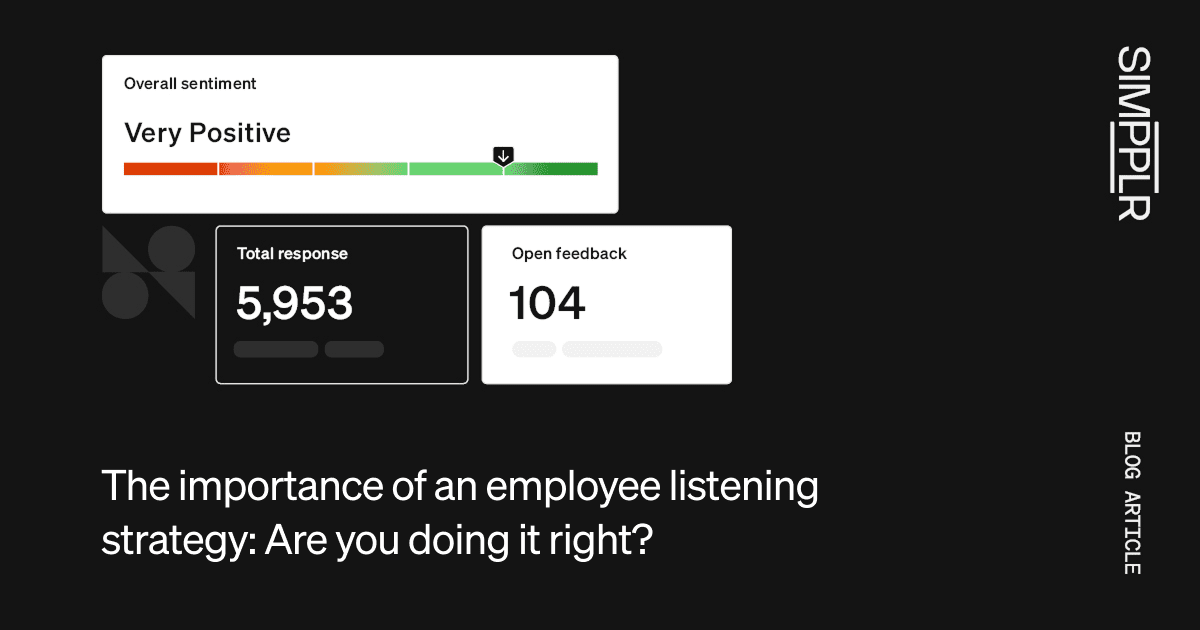
Quantitative metrics only tell part of the story. Qualitative signals like sentiment and feedback add essential context. Tools like sentiment checks, pulse surveys, and reactions to major announcements reveal how employees are feeling — especially during moments of change. These insights move communicators from assumption to understanding.
Iterative improvement based on analytics
Analytics aren’t just a snapshot. They’re a compass. A dip in engagement, fewer comments, or a shift in sentiment aren’t indicators of failure but signals. Treat trends as opportunities to reflect, adjust, and test new approaches with intention.
Employee feedback integration
Listening only matters if we act. Close the loop and show employees how their feedback influenced decisions to build trust. Whether it’s a “You Said, We Did” moment or tying feedback directly to new initiatives, transparency reinforces that employee voices matter.
How Simpplr powers your strategic storytelling
When we lead with empathy, design messages around real audiences, tell clear stories, and choose our channels and tone with intention, communication stops feeling like noise. It becomes something employees can trust. It offers clarity in moments of change and connection in the everyday.
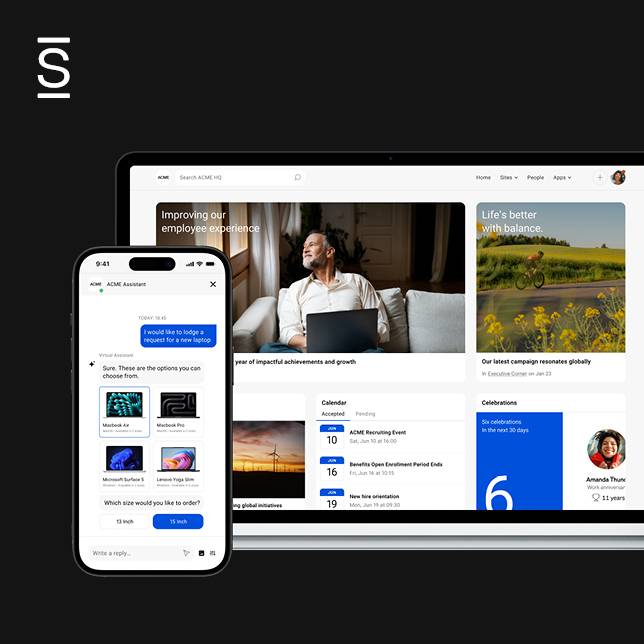
Simpplr helps bring this approach to life by giving internal communicators the tools to understand their audience, tell meaningful stories, choose the right channels, and listen in real time.
With a central digital workplace for information, built-in engagement and sentiment insights, and the flexibility to meet employees where they are, Simpplr supports communication that’s not just seen, but felt — and ultimately, acted on.
Discover how Simpplr builds employee connection and improves engagement. Request a demo today.
Watch a 5-minute demo
See how the Simpplr employee experience platform connects, engages and empowers your workforce.
- #1 Leader in the Gartner Magic Quadrant™
- 90%+ Employee adoption rate