









Ask IC practitioners why their measurement efforts stall, and they might point to their digital resources. The real culprits sit one level beneath the technology: no shared definition of success and no clear ownership. Without those, even good infrastructure ends up held together by manual exports and a prayer. Get that foundation in place, and the right tools will have something to plug into.

Why IC measurement keeps failing and how to solve the real problem
Why IC measurement keeps failing and how to solve the real problem
Table of contents
- 1 The problem isn't tools but what comes before them
- 2 Agree on what success means before you measure anything
- 3 Assign ownership before selecting metrics
- 4 Connect IC to metrics leadership already tracks
- 5 Close tech gaps once the structure is in place
- 6 Measurement is an ongoing operational discipline
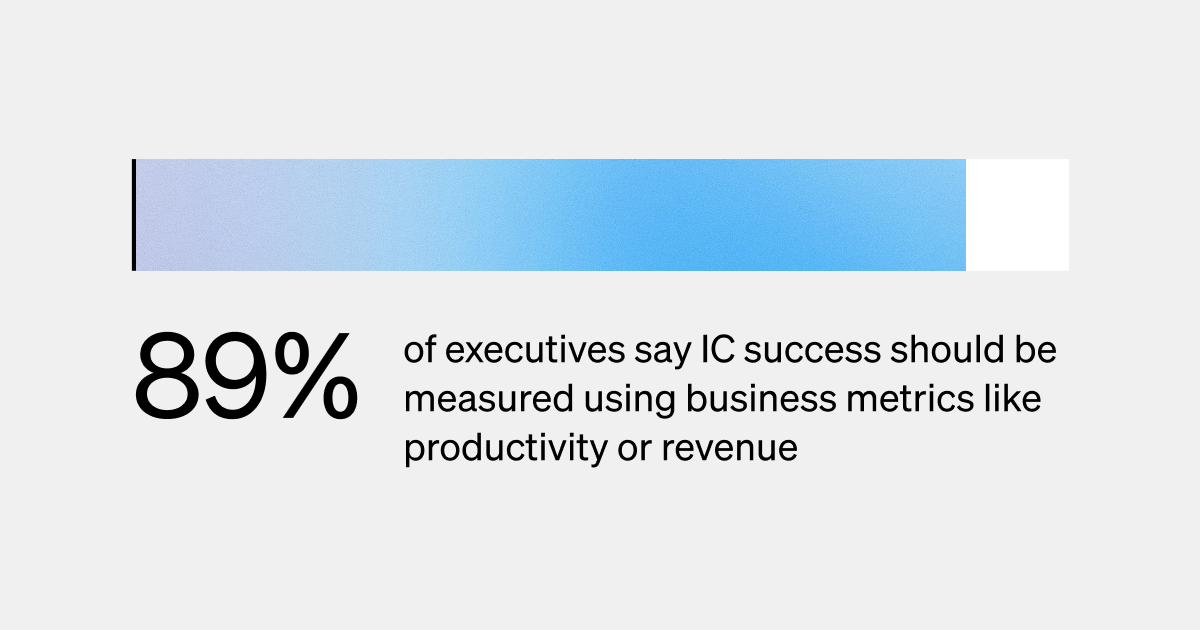
This matters because organizational leadership expects effective measurement. Simpplr’s 2026 State of Internal Communications Report found that 89% of executives surveyed believe IC success should be measured in business terms like productivity or revenue.
Executives are overwhelmingly satisfied with IC (92%) and support increased investment in the function (96%). So the goodwill and demand are there. What’s missing is the foundation. A quarter of organizations don’t measure IC’s revenue impact at all. And most of the rest lean on surveys and self-reported proxies.
When you look at the shortfall in measurement when data is so accessible, the reasons are consistent. No one has agreed on what constitutes success. No one owns the metric. No one can isolate IC’s contribution. No one has the analytic bandwidth. All four problems are challenging, but solvable. They just have to be solved in order.
The problem isn’t tools but what comes before them
When measurement stalls, the instinct is to go shopping for a solution — a new dashboard, a new analytics layer, a new reporting module that promises to finally connect comms to outcomes. The impulse is understandable. Buying something feels like progress, and it’s easier to justify a tool purchase than sit through a series of uncomfortable conversations.
But look at what’s sitting unused. Only 24% of surveyed practitioners use intranet usage and engagement analytics as part of how they measure IC’s impact.
The data exists, but no one has decided what it’s for, who reads it, or what happens when the number moves. Add tools to a structure with no metric ownership and no agreed definition of success, and you don’t get more insight. You just get more data.
That missing piece is upstream of your tech stack. It breaks down into four problems that have to be solved in a specific order, or the tooling fix won’t matter.
The four steps to solving the problem:
- Define what success means
- Assign ownership of each number
- Connect to metrics leadership already tracks
- Fix the tools, only after the first three
The organizations closing the measurement gap aren’t necessarily the ones with the best technology. They’re the ones that solved those structural problems first.
Agree on what success means before you measure anything
Most measurement efforts stall for a reason that has nothing to do with math. IC success means something different in every function.
What each function is already measuring:
- Finance tracks lost productivity and cost avoidance
- HR tracks retention, engagement, and new hire time-to-productivity
- Operations tracks error rates and execution
- Executives track alignment across the business
Define success without them and you’ve built a beautiful case for an audience of one. Two things break when there’s no shared definition. You can’t assign ownership of a metric nobody agrees matters. And you can’t act on data when the people who control the response don’t recognize the number as theirs.
So get them in the room: your CFO, CHRO, and COO, plus any executive sponsor with a stake in alignment, productivity, or retention. Start with what they already track, not with what you’d love to prove. And then work backward to where IC contributes.
This conversation is also political capital, and that’s the part IC pros tend to undersell. When executives co-own the definition of IC success, they have a stake in the outcome. That changes how they show up for the function, and it changes what happens the next time you ask for resources.

Assign ownership before selecting metrics
Metrics without owners don’t get tracked. That’s why the most common measurement gap comes from no one knowing whose job it is to connect what you did to what changed.
The uncomfortable fact is, most of the data you need isn’t yours. IC needs a standing relationship with the same three functions from that room, not an occasional favor request sent at quarter’s end.
Which functions hold what data:
- HR holds retention and engagement numbers
- Finance holds productivity and revenue proxies
- Operations holds efficiency data
Ownership also has to mean something more specific than access to a dashboard. It means a real person is responsible for pulling it on a real schedule — monthly, quarterly, tied to campaign cycles. The precise cadence matters less than the fact that there is one.
Here’s a solid starting place: Take the metrics that came out of your cross-functional conversation, map which functions own each one, and identify a specific contact and a specific rhythm for getting it. Then write it down, and put it somewhere your team can see.
Role boundaries in IC are already blurry: 35% of practitioners rank that as their top frustration (Simpplr’s 2026 State of Internal Communications).
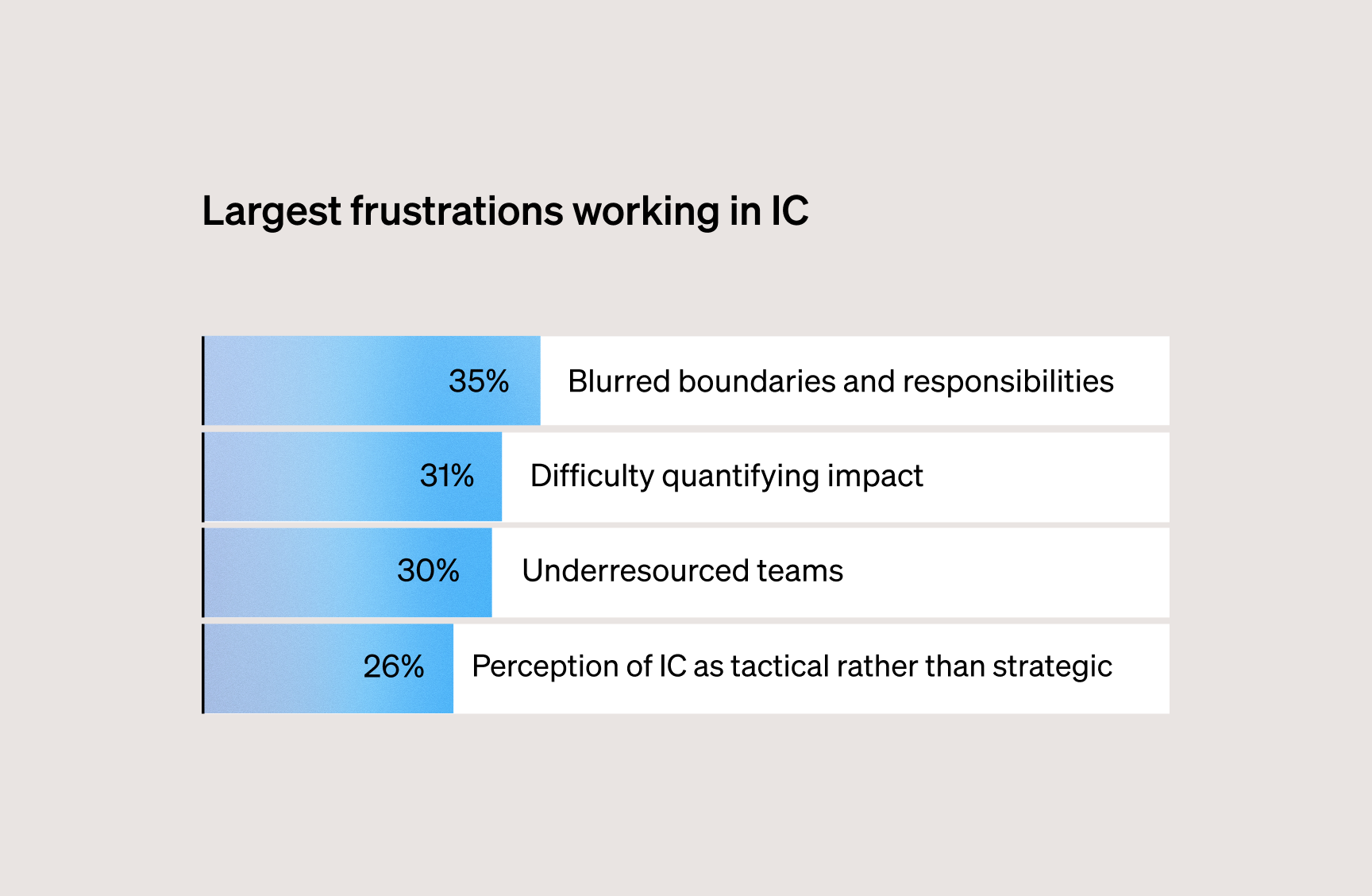
Measurement ownership is one place where IC practitioners can establish clarity deliberately instead of waiting for someone to grant it. Much of this already happens informally, in a spreadsheet nobody else can find. Writing it down just makes it official.
Connect IC to metrics leadership already tracks
You don’t need to build measurement infrastructure from scratch. Customer satisfaction, retention rates, productivity benchmarks, meeting efficiency are all being tracked by other functions, reviewed by leadership, and used to make decisions. IC’s job is to make the connection explicit.
41% of organizations use customer satisfaction scores before and after IC initiatives as their primary metric for IC impact on revenue, while 26% don’t measure impact on revenue at all (Simpplr’s 2026 State of Internal Communications).
The logic holds up. Customer satisfaction links comms activity to an outcome that Finance and Marketing already watch closely. So you’re not asking anyone to care about a brand-new number.
Other practical bridges include:
- Employee retention rate for impact on talent
- Productivity benchmarks measured before and after a major initiative
- Meeting efficiency data where you’ve changed how information flows
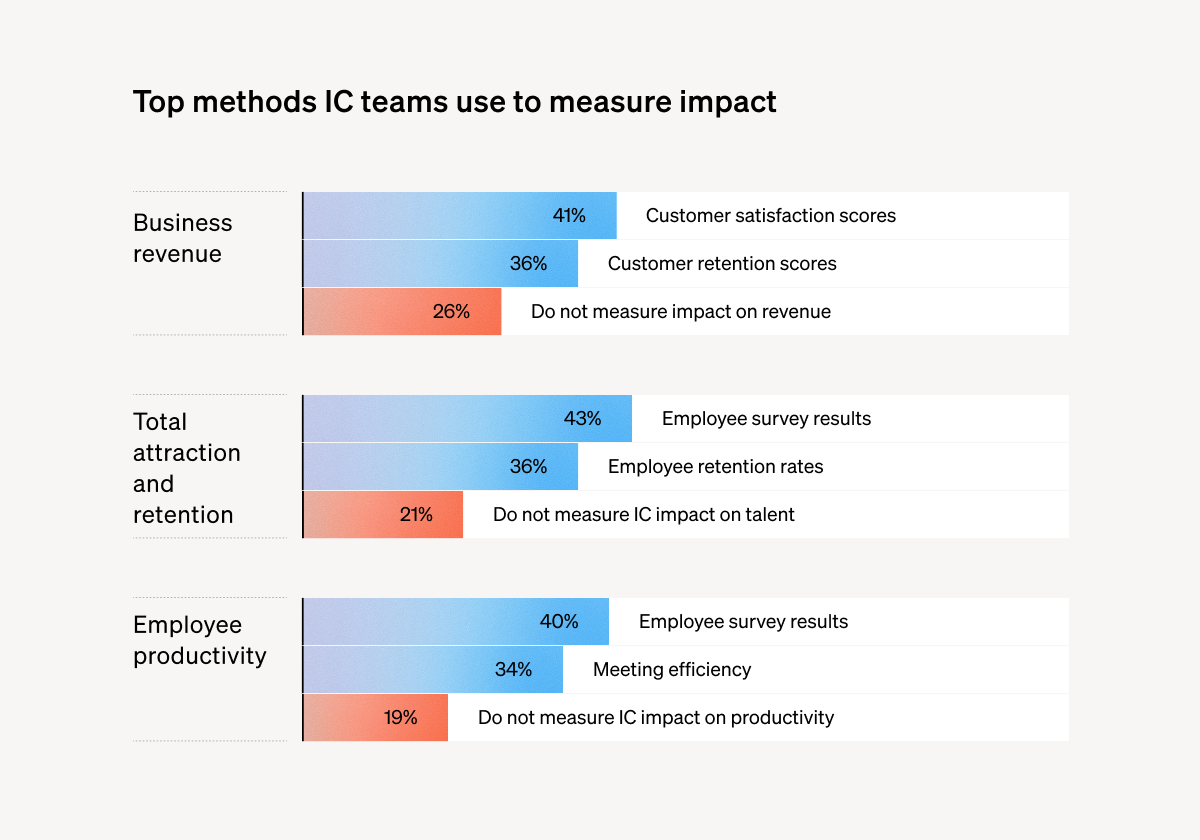
Making the connection between these metrics and IC’s impact requires some discipline. Document which IC initiative preceded a measurable change, note the timing, and work with the function that owns the metric to pull the before-and-after data. No new platform required, just relationships and the habit of connecting internal comms initiatives to data that already exists.
The goal at this stage isn’t a bulletproof causal claim (nobody in Marketing has one either). What you need is a credible association leadership can point to. That’s enough to build an investment case, and the investment is what buys you the more rigorous measurement practice later.

Close tech gaps once the structure is in place
Now the tools matter. With ownership and definitions in place, the right modern intranet multiplies what’s possible. Without that foundation, even excellent analytics produce numbers nobody acts on.
What to audit first:
- Audience targeting
- Engagement data
- Consumption rates
- Campaign-level analytics
Most teams are getting less out of their analytics than they could, which is why it’s critical to get full use out of what you already own before buying anything new. Then assess the level of tech stack fragmentation.
Organizations running consolidated platforms rate IC effectiveness 10 percentage points higher than those stitching together multiple vendors. The employee comms difference is just as stark: 32% of their messages reach 75 to 100% of employees, compared with 22% of organizations using multiple vendors (Simpplr’s 2026 State of Internal Communications).
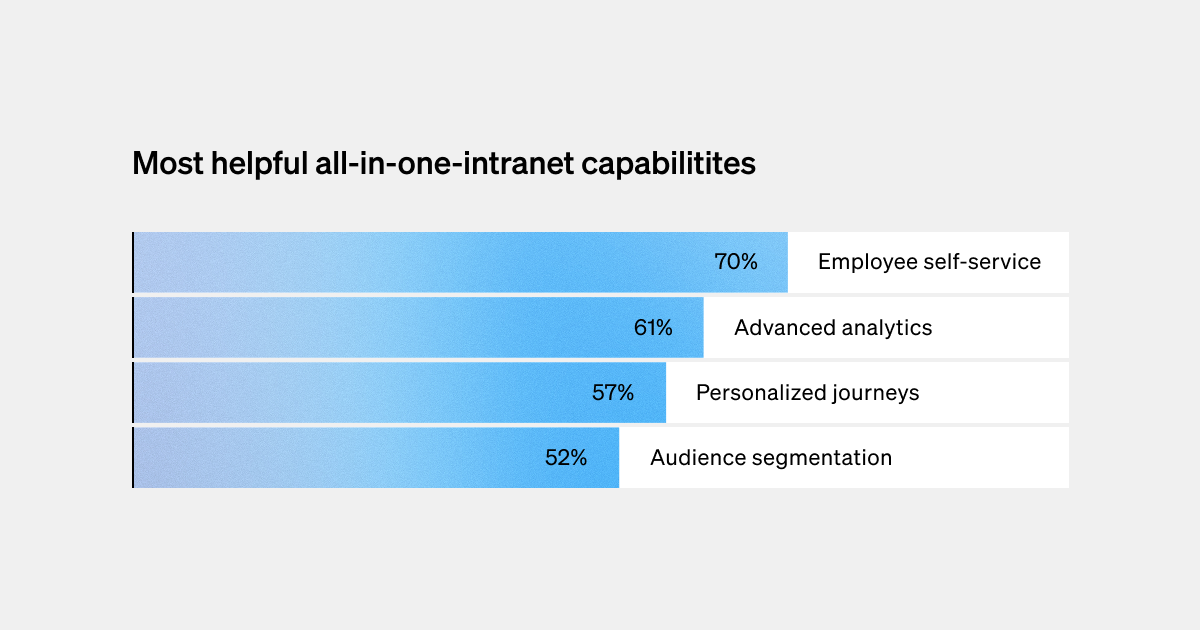
The signal on advanced analytics specifically shows up on both sides of that divide. It’s the second most valued capability among all-in-one intranet users (61%), and the third most wanted among those who don’t have it yet (32%). That consistent signal points to where the technology investment pays off most.
Platform consolidation won’t solve a structural problem — nothing you buy will. What it removes is the operational drag that makes good measurement habits impossible to sustain past month three.

Measurement is an ongoing operational discipline
Executives already trust the IC function, want to invest in it, and expect business metrics in return. What’s missing is the discipline underneath: mutually agreed upon definitions, named owners, access to data from other functions, and a rhythm that survives a busy quarter.
That work is unglamorous and not always engaging for comms pros who prefer words to numbers. It’s mostly conversations, follow-ups, and a shared document someone has to maintain. But it’s the difference between reporting on internal comms and being accountable for outcomes — and accountability is what gets the function into the rooms where resource decisions are made.
Start with the definition. Everything else follows from there.
How Simpplr can help
Defining success and assigning ownership is work for your team and your executive sponsors. An intranet platform’s job is making that structure easier to sustain once it exists.
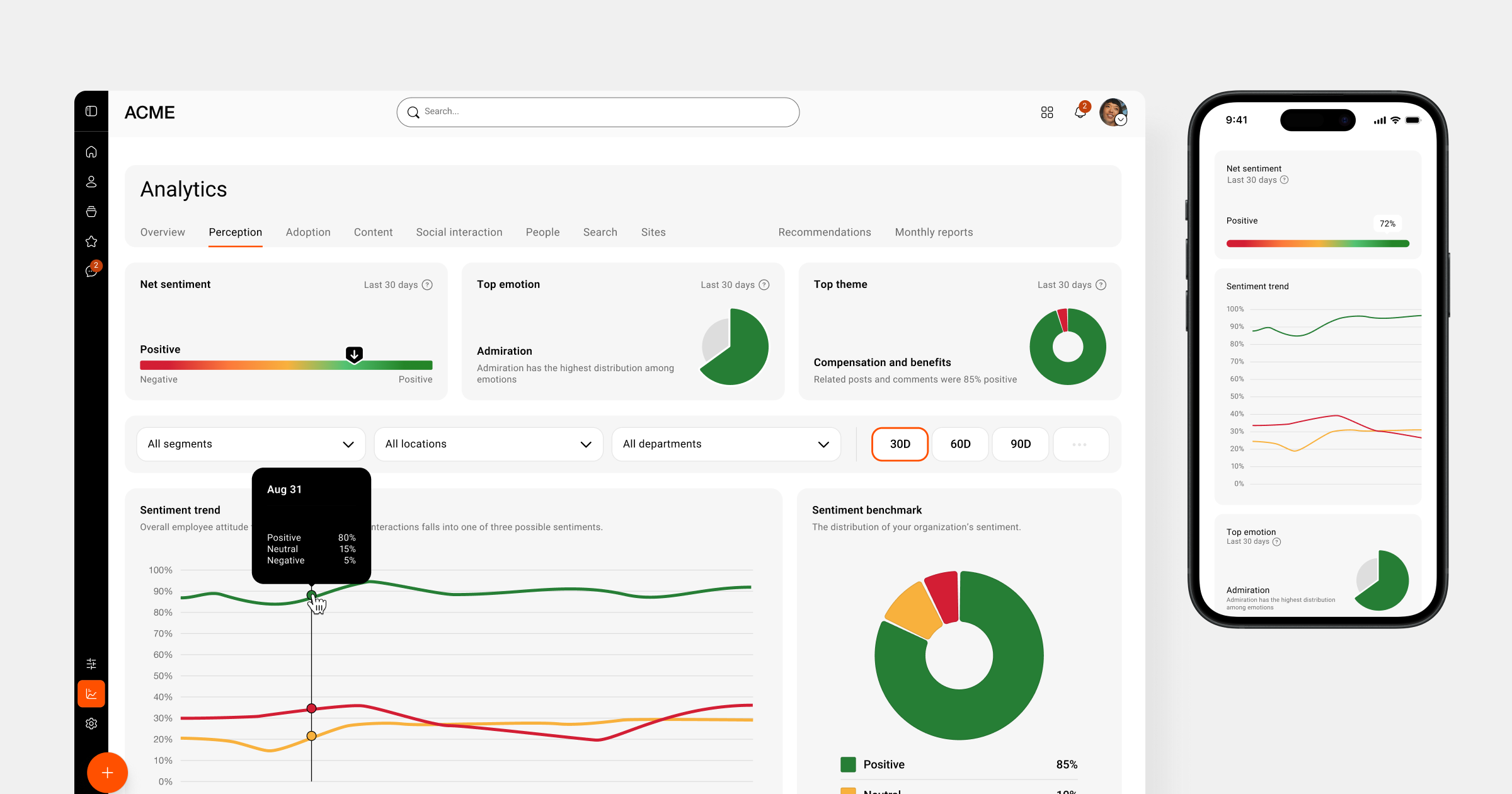
Here’s how Simpplr supports IC measurement:
- Campaign analytics show what comms were sent, who engaged, and what happened next — the record you need for a before-and-after comparison
- Audience segmentation shows results by group — frontline versus corporate, region by region, function by function — instead of one average that hides the real story
- Consolidated reporting cuts the manual work of piecing performance together after the fact from disconnected sources
Once you’ve defined success, assigned ownership, and connected to what leadership already tracks, that’s the infrastructure that can help keep the whole thing running.
Ready to see how Simpplr analytics show the impact of internal comms? Request a demo today.

Watch a 5-minute demo
See how the Simpplr employee experience platform connects, engages and empowers your workforce.
- #1 Leader in the Gartner Magic Quadrant™
- 90%+ Employee adoption rate