


You don’t need another AI tool to test. You need to know which one actually works vs. what’s hype.

How to implement agentic AI in your internal comms strategy
How to implement agentic AI in your internal comms strategy
Internal communicators aren’t lacking AI tools right now. We’re short on clarity. What’s safe to use? What’s actually useful? And how do you roll this out without creating more chaos than you solve?
In my last post, we explored what makes AI “agentic” — the shift from tools that respond to partners that act. AI that initiates work, remembers context, handles entire workflows, and adapts as circumstances change.
But none of that happens without your setup, guardrails, and oversight. If that sounds like extra work, it’s because it usually is — unless the system is designed right.
This post shows you what’s actually ready. We’ll look at three stages of maturity, five specific use cases based on your readiness level, and a rollout roadmap so you don’t break trust while you move forward.
The goal isn’t to race toward full autonomy. It’s progress you can defend — starting where the technology is proven, piloting where it’s emerging, and preparing for what’s next.

The agentic inflection point
The shift from task-level AI to workflow-level AI changes what’s possible for internal communications.
For those of us in IC, this is the moment we’ve been waiting for: the ability to deliver communication that’s timely, relevant, and personalized — without burning out the team while you’re at it. It’s the shift from constant reaction to proactive strategy. From “did anyone see this?” to proving impact in real business terms.
Early adopters are pulling ahead right now. Not because they bought shiny tools, but because they paired clear intent with strong feedback loops and governance. They’re using agents to rethink how work flows.
We’ve been here before. From print to digital, from intranets to social media, every shift felt huge. Every shift was messy. And every one made us sharper because we stayed grounded in why IC exists in the first place. We figured it out then, too.
Agentic AI is no different.
But it’s critical to understand that it doesn’t all arrive at one time — it evolves in stages. The vision is real. The organizations who succeed build competency before they expand autonomy.
Stage 1: AI-assisted workflows (available now)
At this stage, AI executes workflows that you design. You’re still orchestrating. You define the process, set the rules, and decide the approval gates. AI handles pattern recognition and smart execution. You’re faster and more consistent with an engine behind you.
Example: Manager toolkit generation. You trigger the workflow when an announcement goes live. AI identifies necessary assets based on announcement type, then creates them following your templates and brand guidelines.
You review the first few iterations, refine the templates, then let it run with spot-checks. AI doesn’t decide what people managers need to hear. You do. AI handles the repeatable (and admin) work that follows your decisions.
Best for: Repeatable tasks with clear quality criteria where the strategic direction is already set.
Stage 2: Semiautonomous execution (emerging now)
Here, AI starts to make tactical decisions within the boundaries you set. You define goals and constraints. AI handles decision-making within parameters and continuously optimizes.
The shift here: You’re not approving every move anymore. You’re monitoring outcomes and tuning the system based on what you see working.
Example: Survey follow-up campaigns. You set the goal (90% response rate) and boundaries (max touchpoints, timing rules, escalation triggers). AI determines when to send reminders, how to personalize messaging based on engagement patterns, whether to add touchpoints to underperforming segments.
It’s making judgment calls you’d normally make yourself — about timing, personalization, intensity. You monitor results and refine the boundaries as needed.
Best for: Complex workflows where timing and adaptation matter, and you’ve defined clear success criteria.
Stage 3: Autonomous agents (near-term future)
At this stage, AI operates independently to get things done with minimal oversight. You define outcomes and nonnegotiable boundaries. AI decides how to get there and coordinates across systems.
This only works if Stages 1 and 2 are solid. You need strong data, robust governance that can handle autonomous decision-making, and organizational trust earned through competent execution at lower autonomy levels.
Without that foundation — data quality, integration maturity, clear escalation protocols — autonomous agents create more risk than value. The technology exists. Most organizations aren’t ready yet, and that’s OK.
Example capability: Fully autonomous crisis communication that detects signals, determines when situations require comms, develops strategy, and deploys messages across channels within boundaries you’ve defined.
Most organizations today are building Stage 1 capabilities and piloting Stage 2 use cases. That’s right where they should be. The question isn’t whether agentic AI is ready for internal comms. It’s whether we’ll shape how it works in our organizations. Or let others define the future of communication work for us.
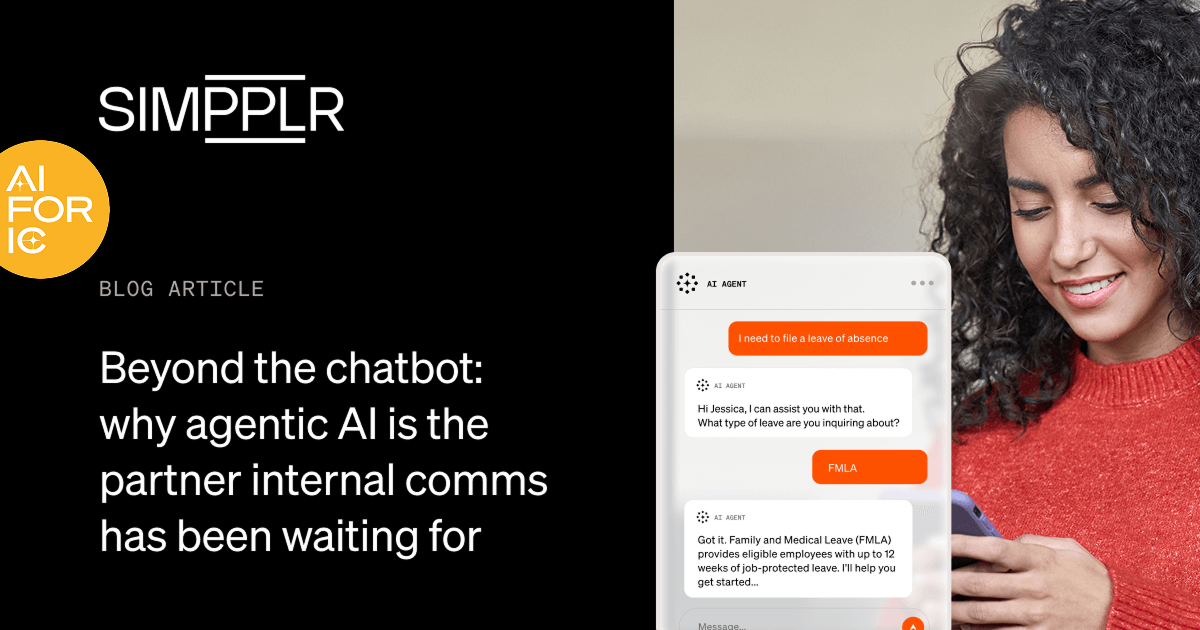
Five use cases you can implement now
These aren’t future-state ideas. They’re concrete, actionable, and matched to current technology maturity. Start with Stage 1 to build confidence. Pilot Stage 2 as trust grows. Save Stage 3 for when your data and governance can support it — and when your team is ready for it.
Stage 1: Manager enablement without the scramble
What it does: When an announcement goes out, AI builds the full manager toolkit: talking points, FAQ, email template, team meeting agenda. All in your voice and format.
What we do: Define what types of announcements need what assets. Review the first few rounds. Set the bar for quality.
Why it works: High volume, predictable structure, clear expectations. Managers get what they need faster. You stop rebuilding the same toolkit every time.
Stage 1: Employee questions answered — and learned from
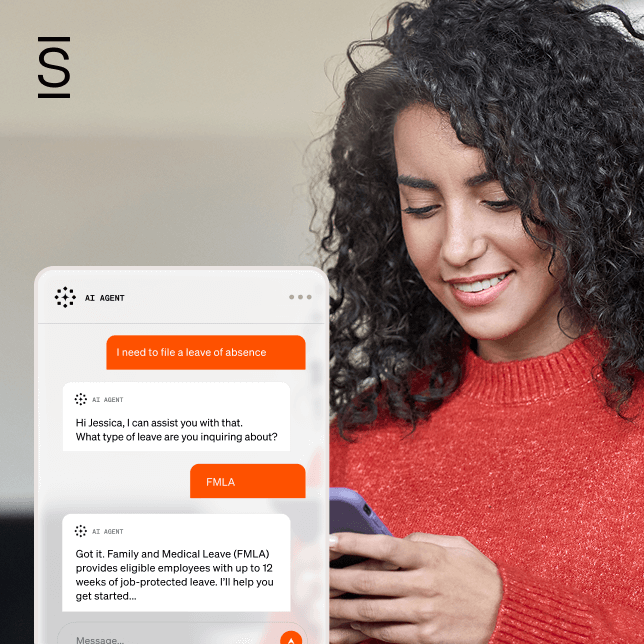
What it does: AI watches questions across channels. Answers the routine stuff from your knowledge base. Routes complicated questions to the right person. Spots patterns that tell you where content is missing.
What we do: Keep the knowledge base current. Set the rules for when to escalate. Review how AI is routing and answering.
Why it works: You get efficiency fast. Build confidence in the AI’s judgment. And finally see what employees actually need to know instead of guessing.
Stage 2: Personalized messaging that lands
What it does: AI figures out who needs what based on role, location, and past engagement. Recommends when to send and through which channel — based on real patterns, not guesses.
What we do: Set the personalization rules. Define the audience segments up front. Sign off on major strategic shifts.
Why it works: Solves the “one-size-fits-all” problem without creating manual work for every campaign. Better relevance means better engagement.
Stage 2: Engagement tracking that helps you act sooner
What it does: AI tracks performance across integrated channels and flags what’s underperforming. Suggests fixes for timing, format, or channel. Catches problems before you do.
What we do: Set performance goals. Approve recommendations at first. Decide what the AI can auto-fix and what needs our eyes.
Why it works: Proactive optimization rather than reacting to past numbers. The AI learns what works in your culture and helps you stay ahead.
Stage 3: Campaign orchestration (build toward this)
What it does: AI runs the whole campaign across channels. Adapts in real time. Makes calls about what to adjust based on how it’s performing against goals.
What we do: Define the goals and core message. Set nonnegotiables and boundaries. Approve major changes.
Why this is Stage 3: Needs proven success at earlier stages, integrated systems, and governance that can handle autonomous decisions. Worth the build, but not where we start. Teams that succeed with agentic AI don’t start everywhere at once. They start with manager enablement or employee questions, prove value, then expand into personalization and optimization. Full campaign orchestration comes last — after confidence is built and trust is earned.
A practical roadmap to agentic AI for IC
You don’t need another tool to test. You need a plan that actually works and won’t unravel in five months.
Build the foundation first
Get your data house in order.
Agents are only as good as the data they can access.
Start with an audit. What data do you have today? Campaign performance metrics. Employee engagement data. Content repositories. Comms calendars and workflows. What’s clean and owned and what’s scattered or outdated?
Organizations often try to skip this step and hit a wall fast. If your data is scattered across systems with no clear ownership, agents can’t do their job. This isn’t glamorous work. But it’s foundational.
Map your high-value workflows
Where do you spend the most time coordinating instead of creating? Which processes or workflows involve multiple hand-offs, approvals, and systems? What work is repeatable but still requires context?
Good candidates for agentic AI in IC:
- Multichannel campaign execution
- Onboarding communication journeys
- Manager enablement (talking points, FAQs, follow-up)
- Survey analysis and response
- Content repurposing across formats and channels
- Compliance and policy communication
Start with workflows that matter, not just tasks that annoy you. Some will be Stage 1 ready. Others will naturally grow into Stage 2 over time.
Design governance before you need it
A lot of folks stumble here. Without structured governance, agent ecosystems quickly become fragile, redundant and unscalable. Not because the AI is wrong but because no one knows who owns what.
Define this early:
- What decisions can agents make on their own?
- What requires human review?
- What’s the escalation path when agents are uncertain?
- How do we monitor and audit agent actions and outcomes?
- Who owns agent configuration and ongoing tuning?
The goal isn’t bureaucracy. It’s to create clarity so agents can move fast within guardrails you’ve set.
Pilot strategically
Choose the right first use case
Start small, but start with intention. The best first pilots are high volume, involve multiple steps that currently require coordination, have clear success metrics, and carry lower risk if the output needs refinement.
Good first agentic AI pilots:
- Stage 1: Manager toolkit creation (agent takes policy update, creates talking points, FAQs, email template, monitors questions, updates materials)
- Stage 1: Weekly digest compilation (agent monitors multiple sources, identifies key updates, drafts digest, personalizes for different audiences)
- Stage 2: New hire communication journey (agent sequences messages, adapts based on engagement, escalates if employee seems confused)
Perfection is not the goal. The goal is to build confidence and prove that the model works — especially before you hand over your most complex workflows.
Measure what truly matters
Don’t just measure efficiency — measure quality and impact.
Track metrics like:
- Time saved (but also, where is that time being redeployed?)
- Engagement rates (are agent-created campaigns performing as well as human-created?)
- Consistency and accuracy (is the agent maintaining brand voice and factual accuracy?)
- Employee sentiment (are recipients satisfied with the communications?)
- Escalation rate (how often does the agent need human intervention?)
These signals tell you whether the agent is helping or just moving fast.
Prepare your team
Don’t let your team rely on random YouTube videos to learn about agentic AI.
What comms teams need to know:
- How to configure and guide agents (not write code but set parameters and goals)
- How to review and refine agent output
- When to let the agent run versus when to intervene
- How to provide feedback that helps the agent improve
And communicate about the agents themselves. Employees will interact with these agents — they need context. Be transparent about how agents work, what they can and can’t do, and how to request human support when needed.
Organizations that communicate clearly about AI strategy tend to see higher adoption rates and greater productivity. Communication isn’t a downstream activity here. It’s a strategic enabler.
Scale thoughtfully
Build on what works
Extend successful pilots to adjacent use cases. Create specialist agents for different functions. But resist the urge to deploy agents everywhere at once.
As you scale, you’ll need cross-functional collaboration. Business domain experts who understand the workflows. Process designers who can reimagine how work gets done. AI engineers who can configure and maintain agents. IT architects who ensure integration. This isn’t just an IC project anymore.
Design for agent coordination
As you deploy multiple agents, you need coordination. An AI concierge that routes requests to the right specialist agent. Systems that prevent agent sprawl and duplication. Authentication and authorization across agents. Observability so you know what all your agents are doing.
Without this coordination layer, you risk creating new chaos while solving old problems.
Continuously govern and refine
The biggest challenge won’t be technical. It’ll be human: earning trust, driving adoption, and establishing the right governance to manage agent autonomy.
Plan for regular reviews of agent decisions. Feedback loops from employees. Adjusting autonomy levels based on performance. The goal isn’t replacement but empowerment. When accuracy is high, escalation is low, and your team trusts the system, you’ll know you’re ready for more autonomy.
And then the work evolves again.
Three mistakes that derail agentic AI implementations
The biggest implementation failures don’t come from bad technology. They come from expectations that don’t match reality.
Expecting full autonomy too soon
Teams see the vision of Stage 3 and try to deploy it immediately, without building Stage 1 and 2 foundations first. They want the AI to “just handle it” before they’ve established the data foundation, governance frameworks, or organizational trust to support autonomous decision-making.
The result: Failed pilots, lost trust, teams reverting to manual processes because “the AI didn’t work.” The technology works. The implementation sequence was wrong.
The fix: Match autonomy level to readiness. Prove value at Stage 1. Expand to Stage 2 deliberately. Build competence before independence.
Underinvesting in governance
Many organizations treat AI agents like software tools instead of decision-makers. They deploy without clear ownership, monitoring frameworks, or escalation paths for edge cases.
What happens: Inconsistent outputs, compliance risks, shadow AI popping up everywhere as teams build workarounds. Agent sprawl where no one knows what’s running or who’s responsible for it.
The fix: Governance that scales with autonomy level.
- Stage 1 needs clear quality standards and review processes
- Stage 2 needs decision boundaries and monitoring dashboards
- Stage 3 needs robust audit trails and intervention protocols
Governance isn’t red tape. It’s what makes speed sustainable.
Skipping change management
Organizations focus on technology selection and deployment timelines. They forget that PPL will work alongside these agents, that employees will interact with agent-generated communications, that managers need to understand what the AI is doing and why.
The result: Resistance, underutilization, failure to realize ROI. Teams that don’t trust the outputs and duplicate the work manually just to be safe.
The fix: Comms strategy for the AI itself. Be clear about how agents work, what they can and can’t do, how to escalate when needed. Train teams not just on how to use the tool but on how to partner with it. Organizations that treat AI strategy as a communication challenge — not just a technical one — see stronger adoption and better outcomes.
The path to agentic AI is evolutionary, not revolutionary. The organizations that succeed won’t race to deploy the most advanced capabilities first. They’ll build systematically, govern intentionally, and earn trust step by step.
How Simpplr is building for the agentic AI era
Internal communications is uniquely positioned to benefit from agentic AI — but only if it’s designed for how this work happens. Not retrofitted from other functions like marketing and not borrowed from IT. Also, not optimized for speed at the cost of trust. That’s why we built Comms AI.
In my role here at Simpplr, I had an opportunity to help shape it. And I did that from lived experience, not theory. I’ve lived the invisible work of internal comms. I’ve herded cats (the coordination, rewrites, approval, reminders, and follow-ups). The pressure to “double-check-12-times” every word before sending something out the door. The reality that one message can land just fine on paper and still be completely wrong for the moment.
We don’t need AI that replaces judgement. We need AI that protects it.
Judgment is one of the hardest parts of our job in comms. And it carries the most risk. Knowing when to slow down. When to escalate. When a message is technically correct but feels/vibes wrong. When being quiet is safer than being fast.
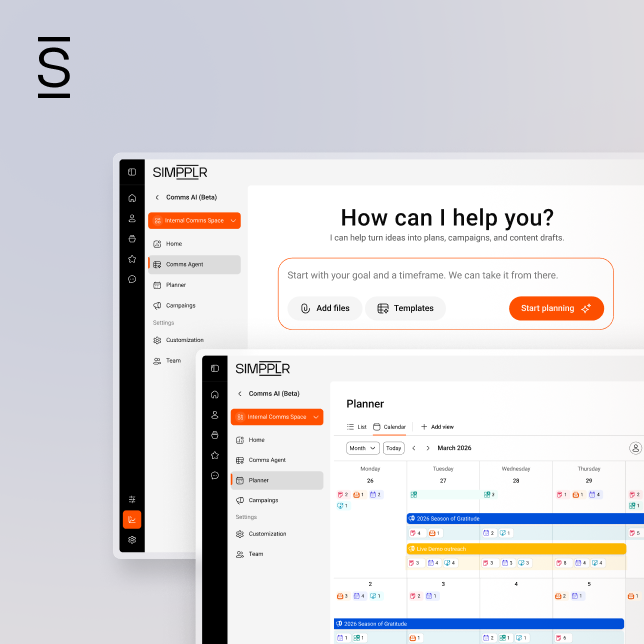
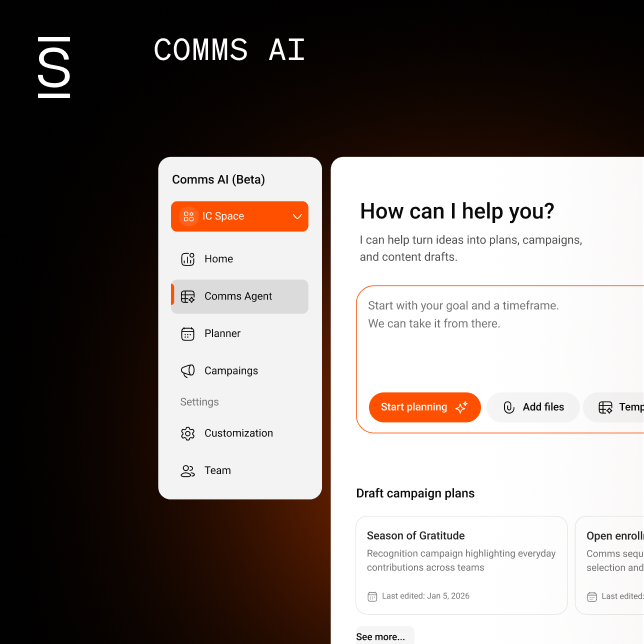
Comms AI was built to support that judgment, not bypass it. It’s an intelligent workspace that keeps campaign planning, content creation, and delivery across lots of channels in one flow.
Because that’s how IC teams actually work. We’re conductors of the proverbial orchestra. We know end-to-end campaigns are shaped by context, voice, awareness, and accountability.
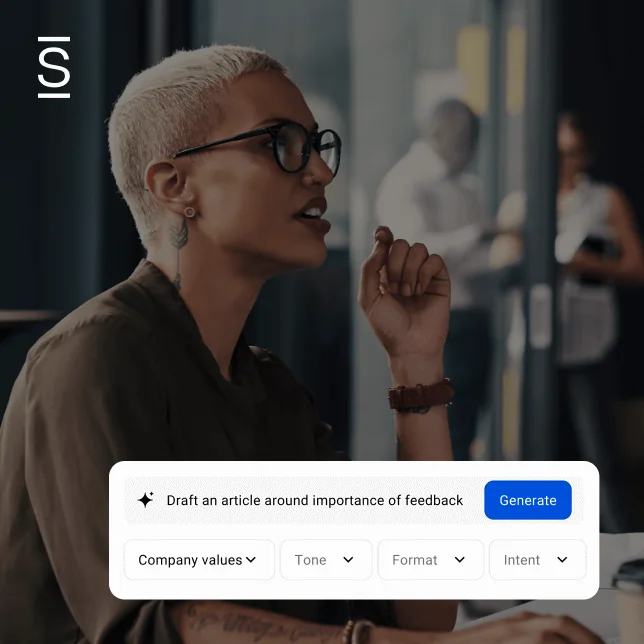
This is Stage 1 agentic AI in practice. You define the goals, boundaries, voice, and standards. Comms AI handles the execution — building campaign structures from meeting notes, drafting content that matches sender personas, routing approvals through your team, publishing across intranet, email, Slack, or Teams. Nothing publishes without human review. And nothing operates outside of your framework and guardrails.
As teams build confidence and competence, we’re designing for what comes next — expanding autonomy deliberately, as governance, data maturity, and trust grow alongside it. Because the best technology doesn’t just move fast. It moves at the pace of trust.
Explore how Comms AI brings agentic capabilities to internal comms. Request a demo today.
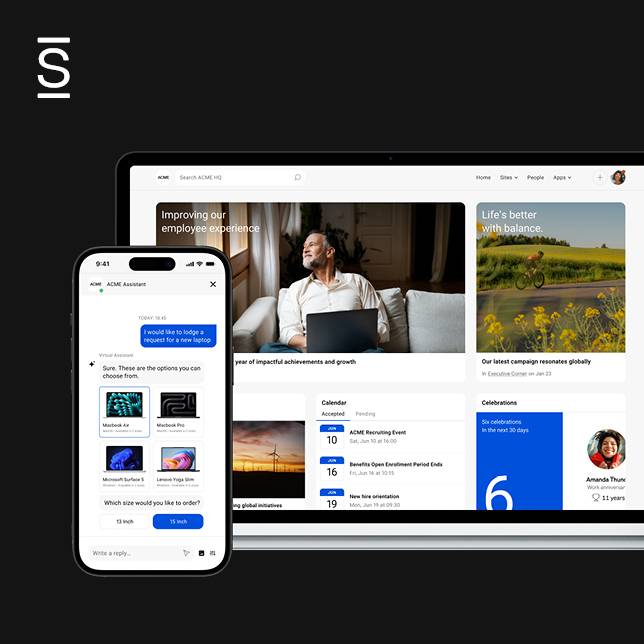
Watch a 5-minute demo
See how the Simpplr employee experience platform connects, engages and empowers your workforce.
- #1 Leader in the Gartner Magic Quadrant™
- 90%+ Employee adoption rate