



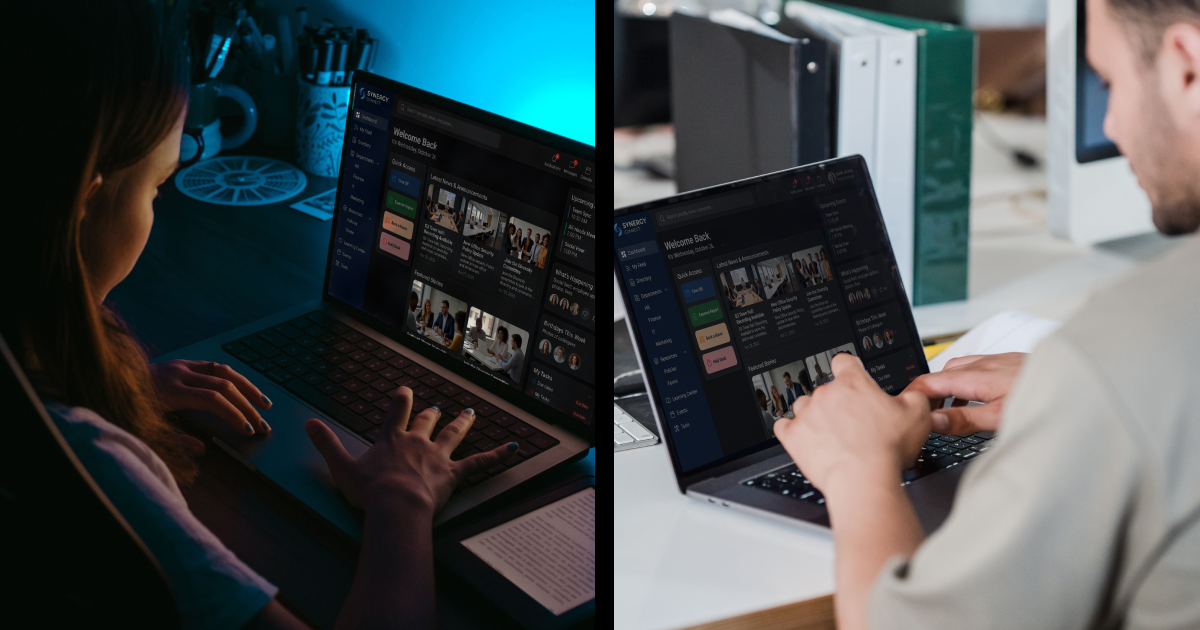
Every employee opens the same intranet homepage. It doesn't matter what team they're on, what they do, or what they need. The same banners, links, and announcements greet everyone. In trying to be everything for everyone, the intranet homepage ends up feeling relevant to no one.
The homepage problem: why one intranet home stopped working
The homepage problem: why one intranet home stopped working
That’s the underlying failure sitting underneath most intranet homepages today. They became generic over time as announcements, campaigns, and business priorities competed for the same limited space. A salesperson, a frontline worker, a people manager, and a new hire all log in with different priorities, yet they’re greeted by the same content and expected to find what’s relevant on their own. Employees learn to scroll past it, search around it, or ignore it altogether, which defeats the entire purpose of having a homepage in the first place.
Three out of four say tailoring communication is critical. One in five actually does it. (Gallagher 2026 Employee Communications Report)
Instead of forcing every employee through the same front door, organizations need landing experiences designed around specific roles, departments, locations, or business priorities. When employees see content, tools, and actions that reflect what matters to them, they spend less time searching, complete tasks faster, and engage more with the intranet.
The relevance gap
Internal communicators already know the problem. Gallagher’s 2026 Employee Communications Report, based on responses from more than 1,300 communications and HR professionals across 40 countries, reflects the gap between what teams know they should do and what their tools actually let them do.
The report highlights:
- 83% of communicators say information overload is a growing problem
- Three-quarters call tailoring messages critical, but only 20% do it regularly
- Only 18% are satisfied with their channel’s ability to personalize communications
That gap reflects a combination of technology, capacity, governance, and organizational constraints. Communicators are not choosing to broadcast. Many are working with platforms that publish well and target poorly, so they compensate by sending everything to everyone.
Why a shared homepage no longer works
When a homepage stops working, the instinct is to add a new section, a new banner, a new tile promising to finally surface the right thing for the right person. The impulse is understandable. Adding something feels like progress, and it’s easier to ship a new module than to rethink who the page is actually for.
But the failure is rarely about any one piece of content. Usage drifts down, updates get missed, and nobody can point to a single cause, because four things are usually happening at once to a homepage:
- Treats every employee the same. A single homepage gives everyone the same experience, regardless of their role, region, or priorities. Different audiences need different information, tools, and starting points.
- Stops at information delivery. Most homepages can tell employees what matters but miss providing what they need.
- Give employees little reason to return. A static, crowded homepage becomes a place employees visit only when they are directed to. Without relevance, engagement declines, and important updates get missed.
- Fails to keep pace with organizational change. Rigid layouts and centralized ownership make it difficult to adapt the homepage as teams, priorities, and organizational needs change.
These are not four separate problems. Fixing these issues requires a different kind of entry point.
What audience-aware landing pages actually require
“Personalized home page” has been in intranet marketing for quite sometime. The phrase covers everything from a first-name greeting to a genuinely different experience per workforce, so it is worth being specific about what type of personalization makes a difference. It comes down to three things:
Targeting that reaches below the page
Serving different audiences different pages is the easy half. The harder half is targeting inside a page, so a section or a single tile can be restricted to a subset of the people who can see the page it sits on.
Without that, every variation forces a whole new page. With it, one page can carry a shared news section and a section that only appears for people in a specific region for example.
Someone accountable for each audience
A page nobody owns goes stale in a quarter. Personalization at scale needs delegated ownership, where the people closest to an audience can create and maintain that audience’s page without holding a full administrator role.
Shared accountability also removes the bottleneck. When HR can update the benefits page without filing a ticket, the page stays current.
Room for the employee
Governance and personal control are usually presented as a tradeoff. They do not have to be. A page can be centrally governed while leaving one section for the employee to fill with the tiles they use most.
A home you can act from
Relevance solves only half of the homepage problem. Employees may see exactly the right information and still have to open four other systems to do anything about it.
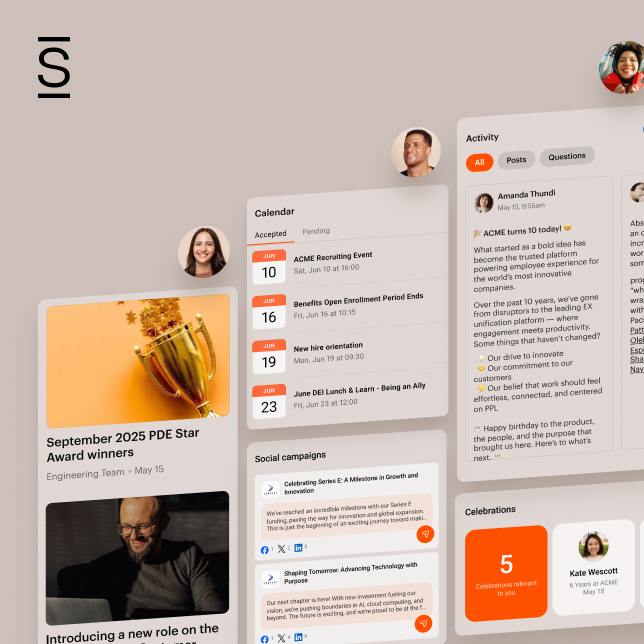
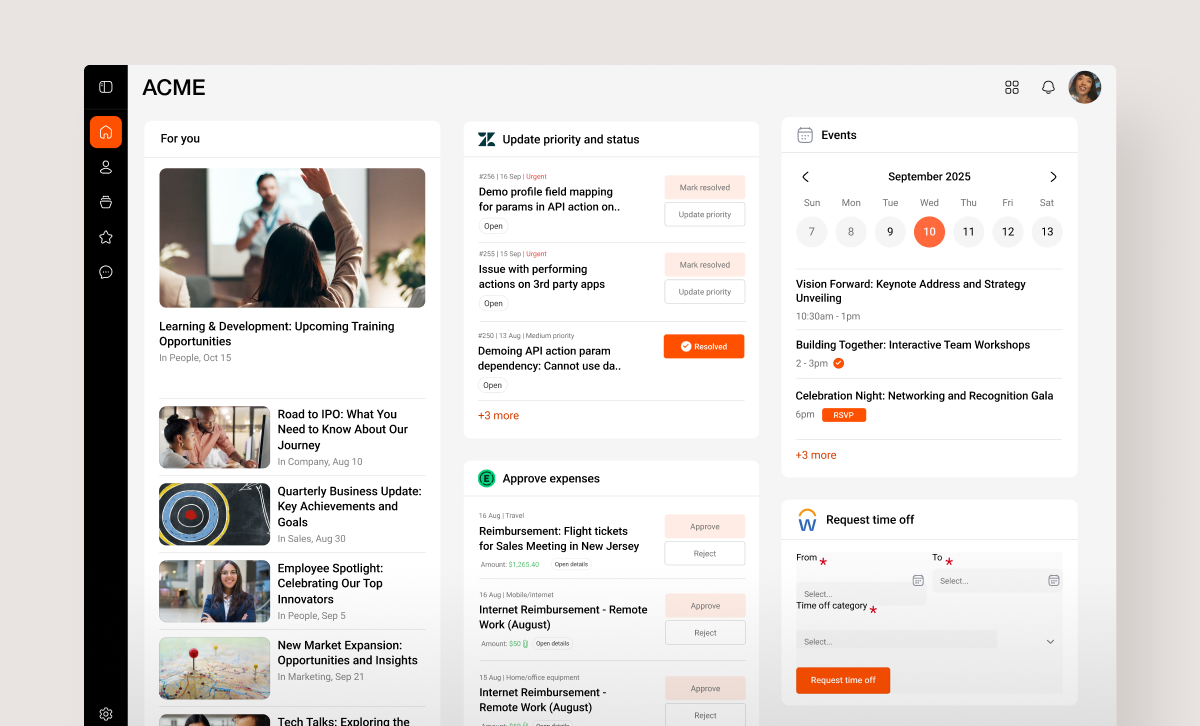
App tiles change what the page is capable of. They bring live information and actions from connected systems into the landing page, so employees can see what needs their attention and take the next step from the same place.
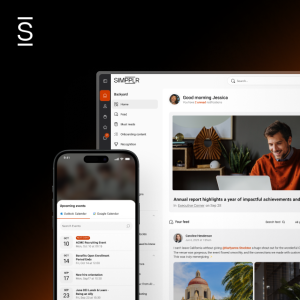
Rather than cluttering the interface with more links, Simpplr pulls live data from the platforms where work actually happens. Employees can view their vacation balance via Workday or BambooHR and finalize time-off requests directly via their intranet. Those requiring IT help can open a ServiceNow or Jira Service Management ticket without navigating away. Support and HR teams can surface active ticket queues or candidate data from Greenhouse and Zendesk, unifying these disparate tools into a single, actionable workspace.
Prebuilt tiles support common enterprise systems, while app managers can connect other systems and configure custom tiles without writing code. Access controls come from the source system, helping ensure employees see only the information they are authorized to access.
Tiles can also be targeted to the people they apply to, even when they sit inside a section visible to a wider audience. A people manager can be given approval workflows that an individual contributor does not need. HR can create an experience centered on onboarding or benefits. An IT team can surface service-management workflows. The point is not to put every application on every homepage; it is to bring the few pieces of each application that matter to that employee into the place they already work from.
That is a much more accurate definition of a personalized intranet homepage. It’s not simply the page where employees are served up personalized news, but it’s also the place where they can find what they need and do something about it.
What a truly personalized home should actually do
Multiple audience-targeted homepages are no longer rare. The differences appear one level down: how deeply targeting works, who can manage the experience, and whether employees can act from the page without creating another layer of administration.
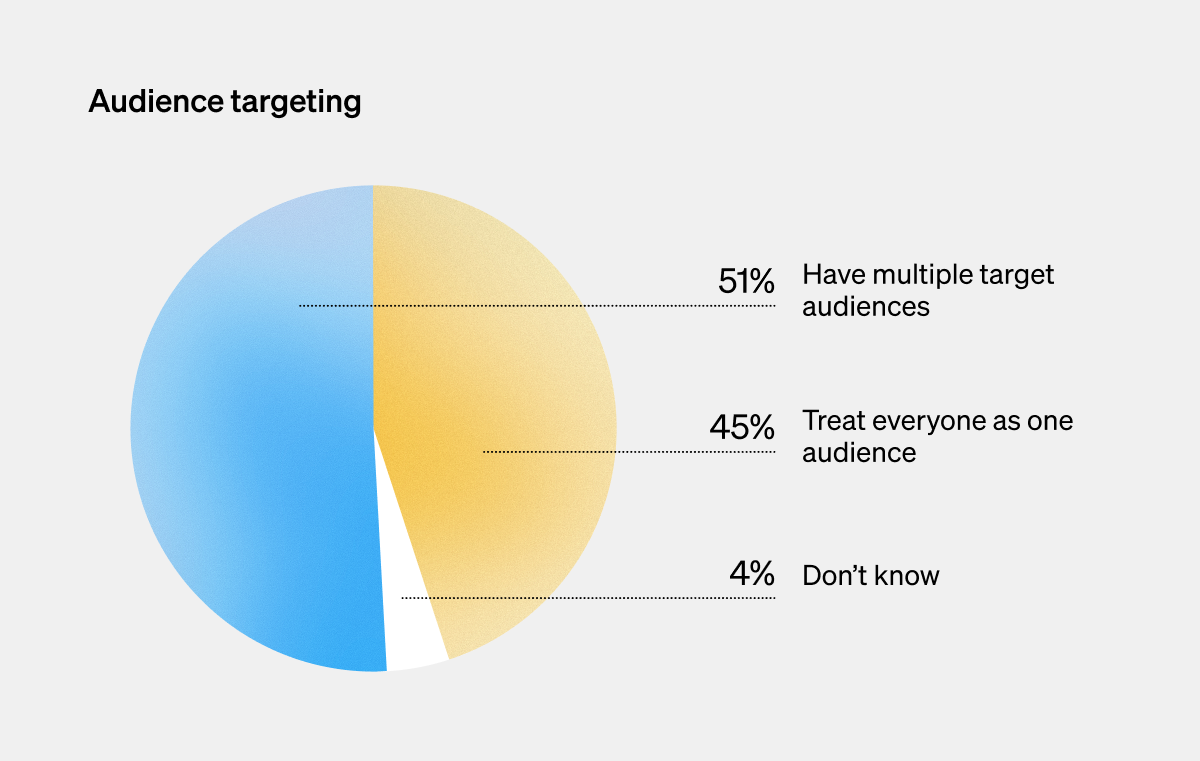
One-quarter of the respondents surveyed for Simpplr’s report say it’s difficult to send messages to unique audiences. Just over half (51%) say they have multiple target audiences, while 45% treat everyone as one audience.
The challenge, then, is to give those audiences a more relevant experience without creating more work for the teams managing the intranet. That means personalization needs to go beyond showing different content to different groups.
When evaluating a personalized intranet, consider whether it can deliver on the following:
| When evaluating a personalized intranet, ask: | Why it matters |
|---|---|
| Can the home experience change based on who the employee is? | Different roles, locations, and employee groups have different priorities. Personalization should reduce what employees have to filter through. |
| Can individual sections and tiles be targeted? | Two employees can share the same landing page while seeing different sections, content, tools, or actions relevant to them. |
| Can employees actually complete work from the homepage? | The best intranet home does more than direct people elsewhere. It should help them submit requests, check status, or act on approvals from the same place. |
| Can it bring information and tasks from other business systems into the home? | Surfacing work from HR, IT, and other systems reduces app switching and gives employees one place to see what needs their attention. |
| Can you evolve the experience without rebuilding what already exists? | Personalization loses much of its value if every new audience or homepage model creates another administrative burden or forces teams to recreate existing work. |
A personalized home should reduce the amount of information employees have to filter through, bring the right tools and actions closer to them, and adapt as their role or needs change. At the same time, communications and intranet teams should not have to create and maintain a separate experience for every audience just to make that happen. Personalization should make the intranet easier to use, not harder to manage.
What this means for your organization
A personalized, action-driven entry point can become the place where communication, resources, and everyday work come together without giving up central governance.
That is what Simpplr Landing Pages is built to provide. Instead of one static dashboard shared by everyone, organizations can create multiple audience-aware workspaces for a specific audience or purpose, from company news and HR benefits to daily tasks and regional resources.
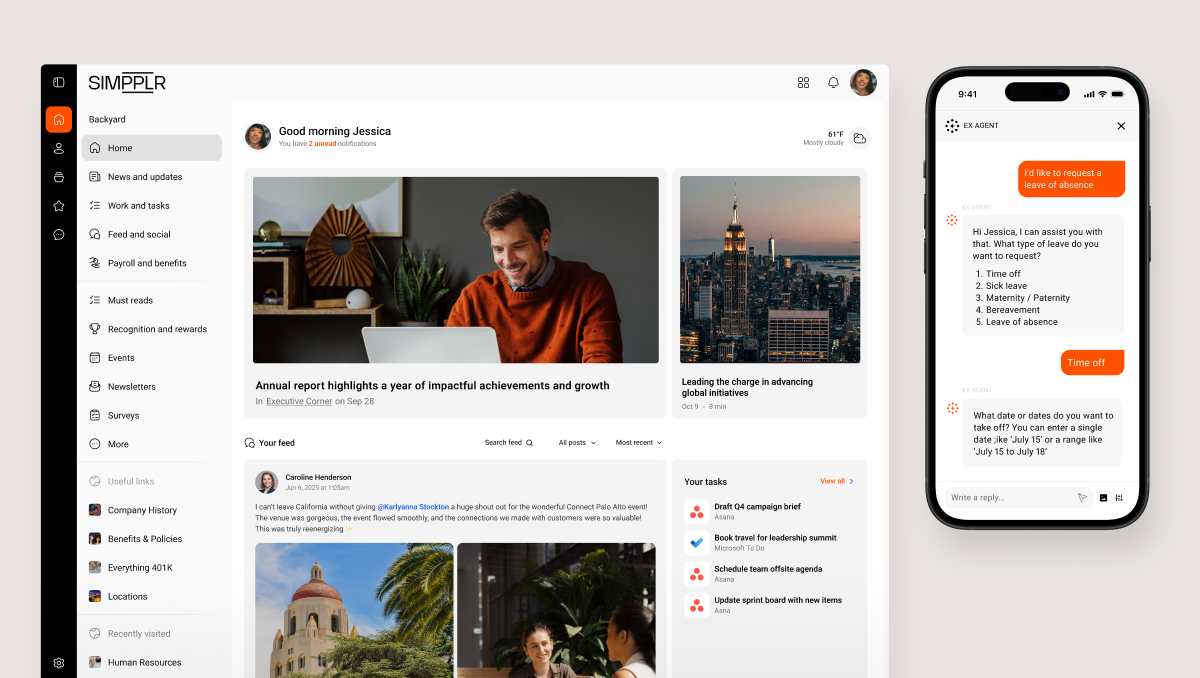
Built on Audience-Based Access Control, targeting reaches the page, section, and tile level. A flexible grid builder makes layouts easy to compose, employees can personalize their own section, and every page has its own URL. Existing home and site dashboards migrate automatically, with no pages or content to recreate by hand.
Ready to see what an audience-aware workspace could look like for your employees? Request a demo today.
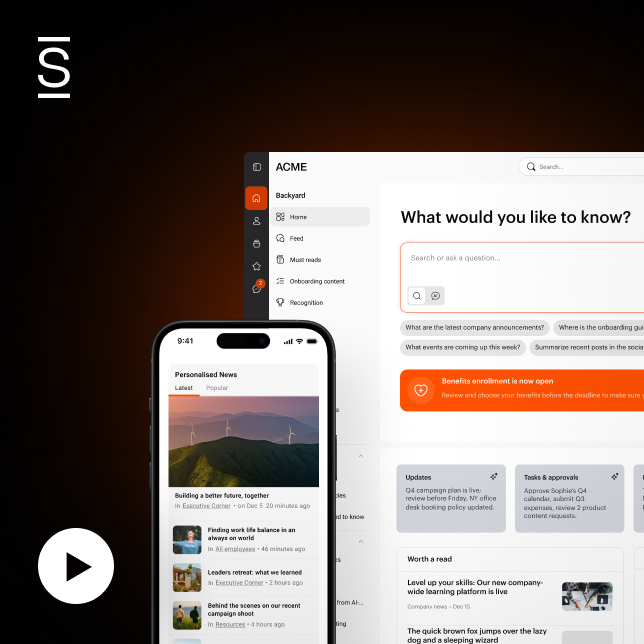
Watch a 5-minute demo
See how the Simpplr employee experience platform connects, engages and empowers your workforce.
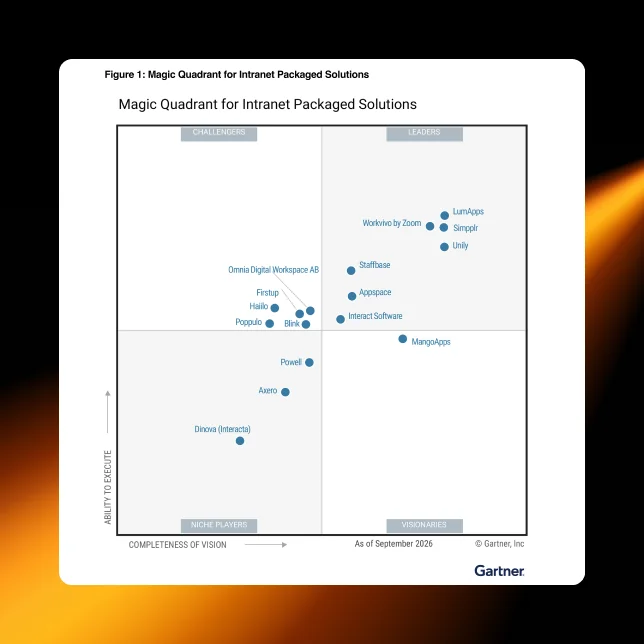
- #1 Leader in the Gartner Magic Quadrant™
- 90%+ Employee adoption rate