



A global intranet is a private, secure, company-wide network built for international organizations. It works as a centralized virtual headquarters where employees across countries and time zones access shared files, collaborate on projects, and stay connected to company policies, resources, and culture.
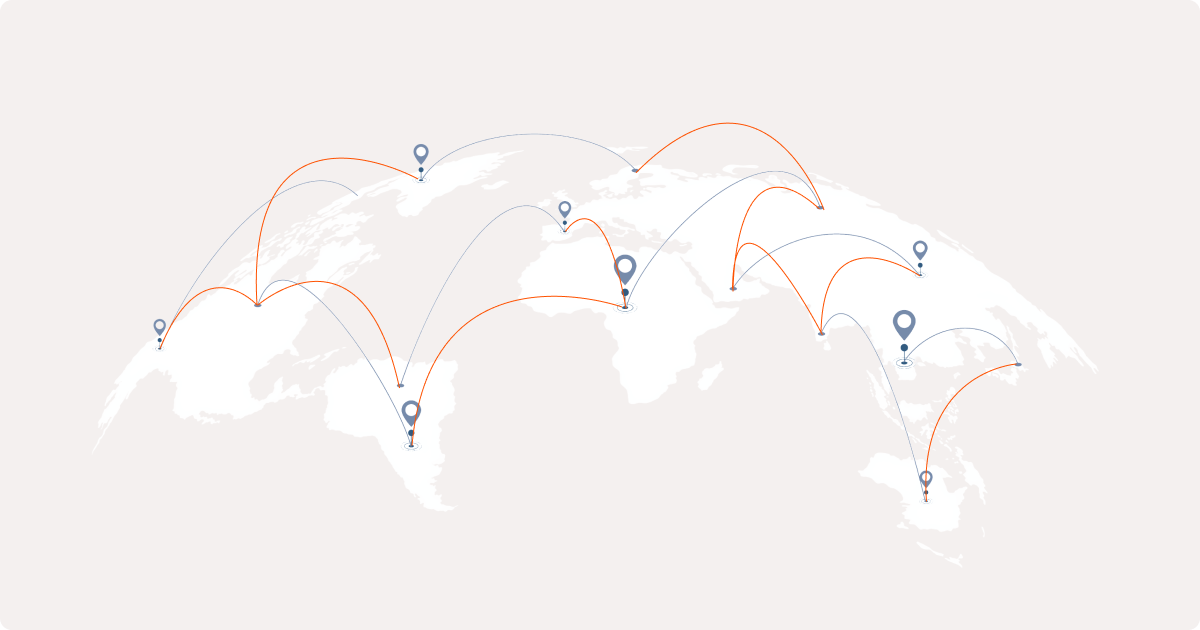
Key characteristics of a global intranet
A global intranet is defined by how it’s built, rather than how many people log in. A handful of traits separate a platform engineered for a global workforce from a local one that distant employees can simply reach.
Native multi-language and multi-locale support
Language and local formats are built in from the start, never included as a translation plugin. So, a team in Tokyo and another in Frankfurt each get an experience made for them, down to the dates and currency they see every day.
Distributed or cloud-native infrastructure
The platform serves content from a location close to each user, so performance never depends on distance from headquarters. A page that loads instantly at home loads just as fast three continents away, which is what keeps remote teams using it.
Centralized governance with regional flexibility
Headquarters sets the standards and security policies everyone follows. Regional offices still publish their local news and resources without waiting on a ticket. Both happen at the same time, on the same platform, with no conflict between the two.
Unified identity and access management
Every employee receives a unique login and standardized permissions across all regions and devices. International employees don’t wait for an HQ admin; they use self-service recovery, which reduces IT tickets and shifts routine workload to local governance teams. Access stays governed from one place, which keeps security tight.
Personalization within one platform
A sales representative in Singapore and an HR lead in Toronto open the same intranet and see different things. Each view contains the role and location, so employees find what they need fast and skip the content meant for someone else.
Real-world examples of global intranets
Different companies may use a global intranet platform in different ways. It depends on where their people are, their roles and what those people need. Here are three common examples of a global intranet in practice.
Bringing many regional sites into one
When companies grow across regions, their intranet platforms are expected to grow as well. However, teams may end up managing separate sites, duplicate pages, and different versions of the same information. A global intranet brings these experiences together without removing local relevance. For example, Envestnet migrated 30,000 pieces of content from Jive across 200 sites, showing how one platform can help simplify a complex content environment.
Aligning offices across time zones
For global teams, the workday does not start and end in one place. A global intranet gives employees a reliable place to catch up on decisions, updates, project pages, and leadership messages without digging through chat threads or crowded inboxes. To put things into perspective, Datto used Simpplr to centralize important communications so employees did not have to search through Slack channels or emails. This is exactly the kind of clarity distributed teams need.
Bringing newly acquired companies together
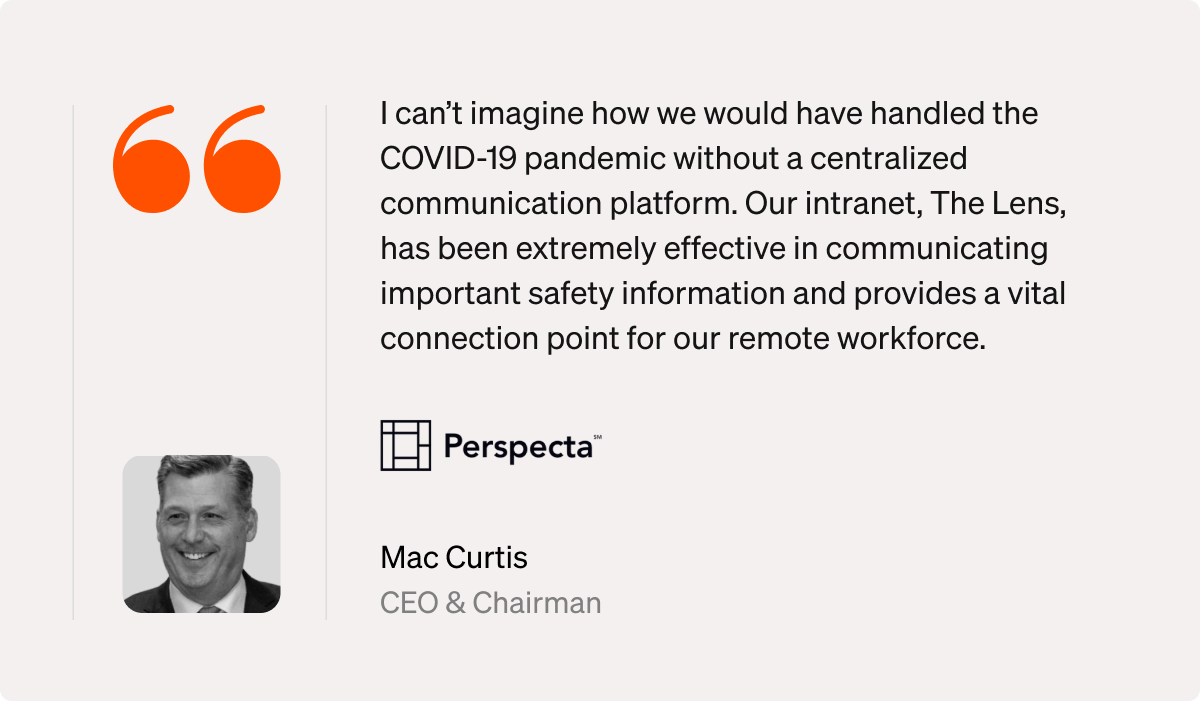
After a merger or acquisition, employees need more than access to tools. They need a clear sense of the new company, its leaders, policies, values, and direction. A global intranet can become that shared home. In a three-company merger, Perspecta was formed by the merger of the public sector business of DXC Technology with Vencore and KeyPoint Government Solutions. When the businesses merged, Perspecta needed to form a new, cohesive brand identity. With Simpplr they were able to achieve a 95% adoption rate across 14,000 distributed employees.
Why global companies need a dedicated intranet
When your employees and resources are distributed across countries, staying connected requires a system everyone can count on. A dedicated global intranet gives everyone one trusted place to find information, reach each other, and feel part of something bigger. Here’s why that matters.
One source of truth everyone trusts
When information is lost in scattered emails and chat threads, people assume and mistakes follow. A global intranet gives everyone one place to find the current policy, the latest update, and the right contact via unified search. So, instead of digging through Google Drive, Slack, or Teams, employees surface the most relevant, recent document in seconds.
A stronger sense of belonging
A global intranet ensures that employees from different countries don’t feel out of place, as the headquarters isn’t in their country. Local teams see their own news sit beside company-wide announcements, leaders feel present rather than distant, and people in every office feel like they belong to one company, not a far-flung branch. This positive company culture also instills a sense of belongingness among the employees, resulting in closely knit teams.
Integrated workflows that move work forward
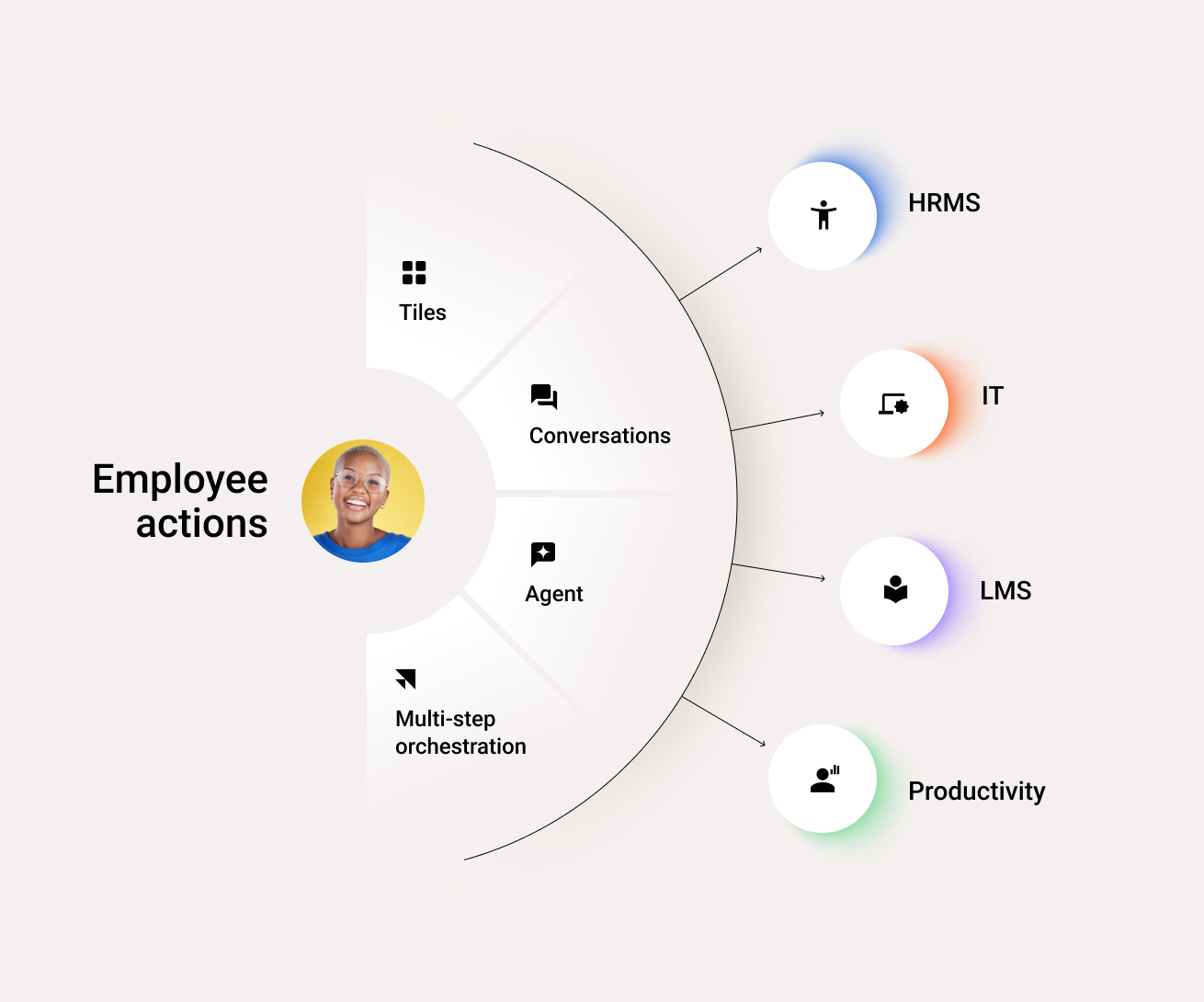
A global intranet that is purpose-built for your company allows you to bring HR, IT, and business systems into one place. For employees, this translates to submitting IT requests, leave approvals, employee self-service workflows, and tracking status without switching apps. Work moves faster because the intranet connects people to processes, not just pages.
Global access intranet vs. global intranet
It’s a misconception that these two terms mean the same thing. They don’t, and the mix-up often leads to budget and architecture mistakes.
Global-access intranet is reachable from anywhere (e.g., over the public internet) with secure authentication (SSO/MFA), regardless of the user’s location or network. It’s “global” in reach (how you get to it), not necessarily in organizational scope. On the other hand a global intranet is a single, organization‑wide intranet that serves all regions, business units, and languages.
Global access means people abroad can reach your intranet (connectivity and availability). A global intranet means it was built for them (global coverage and design).
Why a global-access intranet is not a global intranet
When companies scale internationally, it’s tempting to DIY a “global intranet” by stretching a local, legacy platform and exposing it globally. That approach creates a system that’s reachable worldwide but not built for worldwide use — leading to gaps in performance, governance, and user experience.
Legacy intranets are usually architectured around a primary region or data center. As the business enters new countries, the platform is stretched instead of re-designed.
The consequences include:
- Sluggish performance and latency for distant users
- Inconsistent experiences across regions, languages, and business units
- Growing IT overhead for patchwork security, caching, and content distribution
- Fragmented governance and compliance risks across jurisdictions
- Difficult scaling for search, personalization, and analytics at a global scope
A global intranet works the other way. Instead of compromising performance for uptime, it understands and adapts to the role it is locally meant for. This flexibility in operations turns a stretched local tool into a real international digital workplace.
How a global intranet differs from a traditional intranet
Traditional intranets often run into operational inefficiencies when operating overseas. This is why it makes sense to understand what makes a global intranet a better alternative to legacy intranets and why.
| Dimension | Traditional Intranet | Global Intranet |
|---|---|---|
| Scale and geographic reach | Tuned for one headquarters or a cluster of nearby offices | Serves different continents, time zones, and network conditions at once |
| Multi-language and multi-region support | Single language, translation handled as word-swapping | Locale-aware formats (dates, currencies, units) and UX that feels native, with regional hubs |
| Governance and IT ownership | One IT team, one administrator, every decision central | Clear global, regional, and shared ownership under one framework |
Scale and geographic reach
A traditional intranet operates for one headquarters or a cluster of nearby offices. A global employee intranet has a broader job. It serves people on different continents, in different time zones, under very different network conditions – all at once. This feature makes performance, data routing, and admin responsibility more convenient. Local platforms are rarely built to carry that load.
Multi-language and multi-region support
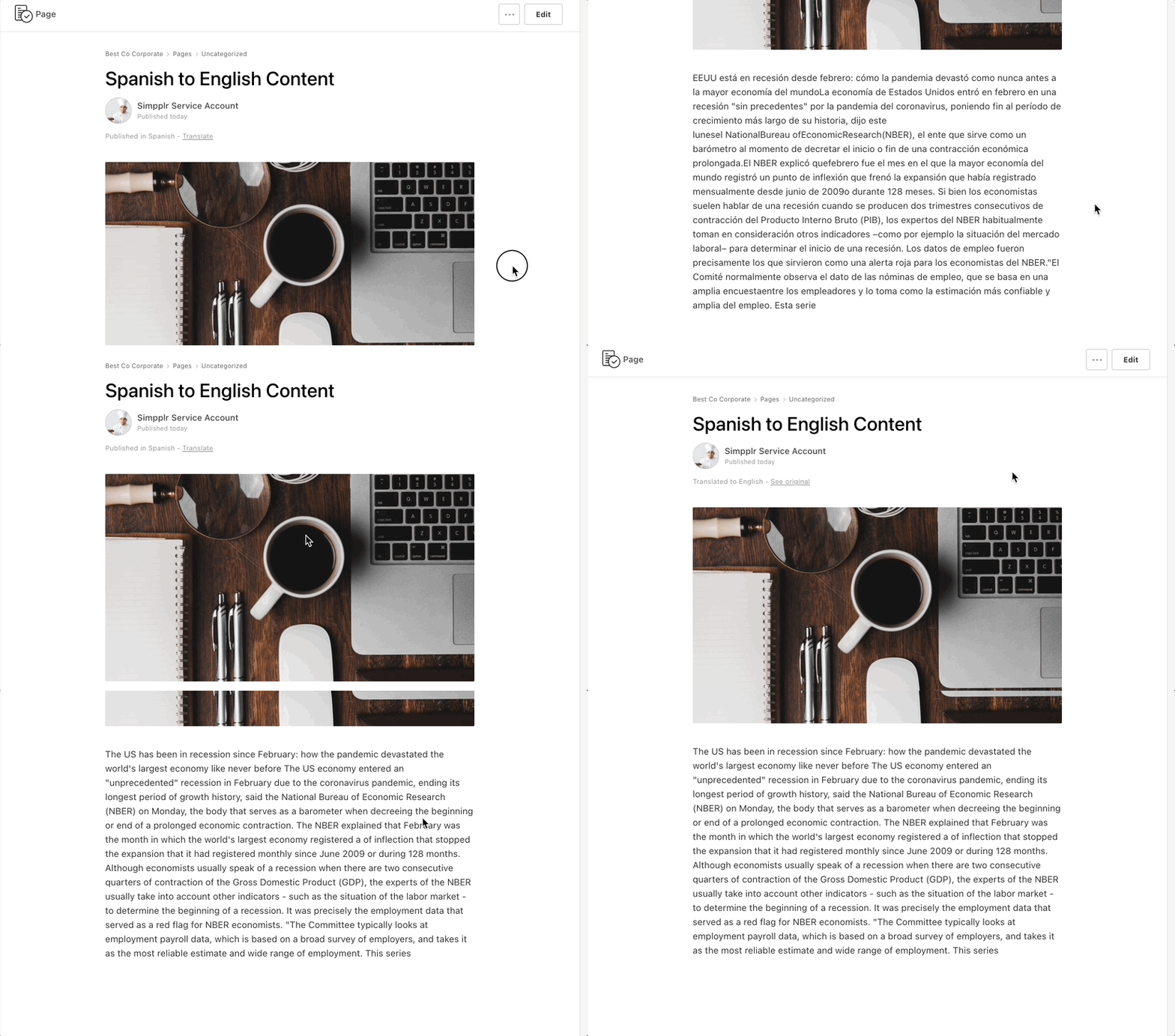
Real language support is more than swapping words from one language to another. A global intranet handles locale along with language. Dates, currencies, and units show up in the format each region expects, and the experience follows UX patterns that align with the local vibe. Regional homepages give each local team its own hub without breaking the shared experience.
Governance and IT ownership at scale
On a traditional intranet, there is one IT team, one administrator, and every decision in one place. Stretch that across countries and that becomes a problem. A global intranet includes a framework that specifies who owns the platform globally, who manages it regionally, and how those roles work together. Without this feature, regional teams are often forced to make isolated decisions that impact their work ecosystem.
Global intranet infrastructure and deployment needs
Infrastructure and deployment of legacy and global intranets might seem similar to you. However, such choices vary by team and location. So, a rigid infrastructure or constrained deployment needs might limit an intranet’s capabilities. A global intranet platform understands this. It has a clear view of how people work, where they work from, and what the intranet has to support over time.
On-premise vs. cloud-hosted intranet deployment
On-premises means you host the intranet on your own servers: lower licensing costs over time, but a heavy maintenance burden and dedicated hardware in each region. Cloud-hosted means a vendor runs it on cloud infrastructure: easier global scaling and lower overhead, with trade-offs around data residency, vendor dependency, and integration. For most first-time global intranet builds, cloud-hosted is the practical default.
Content delivery and performance optimization
Once you’ve decided where the platform lives, the next task is keeping it fast for everyone. A content delivery network (CDN) keeps copies of your content in many places around the world, so each person loads it from somewhere nearby instead of from one faraway server. Always test the platform load speed in the regions where your people actually work, and test it the way they really use the platform makes sense for them.
Security, compliance, and data residency
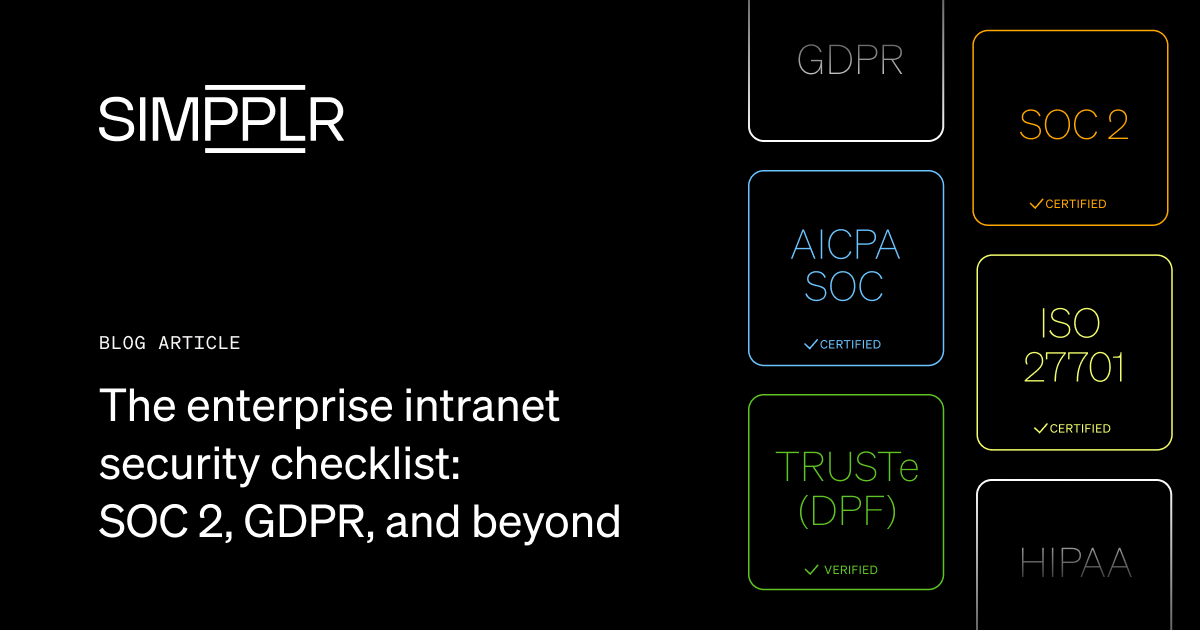
Different jurisdictions limit where employee data can be stored and processed: the GDPR in the EU, the PDPA in Singapore, the LGPD in Brazil, India’s DPDP Act, and more. A global intranet has to be built with these constraints in mind from the start, because retrofitting compliance onto a live platform is expensive and often makes the process more complex.
Data protection laws now cover 137 of 194 countries, so a global intranet has to plan for data residency from day one.
Balancing global reach with local relevance
One platform for everyone across the globe may not be suitable for local teams. Strong IT teams build platform versions of the same intranet platform that feel local everywhere, yet stay easy to manage from the center. Here’s how.
Governance models for multinational intranets
Governance decides who makes which call. Centralized governance puts one global team in charge: consistency and clean compliance, but it slows answers to regional needs. Federated governance gives regional teams their own slice within guardrails: agile locally, but reliant on coordination. A global intranet is about mature deployments that work on a hybrid model. The center often (but not always) owns the infrastructure and security, while regions own content.
Localization with content personalization
Localization is more than translated text. It makes the platform feel built for each person who logs in. That means notifications timed to the right zone, policy documents that match local rules, and UX choices that feel natural rather than imported. A global intranet platform handles this inside one space. It serves each employee content according to their region, role, and language. There are no separate instances per locale.
Language support and regional content hubs
Supporting many languages within one intranet platform is better than operating separate country-specific sites. Separate sites affect the employee experience and multiply what IT maintains. Regional homepages do the opposite. They give local teams a visible space of their own, which drives adoption, while the global architecture underneath stays whole.
Regional admin roles and access control
Delegated administration allows regional contacts to manage their own users, pages, and settings, but only within the limits the central team sets. This takes work off the central team without giving up control of security. The system should also stop regional admins from changing global security settings or key configurations. An international digital workplace platform makes this easy. It lets each region act fast on its own content while the central team keeps a firm hand on security and governance.
Best practices for managing a global intranet
Managing a global intranet well means keeping it fast, relevant, and easy to use for every region. The best practices below focus on performance, adoption, and continuous improvement so that the intranet becomes a daily habit.
- Set regional speed targets and alerts: Define latency thresholds per region and enable auto-alerts to catch slowdowns early, so you fix issues before users complain.
- Integrate systems and automate helpdesk insights: Connect core apps and mine recurring tickets for patterns, so people juggle fewer logins and you prevent repeat problems.
- Appoint local champions to drive engagement and feedback: Name advocates in each office to promote features and gather input, so adoption grows and issues surface faster.
- Hold quarterly check-ins with local IT and HR: Meet regularly to surface on-the-ground pain points, so you solve real problems and build trust.
- Follow up with quiet offices: Proactively reach out to low-activity locations, so you re-engage teams before disengagement spreads.
- Audit shadow AI and IT tools and fold in the useful ones: Inventory side platforms and integrate what works, so you curb sprawl and strengthen a single source of truth.
- Retire stale pages and tools on a schedule: Run regular content and app cleanups, so clutter doesn’t erode trust or findability.
Should you build a global intranet or buy one

Building a global intranet might sound empowering and flexible, but it may not be practical for your business. Working on a global scale means language, governance, access, adoption, and content trust challenges that can quickly outgrow a custom-built system and slow down the teams it was meant to support.
| Decision Area | Build a Global Intranet | Buy a Purpose-built One |
|---|---|---|
| Time to value | Slower. Define requirements, design workflows, test access, and drive adoption before anyone benefits. | Faster. Already built around enterprise use cases and employee experience. |
| Global readiness | Custom work for every region, language, permission, and governance need. | Built-in scale, regional relevance, governance, localization, and adoption. |
| Employee experience | Risks becoming one more disconnected tool. | Unites communication, engagement, knowledge, and workflows in one place. |
| Content trust | You write the rules for ownership, freshness, publishing, and search. | Works as a single source of truth out of the box. |
| IT workload | IT owns maintenance, integrations, security, troubleshooting, and roadmap. | Frees IT from running it like a custom product. |
| Communications reach | May struggle to reach the right people across locations and roles. | Designed to reach and influence employees everywhere. |
| Adoption | Hinges on constant change management. | Low-friction experience that pulls people in. |
| Long-term fit | Each new region or acquisition adds complexity. | Scales with a changing global workforce. |
Building takes longer than global teams can wait
An in-house developed global intranet can take months of planning before employees start gaining value from it. Meanwhile, teams keep searching across disconnected tools, missing updates, and relying on local workarounds. An international digital workplace platform like that of Simpplr is built to solve such challenges. It brings communication, knowledge, engagement, and workflows into one intelligent employee experience from the start.
Buying gives every region a shared source of truth
Global companies need more than a content site. They need one trusted place for policies, leadership updates, people, resources, and regional information. A global intranet platform supports the core intranet role of unifying information, communication, and connection. This helps employees to know where to go and what to trust.
Buying reduces the burden on IT and communications teams
When companies build, the team dynamics change. Internal teams become the product team, support team, roadmap owner, and adoption engines. That might distract the teams from higher-value work. Simpplr’s global intranet platform is positioned for IT, internal communications, EX, HR, operations, and business leaders. It helps them solve outdated intranets, weak reach, poor findability, and fragmented employee experiences.
Building means owning the requirements, integrations, upkeep, and each new layer of complexity. Buying hands that weight to a platform already built for scale, governance, and adoption, so you reach value sooner and let IT focus on strategic work.
Choosing the right global intranet service provider

An international digital workplace provider should line up with your business goals and meet your security/compliance needs across every region. The platform must also scale as you add offices.
Also, it is wise to pressure-test how the platform actually performs day to day.
- Validate integrations with your HRIS, payroll, and core business systems.
- Test the mobile intranet experience your frontline employees will use every day.
- Review governance controls that enable regional teams to manage content safely.
- Assess analytics and reporting to understand adoption across regions and business units.
- Evaluate support, SLAs, and total cost of ownership before making a commitment.
Then plan a phased rollout with clear success metrics, launch with confidence, and keep tracking adoption so you can improve as you go. Measuring and refining turns a well-chosen platform into an international digital workplace people genuinely rely on.
How Simpplr supports your global intranet
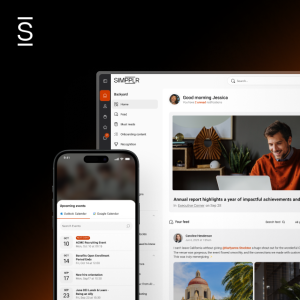
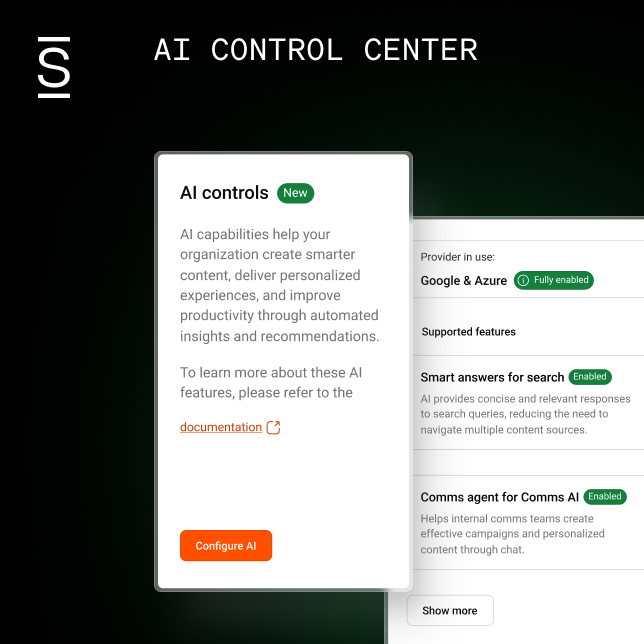
Simpplr is a modern, AI-powered intranet platform built for enterprise scale, designed for the exact multi-region challenges discussed above. Its cloud-native foundation keeps performance steady wherever people log in, while multi-language support and regional personalization let each office feel local inside one platform.
And because governance is built in, the central team keeps control over security and compliance standards even as regional teams own their own content. The result is one international digital workplace that simplifies how employees reach the people, information, and resources they need.
Ready to see how Simpplr can support your organization’s global intranet? Book a demo to see the platform in action.
Watch a 5-minute demo
See how the Simpplr employee experience platform connects, engages and empowers your workforce.
- #1 Leader in the Gartner Magic Quadrant™
- 90%+ Employee adoption rate
About the author

Mukul Dubey
Mukul is a Content Marketing Copywriter at Simpplr. With an innate love of writing and storytelling and extensive industry experience, he uses his writing skills and AI/SEO know-how to create strategic content that drives impact. Mukul loves writing short-form copy - think ad copies, social media content, captions, etc. However, Mukul's expertise lies in ideating, writing, and editing a diverse range of long-form content pieces (blog posts, case studies, thought leadership articles, etc.) to achieve the intended goals. When Mukul isn’t writing, he loves going on bike trips, playing competitive sports, and cooking delicious meals. Connect with Mukul on LinkedIn.