



Most enterprise AI programs don’t fail at the model level. They fail at the foundation — the data strategy, governance model, access controls, and measurement discipline that determine whether a pilot ever becomes a production system. The organizations scaling AI well did the unglamorous work first.
AI at scale: powering the digital workplace (summit recap)
AI at scale: powering the digital workplace (summit recap)
Table of contents
- 1 Forrester: The state of agentic AI for IT in 2026
- 2 Responsible AI Institute: Standards, controls, and technical guardrails for trusted AI
- 3 Ernst & Young: Turning AI policy into practice
- 4 IT leaders panel: What drives AI adoption and ROI in the workplace
- 5 AWS: Building the foundation for AI success
- 6 Forrester and Simpplr: What’s next in proving ROI, securing access, and scale
- 7 Agentic AI is changing what governance requires
That gap between deployment pressure and foundation readiness was the subject of Simpplr’s AI at Scale: Powering the Digital Workplace virtual summit on May 13, 2026. Speakers from Forrester, the Responsible AI Institute, EY, and AWS joined a panel of IT practitioners to cover what that foundation requires. The through line across every session: Most organizations are skipping the prerequisites, and the ones getting results have figured out what to prioritize and in what order.
The conversation covered governance frameworks that can be operationalized, infrastructure and data architecture that hold under production conditions, and measurement approaches that connect AI activity to business outcomes. Each session is recapped below with links to the recordings.

Forrester: The state of agentic AI for IT in 2026
Rowan Curran, Principal Analyst
Three hypercycles in three and a half years — generative AI, RAG, and now agentic action — and most enterprises are still trying to build a foundation underneath a strategy that’s already moving. Rowan Curran framed the blockers consistently stalling progress: employee upskilling, fragmented knowledge ecosystems, and governed access to content. All three trace back to the same root cause.
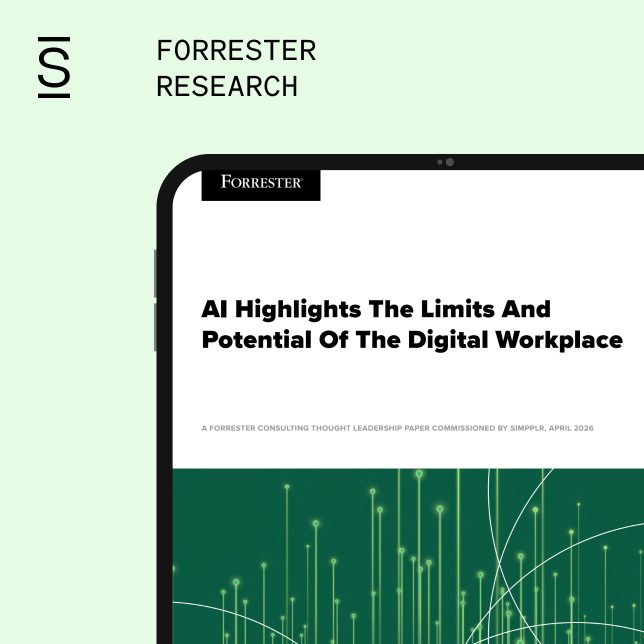
Context is what separates an enterprise agentic system from a consumer chatbot. According to a commissioned study conducted by Forrester on behalf of Simpplr, 45% of AI decision-makers say missing organizational context is the primary reason their initiatives fall short.
”Nearly half of decision-makers reported that missing organizational context is what is most responsible for unexpected results produced by AI,” Curran said. “And unexpected results lead to unexpected business outcomes, and nobody wants unexpected business outcomes.”
Curran also challenged the idea that vibe coding and AI-assisted development have made purpose-built platforms obsolete. Building is the easy part. Maintaining security, access controls, and enterprise-grade reliability over time is a different calculation entirely, and one most organizations underestimate before they commit to building in-house.
“The deaths of SaaS are much exaggerated, especially if you start to think about what actually matters in an enterprise context,” he said. “Building is easy. Maintaining is hard, especially when you consider maintaining things like security and access controls.”
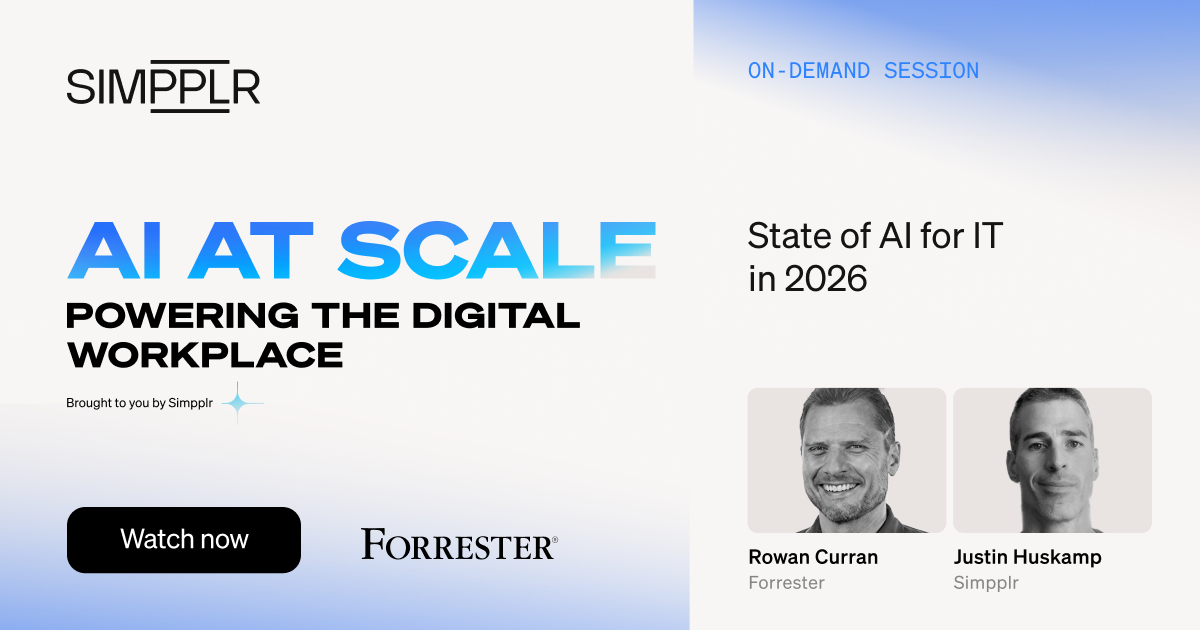
Responsible AI Institute: Standards, controls, and technical guardrails for trusted AI
Manoj Saxena, Founder and Chairman
Most AI governance programs were designed for systems that advise. The problem is that AI now acts — booking appointments, routing decisions, executing transactions — often without a human in the loop. Manoj Saxena’s session made the case that this shift changes the risk equation entirely, and that most governance frameworks haven’t caught up.
He asserts that you cannot control what you haven’t classified. Before an organization assigns policies, runs red-teaming, or sets guardrails, it needs to understand what kind of system it’s dealing with — how autonomous it is, what authority it has, how far its actions reach, and how long it runs. The Responsible AI Institute’s TrustX framework evaluates AI systems across those four dimensions and recommends controls proportionate to the risk tier.
“AI is not an app. AI is now an actor,” Saxena said. “A traditional app, you compile it, it stays the same way. It’s waiting for some input from you. An AI powered app is dynamic. It’s learning all the time. It’s doing things on its own, and it’s a very different type of governance mechanism that you need for systems evolving and acting on your behalf.”
The three most common mistakes Saxena sees are calling simple automation “agentic” and applying the wrong controls as a result; spreading the same governance policies across every AI system regardless of risk tier; and leaving ownership undefined so that when something goes wrong, nobody is accountable. Governance, he argued, is a team sport. Leaders in IT, risk, compliance, and security all need to be at the table before deployment, not after.
“You cannot control a system until you can classify it first,” he said. “Intelligence without control is not deployable, but control without classification is useless.”
Ernst & Young: Turning AI policy into practice
Molly Donovan, Senior Manager, AI & Data, and Preeti Raghunathan, Senior Manager, Responsible AI Strategy and Activation Lead
Writing AI principles is the easy part. The harder work is translating them into decision rights, accountability structures, risk management workflows, and audit readiness — the operational machinery that makes governance real. Molly Donovan and Preeti Raghunathan walked through what that translation requires and where most organizations get stuck doing it.
Most are currently in what EY calls siloed governance. Individual teams and functional leaders have built their own AI practices, their own infrastructure, and their own standards. When organizations try to reel it back in and centralize everything at once, it typically backfires, creating friction, discouraging adoption, and alienating the leaders who took the first steps. The better path is least viable standardization: start with one common requirement, get alignment, then build out from there process by process.
“Organizations start to see value when they have many models or AI applications running in production,” Donovan said. “And responsible AI becomes increasingly important as organizations scale the amount of models that they have live.”
The capability gap is the other problem few organizations are talking about honestly. Knowing how to govern AI — translating explainability into measurable practice, understanding what traceability looks like for agentic systems, tiering risk across model types — is a skill set that’s genuinely scarce right now. Training and documentation that get bolted on at deployment won’t fill what’s missing.
“There is a huge gap in the market with regard to the level of skill set required within organizations to translate something like explainability into practice,” Raghunathan said. “Breaking it down by model and understanding the type of traceability are important for agentic AI systems. That level of skill set is pretty rare in the market, and it’s something very much in demand.”
IT leaders panel: What drives AI adoption and ROI in the workplace
Moderator: Jeff Garrett, VP, Solutions Architecture, Opkalla
Panelists: Sean Sutton, Sr. IT Manager, Renewal by Andersen; Dorren Schmitt, VP, IT Strategy & Innovation, Allen Media Group / The Weather Channel
Dorren Schmitt has an 89% AI project success rate across Allen Media Group. The through line in her approach isn’t technology selection but discipline. Every AI project gets tied to an existing strategic priority or three-year roadmap item before it gets resourced. If it can’t be connected to something the organization has already said matters, it doesn’t move forward.
The KPI conversation was equally direct. Baseline your metrics before the pilot starts, not after. Then set gates the way you would for any other technology. Did the proof of concept work, and did the pilot hit the objectives the KPIs defined? Sean Sutton’s team shelved one pilot after finding the underlying data structure couldn’t support the tool. They didn’t scrap it entirely. They just paused to fix the data foundation first.
“You need to slow down to speed up,” Schmitt said. “By doing the things upfront and only doing them once, it allows us to get to that end goal — is it a go, is it a no go? One of the things we have consistently done is tied our AI projects to either our missions or our three-year strategy. And by doing that, we’re putting money where we’ve already said it’s important for us.”
Shadow AI came up as an ongoing governance issue. Sutton noted that it’s shadow IT with a new name, and it’s been happening for years. The answer isn’t just monitoring tools and approval gates. It requires giving people a visible path to bring their tools inside the tent. Governance without enablement creates the exact behavior it’s trying to prevent.
The panel’s most consistent point was about culture. Team-specific training, shared prompt libraries, proactive communication about what AI frees people to do — these aren’t soft considerations. They’re the difference between adoption and shelfware.
“If my new tool is going to save you 10 hours a week on mundane routine tasks, I should be ready to talk to you about what we can do to maximize the time you get back,” Sutton said.
AWS: Building the foundation for AI success
Daryl Cartwright, AI Acceleration Architect
The pattern Daryl Cartwright sees most often: Organizations buy the AI solution before they’ve built the foundation to support it, then can’t figure out why things stall. Her session was a systematic walk through what has to come first and why skipping it costs more than doing it right.
Data readiness is the starting point: 80% of companies are currently revising their data strategies to support AI. The instinct is to think the problem is volume — that more data will fix it. It won’t. A smaller, well-governed dataset outperforms a massive, messy one. The real questions are whether the right data exists, whether it’s accessible to AI systems, and whether it’s governed consistently across sources.
Security follows the same logic. 66% of executives identify data privacy and security as their top AI risk — not performance, not cost. Authentication, access controls, monitoring, output validation, and human oversight aren’t features to add after launch. They’re the conditions under which trustworthy AI is possible at all.
“I can’t tell you how many organizations come to us and say, ‘We want to implement AI.’ Great, but for what?” said Cartwright. “If you start with the technology instead of the business problem, you’ll build something impressive that nobody uses.”
On measurement, Cartwright pointed out that most organizations have AI metrics in place, but only a third have consistently defined those metrics across all use cases. Ad hoc measurement is worse than no measurement because it produces false confidence. Define success before deployment, establish a baseline, set time-bound targets, and act on what the data tells you.
Two customer stories grounded the framework. Smartsheet consolidated public help docs, internal documentation, training content, and hundreds of Slack help channels into a single knowledge agent employees tag from any Slack channel. No new app, no portal, built in weeks with zero code.
Formula 1® applied the same pattern to IT operations, building an AI triage system on a foundation of historical incident data. End-to-end resolution time dropped by up to 86%, and initial triage went from more than a day to under 20 minutes. Different organizations, different problems, same sequence: foundation first, then the tool.
“Before you deploy anything, document the current state,” she said. “This is your baseline. How long does ticket resolution take today? How many hours do employees spend searching for information? You can’t prove improvement if you don’t know where you started.”
Forrester and Simpplr: What’s next in proving ROI, securing access, and scale
Rowan Curran, Principal Analyst, Forrester; Gurjeev Chadha, VP, Product, Simpplr
The closing session mapped the territory between where most organizations are and where they need to be. Gurjeev Chadha and Rowan Curran worked through five blockers that explain why AI pilots stall before production, and none of them are problems with the models.
The first is use case selection. Anywhere from two-thirds to 95% of AI pilots never reach production, and the most common reason is that they were built to show AI progress rather than solve a specific, measurable business problem. The traits to look for include repetitive work, frequent handoffs, templated outputs, well-documented processes. Those are the workflows where AI delivers fast, visible value. Chadha’s test for a well-chosen use case: what behavior change do you expect to see at 90 days, and can you put a number on it?
The second and third blockers are related. Organizational context — who people are, how they work, what the organization knows — lives across intranets, email, Slack, and systems of record. Agents are only as good as what they can access. Fragmented knowledge compounds the problem. A typical employee works across 20 to 30 tools in a given day, and 83% of IT leaders expect it to get worse as AI adds more layers on top of already fragmented infrastructure.
Change management is the fourth blocker, and the one in which most organizations underinvest. Launching a capability and expecting adoption is not a strategy. The organizations that scaled generative AI successfully didn’t hand employees a blank slate and tell them to be more productive. They built workflow-specific enablement.
“It’s not just enough to do a yearly training or something like that that we may have done with software in the past,” Curran said. “The pace of capability releases means change management has to be an ongoing practice.”
The fifth blocker is security and access control, and it’s where Curran was most direct about market maturity. Agent-to-agent communication is happening, but the governance and security infrastructure around it is still catching up. Observability, auditability, and strict access controls aren’t optional for scaled agentic deployments. They’re the foundation everything else depends on.
“AI agents will always have the last mile problem,” Chadha said. “Depending on the complexity of the agent or the workflow, you’ll be able to get anywhere from 99% there to 80% there to 60% there. The remaining challenge around change management will involve a human in the loop in the majority of cases. Building that organizational muscle to understand the use case is going to be paramount.”
Agentic AI is changing what governance requires
Every speaker came at the problem from a different angle — research, governance standards, operating models, infrastructure, and practitioner experience. But the most consistent diagnosis is that most AI programs are underinvesting in the work that happens before deployment, and paying for it after. Foundation over speed. Classification before control. Measurement before scale. Culture before tooling.
What’s also clear is that the goalposts are moving. Agentic AI is maturing faster than enterprise governance can track it. Agent-to-agent communication is already happening in production environments where the security infrastructure to support it isn’t fully in place. There is a significant credibility gap in AI governance, and the market isn’t going to close it quickly. The organizations that get ahead of these challenges now will have a structural advantage as agentic AI matures.
The recordings from the virtual summit AI at Scale: Powering the Digital Workplace are available on demand.
Ready to find out how Simpplr can support your AI initiatives? Request a demo today.
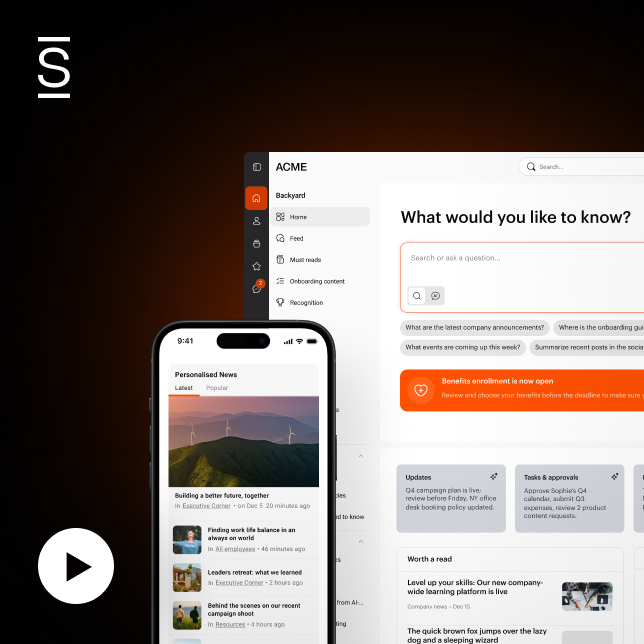
Watch a 5-minute demo
See how the Simpplr employee experience platform connects, engages and empowers your workforce.
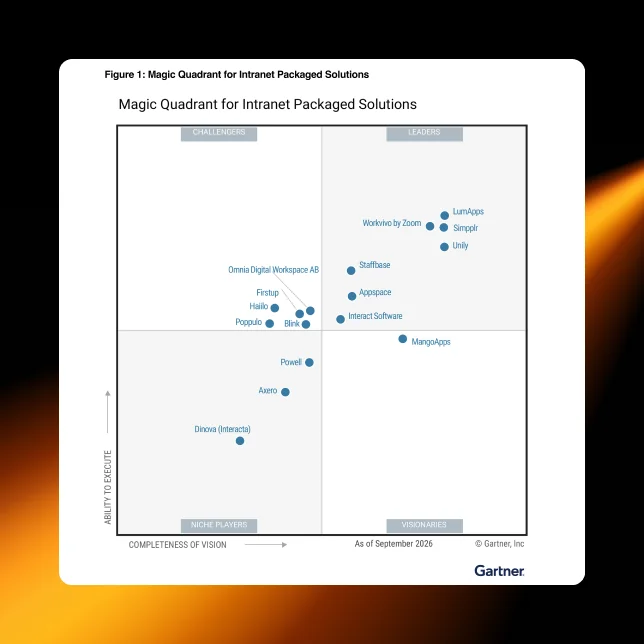
- #1 Leader in the Gartner Magic Quadrant™
- 90%+ Employee adoption rate