


Every intranet vendor promises results. The demos look polished, the feature lists are long, and AI apparently powers everything. Choosing a platform that looks good on paper but falls short in practice is more common than most organizations realize.

2026 Intranet Buyer’s Guide: how to choose a solution that delivers real business impact
2026 Intranet Buyer’s Guide: how to choose a solution that delivers real business impact
The intranet market is crowded, and every vendor sounds roughly the same. AI has sharpened the consequences of a poor platform choice — fragmented tools that were merely frustrating before now create governance risk and operational drag. Organizations that evaluate platforms on features alone are setting themselves up to revisit that decision sooner than they planned.
The 2026 Intranet Buyer’s Guide will help you avoid these pitfalls. It’s based on Simpplr’s experience working with more than 1,000 customers and a clear-eyed view of where the category is headed. Here’s a preview of the structured framework for evaluating platforms that goes beyond what any demo can show you.

The structural decision many buyers underestimate
Whether you’re buying an intranet for the first time or replacing what you have, the model you choose shapes everything that follows. It also shapes the business case. A platform that can’t demonstrate sustained adoption or operational efficiency in practice erodes the ROI argument.
Organizations evaluating for the first time face a build-or-buy decision. Those looking to upgrade — especially from a custom-built solution or a patchwork of vendors — have a strong case for buying a unified, purpose-built platform.
Simpplr research has found that these structural approaches have a direct impact on adoption, effectiveness, and long-term satisfaction.
Multivendor environments
More than half of organizations surveyed create their intranet not by design but by accumulation. A core platform here, a survey tool there, a separate recognition solution added later.
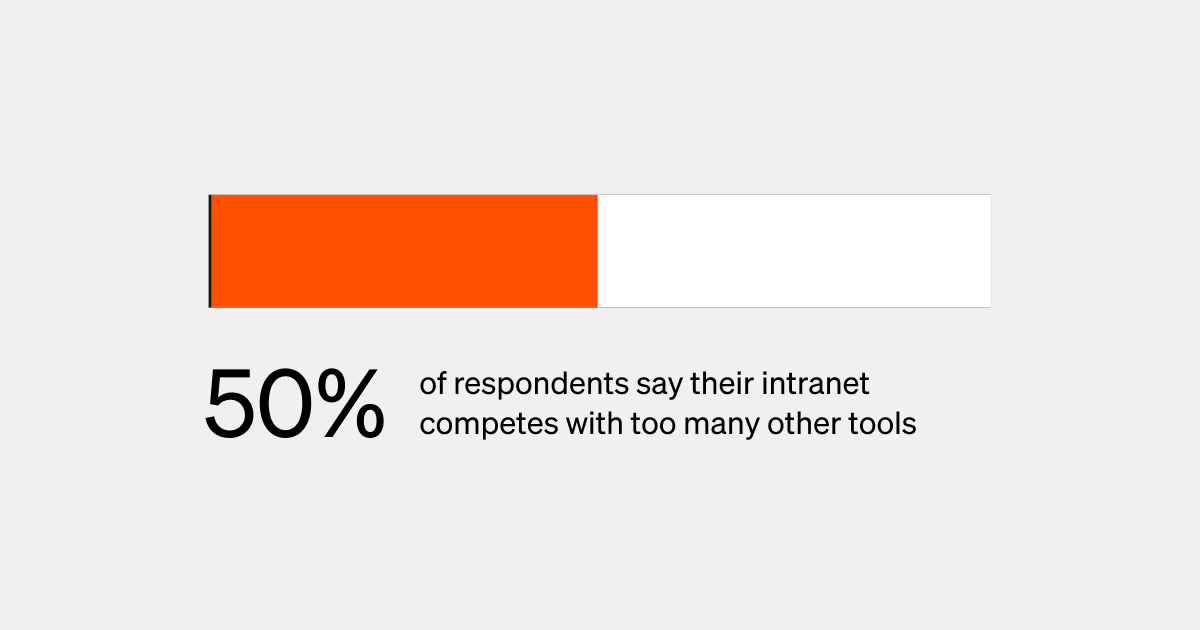
The challenges are consistent — IT dependency, uneven adoption, and an intranet that competes with the tools it’s supposed to replace.
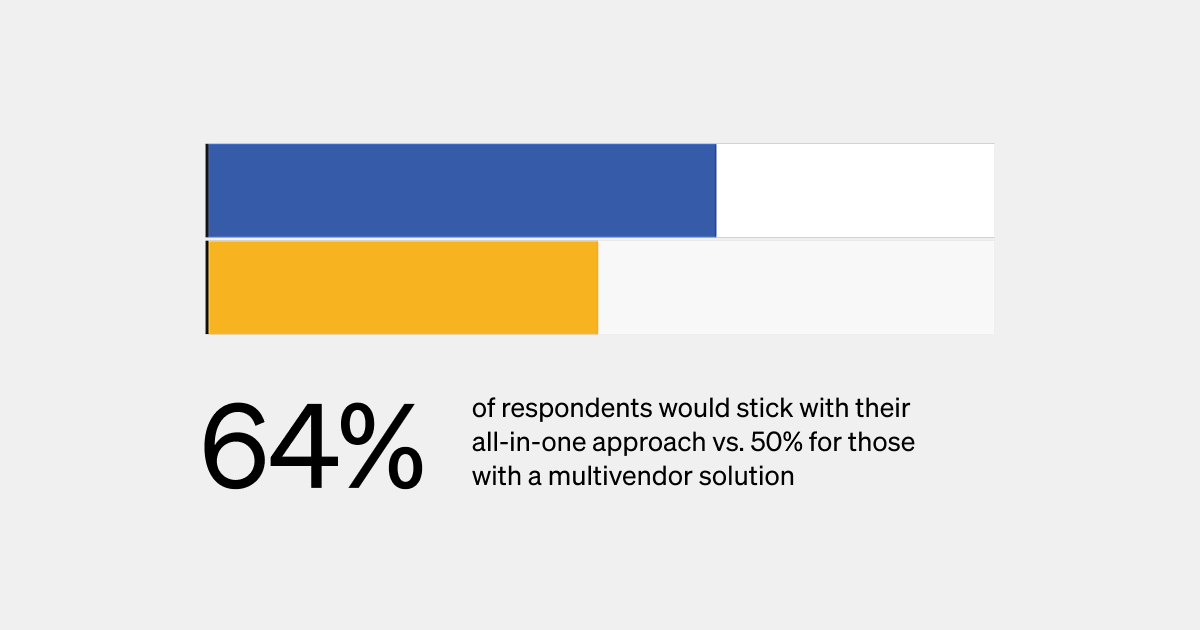
Over 40% of organizations with multivendor intranet platforms say they would switch approaches if they could, with most preferring an all-in-one platform.
Purpose-built platforms
Organizations using unified, purpose-built platforms report fewer challenges across every category — technical, operational, and cultural. IC teams using this model show the highest loyalty to their approach. Higher employee connection scores and lower IT dependency are the clearest indicators that the model is working — not just for IC teams, but for the organization as a whole.
Custom-built solutions
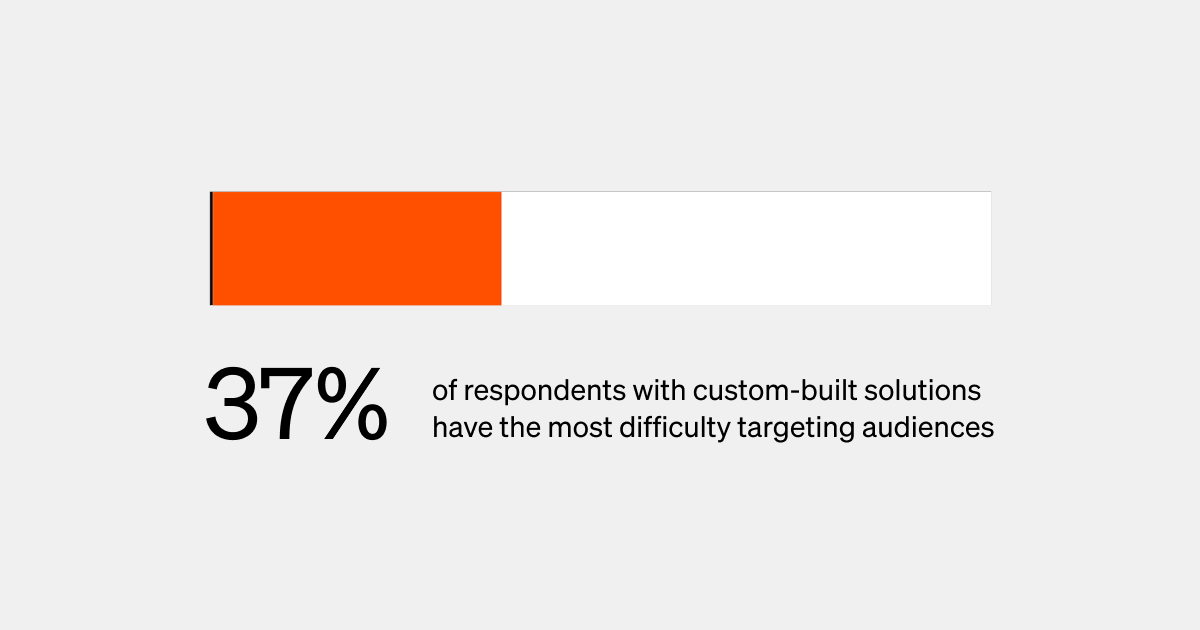
Custom intranets — typically built on top of platforms like SharePoint — remain a minority (12%). The tradeoffs are significant: heavy IT dependency, limited audience targeting, high costs to build and maintain solutions, and a persistent gap between technical performance and day-to-day usability for communications teams.
Non-IT users are nearly twice as likely as IT professionals to want to move away from a custom-built intranet platform.
Once you’ve settled on a unified platform as your model, the next step is where the in-depth evaluations will reveal which one is truly worth your investment.
What to evaluate in a modern intranet
Most platform evaluations stall on feature comparisons. The guide organizes the evaluation differently. There are two layers that reflect how a modern intranet should perform. The first is the baseline every platform must meet. The next are the core systems where depth and quality vary significantly.
The baseline every platform must meet
Two experience principles should function as filters before you go any deeper into an evaluation. If a platform can’t demonstrate both, the rest of the conversation isn’t worth having.
The first is a unified experience. Employees should encounter a familiar interface across devices and channels, with information and actions relevant to them without manual filtering. If employees have to decide which tool to open, where information lives, or how systems relate to each other, the platform has already failed.
The second is intelligent personalization. Search content, answers, and next steps should align to each employee’s role, location, and responsibilities. The results should also improve over time without requiring employees to configure or manage that experience themselves. Personalization that requires effort from the people it’s supposed to serve isn’t personalization at all.
Where depth and effectiveness varies
Once a platform clears that bar, the evaluation gets more specific. Core systems are where vendor capabilities diverge — and where the questions you ask matter as much as the answers.
Consider whether these capabilities exist and how well they scale:
- Communications and engagement: Audience-based targeting, multichannel publishing, drag-and-drop content layout, campaign tools, and two-way listening capabilities. Can communicators operate at scale without IT intervention?
- Knowledge management: Content ownership, approval workflows, governance rules, and lifecycle management. Can nontechnical teams maintain content responsibly without creating bottlenecks?
- Enterprise search: Natural language queries, permission-aware results, and relevance that improves over time. Do employees trust what surfaces, and does the platform help identify gaps?
- Employee services: Self-service workflows integrated with HRIS, ITSM, and business systems. Can employees initiate and complete common requests without leaving the intranet?
- Frontline support Mobile-first access, role-based and shift-based delivery, and offline capability. Does the experience hold up for employees who are never at a desk?
- Integration and extensibility: Prebuilt connectors, public APIs, low-code configuration. Does the platform simplify the tech stack or add to its complexity?
- Security and governance: RBAC, encryption, compliance certifications, accessibility conformance. Are controls embedded in the architecture or bolted on afterward?
These systems are where most evaluations spend the bulk of their time, and rightly so. But a platform that performs well across all of them today can still plateau. What determines whether it keeps improving is a different question entirely.
What constitutes a future-ready intranet platform
A modern intranet can check every box in the previous section and still lose ground over time. The difference between a platform that compounds in value and one that stagnates comes down to two capabilities. This is also where vendor claims diverge most sharply from reality.
The third layer of a modern intranet platform includes accelerators: integrated AI and actionable analytics.
Integrated AI
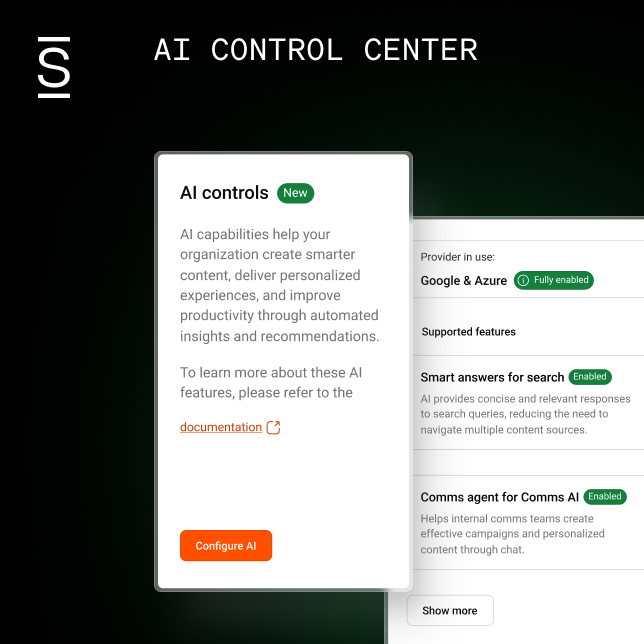
AI is the most overclaimed capability in the intranet market right now. The meaningful distinction isn’t whether a platform has AI — virtually every vendor will say it does. The question is whether it’s embedded into search, content workflows, and services or bolted on after the fact to keep pace with market expectations.
At its current stage of maturity, AI in the intranet should be automated and assistive — guiding employees through processes, surfacing relevant answers, and executing approved actions within established workflows. Governance and permissions should be enforced by the underlying platform, not dependent on the AI behaving correctly.
A platform that adds AI at the expense of coherence or control isn’t ready for enterprise use.
Vendors should also be able to articulate how agent-assisted capabilities will expand responsibly over time, with guardrails governing data access, model behavior, and oversight.
Analytics and insights
Analytics determine whether the teams running the intranet can learn from it. The distinction worth making here is between platforms that report what happened and platforms that help you understand what to do next.
Effective analytics surface content performance, campaign reach, and engagement patterns at multiple levels — by audience, by team, by manager.
They identify gaps and trends early enough to act on them, without requiring manual analysis or a data export to make sense of the numbers.
Together, these two capabilities determine whether the intranet gets more useful over time — for employees, for IC and HR teams, and for IT. That trajectory matters just as much as where any platform starts.

Vendor questions that reveal what demos don’t
A demo shows you what a vendor wants you to see. The evaluation conversations that happen around it — about roadmap, implementation, and long-term support — are where you learn what you really need to know. The guide offers a set of questions designed to surface that information directly.
Use these questions to pressure-test the vendors on your shortlist:
- How will new AI capabilities extend existing systems rather than introduce new tools or workflows?
- How does the platform ensure governance, permissions, and access controls remain consistent as automation increases?
- How does the platform balance innovation with experience stability and usability?
- Will future capabilities reduce cognitive load for employees or create new paths they must learn?
- How does the platform adapt to evolving compliance, security, and accessibility requirements?
- How does the vendor define the role of agents today, and how does that evolve responsibly over time?
- Which capabilities are designed for IC and HR self-service, and which require IT involvement?
These questions won’t always get you a straight answer. But how a vendor responds — the specificity, honesty about current limitations, and coherence of their roadmap — tells you as much as the answer itself.
The intranet market will keep producing polished demos and confident promises. The 2026 Intranet Buyer’s Guide gives you a framework for looking past both.
How Simpplr can help
Simpplr is built around the same framework this guide describes. The experience is unified across communications, knowledge, search, and employee services. AI is integrated into the platform, and governance stays intact as capabilities expand.
IC and HR teams can operate independently without creating IT dependency. Employees get a consistent experience across devices, with personalization that improves based on how they work. Enterprise-grade security, low-code extensibility, and actionable analytics give IT teams the visibility and control they need as the platform scales.
Simpplr invests continuously in platform innovation and works closely with customers to make sure that innovation solves real problems. The result is a digital workplace that gets more useful the longer you use it.
Download the 2026 Intranet Buyer’s Guide for business case guidance, the full evaluation framework, and essential vendor questions.
Ready to find out how Simpplr can help you improve your employee experience? Request a demo today.
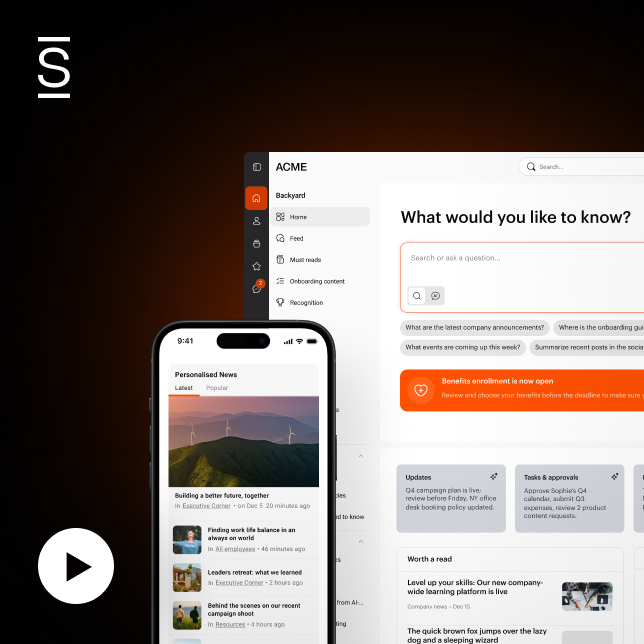
Watch a 5-minute demo
See how the Simpplr employee experience platform connects, engages and empowers your workforce.
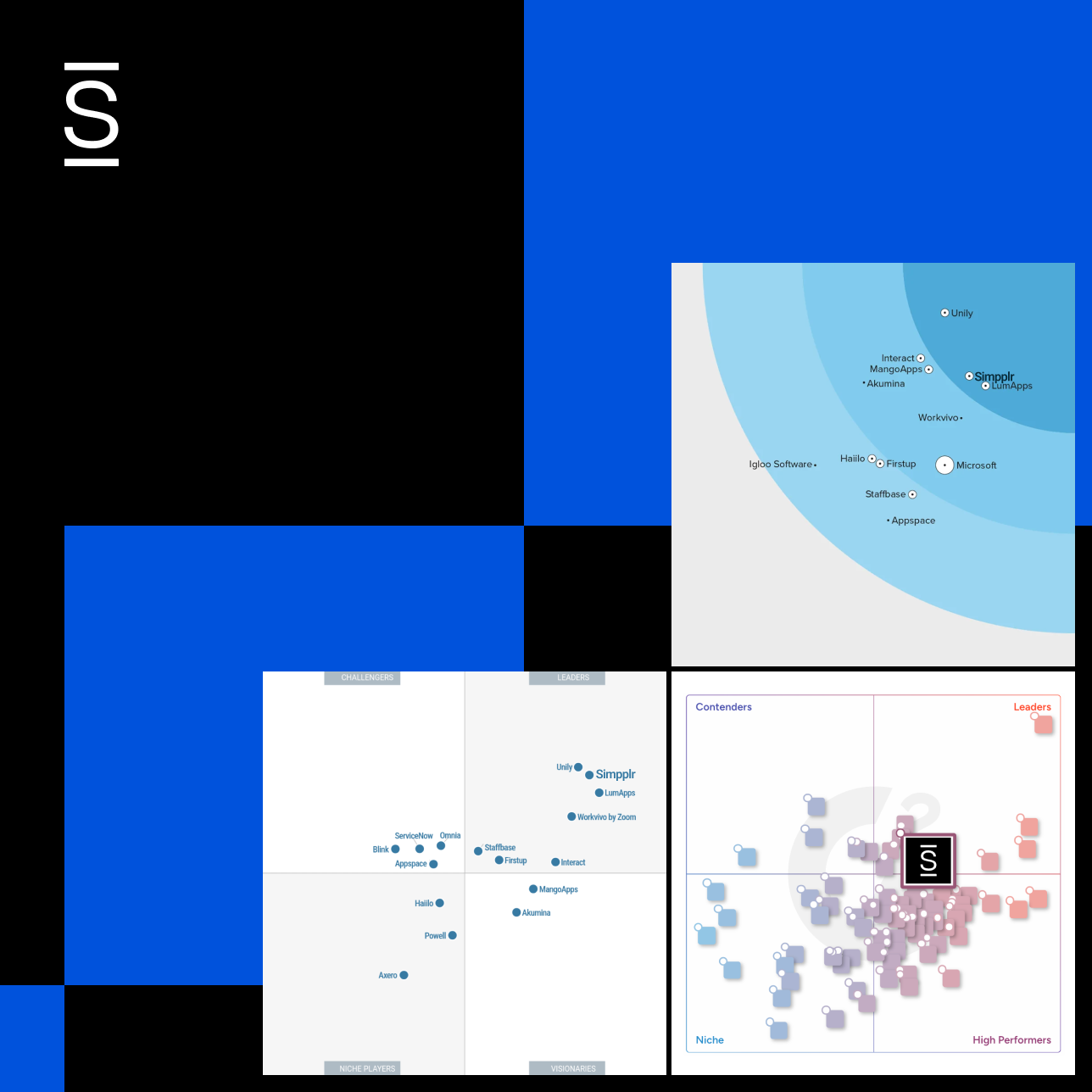
- #1 Leader in the Gartner Magic Quadrant™
- 90%+ Employee adoption rate