

When I first came to Silicon Valley in the dot-com frenzy of the ’90s, tech start-ups talked about the fast pace of change in “Web years.” In other words, what used to take years now takes quarters. Fast forward to today, and quarters as measurements of change seem sedentary. As we turn to 2026, what HR trends are on the horizon and demand our attention?
7 HR trends that will shape your priorities in 2026
7 HR trends that will shape your priorities in 2026
Table of contents
- 1 HR trend #1: Emergence of the augmented human
- 2 HR trend #2: Evolution of the role of manager
- 3 HR trend #3: Rising AI ROI
- 4 HR trend #4: Expanding HR and IT collaboration
- 5 HR trend #5: Reinvent and run the business
- 6 HR trend #6: Rethinking the HR tech ecosystem
- 7 HR trend #7: Human pendulum swing
- 8 Looking forward to what’s next
Of course, AI tops every trend list for 2026. The research backs this up: AI is transforming how we work. But AI-generated trend lists tend toward the safe median. They lack original insight. A reminder that AI is incapable of original thought — for now. Trends are year-over-year continuations of what has gone before, so rightly not always totally new to us. We’re building on what has been and preparing for what’s to come.
I recently published a report card on how my thoughts on HR trends in 2025 played out. I’ve come to the conclusion that predictions are, by nature, unpredictable. What’s more interesting is setting myself up for the year ahead, not with the novel or the fantastical but by building on what’s needed and working, while adapting to our ever-changing context.
With this in mind, here are the seven HR trends I think we’ll keep talking about and working on in 2026.

HR trend #1: Emergence of the augmented human
The augmented human is an employee empowered by AI to achieve exponential productivity gains and performance impact. The potential for this is already rewriting the HR playbook. We’re seeing the rise of what analyst Josh Bersin calls the “Superworker,” which he defines as “an individual who uses AI to dramatically enhance their productivity, performance, and creativity.” And as his report asserts, “The companies with the highest productivity advantage will win.”
For HR, the focus is already shifting from simply managing headcount to evaluating the skills needed and their distribution across the organization, alongside AI “workers.” As one of my clients said to me in my consulting days, workforce planning is now about the organic and the inorganic resources.
HR’s attention must focus on enabling employee agency in ethical ways. Superworkers thrive when given the freedom to experiment and learn new skills relevant to the AI era. Companies that actively encourage this “bottom-up” experimentation can create a critical differentiator, fueling innovation, development, and performance.
For employees, this era presents an unprecedented opportunity for self-directed career evolution. AI-powered platforms hold the promise to improve our ability to enable seamless internal mobility, matching employees’ latent skills to internal projects, stretch assignments, and new roles. Creating a dynamic skills-based internal economy will continue to develop, alongside improvements in technologies to support it.
AI tools also democratize support, offering 24/7, nonjudgmental AI coaching for skills, HR queries — anything! Recent Conference Board research reported that 90% of respondents find AI coaching easy and comfortable to use. While employees previously sought support from their manager or HR, they are now turning to AI first. The same Conference Board research pointed out that AI isn’t replacing human coaches but amplifying them.
To ensure responsible evolution of the augmented human, our employees need access to AI tools, dynamic learning environments, and redesigned work roles.
AI tool access
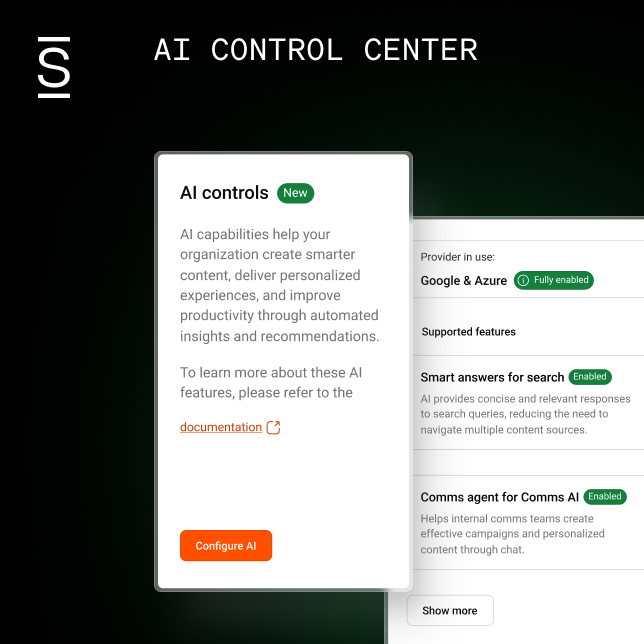
There are two aspects to this. First is providing people with tools they can use to execute their roles, like the now ubiquitous generative AI. Second is ensuring that the employee-facing applications we provide — whether that’s search, intranet, HRMS, CRM, and so on — are bringing the best that AI has to offer.
Dynamic learning
This includes both the expectation and implementation to support increasing self-agency over what, when, and how we learn. Be clear about what skills are in the ascendency (and on the decline). Allow employees to quickly identify and acquire new competencies based on shifting priorities, project needs, and personal curiosity, fostering continuous, self-directed upskilling.
Redesigned work
In HR, we will need to accelerate our work on job redesign. This involves shifting roles from routine task execution to complex problem-solving and ensuring ethical oversight and strategic orchestration of AI agents. Performance management must evolve to reward curiosity, learning agility, and measurable productivity impact, securing a human-centric advantage in this AI era.
So, with Superworkers on the rise, are managers still needed? Yes, but their roles are changing, and they need support in the process.
HR trend #2: Evolution of the role of manager
In 2025, I talked about unlocking the “magic” of managers. In this next phase of managerial evolution, the role requires more from managers, not less, but in different ways. Ultimately, we probably will require fewer managers, a path we’ve been on for a while as organizations have flattened and spans of control increased. But the managers we do have need to be what Josh Bersin calls “Supermanagers” — those who execute and innovate in equal measure.
Expectations of managers continue to shift. While news of their demise is probably overstated, what is very real is the shifting skill set they must have. Much has been said about the increasing need for managerial soft skills. As I see it, these nontechnical managerial skills include irreplaceable human skills, AI ethics, and change management agility.
Irreplaceable human skills
These include emotional intelligence in general and empathy in particular, as well as creativity and innovation. The ability to coach and give feedback, create meaning and purpose, and build culture, trust, and relationships. For now, at least, these skills are uniquely (or at least mostly) human.
AI governance and literacy
Digital fluency is table stakes. Beyond technical foundations, managers need ethical decision-making skills — the moral “why” behind AI choices and their impact on people. They also need decision intelligence — understanding how to blend data science and behavioral science for better decisions — as well as understanding human-AI collaboration design.
Managers need to be comfortable using more AI in their day-to-day work, and they need to lead their teams to do the same. Add “AI orchestrator” to the list of many managers’ responsibilities. In some ways, we’re all techies now — or should be.
Change management and agility
This involves knowing how to lead change with increasing agility, experimenting and adapting at faster rates. It goes hand-in-hand with increasingly complex problem solving, which requires multidisciplinary coordination and human judgment to reach resolution. Rising AI ROI (my next trend) requires that we equip our managers to be better agents of change. As this McKinsey article indicates, this places many demands on the organizational operating system.
These kinds of skills have always mattered. I think we’ll realize they matter even more at times of higher transformation and rising employee agency.
Prioritizing manager enablement will remain on our agendas. This means we need to rethink how we scale the tools and technology this audience needs, connect them with each other, and equip them differently (sometimes ahead of their teams) with skill-building, news, and insights.
Emergence of the augmented human in the workplace means we need to ensure our managers aren’t left behind and feel supported. We need to provide more resources and transparency.
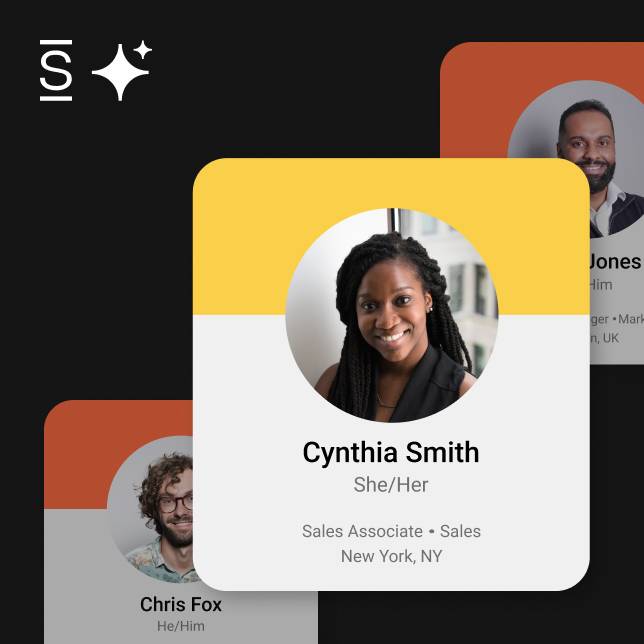
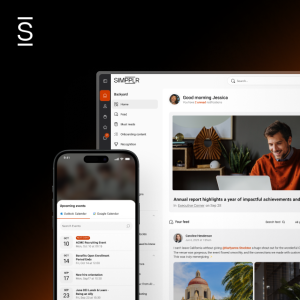
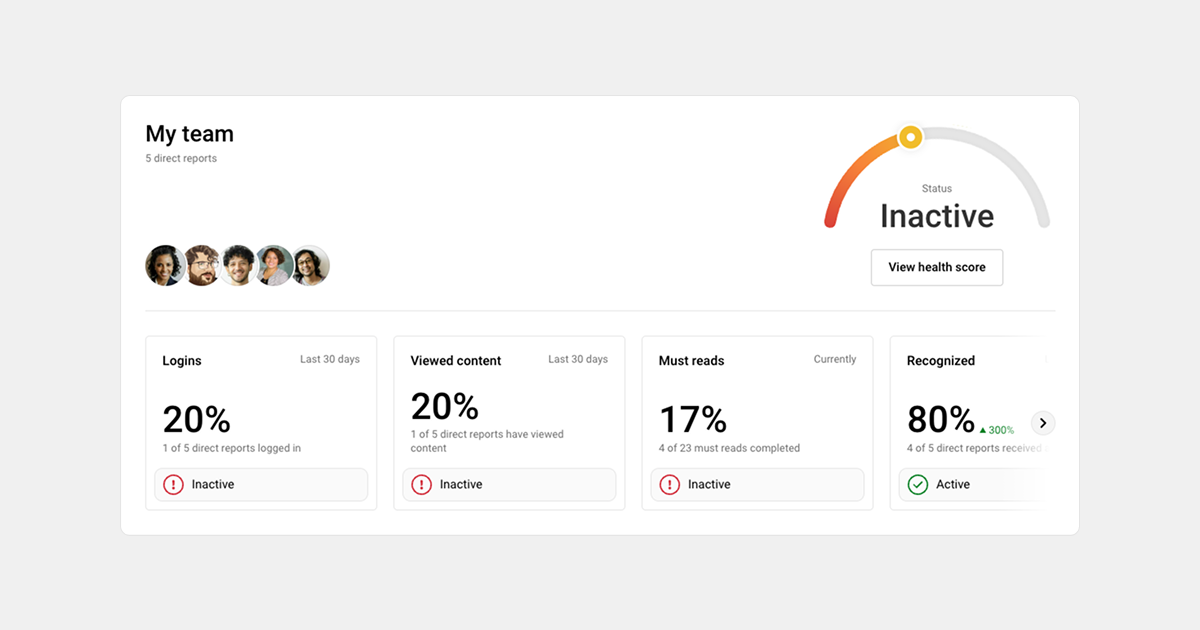
For example, at Simpplr, each manager has access to the My Team dashboard, which serves up data and insights specific to the people on their team. It equips managers to see what their teams are engaging with (e.g., company news) and their reaction to it, who is being recognized and for what, and who has upcoming birthdays or work anniversaries. This visibility allows managers to lead with more empathy, course correct faster, and at least stay in step (if not ahead) of their employees.
HR trend #3: Rising AI ROI
Last year, one of the trends I anticipated was that we’d see more practical applications of AI over the hype. We have made baby steps in moving beyond the hype. We’ll take bigger strides in 2026. We’re in the midst of the irrational exuberance that often comes in the early stages of a transformational technology. I think we’re still somewhere near the hype peak, but promising signs of real progress are starting to emerge.
History is a good teacher in that we’ll typically become more pragmatic and establish metrics to assess our new deployments. There’s a balance to strike. Experimentation comes with failures. But as with any highly innovative cycle, we need to fail fast, learn faster, and put more rigor into the ROI of our AI choices.
As we think about the ROI, it’s easier to leap to the quantitative, but we need to keep a balanced scorecard in mind. Whichever combination of metrics we use, they need to show whether our experiments are actually working. And they have to affirm that the humans at the center of all this disruption and change are feeling supported to learn, are actually learning, and are growing in proficiency and productivity. It’s not all about cost savings — though certain AI use cases can provide us with this.
As many commentators have said, if you focus on AI only to cut costs, you’re missing the point. Some would add that focusing solely on cost savings means you’ll ultimately suboptimize. Through 2026, I think we’ll start to see more fully that the primary value of AI lies beyond mere cost savings and extends to broader areas of productivity, new opportunities, and personal growth. The proof points of an increasing number of use cases will be out there, bringing more rigor and realism and cooling the hype.
HR trend #4: Expanding HR and IT collaboration
I’ve written a few times about the increasingly close collaboration between HR and IT that’s needed to meet the moment we’re in. In May 2025, Moderna merged their HR and IT functions. A few others have made similar bold moves since then, but whether or not you go for a full merger, a closer collaboration across HR, IT, and Internal Communication is the right answer.
Guiding AI transformation is a shared responsibility across any organization. Digital employee experience (DEX) is a distributed phenomenon that doesn’t have a singular owner. This is true even for organizations with a designated DEX leader, which typically falls under HR or IT, taking an integrative role across functions.
But the reality from an employee perspective is that most often they have a disjointed DEX. However we solve this issue, we need to come together across functions, and it’s encouraging to see more of this happening.
With DEX getting more complicated and more important, how we serve both engagement and productivity in our workplace tools requires that these two critical functions work together. After all, HR is all about people, systems, and data. IT is all about users, systems, and data. Layer in AI transformation and you have a Venn diagram with heavily intersecting sets.
The walls between IT and HR are coming down, and they need to continue to do so. Both functions are central to the workplace experience. They don’t just support the business — they shape how people work, grow, and interact with technology every day.
HR trend #5: Reinvent and run the business
The metaphor of “building the plane while flying it” comes to mind. Having to run the business while changing the business isn’t a new factor in how any organization should operate. But at times of high transformation, it’s more needed than ever. Layer in constrained resources and budgets, which many of us are dealing with, and necessity will be the mother of invention.
We will see more HR automation, which will free up our teams to focus on underserviced and unmet needs (e.g., AI transformation change management) and areas of growing demand (e.g., reskilling). This reminds me of the late 1990s and early to mid-2000s when digital transformation was at the fore and reimagining the HR service delivery model was in vogue. (During my consulting years, I spent a lot of time on projects like these!) We spun endless cycles reimagining our systems, processes, and structures — all while continuing to “run the business” of day-to-day HR operations.
Dave Ulrich’s original service delivery model has served us somewhat well for a long time, and I don’t believe we need to entirely blow it up and start over. Whatever you end up calling the parts of your model, we still need to focus on aggregating and automating as much of the high-volume transactional tasks as possible, concentrate on certain areas of expertise, and align strategic consultants with business units.
What was old is new again. But let’s learn from history and also embrace the best of what newer technologies can give us.
There are a few things I plan to do differently during this transformative era, learning those lessons of the past.
First, start with the user in mind. If you can simplify the user experience, the workflows you automate and optimize will ultimately work better for HR, as we’ll have higher adoption, compliance, and happier customers.
Second, experiment more, fail fast, and scale quickly. This has always been a good idea, but the systems we were implementing back in the day were a heavier lift. What’s available to us now allows us to imagine differently and move more quickly.
Lastly, step back and reimagine the overall HR tech ecosystem, which brings me to the next HR trend.
HR trend #6: Rethinking the HR tech ecosystem
With the DEX expansion comes the increasing need to rethink our HR tech ecosystem. While HR has long been seen as the bastion of the employee experience, arguably IT is the keeper of the DEX (hence the previous trend).
HR’s tech stack needs to keep pace with the digital employee experience more holistically, along with our partners. Our goal should be to build toward a more unified, seamless, and personalized user experience.
Many of the systems and applications we’ve installed over the last few decades weren’t about the employees. They were designed to make HR tasks easier, such as store data, ensure compliance, run transactions like payroll, and support programs like performance management.
Many of the suppliers we dealt with focused primarily on selling us their “best-of-breed” solution, without much thought applied to interoperability. Inevitably, the user experience has become more fractured.
More than this, we’ve also created a disjointed landscape for HR, making it harder to get the value from our data and prepare for end-to-end automated workflows. Not to mention collaborate with IT and integrate with other employee-facing applications to create that more seamless, unified, and personalized employee experience.
The new year is a great time to clean out our HR tech “closets.” Think through what no longer suits our needs or fits where we are going. Declutter, and with that, give consideration to additional criteria as we evaluate alternatives.
While walking the Expo hall at the most recent HR Tech in Las Vegas, I focused my vendor conversations on two critical areas: integrations and innovation. I wanted to know what integrations they provided out of the box and how interoperable their applications were with core HRMS platforms. I also asked them about their product roadmap and pace of innovation — how much AI they have built in and what was coming next.
Because when selecting software, I’m not only buying a product — I’m buying into their innovation process and their view of the future. I need to know how aligned it is with my needs and have confidence they will deliver based on their track record of hitting release and upgrade goals.
I ask these four key questions when evaluating new software:
- What is the company’s rate of product innovation?
- Are they actively investing in the areas that matter to me?
- What is their view of the future, and does it align to my plans for our tech ecosystem?
- Does their level of interoperability help me unify and personalize the user experience?
Alan Kay, a U.S. pioneer of personal computing, said, “The best way to predict the future is to invent it.” I would adjust that to “co-invent” and then say count me in.
The future of our HR tech stack depends on treating it as an ecosystem: integrating systems across the organization and partnering closely with internal and external collaborators who help us continue advancing and innovating. It’s the only way to create a more unified experience and keep pace with change.
HR trend #7: Human pendulum swing
To paraphrase a famous political slogan, “It’s the people, stupid.” Technology without adoption is, well, fairly useless. The AI hype will quiet down, and we’ll realize that it’s the human change process and adaptation we need to lead with.
More than that, we need to ensure that our technology choices aren’t helping us only automate, be more efficient, and cut costs. Our technology has to strike the right balance of “head” and “heart.” Meaning, our best choices will come when we keep in mind productivity gains alongside employee engagement.
We are probably at peak AI hype (at least I hope). History shows us that the pendulum will swing back to a more even position. Herbert Alexander Simon was an American political scientist, Nobel Prize–winning economist, sociologist, and pioneer of artificial intelligence. In his 1960 book, “The New Science of Management Decision,” he made this assertion: “Machines will be capable, within twenty years, of doing any work that a man can do.”
This quote encapsulates the early, dramatic optimism — and underlying anxiety — about the speed and breadth of computer capabilities. Of course, by 1980 we’d made progress but not to the extent predicted. Reality settled in, and we recognized the pace of change wasn’t as fast as those earlier days of innovation had suggested.
Once we remind ourselves of these historical patterns, we can refocus on keeping humans at the center of our thinking. For me, this includes thinking about the ethical deployment of AI and evaluating my technology choices from companies signed up to Responsible AI and similar practices.
As we head toward a more grounded outlook, we should also settle into more responsible and supportive deployment of AI. Kathleen Hogan, EVP, Chief Strategy and Transformation Officer at Microsoft, says it well in this LinkedIn post: “Adopting AI tools is easy. Reimagining how we work with them is the real transformation.” We need to think holistically, consider change management deeply, support people as they learn, and look at other components of our operating system as we adapt.
Looking forward to what’s next
The collective journey of HR requires that we transcend the tactical, daily scramble and truly become the architects of human potential, which in some ways is a cool name for what has always been the purpose of HR. We’re seeing the pendulum swing back from technology overhype to a clearer focus on the human factors: our ability to learn, adapt, and lead with curiosity.
The future of work is not being built by AI alone but by our deliberate, empathetic choices in how we design jobs, systems, and careers.
As we finalize our priorities for 2026, let us heed the timeless wisdom of futurist Alvin Toffler: “The illiterate of the 21st century will not be those who cannot read and write, but those who cannot learn, unlearn, and relearn.” So, let’s commit to a year of progress over perfection, trust in our ability to co-invent the future, and focus on equipping every employee — and every HR professional — to run with the innovators.
Ready to see how Simpplr can help you deliver exceptional HR services? Request a personalized demo today.
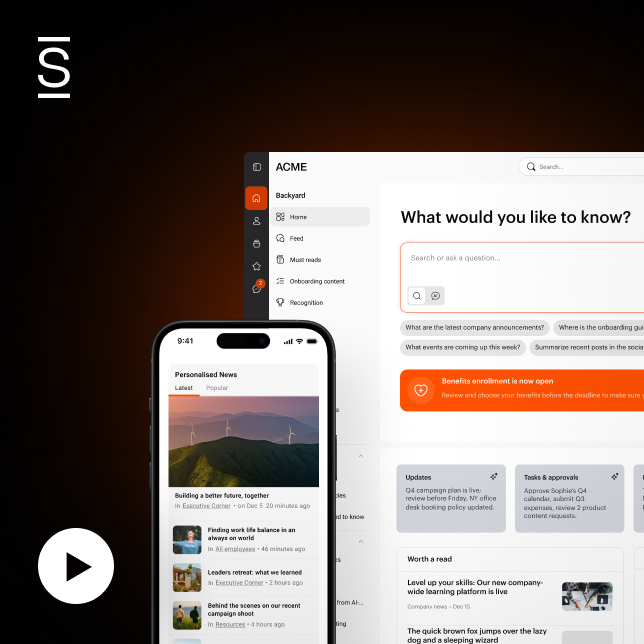
Watch a 5-minute demo
See how the Simpplr employee experience platform connects, engages and empowers your workforce.
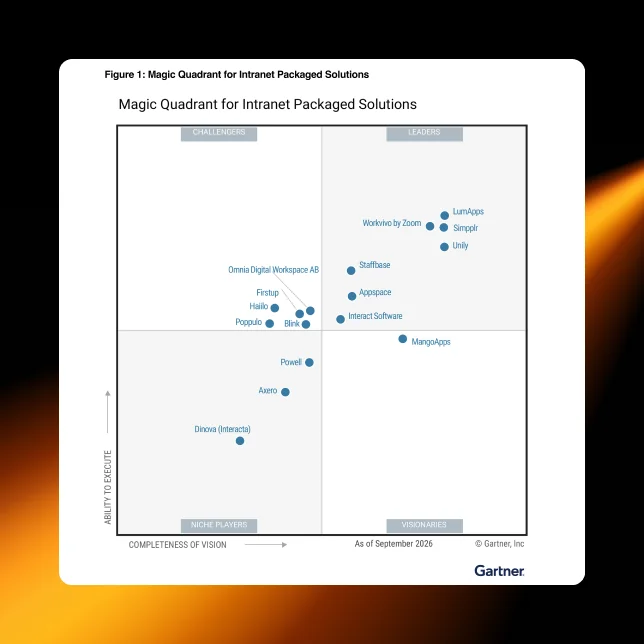
- #1 Leader in the Gartner Magic Quadrant™
- 90%+ Employee adoption rate