



Your enterprise intranet hosts confidential strategic plans and stores thousands of employee records. It’s one of the most valuable systems in your IT infrastructure. Yet many organizations still rely on a generic security questionnaire, check a few boxes, and hope for the best.
The enterprise intranet security checklist: SOC 2, GDPR, and beyond
The enterprise intranet security checklist: SOC 2, GDPR, and beyond
Table of contents
- 1 ISO 27001 certification
- 2 ISO 27701 certification
- 3 SOC 2 Type II
- 4 GDPR compliance
- 5 CCPA/CPRA compliance
- 6 Major subprocessors
- 7 Data privacy framework
- 8 Enterprise-level encryption
- 9 Security ratings
- 10 Disaster recovery
- 11 Cloud application security
- 12 Trust Simpplr for industry security and compliance
This blind spot is costly. The average data breach now exceeds $4.4 million, according to the IBM Data Breach Report (2025). The financial impact is only one dimension of the fallout. Failed compliance audits halt enterprise sales cycles when prospects demand SOC 2 Type II verification. Regulatory investigations drain resources when auditors discover gaps in GDPR data processing agreements or missing encryption standards.
IT teams are forced into triage mode, delaying planned initiatives while they investigate the root cause and rebuild trust in the system. Leadership often sidesteps employees’ concerns about data security.
These outcomes are the result of treating intranet security as an administrative formality instead of a core component of enterprise risk management. Let’s explore intranet security best practices when evaluating potential intranet vendors and platforms — especially if your organization deals with sensitive data or operates in a highly regulated industry like banking or healthcare.
1. ISO 27001 certification
ISO 27001 is an internationally recognized standard for establishing, implementing, maintaining, and continuously improving an organization’s information security management system (ISMS).
ISO 27001 demonstrates an organization has structured security processes across key areas:
- Risk assessment and risk treatment
- Asset management
- Access control and identity management
- Cryptography standards
- Physical and environmental security
- Secure software development
- Vendor and third-party risk
- Incident response and business continuity
- Logging, monitoring, and auditability
An intranet vendor with ISO 27001 certification has undergone independent audits and adheres to structured, repeatable security processes rather than ad hoc practices.
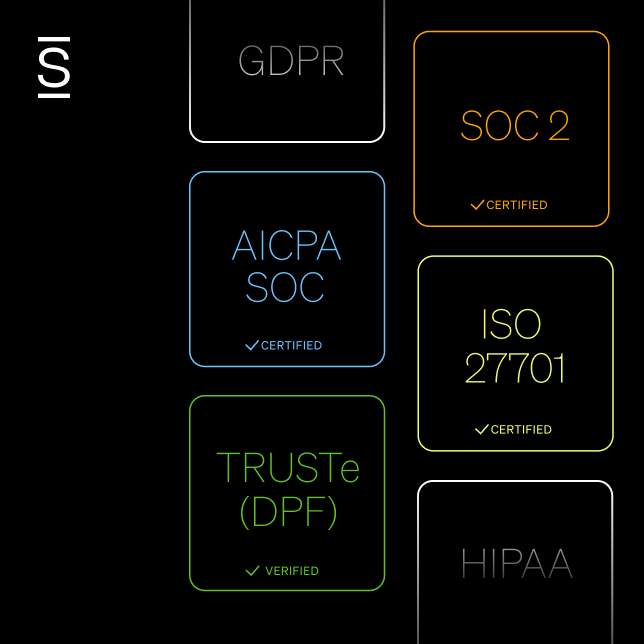
Simpplr’s AI-powered intranet platform maintains ISO 27001, SOC 2, and SOC 3 certifications — not just for subprocessors like AWS but for Simpplr itself — which requires annual audits. This means IT leaders can verify security controls rather than relying solely on inherited infrastructure certifications.
Simpplr also complies with or participates in:
- TRUSTe Data Privacy Framework (DPF) verification, which requires an audit
- TRUSTe Dispute Resolution
- HIPAA compliance for healthcare
- 23 NYCRR Part 500 readiness for financial services firms
- GXP compliance for the biotech, pharmaceutical, and life sciences fields
This is a partial list. Please contact [email protected] to get the list of other industries or sectors and their specific laws and regulations.
2. ISO 27701 certification
ISO 27701 is a privacy extension to the ISO 27001 security standard. Its purpose is to help organizations manage personally identifiable information (PII) in compliance with global privacy regulations such as GDPR, CCPA, and others.
ISO 27701 adds privacy-specific controls to an ISO 27001 management system, including:
- Defined roles for PII controllers and PII processors
- Policies and procedures for PII collection, use, storage, and deletion
- Processes for data subject rights (access, deletion, correction, consent)
- Privacy risk assessments and mitigation controls
- Vendor and third-party privacy management measures
- Privacy by design/default integrated into systems and processes
While ISO 27001 establishes the foundation for information security management, ISO 27701 ensures your intranet vendor has implemented specific privacy controls required by modern data protection laws. This certification demonstrates that privacy is built into the platform’s design and operations.
3. SOC 2 Type II
SOC 2 Type II is one of the most important indicators of whether an intranet vendor has mature, reliable security practices. A SOC 2 audit certifies that security controls are implemented and functioning. It evaluates how well an intranet platform implements and maintains controls across five trust principles.
These trust principles are:
- Security: Protection against unauthorized access
- Availability: Uptime, redundancy, failover, and service continuity
- Confidentiality: Controls for restricting information access
- Processing integrity: Accurate, timely, and authorized system processing
- Privacy: How personal data is collected, stored, and used
A Type I report confirms only that controls exist at a point in time, and a Type II audit verifies that the controls actually work over six to 12 months.
4. GDPR compliance
The General Data Protection Regulation (GDPR) was enacted by the European Union (EU) in May 2018. It established strict requirements for data handling practices and granted individuals unprecedented control over their personal information. Organizations worldwide must comply with GDPR when processing the data of EU citizens, regardless of where they are based.
Noncompliance with GDPR can result in fines up to 4% of annual global revenue or €20 million (whichever is greater). In addition to financial penalties, regulators can suspend data processing activities, halt international data transfers, or require extensive remediation and audits — any of which can disrupt core operations.
When evaluating intranet platforms for GDPR compliance, IT leaders should verify that vendors provide:
- A Data Processing Agreement (DPA) that includes Standard Contractual Clauses (SCCs) for international data transfers
- Built-in tools to track, manage, and fulfill data subject access requests (DSARs) within the 30-day statutory window
- Configurable data retention and deletion policies, including automated purge settings
- Documentation detailing where EU-resident data is stored and processed, including region-specific hosting options
- A transparent list of subprocessors, with their locations and data handling practices clearly documented
- Technical and organizational measures (TOMs) describing how the vendor protects personal data — optional to include, but strongly recommended
Simpplr is fully compliant with GDPR, CCPA, and other legal and regulatory requirements. The platform helps organizations meet their compliance requirements through features such as retention policies, data subject access requests, and standard contractual clauses.
5. CCPA/CPRA compliance
While GDPR sets a strong foundation for global data protection, platforms operating in the U.S. must also meet the distinct standards of the California Consumer Privacy Act (CCPA) and its expansion, the California Privacy Rights Act (CPRA). The CCPA and CPRA establish strict standards for how organizations collect, process, store, and share information.
Compliance ensures that businesses safeguard consumer privacy, maintain transparency, and uphold data rights such as access, deletion, correction, and opt-out controls. Being a CCPA/CPRA-compliant platform reduces regulatory risk and strengthens customer trust.
6. Major subprocessors
Subprocessors are third-party vendors or service providers that perform specific functions such as cloud hosting, analytics, email delivery, customer support, or security monitoring.
When these subprocessors handle personal data, they become an extension of the main service provider’s data-processing responsibilities. However, before engaging with any third-party subprocessor, it’s best to evaluate their privacy, security, and confidentiality practices.
When these subprocessors handle personal data, they become an extension of the main service provider’s data-processing responsibilities. If a subprocessor lacks adequate security certifications, they can compromise the primary platform’s entire compliance posture — the security chain is only as strong as its weakest link.
When evaluating subprocessors, verify that your intranet vendor provides:
- Complete and publicly accessible list of all subprocessors, including their locations, services, and data-processing responsibilities
- Evidence of each subprocessor’s security posture, such as SOC 2 Type II, ISO 27001, or equivalent certifications
- Data processing agreements (DPAs) with subprocessors that define security requirements, breach notification timelines, and liability terms
- Advance notification of new subprocessors and a documented right to object before they are added
- Documentation that clearly identifies what data each subprocessor can access, the purpose of that access, and how long data is retained
- Regular auditing or monitoring practices the vendor uses to assess subprocessor compliance — optional but very strong
Simpplr partners with more than 20 subprocessors — such as AWS, Apple, Azure OpenAI, Elastic Search, Salesforce, Kaltura, and Google Firebase — to deliver a superior user experience by providing infrastructure, data processing, and storage. These partnerships also possess SOC 2 Type II certifications.
7. Data privacy framework
A data privacy framework establishes the policies, procedures, and controls that govern how your intranet vendor handles personal and organizational data throughout its lifecycle — from collection through deletion.
A comprehensive data privacy framework should include:
- Transparent privacy policies detailing what information is collected and how it’s used
- Full regulatory compliance with GDPR, CCPA, and other legal requirements
- Real-time access to personal information through web-based interfaces
- Clear contact channels for addressing privacy concerns
Critically, verify that your vendor never sells customer data to third parties for marketing or revenue purposes. This practice, while common in consumer tech, creates unacceptable risk in enterprise environments where proprietary business information flows through the platform daily.
Simpplr takes data privacy seriously by protecting the security, confidentiality, and data integrity. Data is never sold to third parties.
The Simpplr privacy policy is certified compliant with independent, international, industry-accepted standards. Certifications include Data Privacy Framework (DPF), TRUSTe Data Privacy Framework verification, and TRUSTe Dispute Resolution.
8. Enterprise-level encryption
Data encryption converts information into an unreadable format that only a decryption key can unlock. It ensures that even if malicious actors intercept the data, they cannot decipher it without the key.
Data encryption with Transport Layer Security (TLS) protects information during transmission, and data should also be encrypted while at rest.
Characteristics of enterprise-level encryption include:
- End-to-end data encryption both in transit and at rest
- Centralized secrets management for storing and rotating decryption keys
- Certified cryptographic modules like FIPS 140-2 Level 3
- Secure algorithms and protocols that mandate TLS 1.2 or above
Simpplr always uses the highest level of encryption available for data in transit (current standard is TLS 1.3) and will only accept connections from clients using TLS 1.2 or higher.
9. Security ratings
Security ratings provide organizations with an objective, quantifiable assessment of their intranet platform’s security posture. Be careful that your intranet vendor’s security isn’t self-declared.
A best practice is to look for neutral, third-party assessments from services like BitSight and SecurityScorecard to evaluate intranet security protocols.
Characteristics of robust security ratings include:
- Real-time vulnerability scanning and threat detection across all system components
- Standardized scoring frameworks aligned with recognized standards such as NIST, ISO 27001, or CIS Controls
Simpplr scored the highest (96 out of 100) on SecurityScorecard among other risk management companies and remains committed to protecting information from threats using reasonable safeguards.
10. Disaster recovery
Infrastructure failures happen. Power outages, natural disasters, hardware failures, and security incidents can take down primary systems without warning. In such cases, organizations need a platform that can recover quickly with minimal data loss.
Effective disaster recovery requires two things: backup systems in a completely different location and automatic switching when something goes wrong.
Geographic separation and automated failover support should include:
- Multiple data centers across physically separated availability zones, connected by low-latency, high-throughput, redundant networks. Application services, storage, and databases can automatically fail over without disruption.
- Automated backups of the full database instance, enabling full restoration if the primary instance fails.
- Built-in replication that creates read replicas, which receive asynchronous updates from the primary database. If the primary instance fails, Simpplr can promote a read replica to a standalone instance to maintain continuity.
Simpplr backs up all data daily in multiple availability zones on a rotating schedule of incremental and full backups. The saved data is encrypted with a key and is stored in S3 internally (managed service by AWS).
11. Cloud application security
Cloud application security safeguards applications running in cloud environments — whether public, private, or hybrid — from unauthorized access, data breaches, and cyberattacks.
Characteristics of strong cloud application security include:
- Single sign-on (SSO) or Identity and Access Management (IAM) to simplify and standardize user authentication (Okta, Azure AD, Ping, etc.)
- Application-layer security controls such as web application firewalls (WAFs), API gateways, and runtime application self-protection (RASP)
- Secure development lifecycle (SDLC) practices, including code reviews, vulnerability testing, and patch management
Simpplr uses multiple layers of defense to resist various types of threats and achieve SOC 2 Type II and ISO 27001 certifications, verified through annual audits.
Trust Simpplr for industry security and compliance
Compliance is a moving target. State-level privacy laws are multiplying, AI governance frameworks are emerging, and breach disclosure requirements are tightening globally.
The intranet platform you select today must be maintained by a vendor committed to continuous investments in security, not one that treats compliance as a one-time achievement.
Simpplr is a modern enterprise intranet that offers an unparalleled security-first IT infrastructure. The platform maintains ISO 27001, ISO 27701, and SOC 2 Type II certifications through annual third-party security audits.
Simpplr provides the verified security posture that enterprise IT teams require and auditors demand. This includes quarterly penetration testing against OWASP standards, secure software development lifecycle (SDLC) practices, a SecurityScorecard rating of 96/100,, and data residency options across more than 10 global regions.
The AI-powered platform also provides a consumer-grade employee experience with broad integrations with workplace tools — including Slack, Teams, Workday, Okta, ServiceNow, SharePoint, and more. Features feedback collection and dynamic content targeting help organizations personalize communication at scale.Other key capabilities include enterprise search for information discovery and AI-powered analytics for actionable insights.
Ready to equip your IT teams with enterprise-grade intranet security? Request a personalized demo today.
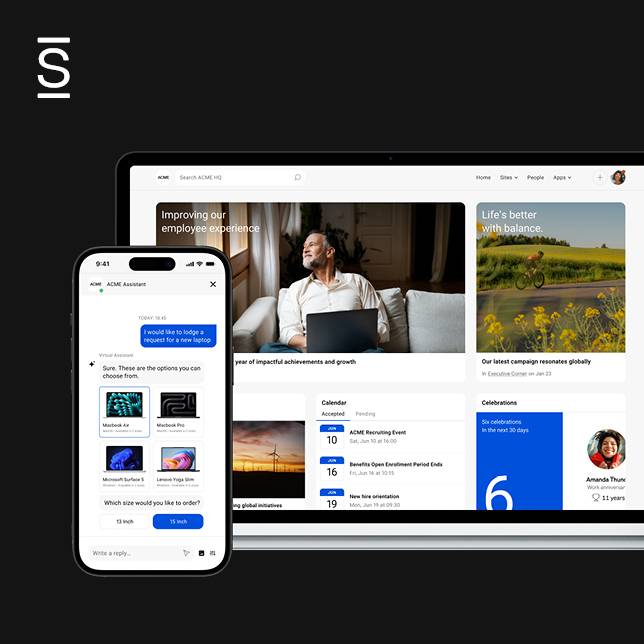
Watch a 5-minute demo
See how the Simpplr employee experience platform connects, engages and empowers your workforce.
- #1 Leader in the Gartner Magic Quadrant™
- 90%+ Employee adoption rate