

360-degree feedback defined
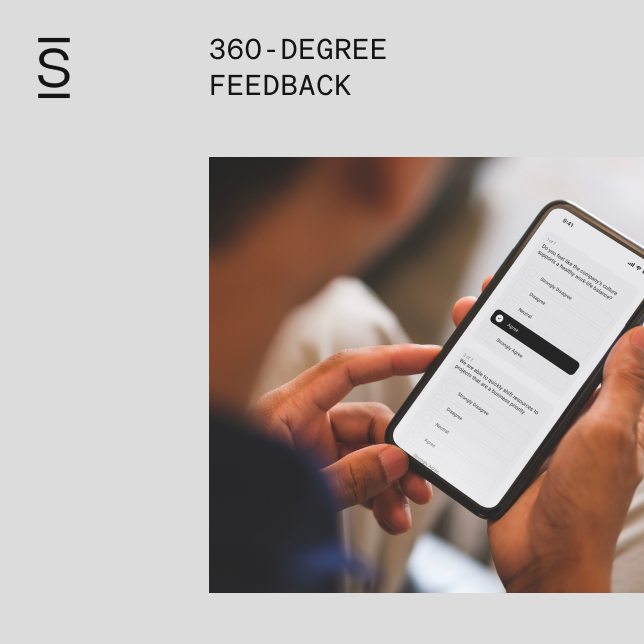
360-degree feedback, also known as full-circle appraisal, is an employee assessment method that gathers constructive feedback from people managers, peers, direct reports and others who work with them the most. The feedback is usually collected through anonymous surveys to encourage candor and openness in the responses.
Combined with self-assessment, 360-degree feedback is a powerful development tool for personal and professional growth. It provides a well-rounded view of an employee’s performance, highlighting key strengths, areas for improvement, and hidden challenges. These collective insights shape individual development plans (IDPs) to support skill enhancement, boost self-awareness, and drive continuous learning.

Four core perspectives in a 360-degree feedback assessment
A 360-degree feedback assessment combines four viewpoints to show where self-perception matches daily experience and where blind spots appear.
| Feedback source | Perspective provided | Behaviors or skills assessed | Privacy considerations |
|---|---|---|---|
| Self-assessment | The employee reflects on personal strengths, goals, and challenges. | Self-awareness, accountability, confidence, and progress toward goals. | Responses are usually shared with the employee and may be compared with group feedback during a development conversation. |
| Manager feedback | A manager connects observed work to team priorities and role expectations. | Results, judgment, communication, and readiness for broader responsibility. | Manager input is commonly identified because the reporting relationship is already known. |
| Peers or cross-functional colleagues | Colleagues show how someone works across shared projects and teams. | Collaboration, reliability, influence, problem-solving, and communication. | Organizations often combine responses to protect anonymity and encourage honest input. |
| Direct reports | Team members describe the employee’s day-to-day leadership impact. | Coaching, delegation, trust, fairness, listening, and decision-making. | Responses should remain confidential, especially when only a small number of people report to the leader. |
Customers or external partners can contribute when they regularly work with the employee. Together, these perspectives help turn 360-degree feedback into focused individual development plans.
How reliable is 360-degree feedback?
360-degree feedback is reliable when it measures observable, role-relevant behaviors with clear questions and a consistent rating scale. Results carry more weight when raters represent the employee’s day-to-day working relationships, receive guidance on fair scoring, and complete bias checks before results are shared. Comparing themes and scores over time also helps separate a one-off reaction from a lasting pattern.
Anonymous surveys can make people more comfortable speaking honestly, but anonymity does not make every comment objective. Treat multi-rater input primarily as developmental feedback, not the sole basis for pay, promotion, or formal performance decisions. Enterprise-grade governance, role-based access, and secure data handling also protect confidentiality and help employees trust the process.
360 degree feedback vs performance reviews
Both 360-degree feedback and performance reviews are essential evaluation tools in the workplace, but they function in distinct ways.
360-degree feedback is a developmental tool that collects input from multiple sources, including peers, managers, direct reports, and even clients, to provide a well-rounded perspective on an employee’s skills, communication, and teamwork. It is typically anonymous, conducted periodically, and focuses on personal and professional growth.
In contrast, performance reviews are usually conducted by a direct manager to evaluate an employee’s past performance, goal completion, and job-specific competencies. These reviews are often tied to promotions, salary adjustments, and overall job performance.
While performance reviews focus on accountability and evaluation, 360-degree feedback fosters self-awareness and continuous improvement. Together, they create a balanced approach to employee development and performance management.
Importance of a 360-degree feedback
360-degree feedback is a powerful way to help employees within their organization. When implemented effectively, it improves employee performance, enhances collaboration and increases employee engagement and satisfaction.
Improved performance and productivity
According to Gallup’s strengths meta-analysis, employees who receive strengths-based feedback during their 360-degree review show an 8% to 18% increase in performance.
360-degree feedback provides a panoramic view of strengths and areas of improvement, which helps employees focus on their performance and productivity levels.
Related: Increasing productivity and effectiveness using the intranet
Increased engagement and job satisfaction
According to Gallup, 33% of American workers are actively engaged in their jobs. The majority fall into the categories of “just showing up” (52%) or “actively disengaged” (17%). This underscores the importance of fostering a culture of continuous feedback and development.
A well-implemented 360-degree feedback system shows your interest in helping employees progress in their careers without any bias through constructive insights. Since growth never stagnates, employees will feel satisfied and engaged.
Challenges faced during 360-degree feedback
While the benefits are substantial, 360-degree feedback is not without its challenges. Here are some of them:
Abundance of overwhelming feedback
Receiving feedback from multiple sources can be daunting, especially when it includes conflicting opinions or critical remarks. Employees may struggle to process the volume of information, making it challenging to identify key takeaways. This can lead to confusion, frustration, or even disengagement without proper guidance.
Tip: A skilled coach or HR leader can guide employees to come to terms with the feedback, pinpoint key insights, prioritize growth areas, and turn them into clear action plans.
Prone to biases
Despite its multi-rater approach, 360-degree feedback can be influenced by biases. Personal relationships, workplace dynamics, or individual perceptions may skew responses, leading to inaccurate or unbalanced employee feedback. For instance, some reviewers may be overly lenient or critical based on personal preferences rather than actual performance.
Tip: Encourage respondents to provide their candid observations with examples. Implement a standardized rating system and do benchmarking to ensure fairness.
Time-consuming
Collecting, analyzing and submitting feedback on time can be a lengthy process, especially in larger organizations with multiple stakeholders. It can take several days or weeks to gather all the necessary input, as coordinating with various participants and ensuring they meet deadlines can be challenging.
Tip: Use performance management software, dashboards or integrate an intranet that transforms feedback into impactful initiatives with real-time insights.
6 ways to maximize 360-degree feedback experience
360-degree assessments can be an incredibly frustrating experience and a waste of time for everyone involved if not done correctly. Consider the following six ways to maximize the impact of a successful 360-degree feedback experience:
Define and clarify expectations
Research from Gallup and Workhuman found that only 47% of employees strongly agree that they know what is expected of them at work. That’s down from 56% immediately preceding the pandemic.
Therefore, clearly outline the roles, behaviors, and competencies assessed in the 360-degree assessment. When participants understand what is expected of them, both in terms of providing feedback and receiving it, the process becomes more effective. Setting clear expectations ensures that feedback is constructive, goal-oriented, and aligned with professional development, ultimately driving performance improvement.
Who to involve
Build a list of several people incorporating multiple unique perspectives. Before finalizing, have the individual review it with a manager or colleague who understands their workflow to ensure no key contributors are overlooked. A true 360-degree review includes insights from all directions — not just direct reports and peers but also cross-functional teams, senior leadership, and even external stakeholders like partners, vendors, or key clients.
Related: How to give constructive feedback in the workplace
Get the commitment from the evaluators
Individuals often receive numerous requests to participate in surveys and initiatives via mail. A resource suggests that an average office worker receives around 121 emails every workday. Therefore, encourage employees to connect with other individuals being asked to participate (in-person, by phone or by video call is preferred).
When reaching out, have them explain why they are participating in this process and how it can help an employee in their professional growth.
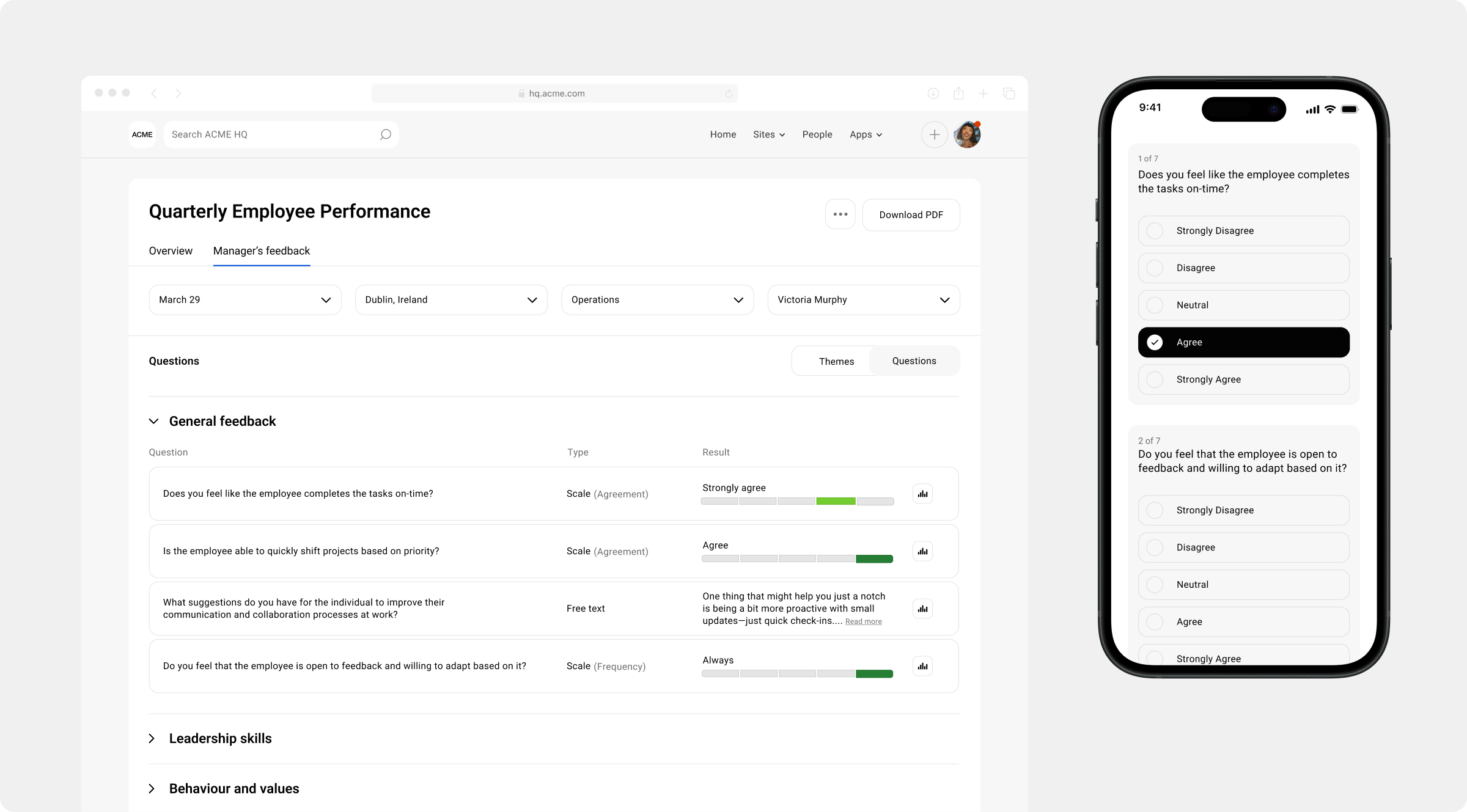
Use AI-powered employee surveys to gather insights
Leverage AI-powered employee surveys to gather deep, actionable insights. These advanced tools help streamline the feedback collection process, offering a more nuanced understanding of employee performance, strengths, and areas for improvement.
| AI can sift through a broad range of data from surveys, comments and other feedback sources to help read the mood within the organization.
Moreover, AI-powered surveys can personalize questions based on previous answers, ensuring that the feedback process feels relevant and targeted to each individual, increasing engagement and the quality of the responses.
Simpplr Surveys capture rich feedback with built-in pulse, engagement, and ad hoc surveys and prompt action on the insights to improve the employee experience. Surveys help leaders understand employee needs through passive listening that continuously gathers millions of data points across the platform to detect emotions, sentiment and platform usage patterns.
Foster strong connection and participation
The success of the 360-degree feedback process hinges on receiving honest and quality responses from all invited participants. To ensure this, encourage the individual to proactively follow up with each participant to confirm interviews have been scheduled and online assessment invitations have been received.
Follow up and reinforce feedback progress
An effective follow-up process ensures individuals understand, absorb and act on the feedback received. To make the most of the 360-degree feedback, choose a platform with feedback capabilities that help you spot and fix problems fast and robust analytics that offer actionable insights.
- Make it simple and keep it short for employees to share ideas and flag issues
- Use integrated surveys to pulse-check what teams need
How to run the 360-degree feedback process step by step
A clear process keeps 360-degree feedback focused on growth, not scores or surprises.
- Set the purpose and choose a small set of job-relevant competencies, such as communication, leadership, or collaboration.
- Select representative raters who regularly see the employee’s work, including peers, managers, direct reports, and cross-functional partners.
- Write short, behavior-based questions that ask what people observe, not what they assume about intent.
- Explain confidentiality rules before launch, including who can view results and how comments will be grouped.
- Send the survey with a clear deadline. Simpplr Surveys can collect anonymous employee feedback and send automated reminders.
- Review patterns across ratings and comments, separating repeated themes from one-off opinions. Passive listening can add context between survey cycles.
- Hold a supportive feedback conversation that starts with strengths, then explores one or two priority gaps.
- Create an individual development plan with specific actions, support needed, and signs of progress. Workflow automation can assign follow-up tasks.
- Schedule a check-in within 60 to 90 days and adjust the plan based on results. AI-native, governed surveys can surface prescriptive next-best actions while role-based access and zero-retention architecture protect sensitive responses.
Putting it all together: How Simpplr can improve 360-degree feedback
360-degree feedback is a powerful tool for fostering employee development, enhancing collaboration, and driving organizational success. Forbes found that over 85% of all Fortune 500 companies use the 360 degree feedback process as a cornerstone of their overall leadership development. Despite its importance, 360-degree assessment can become extremely frustrating in modern digital workplaces if not implemented in the right manner.
Simpplr, an AI-powered modern intranet, helps organizations optimize their 360-degree feedback process with effective insights and analytics capabilities. It also automates workflows, streamlines feedback collection, enhances data accuracy, and provides actionable insights to empower employees and leaders.
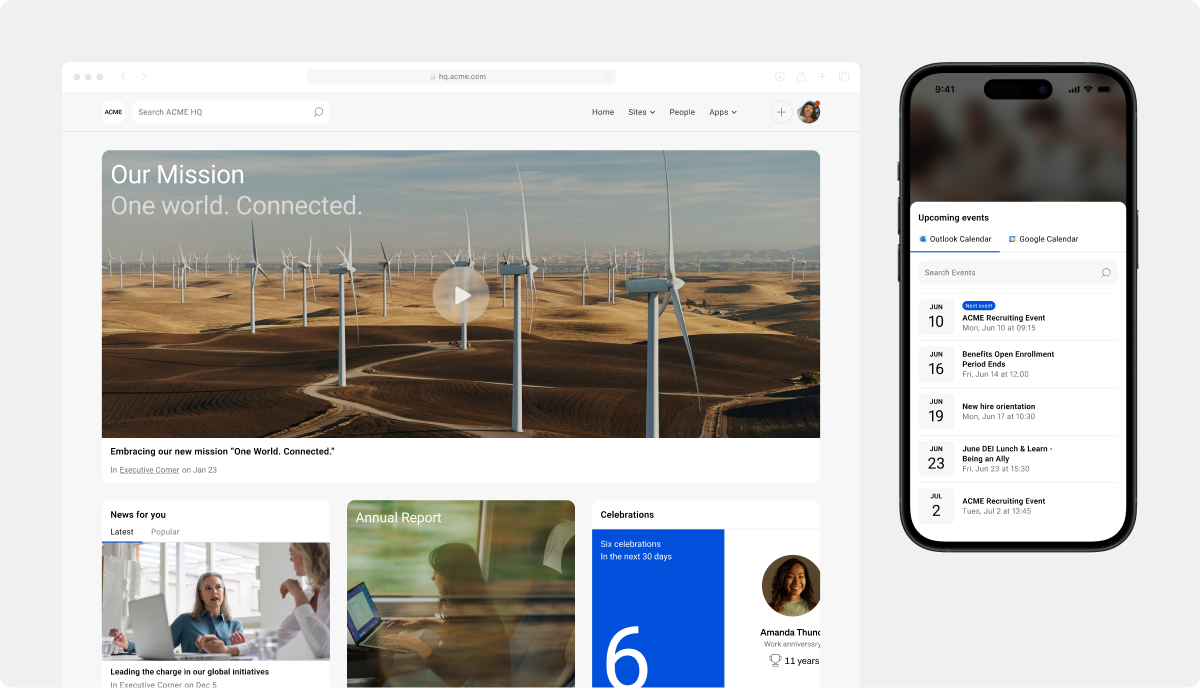
Get a live demo to see how Simpplr can streamline your 360-degree feedback process, enhance employee development, and drive meaningful performance improvements.
Watch a 5-minute demo
See how the Simpplr employee experience platform connects, engages and empowers your workforce.
- #1 Leader in the Gartner Magic Quadrant™
- 90%+ Employee adoption rate
About the author

Srishti Mathur
Srishti Mathur is a Content Marketing Copywriter at Simpplr. With a professional degree in English Literature and Linguistics, she combines her passion for language with a strategic approach to digital marketing. Her expertise spans a diverse range of content types, including SEO-focused blogs, informative glossaries, and compelling video scripts, ensuring consistent messaging across all platforms. In her spare time, she can be found playing with her dog or planning a new trip to beaches. Connect with Srishti on LinkedIn.