






Improving intranet adoption starts with identifying why employees ignore it. To succeed, secure visible executive support, define clear metrics, and prove the intranet’s value to your teams. Then, optimize navigation and search, integrate the platform into daily workflows, and empower managers to lead the way. When the intranet becomes the fastest, most trusted source of truth, engagement will follow.

How to improve intranet adoption and employee engagement
How to improve intranet adoption and employee engagement
Table of contents
- 1 Why intranet adoption matters for employee engagement
- 2 Why does intranet adoption fail in most organizations?
- 3 Seven strategies to improve and increase intranet adoption
- 4 Which mistakes stall intranet adoption most often?
- 5 Which metrics show whether intranet adoption is working?
- 6 What does a realistic intranet adoption timeline look like?
- 7 The right platform accelerates intranet adoption
An intranet is only valuable when employees actively use it. Intranets rarely fail due to missing features, such as complex configurations or excessive customization. Driving engagement requires taking steps such as simplifying search, integrating everyday tools, and empowering managers to lead adoption.
This guide shows IC teams how to remove adoption barriers across content, navigation, integrations, governance, and measurement — building a strategy that supports both sustained intranet usage and broader employee engagement goals.
TL;DR
- Seven common barriers stall intranet adoption long before platform features matter.
- Visible executive sponsorship and named ownership set the foundation for everything.
- Findable content and workflow integration make the intranet the easiest path.
- Managers drive team habits, so enable them before running wider campaigns.
- Track repeat visits and search success, then adjust across two years.

Why intranet adoption matters for employee engagement
Intranet adoption matters for employee engagement because it turns an intranet investment into a trusted daily resource. Employees can use it to find answers, stay informed, and participate in company life.
While a launch creates access, consistent intranet usage proves the platform provides real value.
When employees return to the intranet regularly, it reduces digital friction by creating familiar habits. Information retrieval becomes faster and more intuitive. Frontline and hybrid teams gain a clearer path to timely updates, while everyone spends less time asking where information lives or searching across disconnected channels. Faster access to knowledge also supports employee engagement because people can focus on their work and feel connected to decisions that affect them.
Leaders should care because intranet adoption affects more than employee login numbers. It impacts the work of several departments. Internal Communications can reduce duplicate messages, HR can lower the admin burden of answering recurring questions, and IT can support a more consistent employee experience. Efforts to improve intranet adoption work best when teams recognize those shared stakes before choosing tactics.
Why does intranet adoption fail in most organizations?
Intranet adoption usually stalls because of seven common barriers. When left unaddressed, they tend to push employees to rely on other, less efficient channels.
- Absent executive sponsorship: When leaders don’t engage, employees assume the platform isn’t a priority.
- Outdated content: Conflicting or stale information quickly undermines trust.
- Poor navigation: When the site structure mimics the org hierarchy rather than user needs, information becomes difficult to find.
- Reliance on email: As long as attachments and updates flow via email, employees have no reason to use the intranet.
- Manager disengagement: Since teams mirror their manager’s habits, silent managers cause department-wide stalling.
- Lack of perceived value: If employees don’t see how the tool makes their work easier, it becomes just another application to manage.
- Lack of measurement: Without tracking usage, adoption problems remain invisible and uncorrected.
Seven strategies to improve and increase intranet adoption
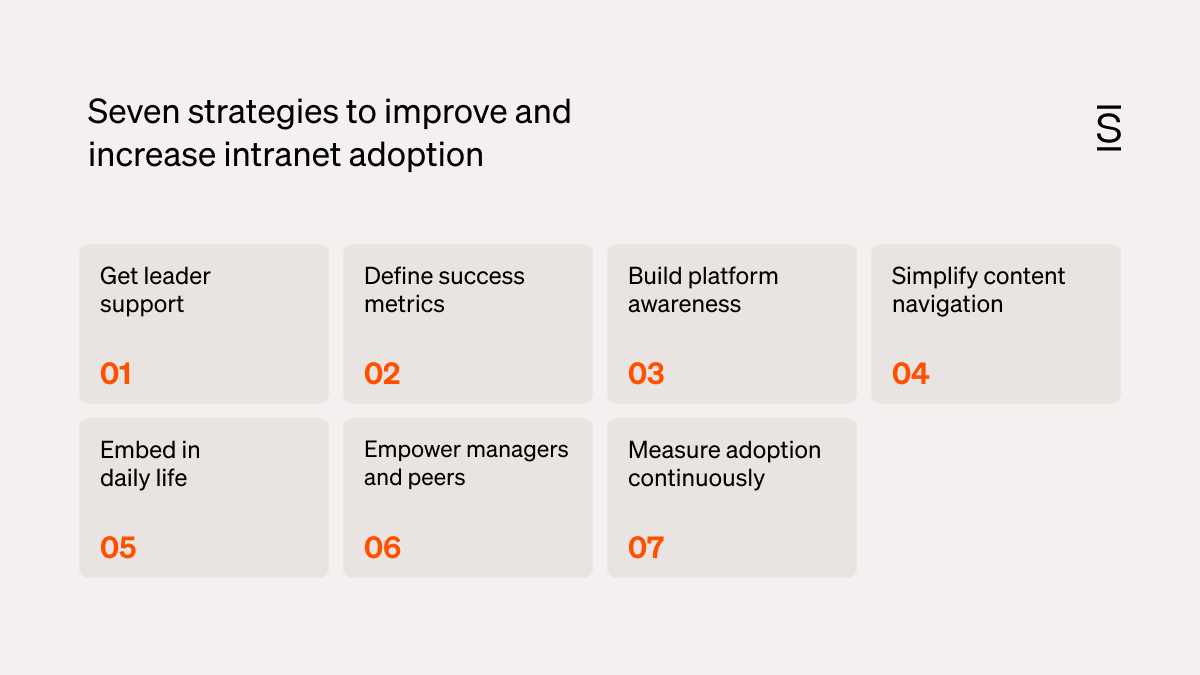
No single campaign or feature can increase intranet adoption on its own. The following strategies explain how to build and maintain the conditions that encourage employees to use the intranet consistently.
1. Secure executive sponsorship and visible commitment
Executive sponsorship is the foundation of every successful intranet. Passive support isn’t enough — leaders need to show up. Sponsorship doesn’t require grand gestures; small, consistent actions, like sharing a strategy update or replying to a comment, signal to employees that the intranet is a priority.
How to secure and maintain executive sponsorship
Securing a sponsor may take more than one good conversation. But keeping one takes a rhythm of short updates and small, visible tasks.
- Identify the right sponsor: Usually the CHRO, COO, or CEO.
- Build the business case: Show intranet ROI against costs leaders already track.
- Brief the sponsor monthly: Cover progress, challenges, and one open opportunity.
- Share adoption metrics: Include usage data in regular executive updates.
- Invite them to milestones: Adoption events, town halls, and launch celebrations.
- Make championing easy: Supply talking points and drafted posts to share.
- Ask for one habit: A monthly post outperforms an annual endorsement.
2. Define adoption strategy and clear success metrics
A clear strategy turns good intentions into concrete goals, specific timelines, and assigned accountability. Don’t rely on “total registered users,” as it is a vanity metric that ignores actual engagement.
Instead, prioritize meaningful engagement metrics — such as employee recognition, repeat weekly visits, successful searches, active manager participation, and lower email volume—to clearly track shifting daily habits.
Building your adoption strategy document
A concise strategy document provides the necessary framework to align your team. Define these five elements before sending your first campaign.
- Target audience segments: Early adopters, groups with lower adoption, and departments with different needs.
- Key behavior objectives: Name the habit to replace and its replacement.
- Metrics by timeline: Awareness by month six, integration by month 12.
- Resource requirements: People, budget, and vendor support to sustain the work.
- Owner accountability: One name reports adoption numbers on a set cadence.
Define clear goals and success metrics
Meaningful targets require a clear baseline, so measure current usage and information-seeking habits before announcing a launch. Next, define what success looks like by setting clear, time-bound goals.
For example, aim to hit 70% monthly active users, 80% manager utilization, and an average session duration of over three minutes, with milestones at six, 12, and 24 months.
While your intranet engagement strategy should evolve based on data trends, keep your core metrics consistent long enough to accurately track progress.

3. Communicate value and build awareness
Successful adoption begins with clarity, ensuring every employee understands how the platform addresses their daily needs. Employees need to know the intranet exists, why it exists, and what it delivers for them specifically.
Engage employees early
Intranet success depends on employee ownership, which starts well before the launch day. Ask teams what information they struggle to find, then use that feedback to build your initial content. Showing them you listened builds immediate value.
Recruit champions from every department. Having ten enthusiastic colleagues across different teams will drive adoption far more effectively than any company-wide email.
These champions humanize the technology, replacing distant corporate mandates with relatable, peer-to-peer encouragement.
Launch integrated communication campaign
Once your intranet is created, treat your intranet adoption communication with the same rigor as an external marketing campaign, supported by a calendar, channel plan, and diverse content mix. Reach different audiences by pairing emails, town halls, and manager briefings with video, infographics, and real employee testimonials.
Consistency matters more than polish. Since new habits require repetition, stagger your messaging across the 12 weeks following go-live.
4. Simplify navigation and make content findable
Employees are less likely to use the intranet when they cannot find information quickly. Build your content architecture based on how employees search — for example, label files by common needs like ‘parental leave’ rather than internal committee names.
Always validate these labels with user testing. Because search is the primary way people find information, it must be reliable. Finally, remove outdated content regularly, as stale information quickly erodes user trust.
Ensure search works and content stays current
With workforces becoming increasingly hybrid and global, how you manage your intranet content directly impacts your company’s ability to operate effectively. Employees need accurate, relevant information available right when they need it — whether they’re onboarding, completing daily tasks, or collaborating across departments.
Establishing a few simple, recurring habits will keep your intranet relevant and trustworthy throughout the year.
- Optimize search: Configure your engine to handle typos, synonyms, and internal acronyms automatically.
- Assign content owners: Require a named owner for every page to maintain ongoing accuracy.
- Automate content reviews: Set expiration dates for all pages to ensure information stays current.
- Track search gaps: Monitor zero-result queries to identify and create missing content.
- Analyze performance: Use analytics dashboards and track intranet KPIs to pinpoint and improve underperforming or confusing pages.

5. Integrate intranet into daily work and processes
Adoption flourishes when the intranet becomes the path of least resistance by integrating seamlessly into daily workflows. By weaving the employee intranet into existing habits, you transform it from an optional bookmark into a core component of the employee experience.
Make the intranet the default for information
When answers live in one place, employees stop guessing where to find the latest versions. Stop sending policy documents as attachments; link to the intranet instead. While attaching files feels faster, it signals that the intranet is optional.
Encourage HR and managers to link to the intranet for details, shifting behaviors gradually until the intranet becomes the single source of truth.
Connect intranet to other tools and workflows
Every additional step reduces usage. Removing small points of friction is more effective at driving intranet adoption than any reminder campaign.
- Set as browser homepage: Make the intranet the default page employees see whenever they open their browser.
- Embed widgets in Slack: Quick access where team conversations already happen.
- Enable single sign-on: One less login, one less reason to leave.
- Add links to signatures: Subtle reminders inside templates and everyday email.
- Optimize for mobile: A mobile intranet app allows frontline and traveling employees to get instant phone-first access.
Technical intranet integration needs planning time with IT, so bring them in well before anyone commits to a launch date.
Build intranet checks into processes
Embed intranet usage into standard operating procedures to make the platform an essential workday habit rather than a fleeting initiative. Lasting adoption depends on these consistent, process-driven strategies.
- Require onboarding orientation: Build the habit with new hires in week one.
- Publish announcements first: Post major news to the intranet before emailing.
- Route policy updates: Direct all revisions to the intranet, not email.
- Direct benefits questions: Replace email threads with a single intranet resource.
- Post org changes immediately: Update charts the day they take effect.
Integrating these checks makes the intranet a foundational part of daily operations.
6. Enable managers and peer adoption leaders
Managers play a vital role in intranet adoption, as team habits often reflect the tools and behaviors their leadership prioritizes. Manager adoption is critical for success, yet it often lags when managers are not shown the direct value to their team’s daily output.
Solve this by shifting your focus to the value proposition, showing even the busiest managers how the platform replaces redundant tasks and streamlines their workflow. Shift your training from basic navigation to why managers should champion the intranet.
Build organic peer credibility by leveraging ambassador programs. Empower these champions with exclusive early access, dedicated channels, and public recognition to sustain their momentum long after the initial launch.
Per Gallup, managers account for at least 70% of the variance in employee engagement scores across business units.
Use leadership and peer voices
Authentic employee voices hold far more credibility than polished marketing messages. The most persuasive content comes from colleagues who truly understand the daily realities of the work.
- Leaders explain the stakes: Short posts linking the intranet to business priorities.
- Peers show daily use: Honest examples of time saved during a normal week.
- Managers translate benefits: Each team hears value framed around its own work.
- Skip the marketing polish: Plain language from real employees earns more trust.
- Show before and after: Compare AI employee onboarding or policy lookups against the old way.
7. Measure adoption and optimize continuously
Intranet adoption requires an ongoing cycle of measuring, learning, and refining. Sustaining focus long after launch depends on prioritizing behavioral metrics over simple traffic counts.
By tracking weekly active users, search success rates, content freshness, and manager participation, you gain clear insights into whether employees are building lasting engagement habits.
- Review monthly usage: Monitor trends, popular content, and search failures.
- Compare departments quarterly: Identify adoption gaps to pinpoint enablement needs.
- Run pulse surveys: Use quick questions to gather qualitative feedback.
- Refresh targets biannually: Adjust goals based on performance trends.
- Audit content annually: Remove or archive pages with no engagement.
Quantitative data tracks what is happening, while qualitative feedback reveals why, providing the insights you need to drive meaningful organizational developments.
Which mistakes stall intranet adoption most often?
The mistakes that stall intranet adoption during the first year are predictable and fixable. Addressing these early barriers is essential to prevent employees from relying on inefficient alternative channels.
- Treating the launch as the finish line: Launch day is just the start; stop treating it like the end of the project.
- Mirroring the org chart: Design navigation around employee needs, not your internal reporting structure.
- Publishing without governance: Without designated content owners, content quickly becomes stale and unreliable.
- Prioritizing vanity metrics: Stop obsessing over login counts; focus on whether employees return and find value.
- Neglecting manager enablement: Teams follow their leaders; if managers don’t use the intranet, their teams won’t either.
- Relying on one-time training: A single training session cannot overcome deeply ingrained email habits.
- Ignoring employee feedback: Dismissing input destroys trust and kills engagement.
Which metrics show whether intranet adoption is working?
The metrics that matter track behavior over time. Reach metrics track initial awareness, while repeat usage indicates that employees find the platform valuable.
To measure true intranet adoption, look at both how many people use it and how deeply they engage. Monthly active users measure broad awareness, while repeat weekly visits signal habit formation. Always pair these high-level metrics with diagnostic questions to better interpret your data.
For example, falling search success signals a content gap, and low manager participation highlights a need for better enablement.
Simpplr surfaces real-time adoption and engagement data by team and location, so a monthly report takes minutes to assemble.
| Metric | What it reveals |
|---|---|
| Monthly active users | Overall reach across the workforce |
| Repeat weekly visits | Whether daily habits are forming |
| Search success rate | How easily employees find answers |
| Manager participation | Which teams still need enablement |
| Task completion rate | Whether real work moves through the intranet |
What does a realistic intranet adoption timeline look like?
The first 90–180 days can establish visibility, trust, and repeat use. The timing will vary by organization, but each phase should build on what employees need to use the intranet consistently.
Days 1 to 30: Visibility and trust
Build a solid intranet foundation early in the rollout. Audit existing content, organize clear navigation, and assign dedicated owners to manage key pages. Ensure the platform is highly visible and populated with essential, reliable content to build early confidence among your workforce.
Days 31 to 60: Utility and habit building
Focus on making the platform genuinely useful for daily tasks, such as sharing practical tips and highlighting daily tools so teams see clear value in returning regularly. Actively encourage employees to use the intranet for their routine work, transforming the platform from an optional resource into a necessary tool for their daily habits.
Days 61 to 90: Culture and participation
Foster culture and participation among the employees regarding intranet usage. Move beyond passive consumption toward active engagement, where employees feel empowered to participate in company life, share updates, and interact directly with peers.
Days 91 to 180: Optimization and long-term value
Refine your intranet strategy by reviewing performance metrics and addressing user feedback. Use the engagement data collected over the first three months to address friction points, streamline navigation, and solidify the intranet as a high-value, long-term asset.
The right platform accelerates intranet adoption
While many platforms can support your intranet adoption strategies, the right technology reduces operational effort and sustains long-term results. Moreover, a solid foundation is vital; without one, employee engagement often suffers as user attention shifts elsewhere.
Furthermore, true adoption relies on a robust digital foundation that acts as a force multiplier. By prioritizing intuitive navigation, seamless mobile access, and prescriptive analytics, you transform your intranet from a static repository into a dynamic destination.
And while human discipline initiates the process, the right tools are what protect and sustain that growth. Choose a platform that makes your intranet the fastest, most reliable source of truth for every employee.
Drive intranet adoption with Simpplr
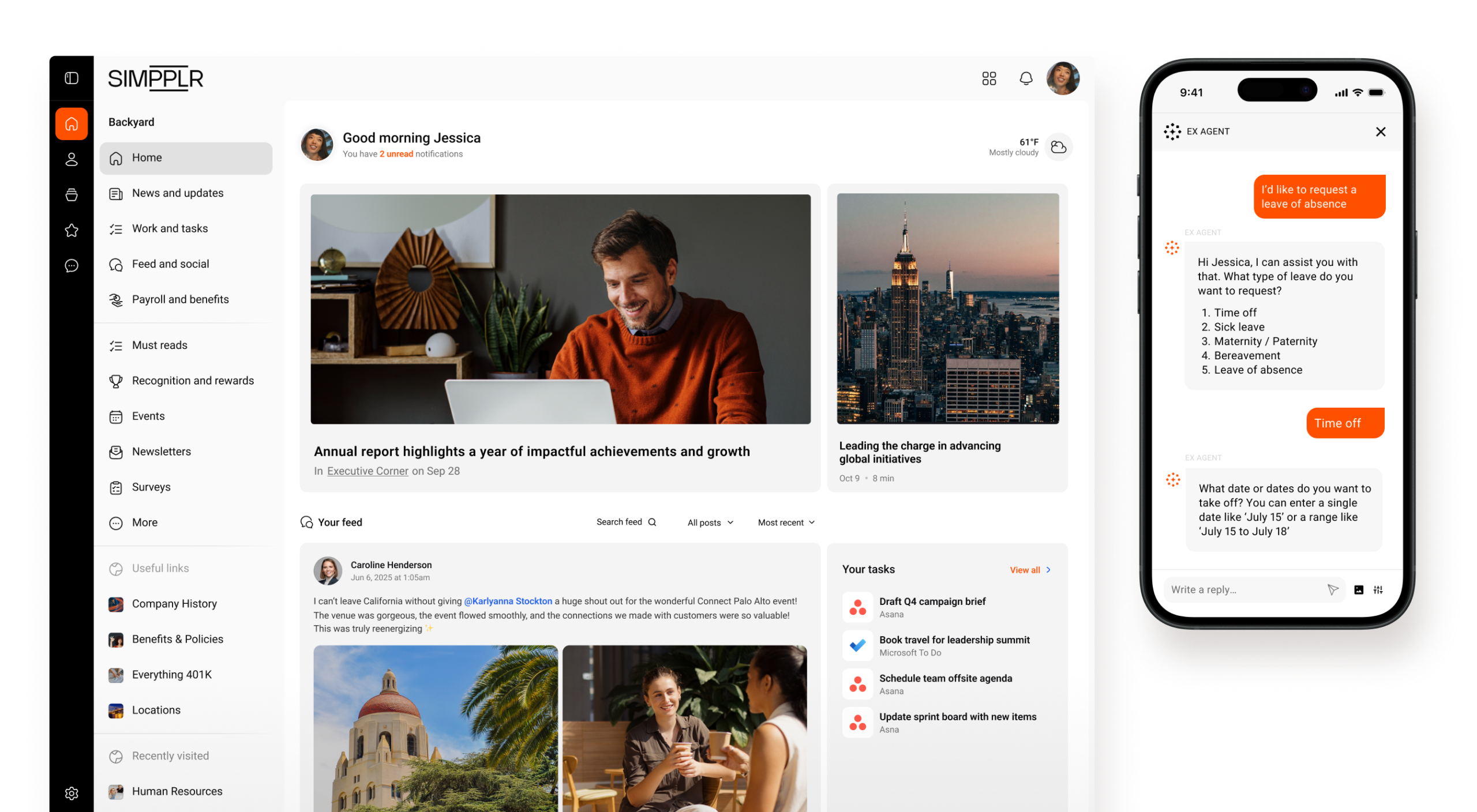
While these strategies provide the roadmap, Simpplr accelerates the journey towards adopting an intranet that is useful for your organization. The platform eliminates friction at every stage of intranet adoption, sustaining momentum from the initial launch through long-term engagement.
- Executive dashboards show reach and engagement in real time.
- AI-powered search answers questions in employees’ own words.
- Native Slack, Teams, and email integrations sit inside the daily workflow.
- Manager and team analytics show exactly where adoption lags.
- Personalized feeds deliver relevant updates by role and location.
- Recognition and community tools give employees a reason to return.
- Proven adoption across both desk and frontline workforces.
Organizations using Simpplr see faster adoption because the platform removes barriers, making each strategy easier to execute and more effective.
Ready to improve intranet adoption with a more connected employee experience? Request a demo today.
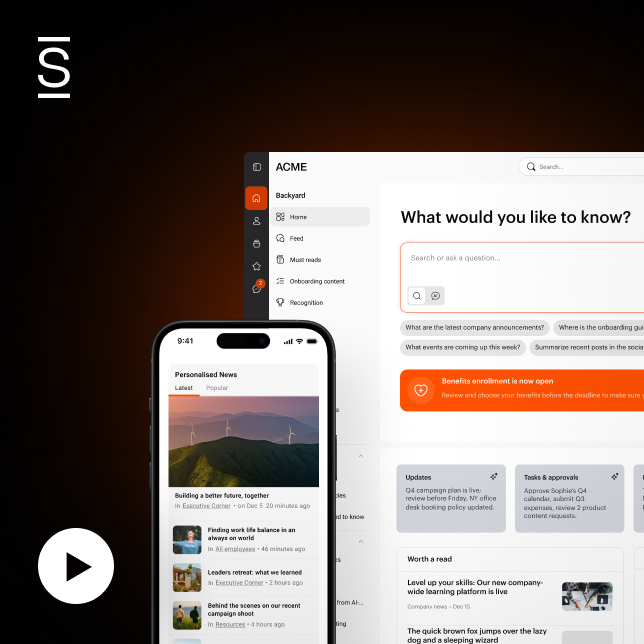
Watch a 5-minute demo
See how the Simpplr employee experience platform connects, engages and empowers your workforce.
- #1 Leader in the Gartner Magic Quadrant™
- 90%+ Employee adoption rate



![[Webinar Recap] Supporting organizational hypergrowth with a powerful intranet](https://www.simpplr.com/wp-content/uploads/2020/11/simpplr-blog-Webinar-Recap-Supporting-organizational-hypergrowth-with-a-powerful-intranet.png)