





Your IT team considers the intranet problem solved. SharePoint is deployed, systems are integrated, uptime is solid. But your internal communications team tells a different story — one where “technically functional” doesn't mean “actually useful.”

Bridging the intranet satisfaction gap between IT and internal comms
Bridging the intranet satisfaction gap between IT and internal comms
Table of contents
- 1 The data behind the intranet satisfaction gap
- 2 Differences in how IT and IC define intranet success
- 3 The hidden costs when “good enough” isn’t good enough
- 4 A framework for closing the gap without choosing sides
- 5 How modern intranet platforms reduce unnecessary trade-offs
- 6 How Simpplr helps bridge the intranet satisfaction gap
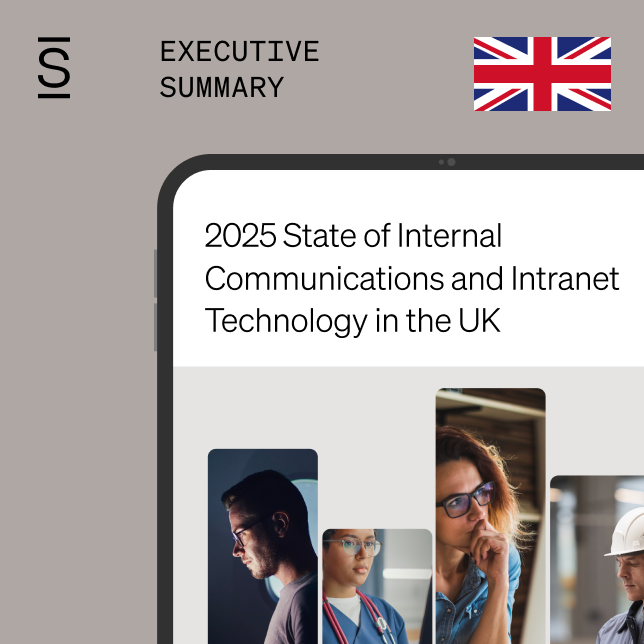
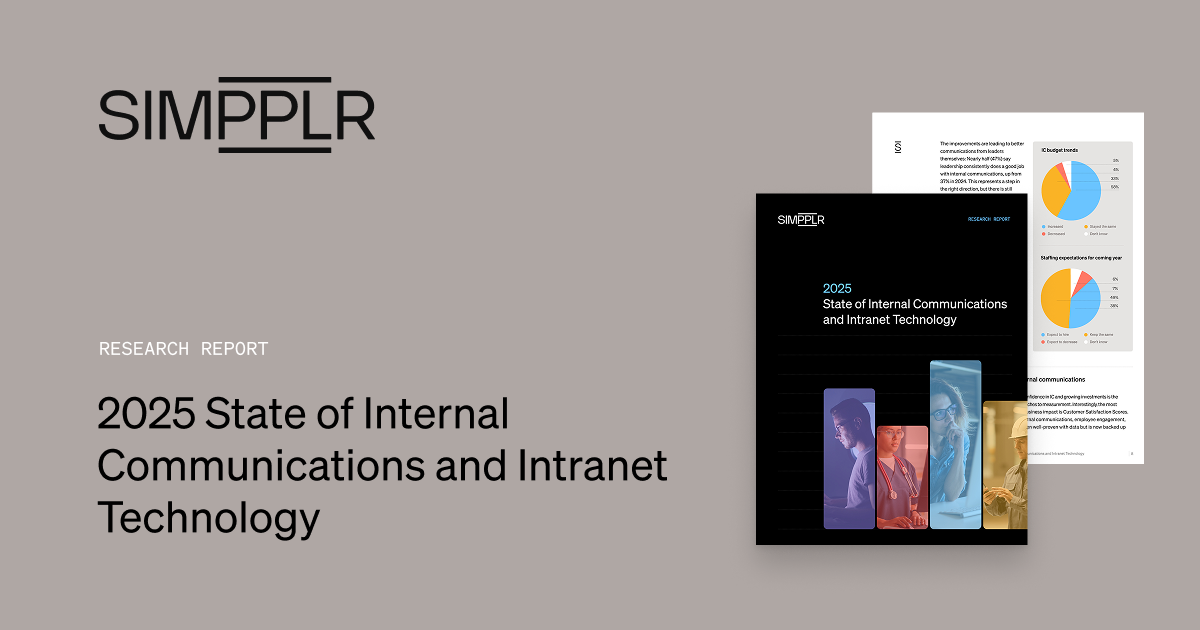
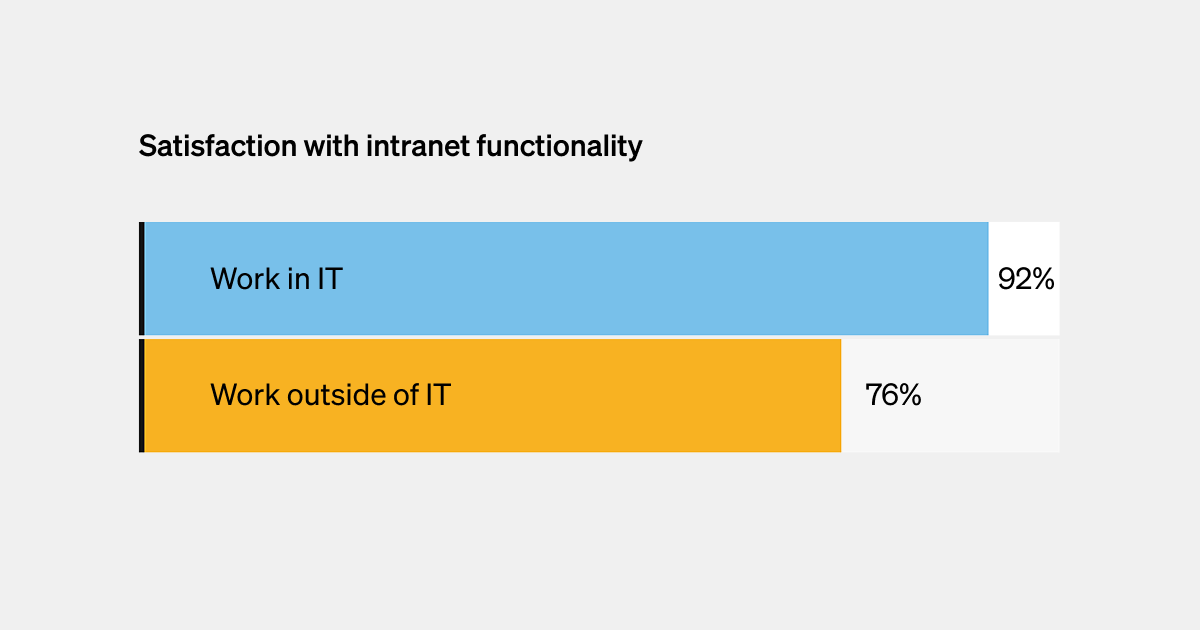
Simpplr’s 2025 State of Internal Communications and Intranet Technology report reveals that 92% of IT professionals report satisfaction with intranet functionality, while just 76% of professionals outside IT — including Internal Communication (IC) teams — report the same level of satisfaction. Those 16 percentage points aren’t about one team being right and the other wrong. They reflect different perspectives on what makes an intranet successful.
The intranet satisfaction gap stems from different priorities. IT evaluates success through uptime, security, and system performance. IC evaluates success through employee engagement, content reach, and ease of content management. All of these metrics are critical.
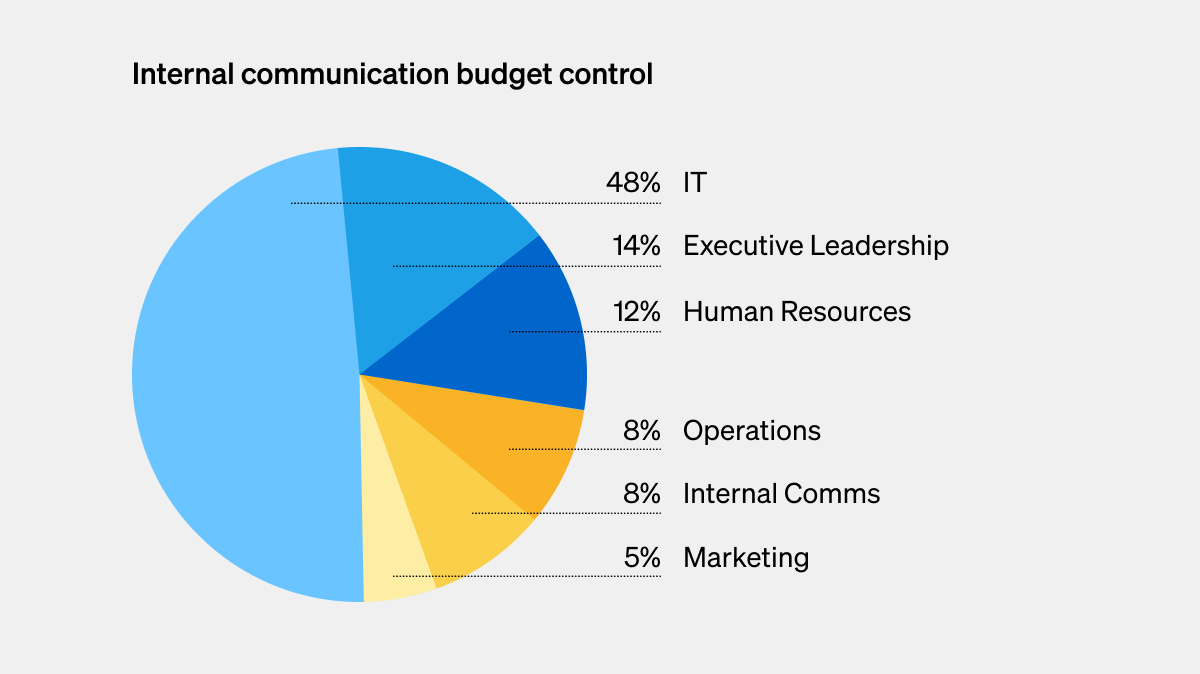
But here’s where it gets complicated: Nearly half of IC budgets are controlled by IT departments. When IT holds the purse strings, IT priorities often win by default.
No one is saying IT is doing anything wrong. But IC needs an intranet solution that’s more than technically adequate. Let’s look at how modern platforms bridge both sets of requirements without forcing either team to compromise on their top priorities.
The data behind the intranet satisfaction gap
The numbers from Simpplr’s research reveal intranet satisfaction varies widely across departments. IT professionals and the IC teams who use these platforms daily see very different realities — and those differences have measurable consequences.
Among the 91% of organizations with intranets, IT workers report 92% satisfaction with functionality. Workers outside IT report 76% satisfaction — a gap of 16 percentage points that persists across organization sizes and industries.
What this gap means in practice:
- IT sees: A working system that’s up, secure, integrated with enterprise tools, and meeting technical specifications
- IC sees: Daily friction where content is hard to update, search doesn’t work well, and basic tasks require IT support tickets
- The result: Platforms that pass IT’s technical checklist while creating bottlenecks for IC’s communication work
The gap widens when IC teams lack control over platform decisions. Given that 48% of IC budgets are managed by IT departments, procurement naturally tends to optimize for what IT understands: technical requirements, security compliance, system integration, and long-term supportability.
Meanwhile, IC’s needs — publishing speed, ease of content management, engagement analytics, audience targeting — often get classified as “nice-to-haves” rather than mission-critical requirements. But these capabilities represent the difference between IC teams that respond to breaking news in minutes versus hours, and analytics that show communication impact versus meaningless page view counts.
How intranet architecture shapes the day-to-day experience
The satisfaction divide extends beyond IT versus IC perspectives. How intranets get built makes an enormous difference in whether they actually work for communication teams.
Three common approaches to intranet solutions:
- All-in-one platforms are purpose-built for communication, productivity, and engagement
- Multivendor solutions attempt to piece together separate tools for different functions
- Custom-built systems are developed in-house or by consulting firms and often reside on top of “free” platforms like SharePoint
Each approach creates different experiences for both IT and IC teams. All-in-one platforms offer integrated functionality designed specifically for employee communication.
Multivendor solutions promise flexibility but instead create complexity as teams juggle multiple interfaces and tools that don’t talk to each other. It can also be more difficult to maintain security for multivendor solutions. Custom-built systems can provide a certain degree of control but typically require heavy IT involvement for even simple updates.
The implementation satisfaction split:
- All-in-one solutions: 64% of users would stick with their approach
- Multivendor solutions: 50% would stick with their approach
- Custom-built systems: 50% of non-IT departments would switch to an all-in-one solution if they could (vs. just 28% of IT departments)
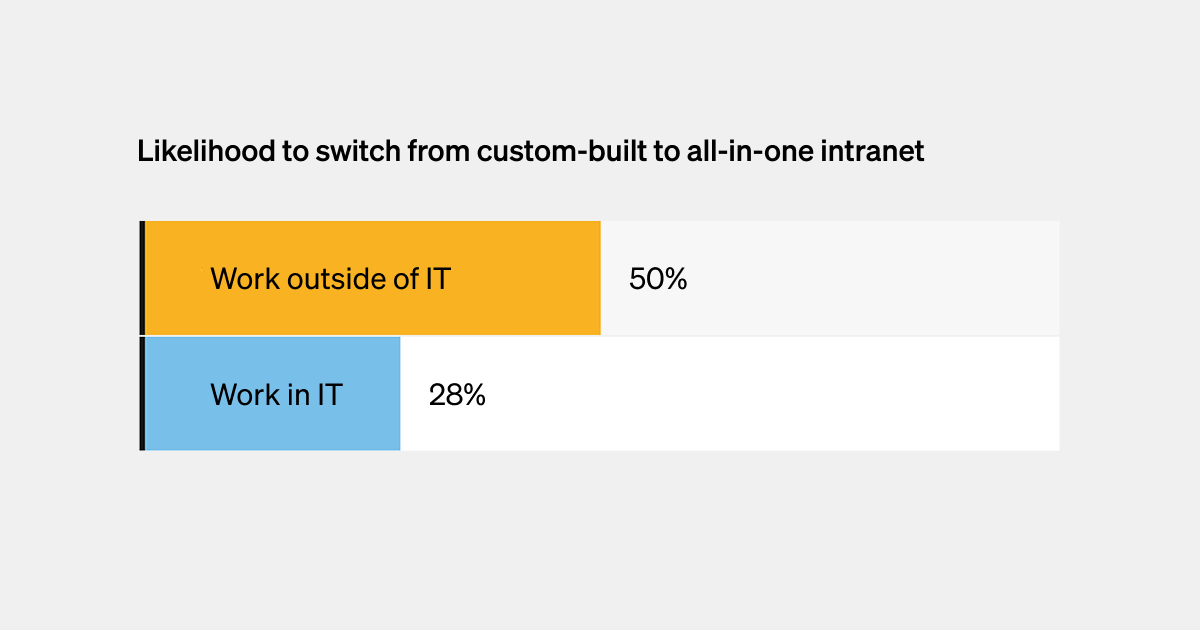
The disparity in satisfaction among departments reflects the daily reality of managing communication on platforms optimized for different goals. When IC teams struggle with systems that prioritize technical flexibility over communication workflow, they want out. When IT departments invest heavily in custom-built solutions, they’re more likely to avoid change and stick with what they’ve built — even when the teams actually using those systems want something different.
This isn’t resistance to change for its own sake — it’s the reality of preexisting investments and the operational risk of moving away from systems IT teams have spent years building and securing.
Understanding why these satisfaction gaps exist requires looking at how IT and IC teams evaluate what makes an intranet effective. The priorities are often placed in tension by how intranet platforms are designed and governed.

Differences in how IT and IC define intranet success
The disconnect stems from fundamentally different success criteria. What IT optimizes for and what IC needs to accomplish their work can pull in opposite directions depending on intranet architecture and governance models.
What IT optimizes for (and why it’s valid)
IT evaluates intranets through the lens of technical excellence: system uptime and reliability, security and compliance requirements, integration with the existing enterprise stack, and long-term maintainability.
These priorities are risk controls. Every new platform introduces potential security exposure, operational instability, and audit complexity. From IT’s perspective, replacing or significantly altering an intranet goes beyond usability. It’s a risk decision with consequences that extend far beyond communications.
IT often gravitates toward platforms like SharePoint because they’re already part of the Microsoft ecosystem, meet security requirements out of the box, leverage existing team expertise, and fit within allocated budgets. From IT’s perspective, the intranet problem is solved when the system is stable, secure, and integrated — even without analytics.
What IC needs to succeed (and why it’s also valid)
IC measures success differently: How quickly can we publish breaking news? Can nontechnical staff update and organize content without submitting IT tickets? Do we have analytics that show message reach and engagement, not just page loads? Can we target different messages to different employee groups? Can frontline workers access everything on mobile devices?
IC struggles with IT-selected platforms because they’re often built for document management but not for communication. Publishing content requires technical knowledge or IT involvement. Analytics focus on system performance rather than communication effectiveness. Audience targeting capabilities are limited or require complex configuration that IC teams can’t manage independently.
Today’s IC teams do much more than publish content. They shape how employees experience information, tools, and priorities across the organization — often through the intranet itself. When IC can’t manage that experience independently, it directly limits how effectively the organization communicates and stays aligned.
An intranet that works for IT but constrains IC limits one of the few functions directly responsible for alignment, clarity, and engagement at scale.
Where the priorities collide and create friction points:
- IT selects a system they can support; IC chooses the platform they can use daily
- IT measures technical uptime; IC requires communication reach
- IT values long-term stability; IC needs publishing agility
The cost of this collision shows up in the data:
- 46% of research respondents report heavy IT dependency as a barrier to intranet effectiveness
- 47% cite high manual effort to maintain content
- 50% say their intranet competes with too many other tools
Neither set of priorities weighs more heavily than the other. But when platforms force organizations to choose between technical soundness and communication effectiveness, both teams lose — and so do the employees caught in the middle.

The hidden costs when “good enough” isn’t good enough
Change carries risk. Legacy and custom-built systems represent years of investment in security hardening, integrations, and internal expertise. For IT teams, the perceived risk of switching platforms can feel greater than the visible cost of inefficiency, even when those inefficiencies quietly drain productivity across the organization.
When IC teams struggle with intranets that meet only IT’s technical specifications but fail their own employee engagement needs, additional costs ripple across the organization. Frustration compounds daily, affecting both individual and team performance.
What IC teams lose
IC staff spend hours on tasks that should take minutes — creating content in external tools, navigating cumbersome approval workflows, and submitting IT tickets for simple updates.
Important messages get buried because search doesn’t surface relevant results. Outdated content stays live because updates are too cumbersome. Employees develop alternative information channels because the official intranet is too hard to navigate.
What employees experience
The downstream impact affects everyone. Half of organizations report that their intranet competes with too many other tools. This leads employees to create workarounds through applications like Teams, Slack, and email — even when their corporate intranet should serve as the single source of truth. Information silos emerge because people don’t trust this central channel to have current, findable information.
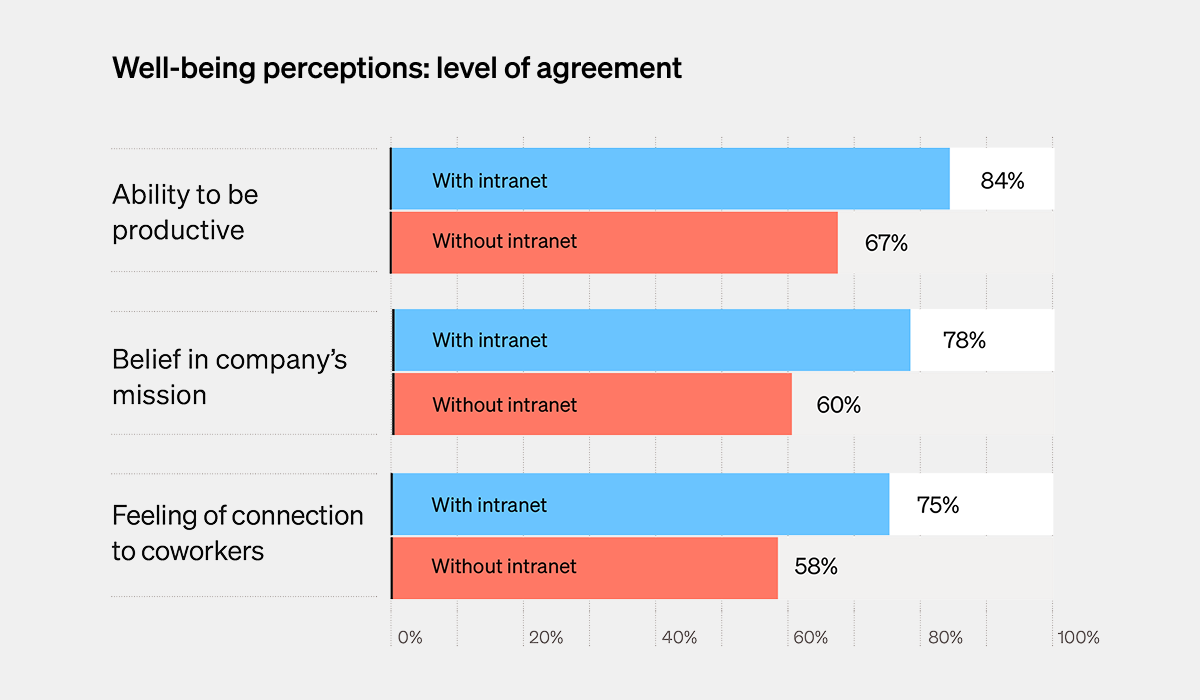
Organizations with a purpose-built intranet report significantly higher productivity (84% vs. 67%) and employee connection (75% vs. 58%) compared to those without one. But these benefits disappear when the intranet is only technically adequate but otherwise unusable for the teams managing it and the employees relying on it.
A framework for closing the gap without choosing sides
The goal in these examples isn’t to override IT’s requirements or dismiss technical realities. Rather, it’s to ensure IC’s communication needs are weighted equally in platform decisions. Here’s how to make that happen.
Establish shared success metrics
Create a balanced scorecard that matters to everyone. Keep IT’s metrics: system uptime, security compliance, integration health, and support ticket volume. Add IC’s metrics: content publishing speed, employee engagement rates, search success rates, and content management efficiency.
When IT sees that IC’s struggles result in IT support tickets, and IC sees that their needs align with reducing the burden on IT, you’ve created shared incentives.
Map IC’s actual workflow
Document the work IC does daily: How often does content need updating? How many people need publishing access? What types of content get published? Who’s the audience? What devices do employees use?
IT often optimizes for their imagined use case, not IC’s actual workflow. Making the workflow visible and quantified helps IT understand why “technically functional” creates IC bottlenecks.
Calculate the true cost of “good enough”
Build the business case with time costs (IC staff hours on workarounds, IT support hours on intranet tickets, employee time searching for information) and opportunity costs (communications not sent, initiatives that can’t scale, competitive disadvantage in employee experience).
Organizations with all-in-one solutions report 31% fewer process-related challenges and 30% report no technical challenges versus 14% for multivendor approaches.
Evaluate alternatives with both lenses
When IC pushes for platform evaluation, include IT from day one. IC looks for content management ease, mobile experience, communication analytics, targeting capabilities, and speed to value. IT assesses platforms for security and compliance, integration capabilities, scalability, vendor reliability, and total cost of ownership.
Modern employee experience platforms are purpose-built to satisfy both sets of requirements.
How modern intranet platforms reduce unnecessary trade-offs
Many legacy and multiventor intranet approaches force organizations to choose between technical stability and day-to-day usability. Purpose-built employee experience platforms are designed to support both, without overweighting one at the expense of the other.
What all-in-one solutions provide
The best platforms satisfy both teams’ requirements simultaneously. IT gets the enterprise-grade infrastructure they need to sleep at night, while IC gets the communication tools they need to do their jobs effectively.
For IT:
- Enterprise-grade security and compliance (SOC 2, GDPR, etc.)
- Robust integrations with Microsoft 365, Google Workspace, and HRIS systems
- Scalability and reliability with 99.9%+ uptime
- Reduced support burden (30% of users report no technical challenges)
For IC:
- Intuitive content management without IT tickets
- Built-in analytics for communication effectiveness
- Mobile-first design for frontline workers
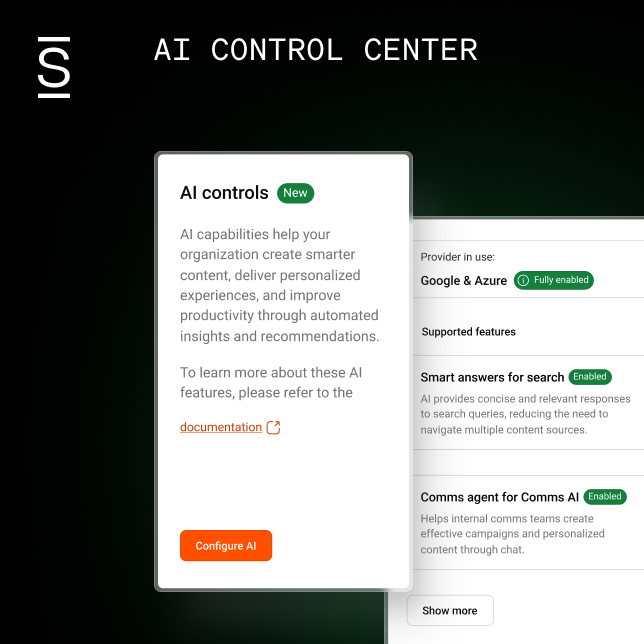
- AI-powered personalization and targeting
- Purpose-built for employee communication, not retrofitted from document management
The all-in-one approach eliminates the trade-offs that create satisfaction gaps in the first place. IC teams get communication agility without sacrificing IT’s security requirements. IT teams reduce their support burden without limiting IC’s ability to publish timely content.

How Simpplr helps bridge the intranet satisfaction gap
Bridging the divide doesn’t require choosing between IT’s need for stability and IC’s need for agility. In many organizations, legacy and custom-built intranets persist not because they work well for everyone but because they seem safer. Years of investment in security, integrations, and internal expertise make change feel risky.
The problem is that “good enough” systems often shift risk rather than reduce it. When IC teams rely on workarounds, submit tickets for routine updates, or move communications into side tools, complexity grows and adoption suffers. Over time, the intranet becomes technically sound but strategically weak.
Simpplr’s AI-powered employee experience platform is designed to reduce risk on both sides. IT gets enterprise-grade security, governance, and integration without the overhead of maintaining heavily customized systems. IC gains the ability to publish, target, and measure communications independently. The result is shared ownership without trade-offs — a platform that supports both operational control and communication effectiveness at scale.
Discover how Simpplr sets up both IT and IC for success. Request a demo today.
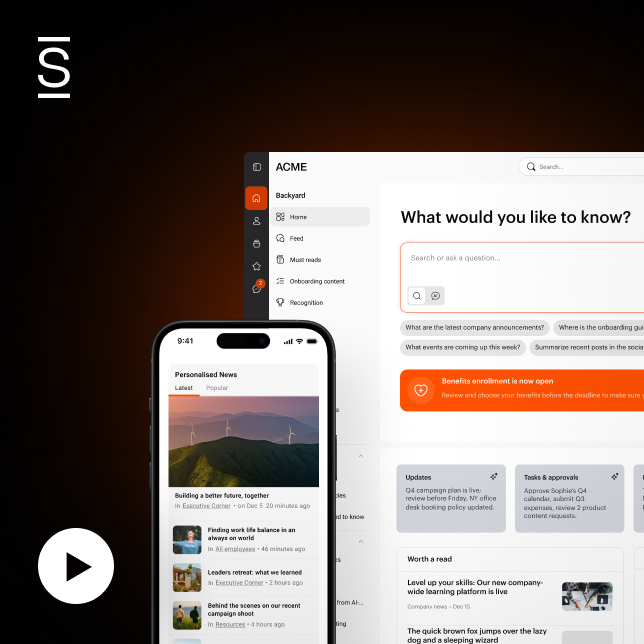
Watch a 5-minute demo
See how the Simpplr employee experience platform connects, engages and empowers your workforce.
- #1 Leader in the Gartner Magic Quadrant™
- 90%+ Employee adoption rate