


Remote work is an employment arrangement where employees perform their jobs outside a traditional office, without commuting to a fixed location. It includes fully remote, hybrid, flexible, and work-from-anywhere models. Remote work relies on technology to stay productive and connected, offering employees flexibility and work-life balance while giving companies access to wider talent pools and lower costs.
Remote work is no longer a temporary fix. It began as a way to keep teams safe during the pandemic. Today it is one of the normal ways to work in a corporate setup. Companies of every size use it and post pandemic, many professionals have remote work as their first preference. For business leaders, HR teams, and IT managers, remote work has become part of how the modern digital workplace runs.
This guide explains what remote work means. It covers the main types and discusses the benefits for both workers and companies. Also, it shows how the right technology helps you build a remote work model that lasts.
Remote work explained
Remote work has become increasingly popular in recent years as technological advances have made it easier for remote workers to remain productive and connected without requiring a traditional office space. While remote work does not (and cannot) apply to every position at every company, many corporations now have at least some remote workers, making remote work efficiency of vital interest to a wide variety of businesses across every industry.
Remote work meaning
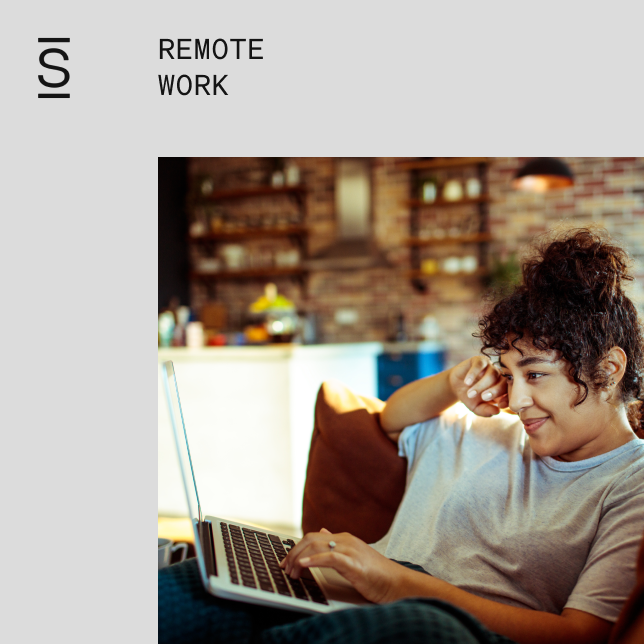
Remote work is an employment arrangement that allows workers to perform their work duties and responsibilities without traveling to a specific physical workplace. Some remote workers might work at home, while others might work in coworking spaces that offer office equipment, high-speed internet service, and other benefits of an office environment without a long commute.
Although satellite offices might be known as “remote offices,” employees who work in these physical locations are not remote workers. As branch offices of larger corporations, satellite offices are physically separated from the company’s primary work location, or headquarters. Satellite office employees who are expected to report to the physical satellite location fall outside the definition of remote workers.
What is remote work: a deeper insight
The remote work experience varies tremendously from one employee to another and from one company to another. Some companies are fully remote, making remote work opportunities available at every level of the corporate ladder from entry-level office workers to the CEO. Other companies might offer only a handful of remote work options for specialized positions, such as data analysts or customer service representatives.
There are still some companies that do not offer any remote work options. These companies may believe that a strong corporate culture depends on physical interactions or that maximum productivity depends on the physical presence of middle or upper management. However, there is a growing body of evidence to suggest that neither of these is the case.
Remote work concepts
The flexibility of remote work allows individuals to work from home, co-working spaces, or any other remote location, outside of a traditional office setting, typically using technology to collaborate with colleagues and complete tasks.
Coworking spaces
Coworking spaces are shared work environments where individuals from different companies or professions work alongside each other in a communal setting. These spaces offer amenities such as desks, meeting rooms, and other resources that would traditionally be provided by an employer. Coworking space memberships allow remote workers to enjoy the camaraderie of working in the same space with other people even if their own company does not have a local branch office. For many remote workers, a coworking space is their primary work location.
Digital nomads
Digital nomads, on the other hand, are individuals who use remote technology to free themselves entirely from the confines of working in a single location. They rely on digital tools and platforms to communicate and collaborate with clients or colleagues, allowing them to maintain a flexible, independent lifestyle. Taking full advantage of remote work potential and the globalization of internet technologies, digital nomads travel extensively, hopping from city to city or even country to country around the globe.
Job characteristics theory
When employees have the ability to become perpetual tourists, many companies become concerned that remote workers will not apply themselves to their jobs or live up to their full potential. However, job characteristics theory suggests that work autonomy should raise employee engagement, not lower it.
Job characteristics theory is a psychological framework that explains how and why certain job characteristics can influence an employee’s motivation, satisfaction, and performance. It posits that five core job characteristics—skill variety, task identity, task significance, autonomy, and feedback—contribute to meaningful work experiences and overall well-being.
The theory suggests that remote work should not lead to any loss of productivity as long as jobs are designed to optimize these five characteristics. In fact, well-designed jobs should see an increase in productivity no matter where they are located because internal work motivation is the key to positive employee experience and engagement.
Working from home vs. remote work
Although many remote workers do, in fact, work from home, that is not always the case. The coworking spaces described above, for example, offer flexible work environments and digital technologies for those who want (or need) to work remotely but who would rather not work in isolation.
Working from home can also refer to a short-term arrangement that would not fall under the definition of remote work, such as working from home temporarily to care for a sick child. There are also hybrid work programs in which people are expected to work in the office some number of days each week while being permitted (but not usually obligated) to work from home on other days. These would be considered hybrid work environments rather than remote work.
The basics of remote work
Some jobs have more potential to be performed remotely than others. Remote work potential varies depending on how much a job involves manual activities or specialized equipment that is only available at a primary work location.
The vast majority of office jobs, for example, have high remote work potential—they could easily be performed from a remote location with an increase in productivity. Many jobs in the food services industry, on the other hand, have low remote work potential—chefs and servers need to be in a given physical location to do their jobs.
As modern technology continues to advance, more and more employees will be capable of performing most or even all job activities remotely, from cottage industry proprietors to enterprise-level executives—legal teams, artists, coders, customer service reps, data analysts, in-house career experts, federal workers, and more.
How does remote work function?
Remote work functions like any other work—it is simply performed remotely. In a digital workplace, remote technologies replace traditional tools, allowing remote workers to perform similar functions. In fact, remote work often operates at a much higher degree of efficiency thanks to digital automation.
Just as email replaced snail mail and search engines replaced phone books, video conferencing is taking the place of in-person meetings, digital whiteboards are replacing physical whiteboards, and digital project management tools are replacing project boards, to name a few examples.
Types of remote work
Like traditional work, remote work can be either full-time employment or part-time employment. Remote work opportunities may also be contract positions or contract-to-hire. In short, remote work comes in as many varieties as traditional opportunities.
Full-time remote work
Full-time employees may work remotely if their jobs and employers permit it. While benefits such as health insurance and employer-sponsored retirement plans may be the same, there are a few key differences between the ways in which traditional and remote work is carried out.
One difference that concerns some employers is the fact that remote workers don’t usually “clock in.” They may have remote meetings that require them to be online at certain times, but their moment-to-moment presence is not generally monitored. In fact, some remote employees are allowed to work flexible schedules, choosing which hours they work within the constraints of their contractual obligations.
Because the number of hours worked cannot easily be monitored, some employers that offer remote work focus more on productivity than time. Employees are expected to produce a certain volume of work or accomplish certain tasks week by week. As long as these tasks are accomplished by established deadlines, employers are less concerned with how or when that work happens.
Part-time remote work
Part-time employees can also work remotely, allowing them to minimize the number of hours they dedicate to work each day. Commuting, for example, can add an hour or more to an employee’s job in each direction. For a full-time employee, an eight-hour day becomes a ten-hour day or longer. For a part-time employee, a four-hour day becomes a six-hour day, adding an extra fifty percent to the time they need to complete their work successfully.
Benefits of remote work
For employees, the benefits of remote work are obvious. Remote employees don’t have to commute—saving money, time, and stress. They can also save on childcare costs, and they don’t have to take days off from work if their children are home sick. Other benefits are less obvious but still quite valuable, if not more so. For example, remote workers can relocate to areas with a lower cost of living, helping them afford larger homes in safer communities, with better school systems for their children.
For companies, remote work can significantly reduce the cost of office space. It can also reduce employee expenses related to absenteeism because employees don’t need to leave work to attend to responsibilities at home. Other benefits include a wider hiring pool with stronger candidates—and lower attrition rates—as many workers have come to want and even expect remote work options.
Challenges of remote work
However, drawbacks for remote employees can include limited exposure to senior management, especially in workplaces that include a mix of traditional and remote workers. For people who live alone, remote work may also lead to feelings of isolation, especially if company communication is limited. Remote workers may find it a challenge to separate their work lives from their home lives, feeling that they “live where they work and work where they live.”
Furthermore, challenges in communication as well as the potential for disengagement among remote employees who lack internal work motivation. To make sure remote employees maintain a strong sense of corporate culture and a growth mindset, companies that offer remote work opportunities need to implement modern tools and technologies that are designed for remote collaboration.
Distinguishing tools for remote work
The key to success with a remote workforce is maintaining efficient, effective communication throughout the organization. It is as true for informal interaction and engagement as it is for project management.
Communication tools
From team messaging to video conferencing, nothing is more important for remote workers than internal communication tools. For IT administrators, those tools need to be reliable, secure, and easy to configure. For employees, they need to be easy to use and engaging, with settings that allow notifications to be turned on and off automatically according to regular work schedules.
However, using multiple methods of communication can often lead to inefficiencies. To address this problem, corporations can bundle their communication channels together through a single, modern intranet with multiple integrations.
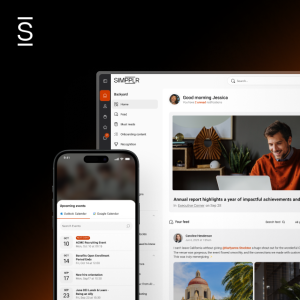
Simpplr, for example, integrates with Confluence, Dropbox, Google Analytics, Google Drive, LinkedIn, Meta, Office 365, Okta, Oracle, Slack, Teams, Vimeo, Workday, YouTube, Zoom, and many more for a one-stop communications and data management hub.
Project management tools
When it comes to remote workforces, project management is another place where good communication is crucial. Projects need to be well organized and task status needs to be transparent, with clear direction for everyone who needs to collaborate—from creators to stakeholders.
Projects should be easily broken down into actionable steps, whether through a kanban board that displays multiple work stages or a singular project view that includes multiple tasks and subtasks. Work should flow easily and efficiently from one step to the next, taking advantage of automation to manage routine transitions.
Collaboration and conferencing tools
For remote collaboration, files should be easy for everyone to share and access through the cloud, and collaboration tools should foster transparency. For example, collaboration tools might:
- Show everyone on a social media team which posts will be published when
- Show marketing channel owners what videos are available for use
- Show artists which messaging should be leveraged for an upcoming sale
Remote teams also need easy ways to communicate through audio and video conferencing—both asynchronously and in real time. From team meetings to video-based instructions, if photos are worth a thousand words, video is worth a million.
Choosing the right remote work software
Choosing the right software is crucial to effective collaboration and communication for a remote workforce. When applied well, modern automation can greatly enhance productivity and streamline workflows.
The right remote work software should offer features such as employee onboarding, document sharing, project management, and real-time communication. It should also be user-friendly and sync with popular remote work solutions for a fully integrated tech stack that includes data aggregation and analysis, self-serve human resources tools, and more.
To learn more about helping remote teams stay connected, work efficiently, and achieve their goals regardless of their physical location, download Simpplr’s Anywhere work—2023 employee experience survey report.
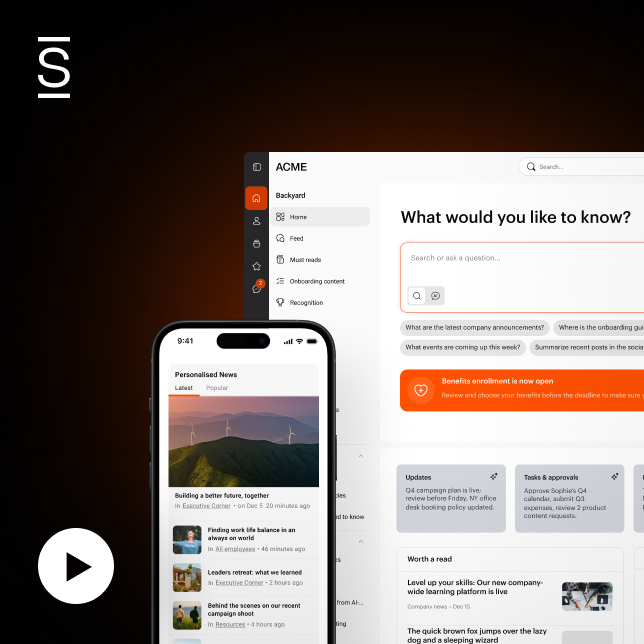
Watch a 5-minute demo
See how the Simpplr employee experience platform connects, engages and empowers your workforce.
- #1 Leader in the Gartner Magic Quadrant™
- 90%+ Employee adoption rate
About the author

Mukul Dubey
Mukul is a Content Marketing Copywriter at Simpplr. With an innate love of writing and storytelling and extensive industry experience, he uses his writing skills and AI/SEO know-how to create strategic content that drives impact. Mukul loves writing short-form copy - think ad copies, social media content, captions, etc. However, Mukul's expertise lies in ideating, writing, and editing a diverse range of long-form content pieces (blog posts, case studies, thought leadership articles, etc.) to achieve the intended goals. When Mukul isn’t writing, he loves going on bike trips, playing competitive sports, and cooking delicious meals. Connect with Mukul on LinkedIn.