



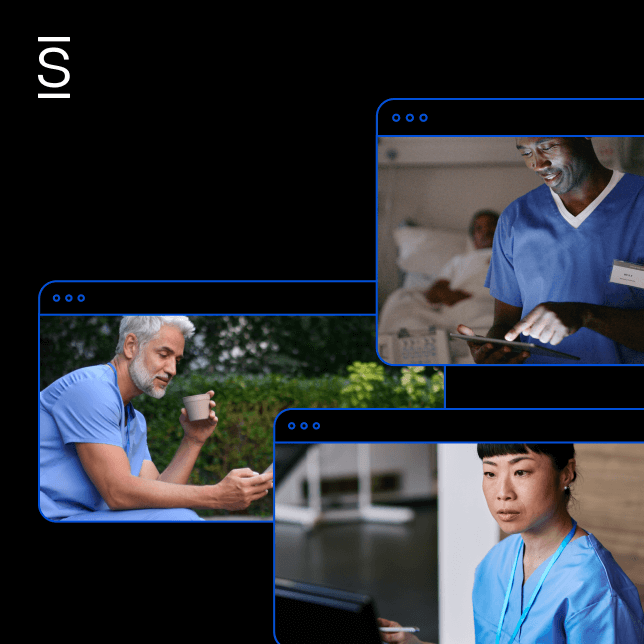
Every day, healthcare professionals battle more than just medical challenges. They struggle with communication barriers created by shift schedules and scattered locations. They miss critical updates because traditional tools like email and bulletin boards can't reach them during patient care. They feel disconnected from their organization’s mission, leading to burnout that drives talented staff away and compromises patient safety.
Best intranet platforms for the healthcare industry
Best intranet platforms for the healthcare industry
Table of contents
These aren’t minor inconveniences. Forward-thinking healthcare leaders are waking up to a simple truth: the biggest threat to quality care isn’t always medical — it’s organizational. When doctors, nurses, and office staff lack a unified healthcare intranet platform that connects, shares knowledge, and recognizes one another, the ripple effects touch every corner of patient care. This divide undermines operational excellence, threatens patient safety, and contributes to workforce instability.
61% of Americans worry a great deal about healthcare access and affordability (Gallup).
Many organizations rely on emails, bulletin boards, shift huddles, and staff meetings that reach only a fraction of employees, leaving remote workers and off-shift teams out of the loop. Healthcare workers shouldn’t have to choose between finding the right information and treating their patients on time. Today’s healthcare workforce expects — and deserves — technology that keeps them connected with real-time updates and streamlined workflows while delivering exceptional patient care.
This comprehensive guide examines the leading healthcare intranet platforms that connect administrative and clinical teams, provide easier access to information, enable two-way communication, and foster engagement — all within secure, HIPAA-compliant systems that integrate seamlessly with existing healthcare workflows.
Empower your workforce, elevate patient care
Keep healthcare teams informed, connected and focused on what matters most, delivering exceptional patient outcomes.

Why healthcare needs a specialized intranet solution
Healthcare workers face challenges that go beyond workplace inefficiencies. When information is fragmented or hard to access, the consequences can mean delayed treatments, compromised patient safety, and staff burnout.
While healthcare organizations invest heavily in clinical systems, their internal communication infrastructure often relies on outdated tools that weren’t designed for the life-or-death communication demands, strict regulatory requirements, and round-the-clock operations that define modern healthcare environments.
More than half of 7,000 nurses surveyed in the U.S. reported symptoms of burnout (McKinsey).
Healthcare operates in high-stakes environments where outdated systems, scattered resources, and disconnected teams directly affect outcomes — from privacy compliance issues to operational complexity and talent retention challenges.
Privacy compliance
Patient data protection isn’t optional. When healthcare organizations use unsecured platforms, they create immediate legal exposure that can destroy their reputation and financial stability. A single unencrypted message containing patient information can result in fines reaching $50,000 per record. This also results in loss of patient trust, media scrutiny, and regulatory oversight that can cripple operations for years.
Specific HIPAA compliance requirements include:
- Unique user identification and automatic logoff features for all accounts
- Encryption of data both at rest and in transit using AES-256 standards
- Complete audit logging of all user actions, file access, and system changes
- Access controls that limit information visibility by job function
- Secure user authentication, including multifactor authentication requirements
- Breach notification procedures that alert affected individuals within 60 days
Simpplr provides enterprise-grade security designed to protect sensitive healthcare information. The platform meets stringent global compliance standards (ISO 27001, ISO 27701, SOC 2 Type 2, SOC 3, TRUSTe, and HIPAA) so that you can confidently share “must-read” updates and safety protocols across your organization.
Operational complexity and 24/7 demands
Healthcare operates on a nonstop schedule where minutes can determine outcomes. When critical updates fail to reach night shift nurses or emergency procedures aren’t instantly available to on-call physicians, it creates multiple vulnerabilities.
These vulnerabilities include:
- New protocols don’t reach everyone, causing inconsistent practices and confusion
- Policy changes get lost in inboxes, raising compliance risks and liability issues
- Supply chain updates aren’t shared quickly, forcing clinical staff to improvise or delay care
- Shift changes lack proper handoffs, leading to an increased chance of missed care elements or duplicated efforts
- Critical safety alerts don’t reach all departments at once, leaving preventable risks in place
A one-size-fits-all intranet can’t keep up with the real-time communication demands of hospitals and clinics. The result is delayed decisions, miscommunication, and risks to patient safety. The right technology can deliver critical updates in real time, create channels for meaningful feedback, and reach workers at the point of care.
Talent retention
One of the biggest challenges facing the healthcare sector today is the attraction and retention of a patient-facing workforce. Almost 900,000 — nearly one-fifth of 4.5 million total registered nurses — intend to leave the workforce in 2027, according to NCSBN.
And it’s not just nurses. The American Hospital Association projects that the U.S. will face a shortage of up to 124,000 physicians by 2033. According to McKinsey, more than a third of physicians who leave their jobs cite “not feeling listened to or supported” and “too much uncertainty and lack of control” as “very much a factor” in their decision.
This signals an urgent need for healthcare leaders to adopt a technology that tackles retention challenges by creating transparent communication channels where every voice matters.
Top healthcare intranet platforms comparison
| Platform | Key Differentiators | HIPAA Compliance | Best For | Analyst & Grid Review Position |
|---|---|---|---|---|
| Simpplr | AI-powered content delivery, comprehensive healthcare templates, 50+ prebuilt clinical system integrations, advanced analytics, mobile-first design, and proven ROI in healthcare environments | Full compliance with comprehensive audit trails | Large healthcare systems and multi-location facilities |
|
| Axero Solutions | Healthcare communities and patient care coordination tools | Compliance ready | Mid-size hospitals |
|
| Unily | Enterprise scalability with healthcare analytics | Healthcare security | Enterprise healthcare organizations |
|
| Claromentis | Document management with clinical protocol distribution | Security-focused | Smaller clinics |
|
| LumApps | Google/Microsoft integration with telemedicine connectivity | Cloud compliance | Google/Microsoft users |
|
| iTacit | Frontline worker focus with shift scheduling integration | Basic compliance | Nursing teams |
|
| Interact Software | SharePoint-based healthcare solutions | SharePoint compliance | Microsoft-heavy organizations |
|
| MangoApps | Team collaboration with healthcare communication tools | Security features | Communication-focused organizations |
|
| ThoughtFarmer | Advanced search for medical protocols and knowledge management | Privacy controls | Content-heavy organizations |
|
| CentricMinds | Workflow automation and process management | Document security | Process-driven organizations |
|
10 best intranet platforms for healthcare workers
Healthcare is a high-stakes environment where life-and-death decisions are made several times a day. Yet the professionals making critical choices are often the last to get updates. While administrative staff stay updated through regular email access and desktop notifications, clinicians move between patients and support staff rotate through shifts with much less digital access.
Hospitals need the best intranet that provides a centralized solution to break down silos, provide real-time updates, and empower patient-facing employees with the resources they need to stay focused on patient care.
When seconds count and protocols change, healthcare workers need instant access to critical information — not outdated systems that take away precious time from patient care.
Here is a list of the top 10 intranet platforms designed for patient-facing workers:
1. Simpplr: Best healthcare intranet platform
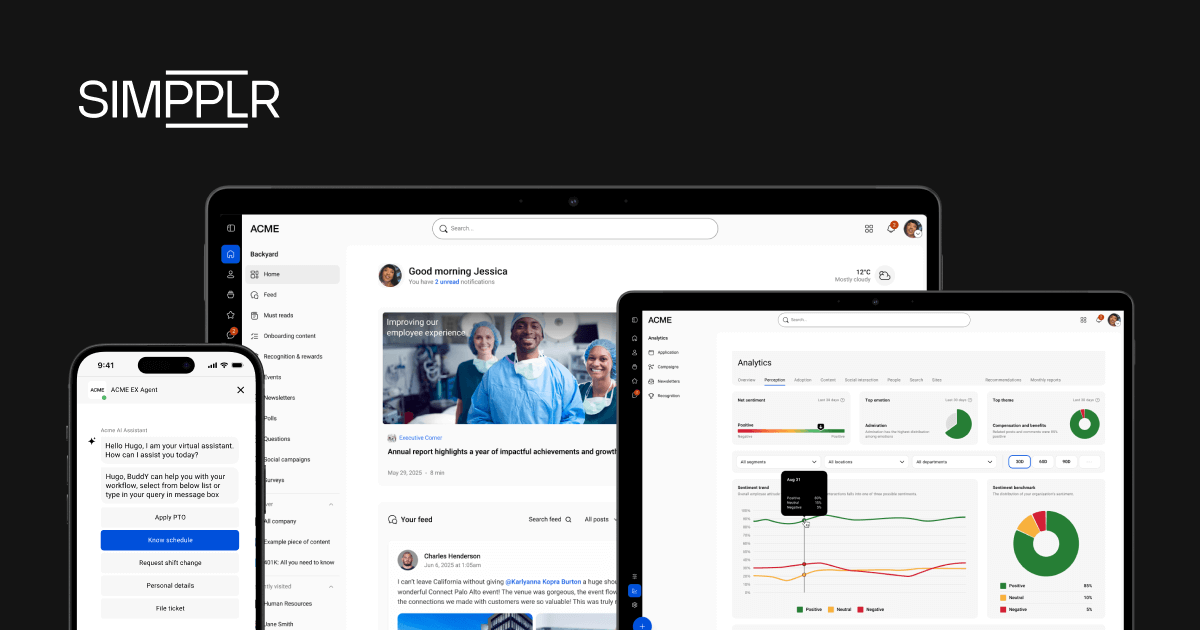
Leading healthcare organizations know that supporting patient-facing workers takes more than technology — it requires a unified platform built with intention, strategy, and a genuine focus on engagement.
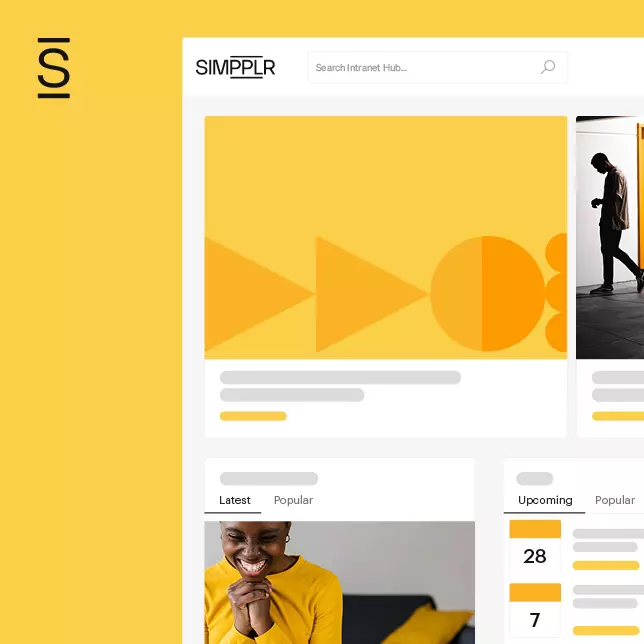
High-performing healthcare organizations use Simpplr, an AI-powered modern intranet, to deliver personalized clinical updates, streamline care coordination, and maintain HIPAA compliance without burdening their already stretched IT resources.
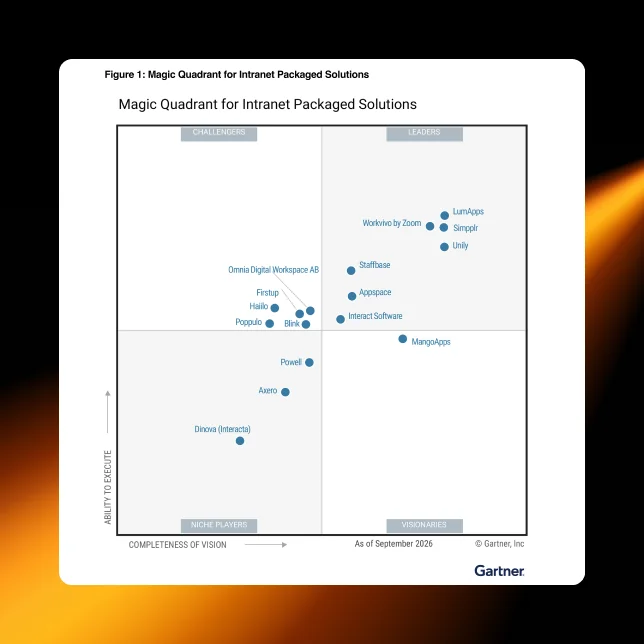
In the 2026 Gartner® Magic Quadrant™ for Intranet Packaged Solutions, Gartner analysts highlight Simpplr’s “market traction across manufacturing, healthcare, financial services and the public sector, targeting organizations with highly distributed or frontline workforces.” The platform stands out for its robust capabilities across social engagement, communication, collaboration, and knowledge management.
“Simpplr integrates seamlessly with our systems and offers opportunities to consolidate workflows, like newsletters and a native mobile application, which we use … it is an effective tool to reach frontline and field employees.” (Gartner Peer Insights)
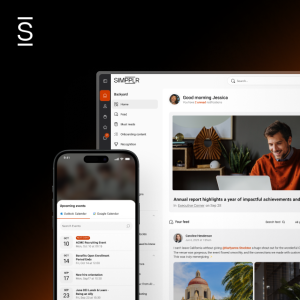
Simpplr is a purpose-built, healthcare intranet platform that uses AI to keep healthcare workers informed, connected, and empowered with seamless communication, real-time updates, and streamlined workflows — so they can focus on delivering exceptional patient care.
Features that set Simpplr apart in the healthcare industry include:
- Geotargeted updates deliver precise, location-specific information with AI personalization so every hospital, clinic, or care unit receives relevant messages.
- Smart notification management can be done manually or by integrating with UKG Pro WFM to silence notifications during off-hours, balancing compliance with employee wellbeing.
- Mobile-first functionality gives real-time access to critical updates, protocols, and resources from any device, at any time.
- Custom workflows via app tiles integrate third-party applications directly into the intranet, supporting secure integrations via REST APIs, OAuth 2.0, and more.
- Native messaging and video communication are available within the app over WiFi or mobile without switching tools or relying on shadow apps.
- Digital signage gives healthcare staff instant access to critical content through scannable QR codes and on-site displays.
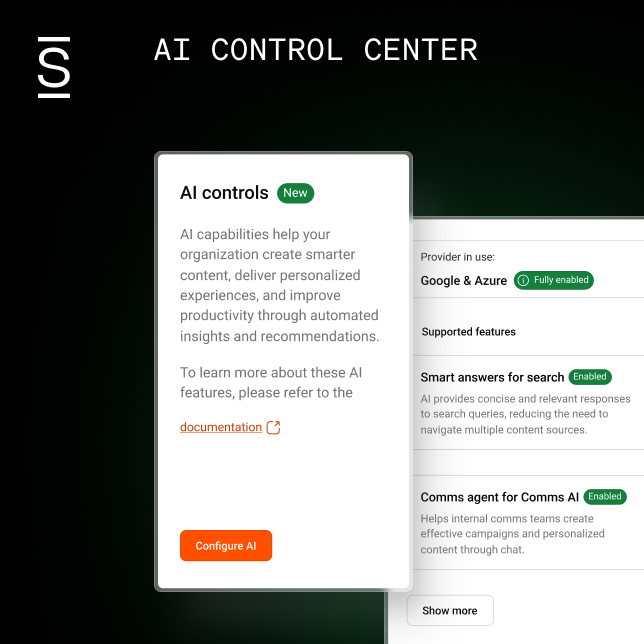
- AI assistant built for healthcare teams helps staff manage shift swaps, time-off requests, safety checklists, and SOP access, while allowing quick IT or HR ticket submissions.
- Employee feedback can be captured through multilingual mobile surveys and AI-driven sentiment analysis to learn how workers are feeling.
- Recognition and rewards tools make it easy to show appreciation and boost culture within the platform without switching systems.
The platform extends beyond communications to strengthen healthcare support by refining digital workplace strategies including engagement content and community experience.
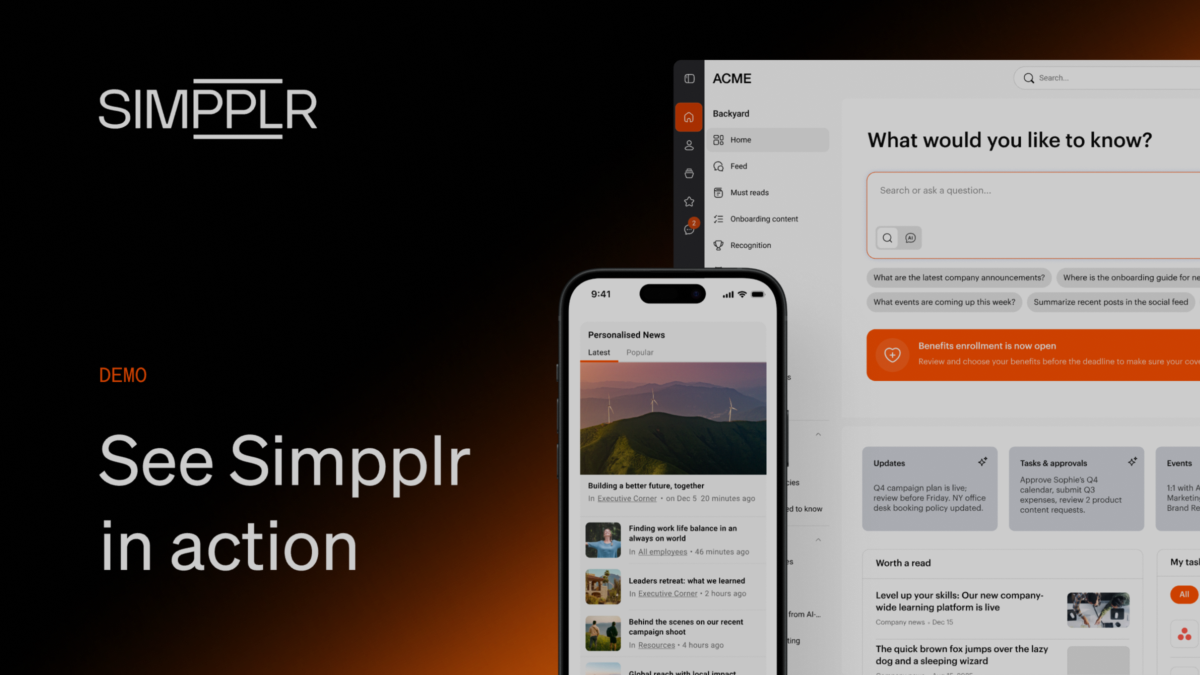
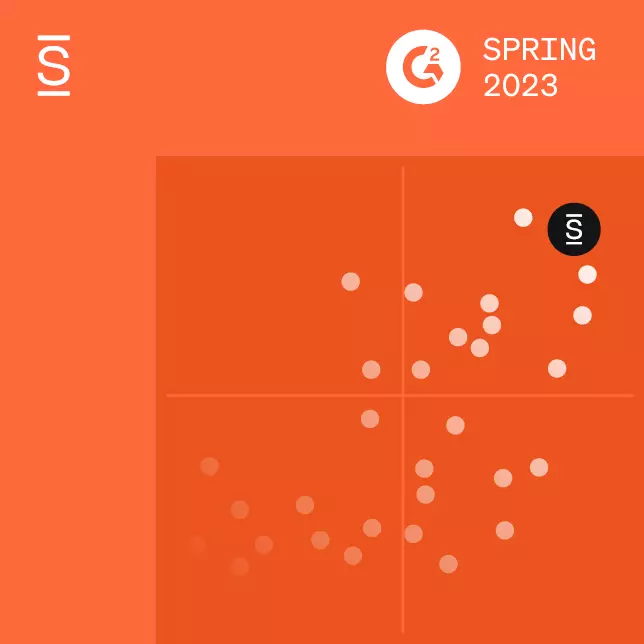
Simpplr is the only 4x Leader across four of the industry’s most influential reports:
- Gartner® Magic Quadrant™
- Forrester Wave™ Cognitive Search Platform Landscape
- IDC MarketScape for Integrated Employee Workspaces
- G2 Grid® Report for Employee Intranet, Fall 2026
2. Axero Solutions
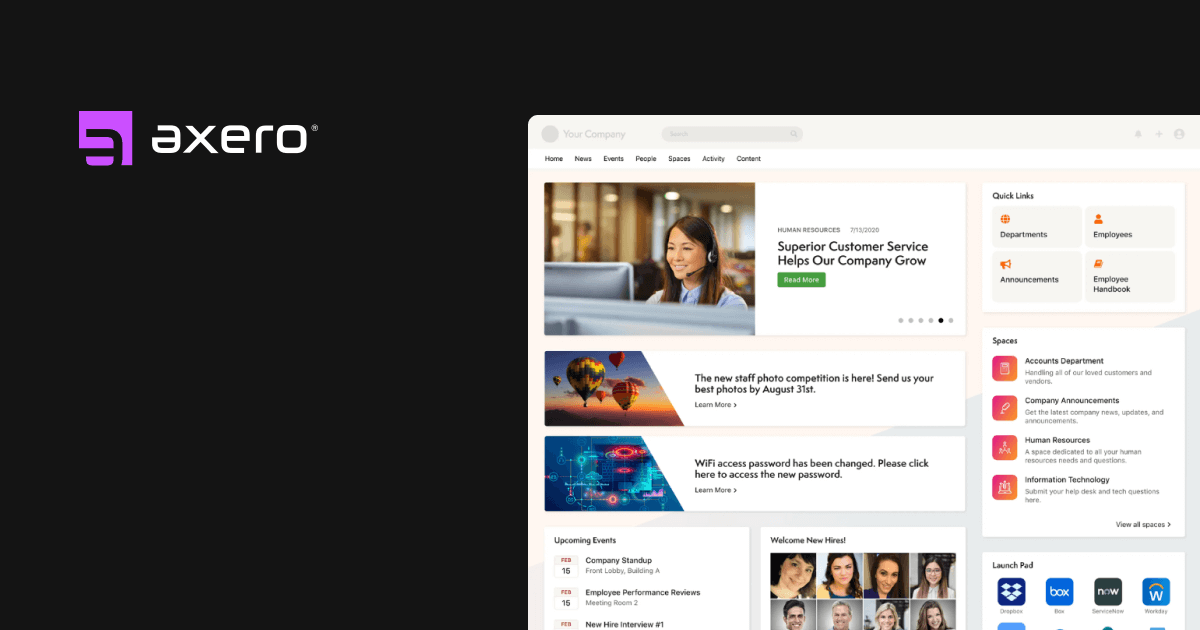
Axero combines social networking, collaboration, and community software into a single, integrated platform that powers social intranets and customer communities. It offers tools for document management, policy sharing, community engagement, and workflow automation within a secure, role-based environment.
Designed for flexibility, Axero integrates with Microsoft 365, Google Workspace, Slack, and other enterprise tools through REST APIs and SSO options. For healthcare organizations, its customizable “spaces” can serve as departmental hubs, enabling targeted communication, version-controlled policy updates, and mobile access for patient-facing staff. While Axero provides robust features and strong integration capabilities, a user highlighted a few areas of improvement, particularly around search.
“The search functionality is very limited. If we want to build something more complex, like indicating the target persona or using other customized filters or variables, we would need to get a developer involved, which defeats the whole purpose of having a user-friendly platform.” — Digital Marketing Specialist, 2026
3. Unily
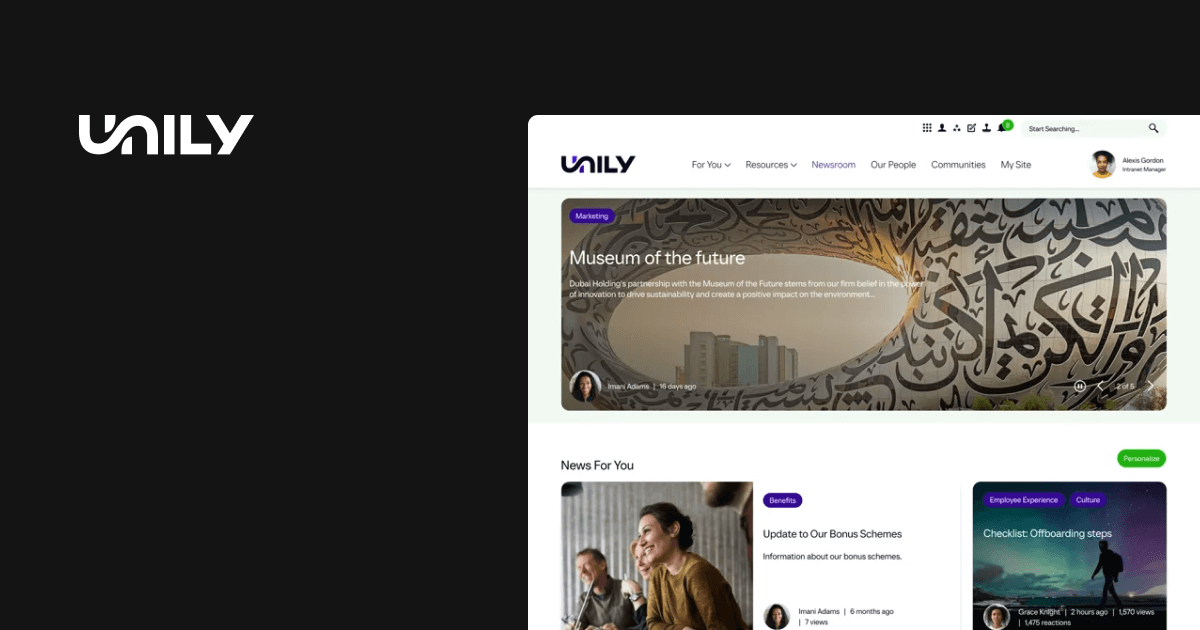
Unily is a cloud-based intranet platform that helps organizations connect their employees, share information, and manage internal communication. It offers tools for publishing news, managing documents, collaborating across teams, and integrating with systems like Microsoft 365 and Google Workspace.
According to the Forrester Wave: Intranet Platforms, Q2 2026 report, “Unily’s architecture provides strong overall content repository and metadata capabilities along with strong support for mobile and the needs of frontline worker.”
While Unily emphasizes its social and frontline capabilities, Forrester experts cited that it “lags in its support for native AI assistants and agents, depending on customers to choose their preferred AI tools.”
4. Claromentis
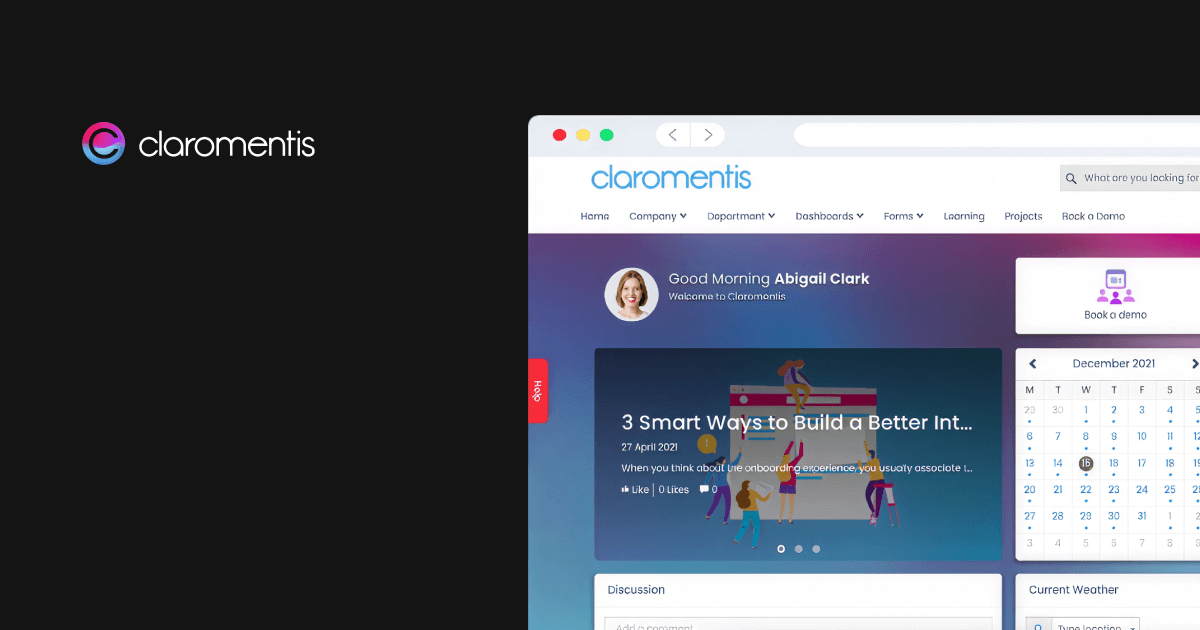
Claromentis is an employee intranet and digital workplace solution that centralizes communication, knowledge, and operational workflows. The platform offers tools for document management, policy sharing, e-learning, and process automation within a secure, role-based environment. It’s designed to support both clinical and administrative teams. With flexible deployment options — cloud or on-premise — it accommodates the compliance and data governance requirements common in healthcare settings.
User reviews have noted that while one can tailor the intranet based on specific needs and workflows, the customer experience has room for improvement.
“I think Claromentis is an average intranet platform. Before they began the quarterly check-ins, it was almost impossible to email or talk to a person, which was very frustrating from a customer experience perspective. I think they are limited on their widgets and don’t seem to update them often, which can make the website feel boring at times.” — Verified User in Hospital & Healthcare, 2026
5. LumApps
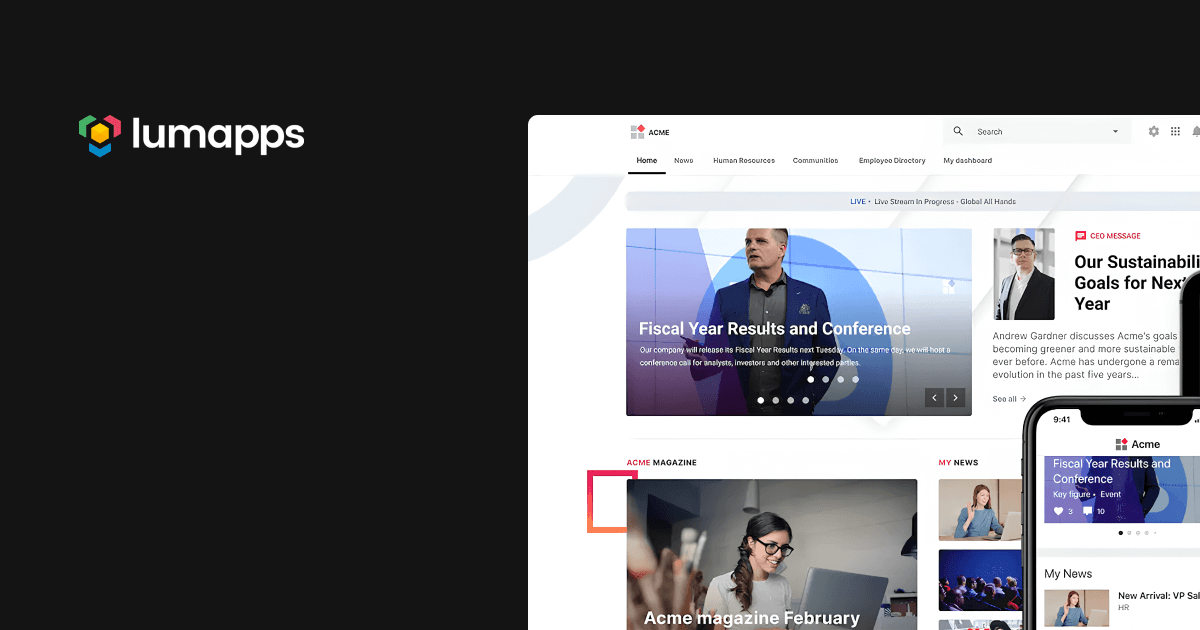
LumApps is an employee experience platform that connects patient-facing teams across hospitals, clinics, and care sites. LumApps emphasizes centralized communication, knowledge management, and mobile accessibility so that healthcare workers, including nurses, doctors, and lab technicians, can access policies, shift information, alerts, training modules, and clinical protocols. It integrates with Google Workspace and Microsoft 365, offering personalized content and seamless access to tools.
LumApps’ Companion app, integrated with communication tools such as Teams and Slack, is supported by an AI-powered chatbot to help patient-facing workers access information and resources on the go. However, some customers in the Forrester report are “concerned about the ease of setting up communication campaigns and customizing reports.” This means that LumApps may be less effective for organizations that require highly tailored communication workflows.
6. iTacit
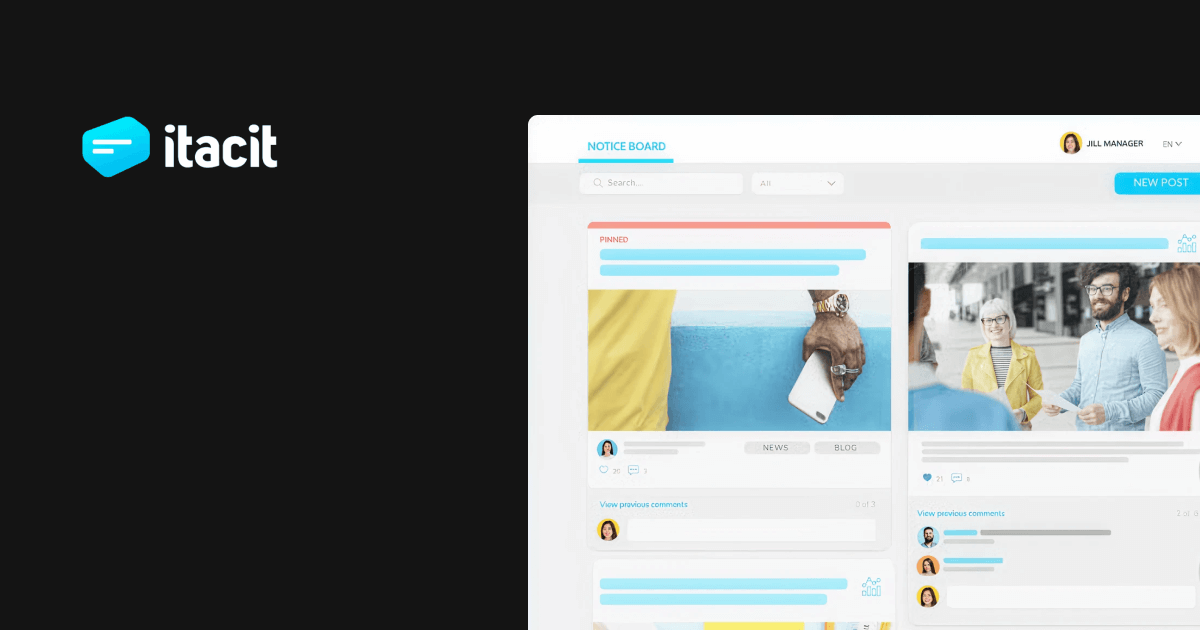
iTacit is a cloud-based mobile app that connects, trains, and empowers healthcare teams. The platform offers digital forms, checklists, automated tasks, and targeted workflows, enabling processes (e.g., incident reporting, checklists, approvals) to be digitized. It supports role-based content delivery and compliance tracking and integrates with other enterprise systems.
Reviews suggest that its interface is relatively user-friendly, but in some areas, navigation can become difficult for non-technical users.
“I think the difficulties I’ve had with iTacit would be that some areas of the platform seem to me to be a bit complex — as an average person, not an LMS expert or specialist.” — Clinical and Training Programs Pharmaceuticals, 2025
7. Interact Software
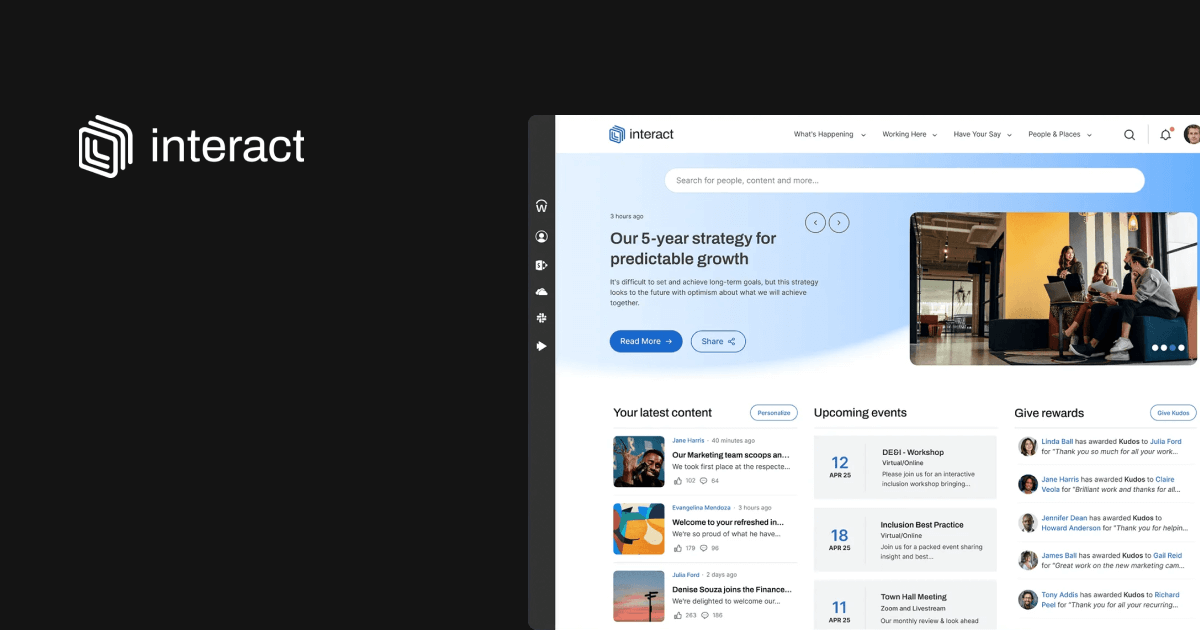
Interact is an employee experience platform designed to unify communication, knowledge sharing, and employee engagement across organizations. According to the 2026 Gartner Magic Quadrant, Interact “excels in supporting corporate communications leaders managing content, editorial calendars, campaigns and promotions to reach employees with validated messages and content in their preferred channels.”
However, Gartner analysts reported that Interact “is lacking strength in key components for employees to accomplish tasks directly within the search or AI assistant experience. It is also weak on broader task management and messaging, leading to gaps with work management use cases.”
This may impact how efficiently healthcare administrators and frontline managers use healthcare intranet software to manage communication and collaboration across care teams in fast-paced clinical environments.
8. MangoApps
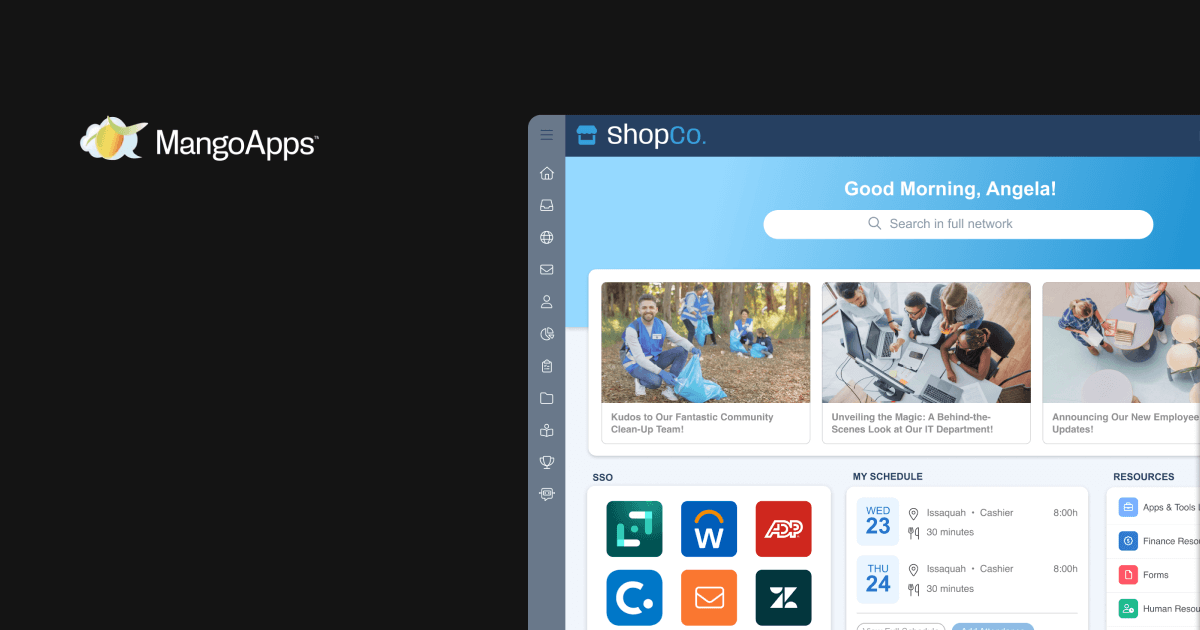
MangoApps is a unified digital workplace that combines a modern intranet, frontline employee app, and productivity suite in one platform. Built to replace complex legacy systems like Drupal, Liferay, IBM, or SharePoint Online, it streamlines communication and collaboration across organizations. Its mobile-first design makes it ideal for engaging frontline workers, and users often make note of its responsive support and customer-focused approach.
However, the 2026 Gartner Magic Quadrant for Intranet Packaged Solutions cautions that the MangoApps “platform can be cumbersome to configure, maintain and update, despite the availability of templates.” The report also highlighted that “the complexity of the solution’s configuration tools may require significant time and expertise, potentially slowing deployment and increasing ongoing management overhead.”
9. ThoughtFarmer
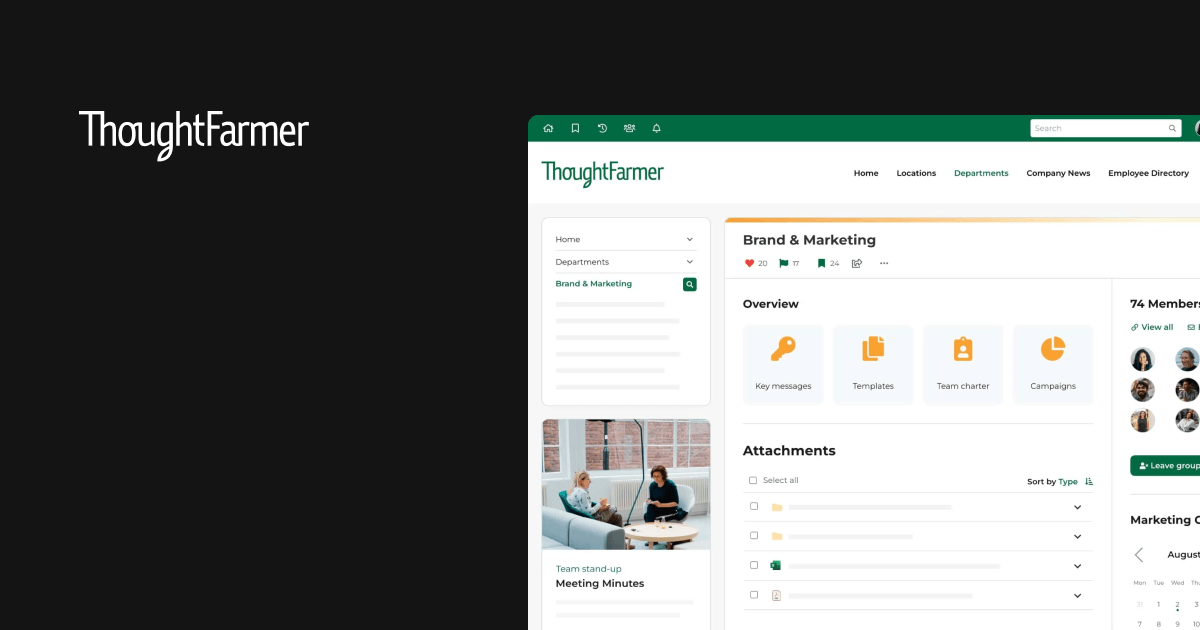
ThoughtFarmer is a modern intranet and digital workplace platform that centralizes communication, collaboration, and knowledge sharing within a secure, role-based environment. It enables healthcare organizations to streamline operations through tools for content management, targeted announcements, e-forms, and workflow automation.
The platform integrates with popular identity systems, such as Okta and Azure AD, and includes analytics for tracking user engagement. The mobile app ensures that healthcare workers can access updates, policies, and resources on the go. While ThoughtFarmer offers extensive customization, a G2 user reported its AI as limited.
“AI seemed to be an afterthought in the process. It does work rather well, but seems to be limited.” — Branch Office Manager, 2026
10. CentricMinds
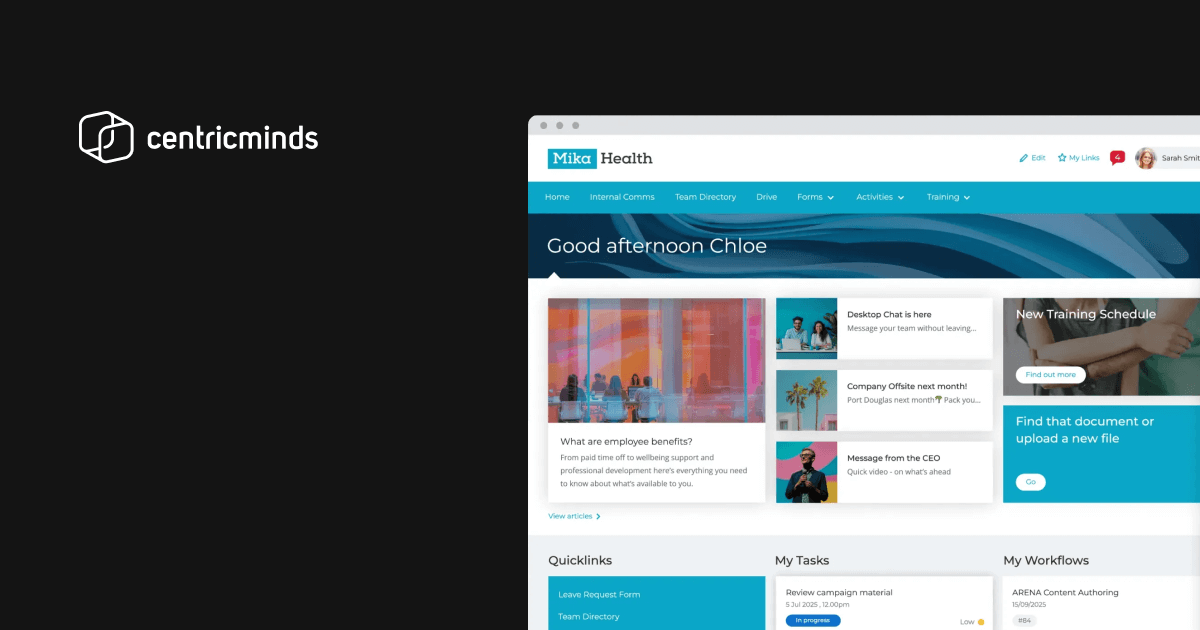
CentricMinds is a digital workplace and intranet platform designed to unify communication, content, and workflows across healthcare organizations. Built with HIPAA compliance and data security in mind, it helps clinical and administrative teams manage documents, automate forms, and streamline processes in one secure environment. The platform supports both cloud and on-premise deployments and integrates with Microsoft 365, Google Workspace, and EHR systems to enhance operational efficiency. CentricMinds enables hospitals to standardize procedures and improve coordination with features like checklists, incident reporting, and task automation.
Some users note that the setup process requires time and technical familiarity, while the content editing experience can feel less intuitive compared to newer intranet solutions.
“Editor could be a bit more user-friendly, initial setup quite complicated.”— Verified User in Government Administration, 2021
Success stories in the healthcare industry
Smart healthcare organizations are already achieving positive outcomes by reinventing their employee engagement strategies. From reducing turnover in critical roles to boosting hospital staff’s satisfaction, these real-world examples demonstrate how a modern intranet platform can drive measurable results.
Two examples stand out for their transformative impact:
Pikeville Medical Center
Pikeville Medical Center (PMC) is a regional health system in Appalachian Kentucky, where workforce participation is low. Leaders were working to strengthen employees’ sense of belonging, but four disconnected platforms left staff unsure where to find updates, benefits information, and resources.
PMC branded their Simpplr intranet “The Pulse”. It became home to “What’s Your Why,” a video series pairing frontline employees with leaders to share what drew them to healthcare and what keeps them going. What began as a communications initiative spread into department conversations, with leaders nominating colleagues whose stories deserved recognition. Employee surveys also gave the retention committee clearer insight into staff concerns and missing resources.
During 2025, 94% of employees logged in to The Pulse, and quarterly surveys showed improved scores for trust, transparency, and organizational pride.
Employee turnover fell 2% from the last quarter of FY2024 to the last quarter of FY2025.
I have been an employee at PMC for 35 years. I have seen many communication tools implemented. I have never seen such a smooth implementation of a communication system. The Pulse has all the tools and apps at your fingertips, while providing meaningful information to help us all stay updated and on the same page.

Pam Vanhoose
VP, Risk Management and Special Projects
Included Health
Headquartered in San Francisco, Included Health is a leading virtual healthcare company providing comprehensive, personalized healthcare solutions. With a fully remote workforce of 2,500 employees distributed across the country, the company prioritizes innovative communication strategies to foster engagement and create a connected digital workplace.
Without a centralized healthcare intranet platform, the company relied heavily on Slack, which led to fragmented messaging, information silos, and difficulties accessing important updates. Employees struggled to find reliable sources for organizational announcements and lacked a unified space for collaboration and knowledge sharing.
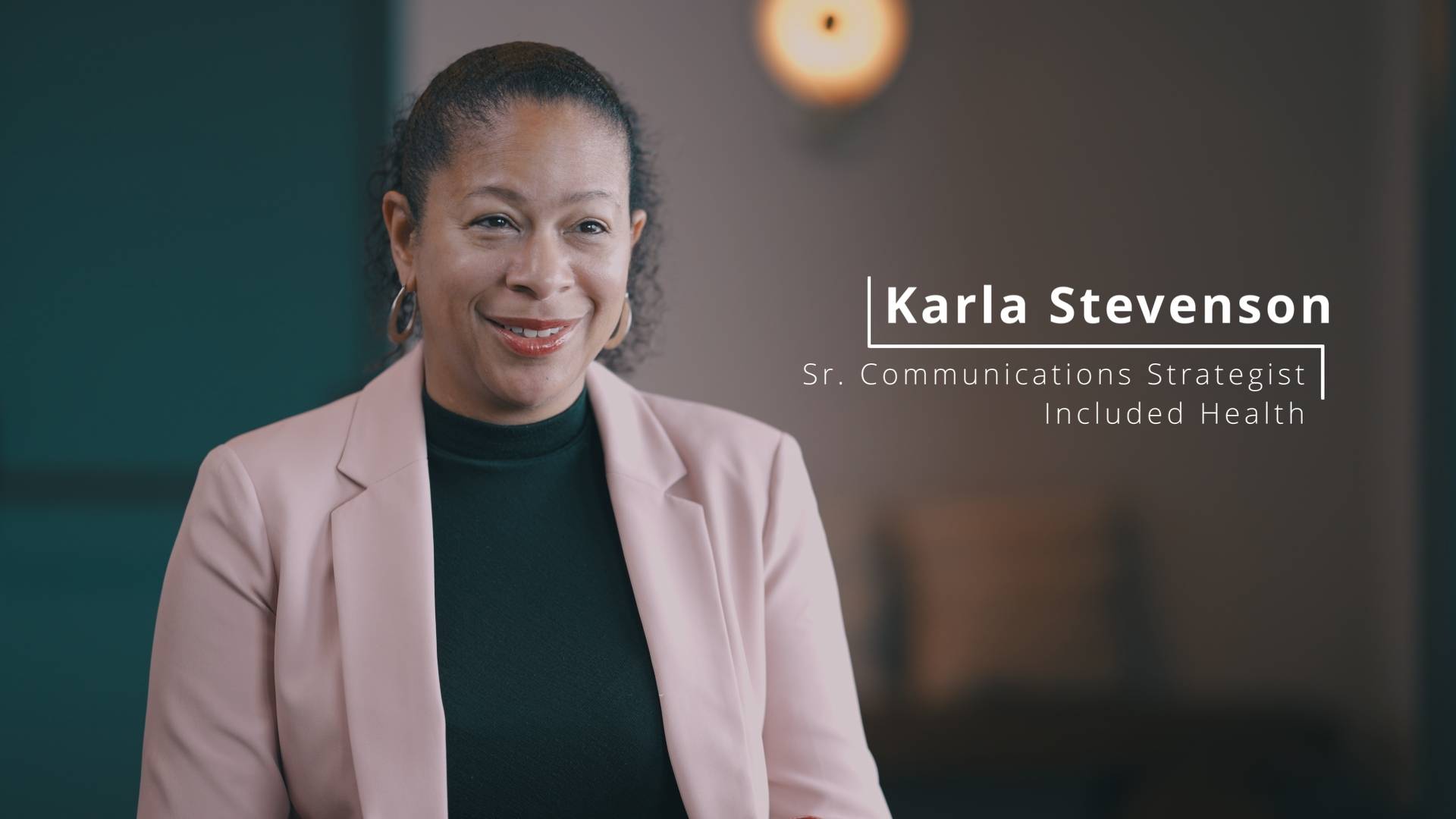
To address these challenges, Included Health’s leadership partnered with IT to implement Simpplr’s modern intranet platform, branded as IH Connect. The solution provided a single source of truth for all employees, featuring structured governance and a user-friendly interface.
Since launching IH Connect, Included Health has achieved remarkable results, including dramatic improvements in employee engagement, more than 2,000 monthly searches, and increased participation with the company newsletter.
Key capabilities in the best healthcare intranet solutions
Healthcare workers work in demanding environments. Traditional intranet platforms built for desk-based workers weren’t designed for nurses switching between patient rooms, physicians making rounds, or care coordinators juggling tablets between appointments.
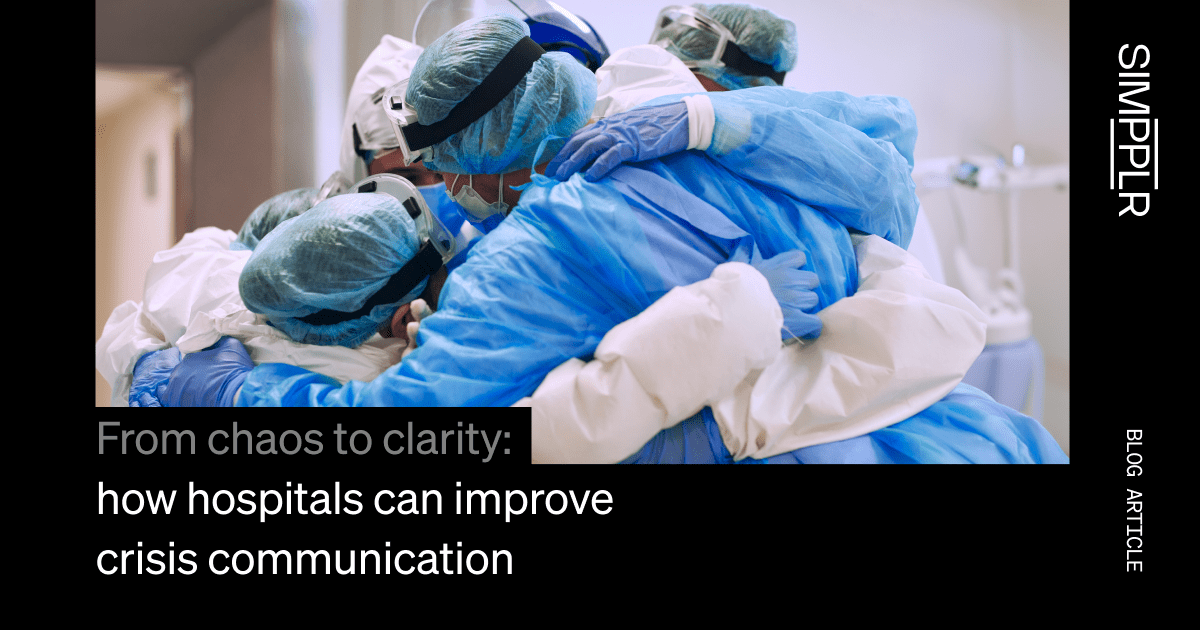
These conventional systems burden healthcare workers with clunky document repositories that make it difficult to find critical protocols. They have communication tools that don’t accommodate shift schedules, and interfaces that break down on mobile devices. Healthcare professionals need secure, role-specific, mobile-ready platforms that deliver the right information without disrupting patient care, especially when they need access to crisis communication.
Organizations that recognize that clinical staff, administrators, and support personnel all play critical roles in patient outcomes implement the most supportive technology. Rather than forcing everyone into a one-size-fits-all experience, they choose a modern healthcare intranet that serves work realities while maintaining required security and compliance standards.
Let’s examine the capabilities that separate standard healthcare intranets from transformative ones.
1. Unified information access
Clinicians might check one system for protocols, another for schedules, and yet another for organizational announcements — all while managing multiple logins. A unified digital work hub brings essential tools and information into one cohesive experience.
Key unified access capabilities include:
- Centralized information hub for policies, protocols, and organizational updates
- Enterprise search that surfaces content from connected healthcare systems
- Integrated scheduling tools for real-time shift visibility and time-off management
- Self-service HR access for benefits, payroll, and personal information updates
FLEXCARE
The Simpplr platform has really helped us ensure that every employee has the exact same processes in front of them so that we can continue to achieve our goals.

Shannon Quignon
Solution Architect, Flexcare Medical Staffing
2. Mobile-first functionality
Healthcare workers are constantly on the move — caring for patients, updating records, and coordinating with teams across locations. In fast-paced clinical environments, a mobile-friendly intranet helps drive efficiency and, as a result, better patient outcomes.
Key mobile-first capabilities include:
- User-friendly interfaces designed for fast navigation and minimal training
- Push notifications and alerts to deliver urgent updates, safety notices, or shift changes
- Offline access to critical documents like emergency protocols or SOPs when connectivity is limited
- Secure authentication with SSO and multifactor options to protect sensitive healthcare data
- Personalized communication with targeted messages by role, shift, or location
3. Real-time care communication
Lack of communication between different healthcare providers, units, and locations can lead to fragmented care and misunderstandings, delays, and even grave mistakes. Smart healthcare organizations need multichannel, real-time communication to ensure timely information flow across all levels of care.
Key real-time communication capabilities for healthcare intranet:
- Instant messaging and chat for coordination between departments and care teams
- Targeted announcements and alerts to reach specific teams without overwhelming others
- Two-way channels that enable staff to report issues and share feedback
- Digital signage in break rooms and nursing stations for high-visibility updates
- Video and voice conferencing to support virtual huddles, consultations, and remote teamwork
4. Authentic recognition and reward
In high-pressure healthcare environments where job stress and burnout lead to high turnover rates, meaningful recognition becomes essential. But most recognition efforts feel like an afterthought and fail to truly connect with workers’ daily experiences.
Only 18% of healthcare workers say their employer recognizes teams and groups — below average for U.S. employees (22%) and significantly lower than other industries that often work in teams (Gallup).
Key recognition and reward capabilities include:
- Customizable badges and awards for clinical excellence or patient care milestones
- Peer-to-peer recognition tools to acknowledge colleagues in real time
- Integrated reward programs that link recognition to points, badges, or incentives
- Analytics and insights to track recognition trends and employee sentiment

5. Employee feedback
Hospital staff need opportunities to speak up and have their voices heard. Regular pulse surveys and open communication channels help leadership uncover challenges early and take action to boost engagement, satisfaction, and retention.
Key capabilities of AI-powered employee surveys include:
- Built-in analytics to capture employee sentiment from every department and shift
- Collaboration spaces that make teamwork seamless across units and schedules
- Social features that strengthen connection and recognition among colleagues
- Two-way communication between clinical teams and hospital leadership
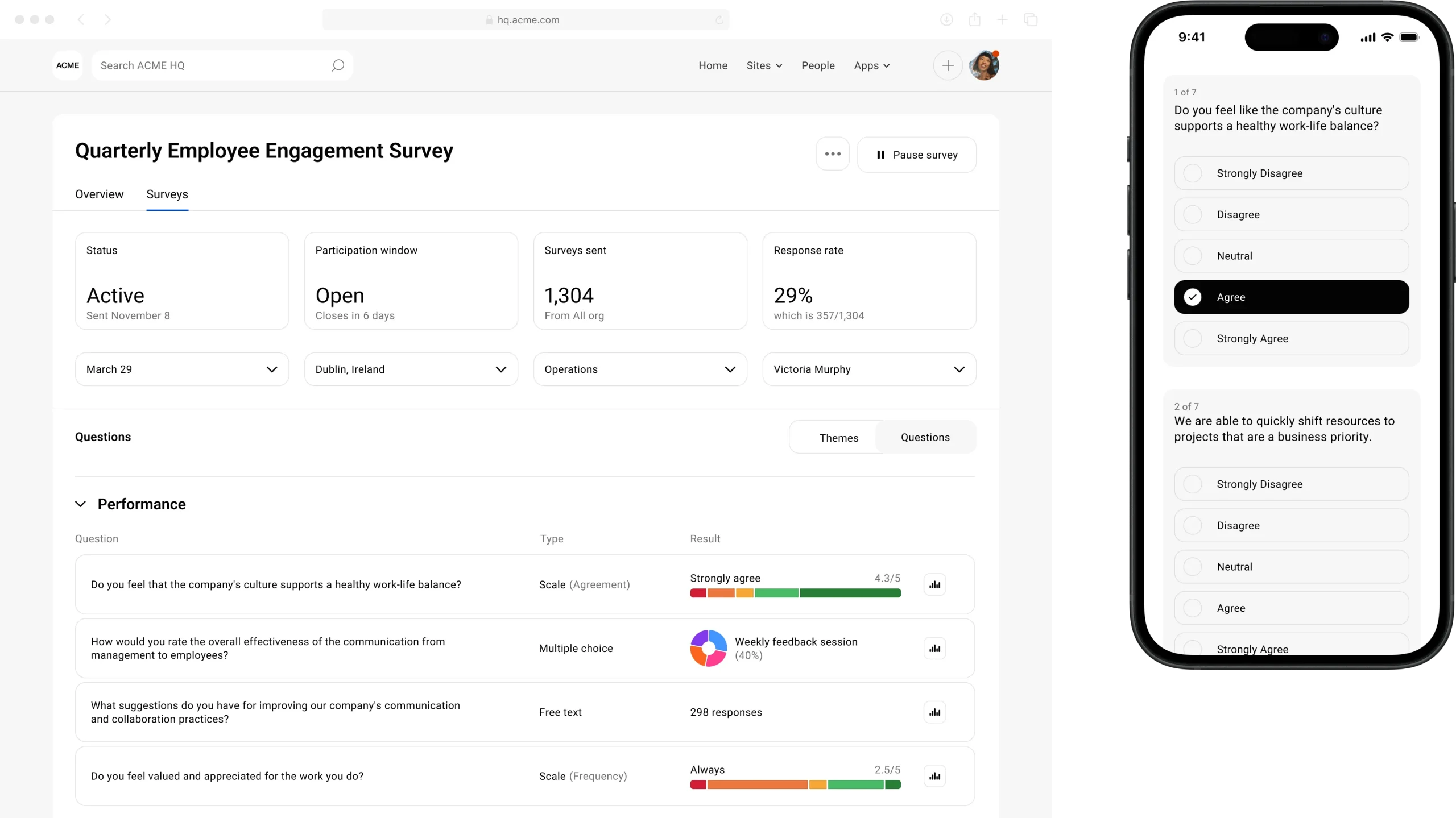
Keep your team informed with Simpplr
Patient-facing healthcare workers deserve digital experiences as seamless and compassionate as the care they deliver — and that’s where Simpplr makes a difference. With Simpplr’s AI-powered employee experience platform, every essential tool, update, and resource gets integrated into one intuitive, mobile-first intranet designed for the realities of clinical work. With unified access, staff can instantly find what they need — whether it’s shift schedules, clinical protocols, or organizational updates — without switching between systems.
AI-powered personalization ensures that every clinician sees the most relevant content, from department news to patient care alerts, across devices and channels. Built-in recognition tools and feedback loops help strengthen culture, boost engagement, and make every employee feel valued and connected to purpose.
Backed by enterprise-grade security and compliance with standards like HIPAA, SOC 2, and GDPR, Simpplr supports hospitals in creating connected, resilient, and informed workforces.
Ready to give your healthcare teams the experience they deserve? Request a demo today.
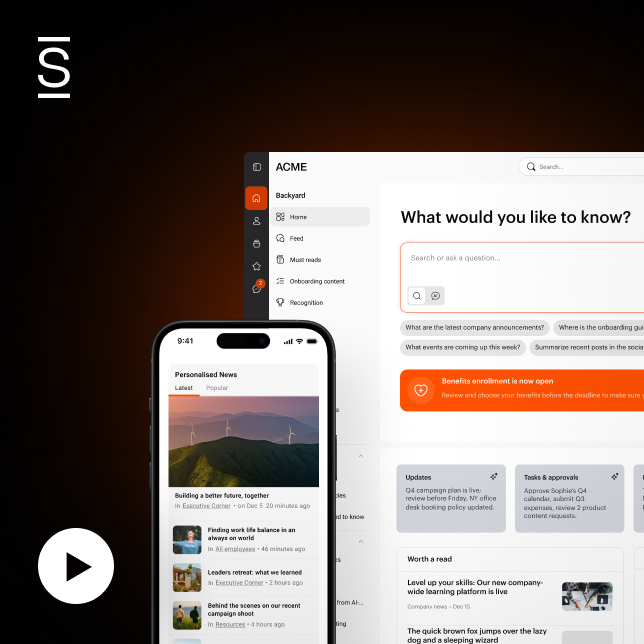
Watch a 5-minute demo
See how the Simpplr employee experience platform connects, engages and empowers your workforce.
- #1 Leader in the Gartner Magic Quadrant™
- 90%+ Employee adoption rate