



Recognition is a retention approach that directly relates to how long employees stay in an organization. Employees who receive high-quality recognition are often less likely to leave their jobs. This makes it crucial for you as an HR or IC leader to compare the best employee recognition platforms and pick the solution that aligns with your specific needs.
Best employee recognition platforms: the complete buyer’s guide
Best employee recognition platforms: the complete buyer’s guide
Table of contents
- 1 What makes a good rewards and recognition platform
- 2 Shortlisting the top employee recognition platforms
- 3 Detailed review of the best employee recognition and rewards platforms
- 4 Which rewards and recognition platform best suits your needs
- 5 Why rewards and recognition should live inside your intranet
- 6 Choosing the best platform for your organization
Imagine an employee’s birthday. For HR, it’s a chaotic scramble of manual reminders and gift-card portals, resulting in a generic wish that lacks sincerity. For Internal Comms, that same moment often slips through the cracks, trapped in a standalone tool that sits outside your main communication channels—meaning it can’t support active culture campaigns or reach frontline staff.
Months later, both teams face the same challenge: justifying the ROI of a tool that hasn’t moved the needle on engagement or visibility. The problems here are twofold:
1. Recognition that feels like formality rather than a genuine gesture, despite your efforts.
2. Low visibility that doesn’t give the recognition the exposure it deserves.
And yet, recognition can work wonders for an organization. Companies with a visible employee recognition setup experience 31% lower turnover. Moreover, employees tend to work harder when they are recognized.
What does this mean for you as an HR or IC leader? Besides focusing on reinforcing stronger employee recognition, it is also wise to do so within your current infrastructure. This means skipping a standalone tool everyone has to login to daily.
What makes a good rewards and recognition platform

A good rewards and recognition platform makes it easy to celebrate people quickly, fairly, and in ways that actually matter to them. It should be simple to use, mobile-friendly, and integrate with the tools teams already use.
It is purpose-built and designed for all employees equally. If it requires yet another login, time-strapped frontline and deskless workers without easy computer access simply will not adopt it. What separates a suitable employee recognition software from others depends on a handful of criteria discussed below. These drive adoption, engagement, and business impact.
Parameters of comparison
To ensure we help you make an informed buying decision, we came up with seven parameters. These are intended to skip the usual feature lists and test what actually matters once a platform is live.
From employee experience to analytics and workforce reach, we are confident that these parameters will help you choose among the best employee recognition platforms.
- Intranet integration: Whether recognition lives inside the intranet or sits in a separate, standalone tool.
- Employee experience integration: How tightly recognition connects to the wider employee experience instead of working in isolation.
- Recognition and rewards functionality: Recognition types and the range of reward options on offer.
- HRIS and workplace tool integration: How well the platform connects to your HRIS, collaboration, and performance tools.
- Analytics and reporting: Whether dashboards show recognition trends, manager activity, and programme ROI.
- Administrative scalability: How easily the platform grows from 500 employees to 5,000 without adding admin strain.
- Distributed workforce reach: How well remote, hybrid, and frontline employees get equal recognition visibility.
- Add scale across global teams: How well recognition holds up across regions, with localised languages, currencies, reward catalogues, and compliance handling rather than a single-market experience stretched worldwide.
Why trust us
Multiple HR, IC, and IT teams use our intranet platform daily. This allows us to understand the real pain points of these teams across the globe. Moreover, our platform is highly rated across the industry and positioned among the best employee recognition platforms worldwide.
So, we know what earns adoption and what gets ignored. We have brought that experience into this comparison guide. The goal is simple: help you choose a recognition and rewards platform you will still rely on a year from now.
Shortlisting the top employee recognition platforms
The market for the best employee recognition platforms is crowded, and most tools look similar on paper. To help you evaluate them fairly, we assessed each one against the same four needs: recognition paired with rewards, native intranet integration, and impact analytics. The table below shows how each platform stacks up against these criteria.
The platforms below are the most widely adopted and highly rated options available to HR and IC teams today. The following table gives you an at-a-glance comparison before the detailed reviews.
| S.No | Tool | What the tool fulfils | G2 reviews |
|---|---|---|---|
| 1 | Simpplr |
| “Recognitions make people feel seen and appreciated.” — 4.6/5 |
| 2 | Awardco |
| “Loved by Teams, Challenging to Launch” — 4.9/5 |
| 3 | Bonusly |
| “Simple, visible recognition with real rewards that keeps teams engaged.” — 4.7/5 |
| 4 | Motivosity |
| “User friendly, a lot of options to choose to redeem.” — 4.7/5 |
| 5 | WorkTango |
| “Recognition that works, and everyone looks forward to it.” — 4.7/5 |
| 6 | Workhuman |
| “Intuitive, real-time recognition that reinforces company values.” — 4.7/5 |
| 7 | Nectar |
| “Natural, fun recognition that builds a positive workplace culture.” — 4.7/5 |
| 8 | Guusto |
| “Easy to use employee recognition software that actually reaches everyone.” — 4.9/5 |
| 9 | Achievers |
| “A great recognition tool that reinforces company values.” — 4.6/5 |
| 10 | Recognize |
| “Recognition should be woven into everyday work, not saved for reviews.” — 4.7/5 |
One pattern stands out across the table. Every other tool integrates with your stack, but only Simpplr builds recognition and rewards directly into the intranet. Recognition should exist where employees already work, so it needs no separate login tool and no extra adoption push.
Detailed review of the best employee recognition and rewards platforms
1. Simpplr
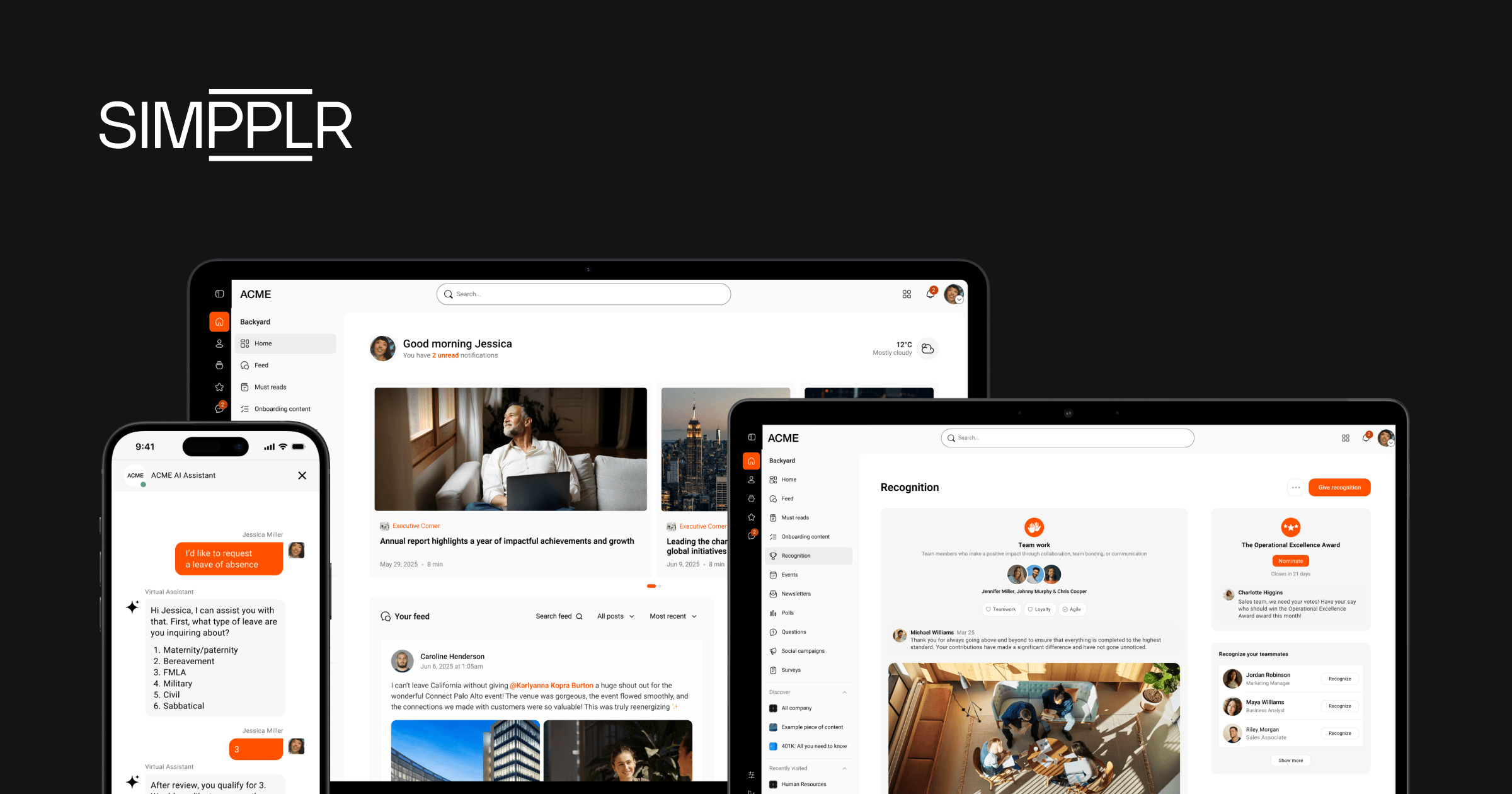
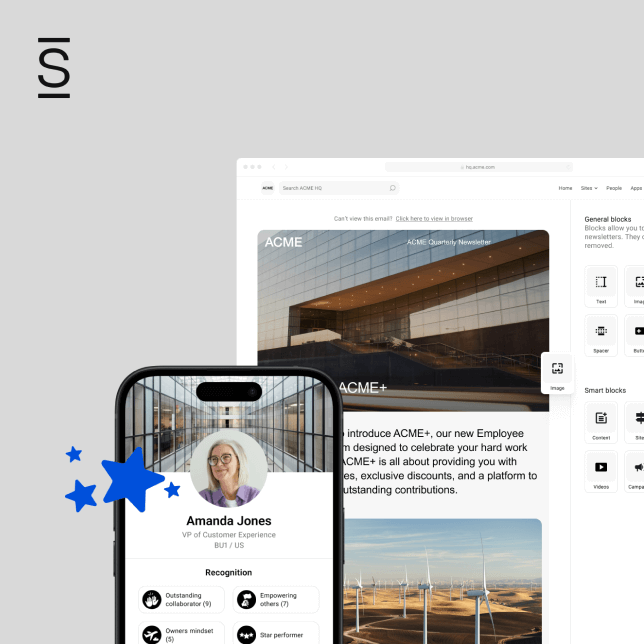
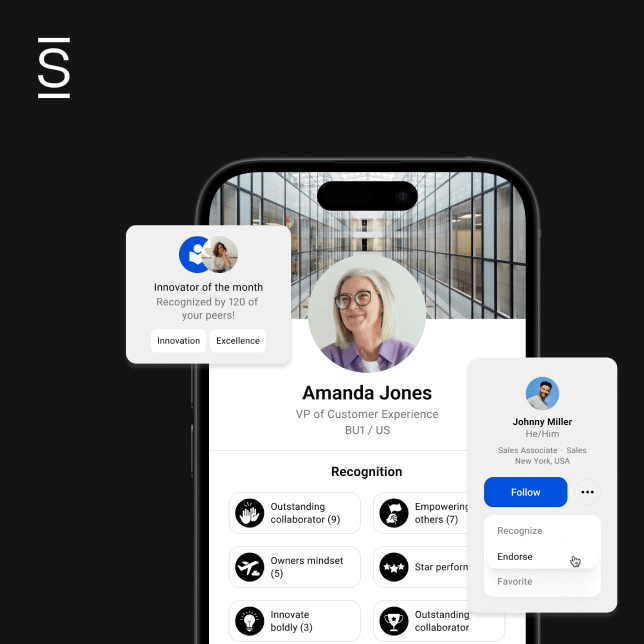
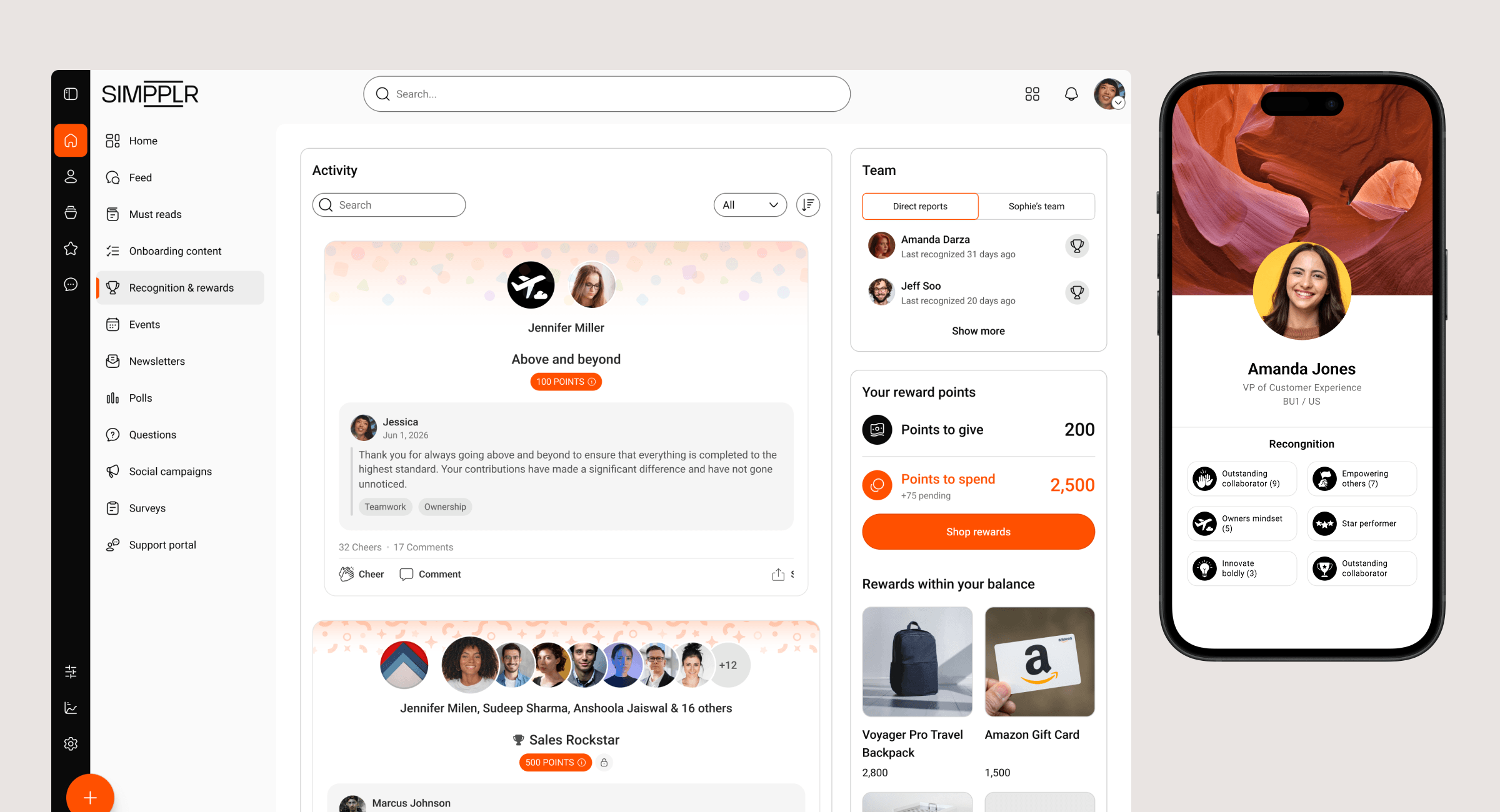
Simpplr is an AI-powered employee experience platform. Recognition and rewards live inside the same place employees read news, find resources, and connect every day. HR and IC teams can manage recognition, rewards, budgets, reporting, and communications in one connected employee experience.
Here is how Simpplr measures up against the seven parameters we used across this comparison:
How Simpplr’s rewards and recognition perform meets HR and IC expectations
- Recognition is built natively into the intranet itself.
- Recognition sits beside news, resources, and daily communication.
- Values-based recognition with points built in and attached to enterprise-grade rewards stores.
- Extends recognition into collaboration tools and connects with existing HR systems.
- Recognition analytics connect with broader intranet engagement insights.
- Scales across global enterprises from one console.
- Reaches remote, hybrid, and frontline staff.
Simpplr Pros:
- Reach employees in the place they already use for news, resources, and everyday work
- Extend intranet recognition to workplace collaboration tools
- Expand from recognition into points and rewards without adding a separate vendor
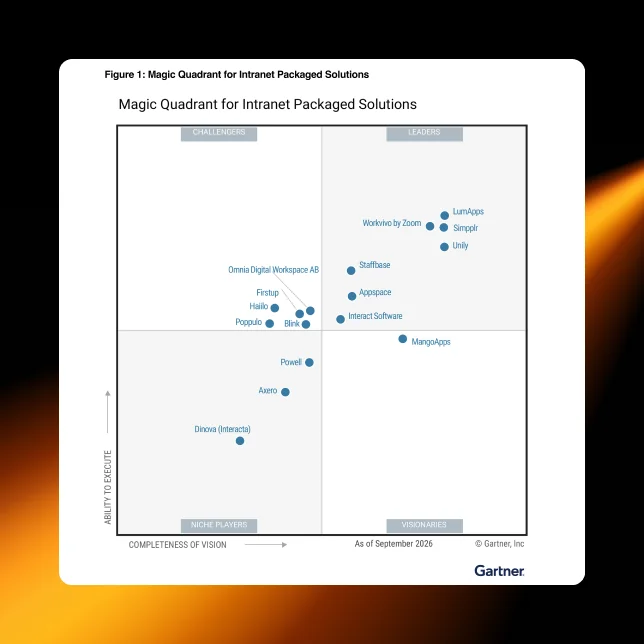
- Named a Leader across G2, Forrester, IDC, Gartner
Simpplr Cons:
- Best suited to organizations using Simpplr as their intranet, rather than buyers looking for a standalone recognition-only product.
- Best suited to larger organizations with dedicated IC & HR teams; smaller organizations may find the platform broader than their needs require.
G2 rating and review
4.9/5
Simpplr differentiates by building recognition and rewards directly into the intranet employees already use. Instead of asking employees to adopt another standalone destination, recognition becomes part of everyday communications and work, helping organizations drive participation while connecting recognition activity with the broader employee experience.
2. Awardco
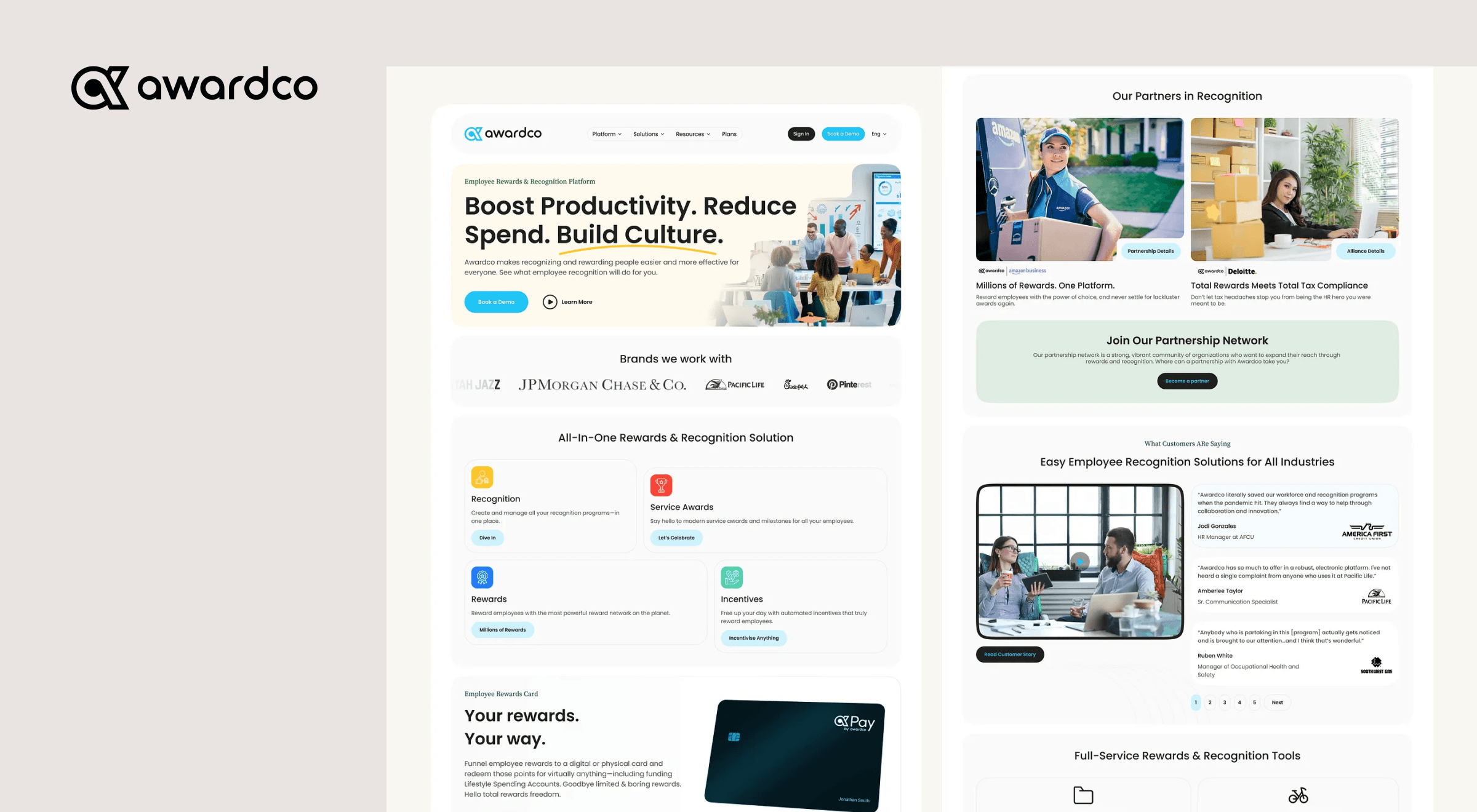
Awardco is a rewards, recognition, and engagement platform for managing employee recognition programs. It combines recognition, rewards, and engagement capabilities in one configurable platform and supports programs across distributed and global organizations.
The platform offers configurable program controls. You can set point budgets by department, role, or geography, build custom approval workflows, and tie recognition to your company values. Its reward marketplace includes Amazon Business, gift cards, travel, experiences, and swag. It also comes with multi-currency and multi-language support for international teams.
Awardco Engage adds feedback tools, so you can connect sentiment and participation data back to your recognition efforts.
Here is how Awardco measures up against the seven parameters we used across this comparison:
How Awardco’s rewards and recognition perform meets HR and IC expectations
- Integrates with intranets but is not intranet-native.
- Recognition integrates with Slack and Microsoft Teams.
- Amazon Business-integrated rewards catalog with milestone automation.
- Integrates with major HRIS and workplace systems.
- Reporting covers budgets, recognition activity, and engagement.
- Supports programs across different organization sizes.
- Supports deskless employees through offline recognition options.
Awardco Pros
- Programs align to company values and goals
- Optional point purchases add redemption flexibility
- Optional employee listening & engagement capabilities
- Central budget and reporting control for admins
Awardco Cons
- Heavy configuration may overwhelm smaller teams
- Engagement module is an added layer
- Some admins report rigid or clunky workflows in parts of the platform.
G2 rating and review
4.9/5
If reward flexibility and budget control matter most, Awardco delivers one of the largest catalogs with no markup. Best for mid-market and enterprise teams that prioritize rewards over social, culture-building recognition.
3. Bonusly
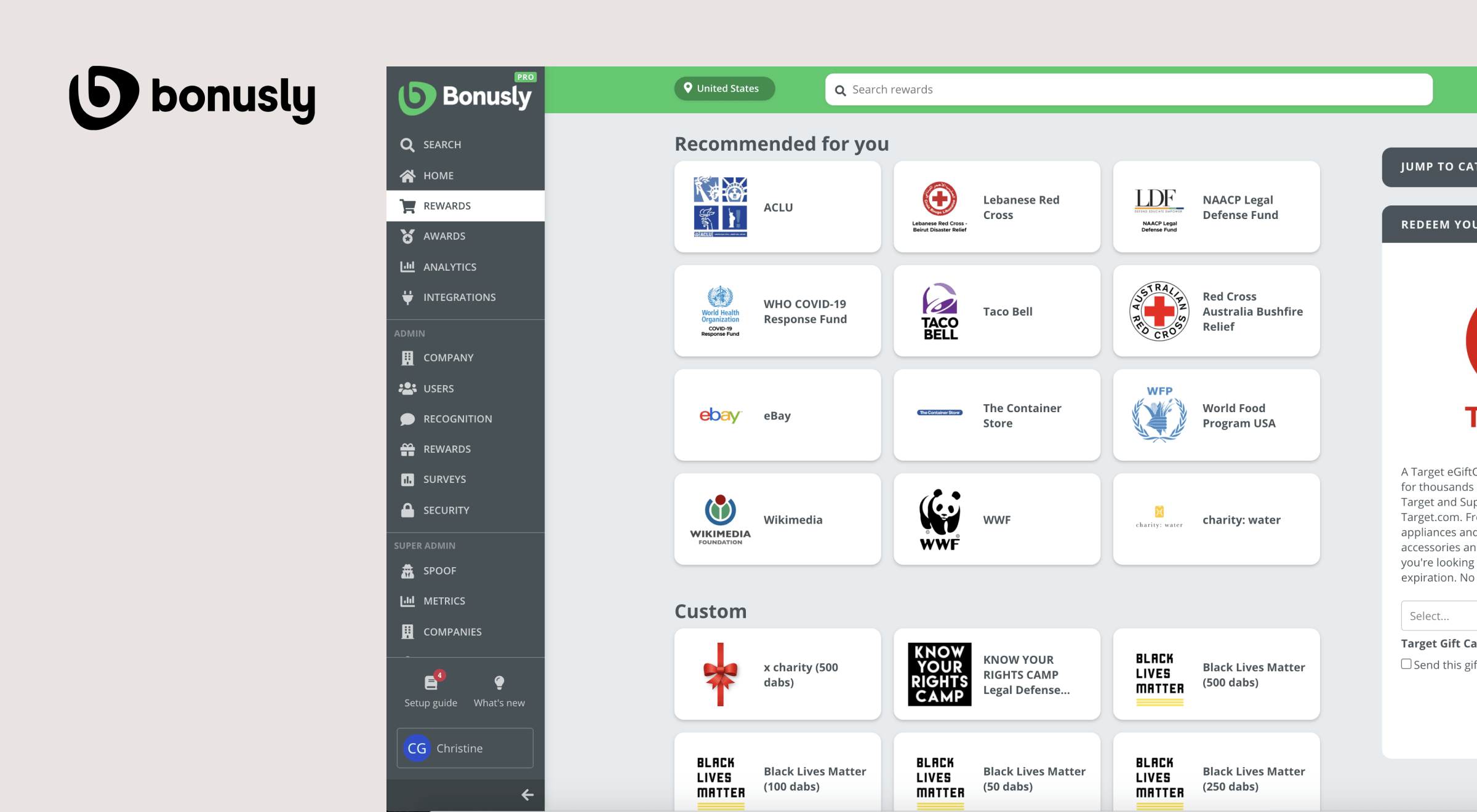
Bonusly is a standalone recognition, rewards, and employee performance platform built around the everyday habit of appreciation. Employees recognize peers, share feedback, and complete lightweight check-ins right in the flow of work, often from Slack or Teams.
It also offers analytics that track recognition activity and participation trends across teams.This gives managers continuous visibility into where teams thrive and where support is needed.
It is used mainly by small and mid-sized organizations to reinforce values, make contributions visible, and connect recognition to engagement and retention.
Here is how Bonusly measures up against the seven parameters we used across this comparison:
How Bonusly’s rewards and recognition perform meets HR and IC expectations
- Integrates with tools but is not intranet-native.
- Recognition happens inside Slack and Teams daily.
- Points-based peer recognition with configurable rewards.
- Connects to 40+ tools, including major HRIS systems.
- Insights show trends, sentiment, and team patterns.
- Scales best for small to mid-sized teams.
- Reaches distributed staff through chat-based recognition.
Bonusly Pros
- Quick to set up and roll out.
- Familiar social-media-style interface
- Automated milestone and celebration reminders
- Lightweight check-ins and 1:1 tools included
Bonusly Cons
- Monthly point allowances reset without rollover
- Reward redemption can feel slow or limited
- Some users want faster support response
G2 rating and review
4.7/5
Bonusly suits teams that want simple, frequent peer recognition in the flow of work. Best fit for small to mid-sized organizations that prioritize everyday appreciation over deep analytics or a broad rewards catalog.
4. Motivosity
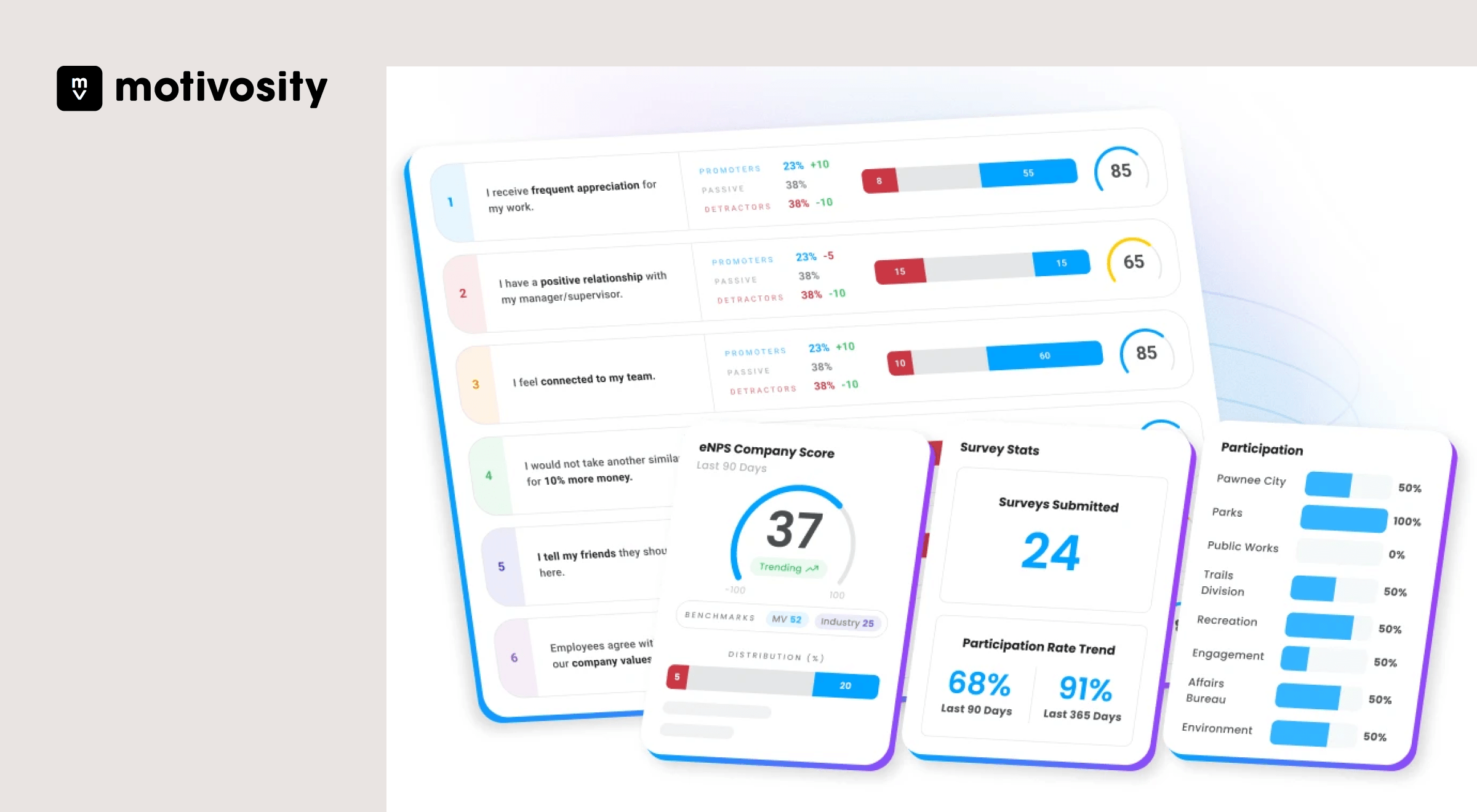
Motivosity is a standalone recognition, rewards, and engagement platform with social and community features. It combines peer recognition and rewards with a social feed, employee communities, internal communications, and engagement tools.
A central part of the platform is its social layer. A central feed brings together recognition, milestones, announcements, and other employee activity, supported by employee profiles, an org chart, and community spaces. Its rewards marketplace includes gift cards, merchandise, cash-out options, charitable donations, swag, and other reward types across global markets.
Here is how Motivosity measures up against the seven parameters we used across this comparison:
How Motivosity’s rewards and recognition perform meets HR and IC expectations
- Standalone engagement platform with internal communications; not a full intranet.
- Social feed combines recognition, milestones, and employee communities.
- Peer recognition, spot bonuses, and global rewards.
- Integrates with major HRIS and workplace systems.
- Reporting surfaces department stats and eNPS trends.
- Supports mid-market and enterprise recognition programs.
- Localized rewards and fulfillment support global teams.
Motivosity Pros
- Strong community and social connection features
- Automated milestone and anniversary celebrations
- Multilingual and multi-currency support for global programs
- Lifestyle spending accounts and swag add-ons
Motivosity Cons
- Physical rewards may incur shipping, tax, or import charges.
- Some users report navigation difficulties.
- Some users report limited reward options or recognition budgets.
G2 rating and review
4.7/5
Motivosity centers on social, peer-driven recognition, with peer thanks, milestone automation, and charity donation options in an interface built around a company feed. Best fit for mid-market and enterprise teams that want a culture-led social layer over a rewards-first catalog.
5. WorkTango
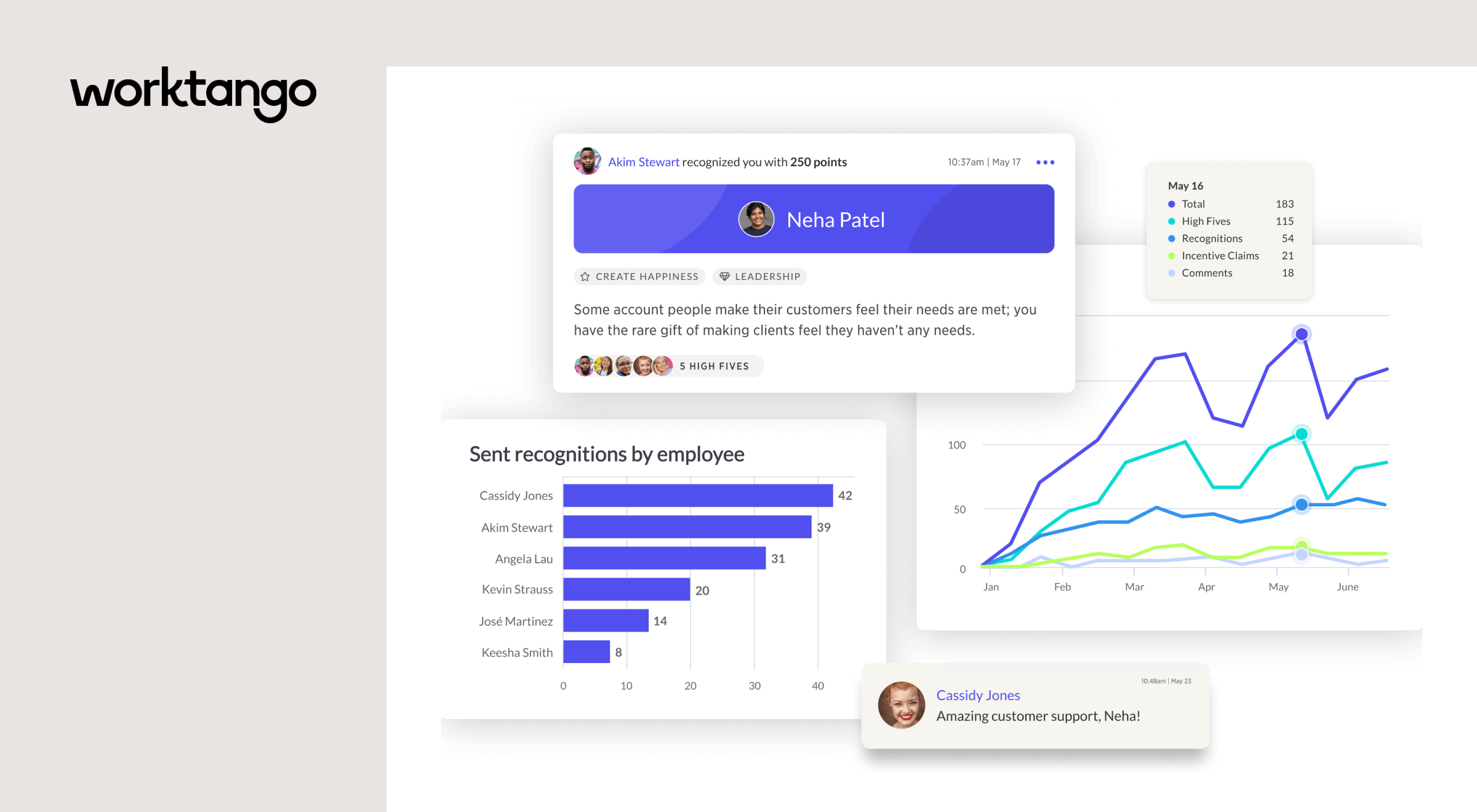
WorkTango is an employee experience platform with two core products: Surveys & Insights and Recognition & Rewards. As an HR or IC leader, you can run unlimited surveys across the employee lifecycle.Its survey tools include unlimited surveys, sentiment analysis, dashboards, and AI-assisted action planning.
On the recognition side, WorkTango offers peer-to-peer, manager-to-employee, and top-down recognition tied to company values. This is enhanced by AI writing assistance and recognition quality scores.
Its rewards marketplace includes 10M+ options across merchandise, gift cards, experiences, travel, donations, and swag, using a zero-markup model. Moreover, you only pay when employees redeem. Recognition happens in the flow of work through your communication tools, with milestone automation built in.
Here is how WorkTango measures up against the seven parameters we used across this comparison:
How Worktango’s rewards and recognition perform meets HR and IC expectations
- Standalone EX platform, not intranet-native.
- Recognition integrates with Slack and Microsoft Teams.
- Recognition plus a 10M+ option rewards marketplace.
- 40+ HRIS and SSO integrations.
- AI-assisted survey analysis, sentiment insights, and action planning.
- Supports organization-wide recognition and employee listening programs.
- Available through web, mobile, Slack, and Teams.
WorkTango Pros
- Surveys and recognition available within one EX platform
- 10M+ option global rewards marketplace
- AI writing assistant for recognition messages
- Automated milestones and group recognition
WorkTango Cons
- Typical implementation takes 4–6 weeks
- Standalone platform rather than recognition native to the intranet
- Reward store can be cumbersome to navigate and search
G2 rating and review
4.7/5
WorkTango suits teams that want recognition and engagement surveys in one platform, with rewards and real-time feedback alongside survey action plans. Best fit for organizations that want integrated experience management, surveys plus recognition, rather than a standalone recognition tool.
6. Workhuman
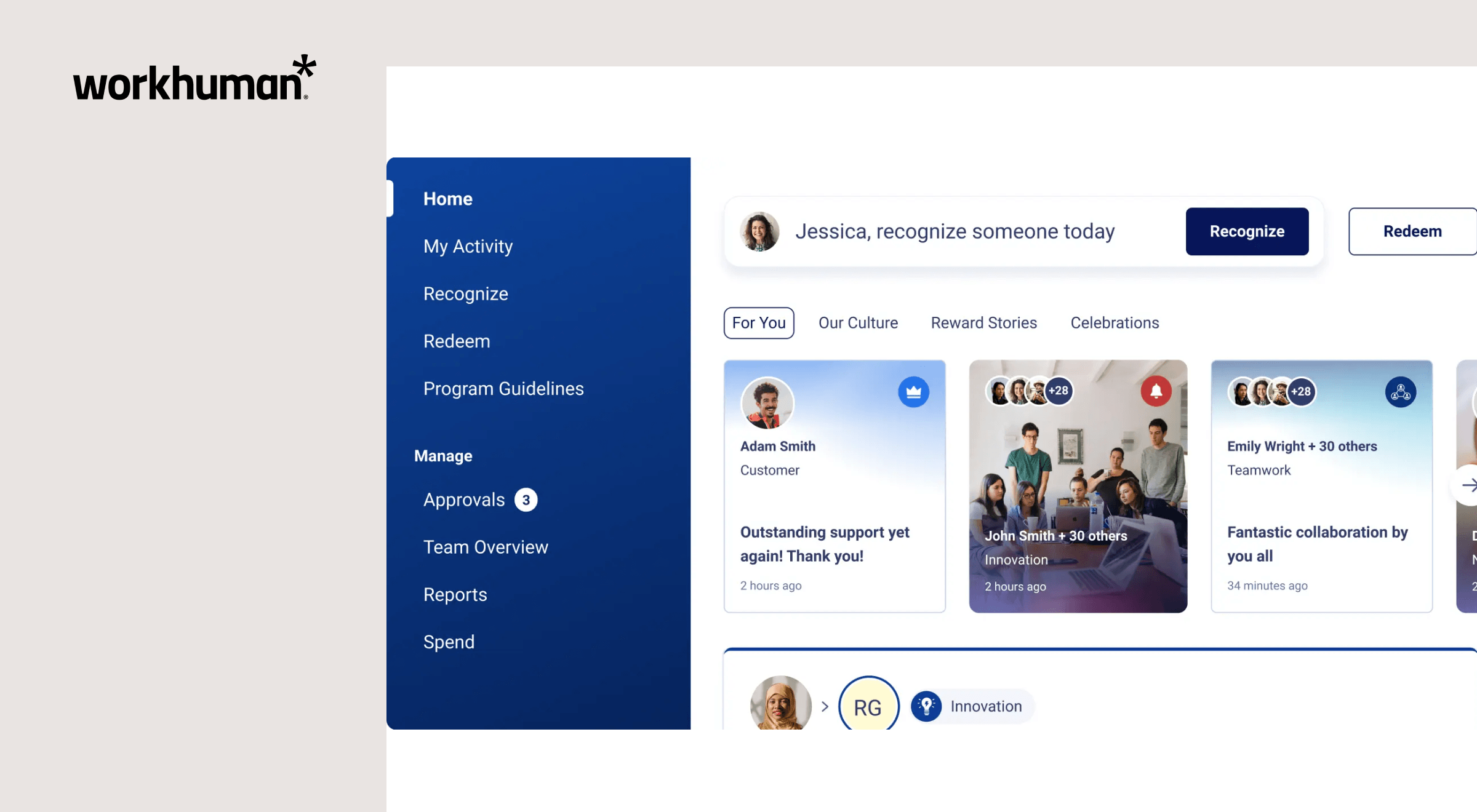
Workhuman is a standalone employee recognition and rewards platform designed primarily for large and global programs. It combines social recognition, rewards, milestone celebrations, and recognition analytics.
Its rewards marketplace includes locally curated merchandise, gift cards, experiences, and other redemption options across global markets.Workhuman iQ analyzes recognition data for insights into skills, culture, collaboration, and performance. Recognition ties to company values and connects to tools like Workday, Teams, and Outlook.
Here is how Workhuman measures up against the seven parameters we used across this comparison:
How Workhuman’s rewards and recognition perform meets HR and IC expectations
- Standalone platform, not intranet-native.
- Recognition integrates with Teams, Outlook, Slack, and other workplace tools.
- Values-based recognition with a global rewards marketplace.
- Integrates with Workday, Teams, Outlook, Slack, and other workplace systems.
- Workhuman iQ provides recognition-driven skills, culture, and performance insights.
- Supports large, global recognition programs.
- Localized catalogs and support for global workforces.
Workhuman Pros
- Global rewards marketplace with localized options
- AI-assisted recognition and inclusion guidance
- Public recognition feed and milestone programs
- Supports 30+ languages for global teams
Workhuman Cons
- Roughly four-month implementation timeline
- Reward catalog gaps in some regions
- Required recognition quotas can make recognition feel performative
G2 rating and review
4.7/5
Workhuman fits large, global programs that need enterprise scale and culture analytics through Workhuman iQ. Best suited to enterprises with mature HR teams and the budget and admin capacity for a heavier deployment.
7. Nectar
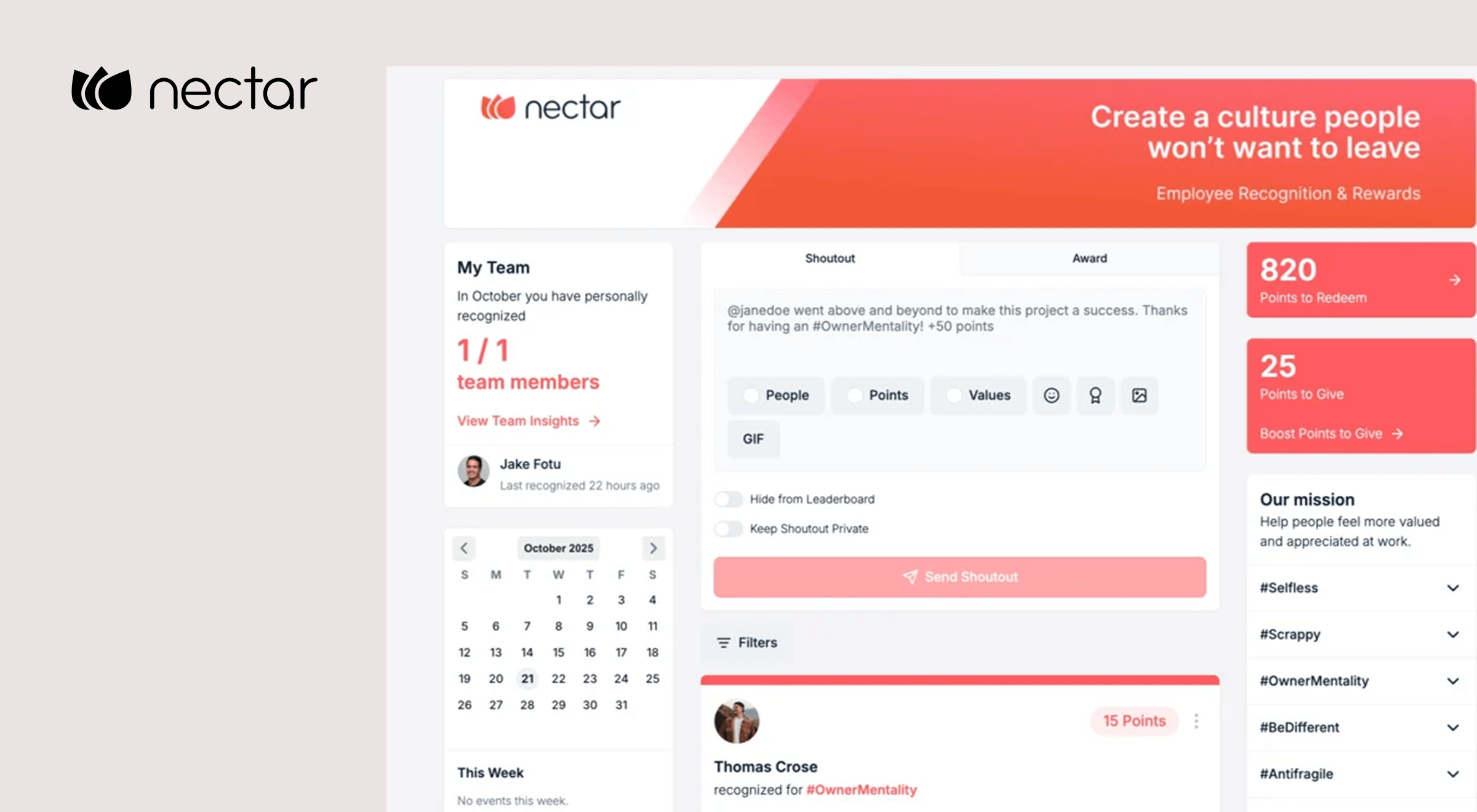
Nectar is a culture suite that combines recognition and rewards, internal communications, and employee listening. This means recognition does not happen in a silo. Nectar Recognize includes peer-to-peer recognition, points-based rewards, challenges, milestones, and values-based recognition. A mobile app provides access for deskless and frontline employees.
Beyond recognition, Nectar Comms distributes announcements through email, SMS, Slack, Teams, and Nectar, with delivery, open, and click analytics. This includes visibility into who reads them. Nectar Engage supports engagement, pulse, eNPS, and custom surveys.
Here is how Nectar measures up against the seven parameters we used across this comparison:
How Nectar’s rewards and recognition perform meets HR and IC expectations
- Standalone culture suite with workplace integrations.
- Recognition and communications extend into Slack and Teams.
- Peer recognition, challenges, milestones, and global rewards.
- Connects to Workday, BambooHR, UKG, and more.
- Analytics track participation, activity, values, and rewards.
- Serves small to mid-market organizations well.
- Mobile access supports deskless and frontline employees.
Nectar Pros
- Recognition, comms, and Employee Listening in one suite
- Recognition available through Slack, Teams, Outlook, and mobile
- Challenges, milestones, and values-based recognition
- Multi-channel communications with delivery and engagement analytics
Nectar Cons
- Monthly point allowances often run out early
- Reward catalog can feel repetitive or limited over time
- Customization options are limited in some area
G2 rating and review
4.7/5
Nectar suits teams that want frequent, values-based peer recognition at a lower price point. Best fit for small to mid-sized organizations that prioritize simple recognition over deep analytics.
8. Guusto
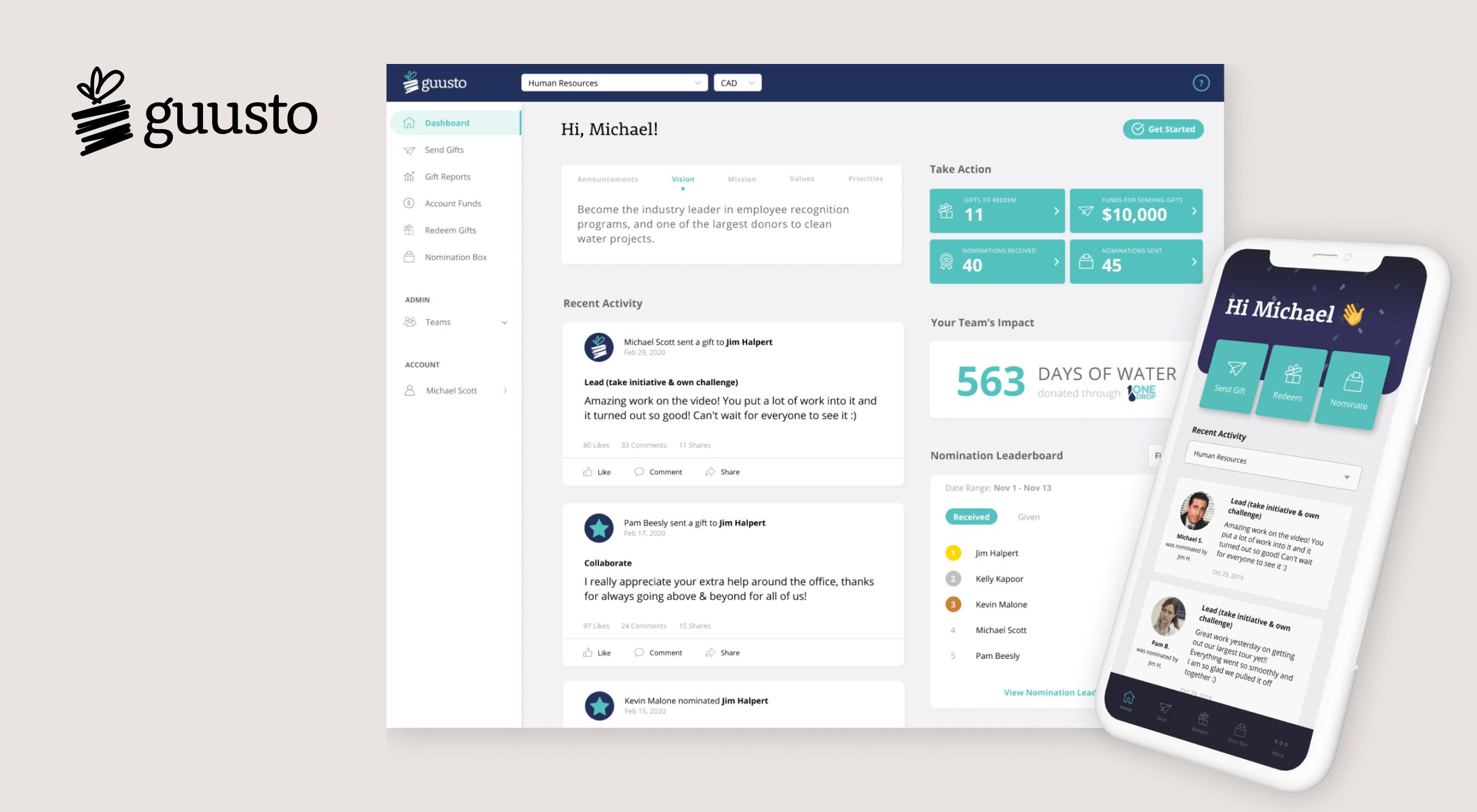
Guusto is a standalone recognition and rewards platform with a strong focus on frontline and deskless employees. Its edge lies in inclusion and cost control. Pricing is weighted toward recognition senders, with lower-cost recipient seats And the program works for full-time, hourly, seasonal, and contingent staff alike. The platform supports office, frontline, seasonal, and contingent workers.
Where Guusto stands apart is delivery. Recognition can be delivered through SMS, QR codes, print, mobile, TV displays, and manager-assisted delivery.
Rewards can even route to a manager for in-person handoff. The platform also supports automated milestones, draws, approvals, and manager-delivered rewards. Here is how Guusto measures up against the seven parameters we used across this comparison:
How Guusto’s rewards and recognition perform meets HR and IC expectations
- Integrates with workplace tools but remains a standalone platform.
- Gift-based rewards with face-value redemption.
- Integrates with HRIS, identity, and workplace tools.
- Program insights track participation and reward usage.
- Supports team-level through enterprise recognition programs.
- Reaches deskless staff via SMS, QR, or print.
Guusto Pros
- Pay only for users who send
- Multiple delivery options for frontline and deskless employees
- Unclaimed rewards can be credited back to the employer
- Fast setup with minimal onboarding effort
Guusto Cons
- Fewer social and gamification features
- Fewer merchant options in certain regions
- Limited branding and customization controls
G2 rating and review
4.9/5
Guusto fits workforces that are largely frontline or deskless, reaching staff without a corporate app or email. Best for retail, healthcare, and hospitality teams that want simple, dollar-based gift rewards.
9. Achievers
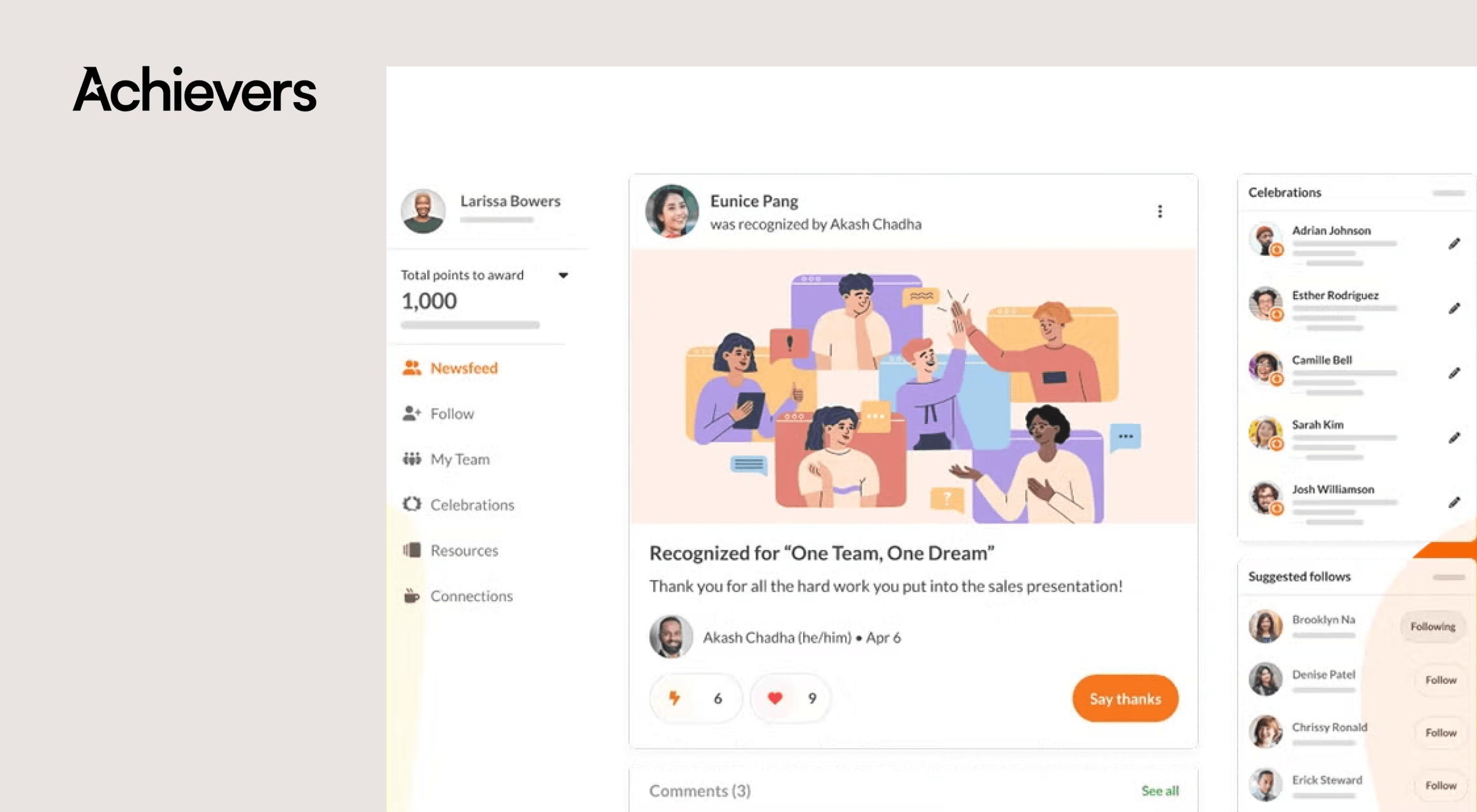
Achievers is a standalone employee recognition and rewards platform that supports monetary and non-monetary recognition, rewards, milestones, and employee engagement programs. It works for complex global organizations and mid-market teams alike, giving you the tools to elevate recognition, empower managers, and drive high participation from day one.
The platform combines monetary and non-monetary recognition backed by a global marketplace, and integrates with Workday, Microsoft, Slack, and SAP to become a unifying layer across your HR stack. Achievers Intelligence uses recognition data to surface workforce, engagement, and behavioral insights.
Here is how Achievers measures up against the seven parameters we used across this comparison.
How Achievers’ rewards and recognition perform meets HR and IC expectations
- Standalone engagement platform with internal communications; not a full intranet.
- Recognition integrates into workplace tools and workflows.
- Monetary and non-monetary recognition with a global rewards marketplace.
- Integrates with major HRIS and workplace systems.
- AI-powered recognition and workforce insights.
- Supports mid-market and enterprise recognition programs.
- Localized rewards support global workforces.
Achievers Pros
- Monetary and non-monetary recognition with global rewards
- Recognition integrates into workplace tools
- Social recognition feed, milestones, and nomination-based awards
- AI-powered recognition and workforce insights
Achievers Cons
- Standalone platform rather than recognition native to a full intranet
- Some users report navigation and search can feel cluttered or difficult
- Some users report limited reward choices or redemption flexibility
- Broad configuration options can require additional administration
G2 rating and review
4.6/5
If you need recognition at enterprise scale, Achievers brings global rewards, real-time social recognition, and strong analytics. Best for large, distributed organizations that want established enterprise infrastructure and dedicated support.
10. Recognize
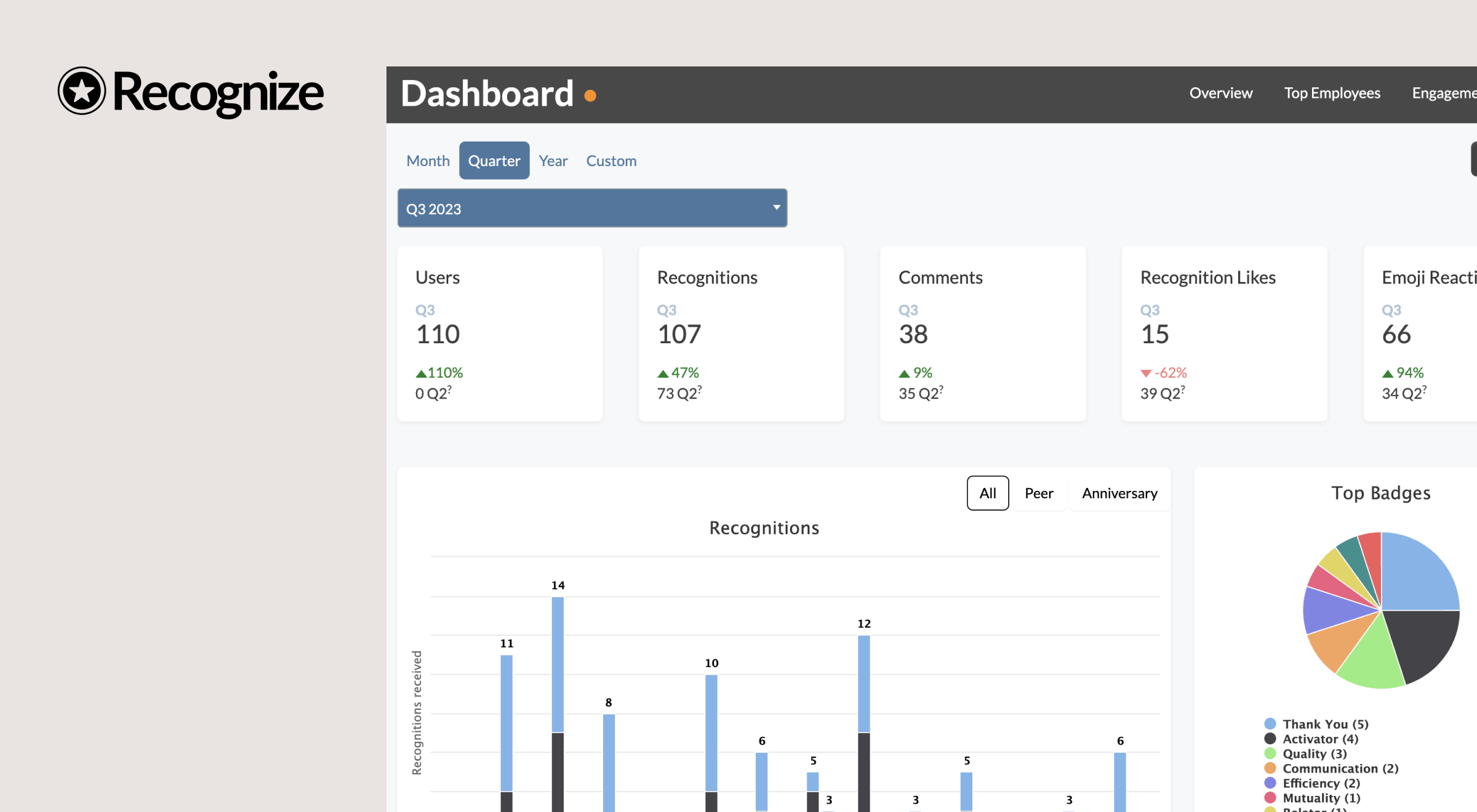
Recognize is a standalone employee recognition and rewards platform with deep Microsoft 365 integration.
Recognition and rewards can be accessed within Teams, Outlook, and SharePoint, alongside the standalone Recognize experience. You pick and choose the features that fit, from work anniversaries to nominations.
Recognize also includes customizable pulse surveys, including eNPS and employee engagement surveys. Rewards include gift cards, merchandise, events, donations, experiences, and custom company rewards. Its peer-to-peer and level-based recognition sits alongside social and gamification features designed to build community across teams.
Here is how Recognize measures up against the seven parameters we used across this comparison:
How Recognize’ rewards and recognition perform meets HR and IC expectations
- Deep Microsoft 365 and SharePoint integration; not a full intranet.
- Recognition integrates into Microsoft 365 workflows.
- Values-based recognition with configurable rewards.
- Integrates with major HRIS, identity, and workplace systems.
- Recognition analytics plus customizable pulse surveys.
- Offers plans for small, mid-market, and enterprise organizations.
- Available through Microsoft 365, web, and mobile.
Recognize Pros
- Deep Microsoft 365 and SharePoint integration
- Values-based recognition with configurable rewards
- Built-in pulse surveys and recognition analytics
- Automated milestones, nominations, and incentives
Recognize Cons
- Standalone recognition platform rather than a full employee intranet
- Microsoft 365 is its strongest workplace integration story
- Some users report limited reward and badge options
- Some users report the activity feed can become crowded across larger teams
G2 rating and review
4.7/5
Recognize suits organizations already standing on Microsoft 365 that want recognition inside Teams and Outlook without extra logins. Best fit for teams that want a lower-cost, Microsoft-native program and do not need the reward-catalog breadth of the enterprise leaders.
Which rewards and recognition platform best suits your needs
You don’t need the best-rated platform on the internet. You don’t need the flashiest one either. You need a platform that fits your organization’s needs and one you can justify as a business investment. What counts as the right fit depends on your role.
HR and IC leaders often prioritize different aspects of recognition. So, the priorities below are split by who you are.
| HR leaders | IC leaders |
|---|---|
| Adoption & accessibility — reaches frontline and deskless staff | Recognition visibility — easy to see across the employee experience. |
| Measurable EX impact — ties to employee engagement and retention | Culture reinforcement — every moment maps to a value |
| Rewards flexibility — choice across reward types and regions. | Intranet-native — sits beside news and updates |
| HRIS integration — employee data and recognition programs stay in sync | Participation — easy access encourages regular recognition |
| Scalable admin — centralized programs, budgets, and controls. | Reach across channels — consistent visibility across employee touchpoints. |
Remember, the best employee recognition platforms are designed to serve their intended customer base. A one-solution-fits-all approach may not be a wise decision.
For HR leaders, priorities often center on participation, measurable impact, rewards, and program administration. For IC leaders, visibility, culture reinforcement, and recognition within everyday communications matter more.
Match the platform to your priorities, and recognition stops being another tool to manage and becomes part of how your organization works every day.
Why rewards and recognition should live inside your intranet
Your IT team already manages a dense tech stack. Adding another standalone platform can introduce another system for IT to govern, integrate, and support. That matters when IT teams are already managing significant operational overhead. The data backs this up. 60% of IT teams are already stuck in a cycle of manual tasks like password resets and access requests that keep them from strategic work.
A separate platform can add another vendor, integration, permission model, and data flow to manage.
The cost of disconnected tools
A standalone recognition platform can be the right fit for some organizations, but it also introduces another system to manage. Consider these trade-offs:
- Adds another app for employees to visit and remember, even with SSO and integrations.
- Separates recognition from broader communications, leaving news and resources spread across systems.
- Requires its own integrations, permissions, reporting, and ongoing admin that must be updated with org changes.
Demands a separate rollout, training, and ongoing reminders, diverting time from other priorities.
What intranet-embedded recognition unlocks
Embedding recognition in the intranet can reduce many of these friction points. Here is how this works.
Places recognition beside news, updates, and leadership messages
Recognition appears next to the content employees already read each day. A shout-out appears beside company news and leadership posts. Recognition can appear in feeds alongside company news, updates, and leadership communications.
Removes the need to onboard employees to another tool
Employees already know the intranet. Since the recognition happens on a platform they already know, there is nothing new to learn. People give and receive recognition from day one, with no training required.
Centralizes permissions, data, reporting, and admin workflows
One platform handles everything. HR manages permissions, data, and reporting from the same place that runs internal communications. Admins can manage recognition programs, audiences, budgets, and reporting centrally.
Makes values-based recognition part of everyday culture
Recognition aligned with the company values shows up in the daily flow of work. Values-based recognition makes company values visible through everyday appreciation.
Supports recognition across office, remote, and frontline teams.
The intranet reaches everyone, wherever they work. Remote and frontline staff see the same recognition feed as office workers. No one gets left out because of where they sit.
Choosing the best platform for your organization
The right employee recognition platform is one employees can access easily, HR can administer effectively, and IT can support within the existing technology environment. It is also why recognition belongs inside your intranet, where employees already work. Use the comparison table and the buying questions above to build your shortlist.
The right platform should support higher participation, more consistent recognition, stronger visibility, and clearer insight into how recognition programs are performing.
Why Simpplr sits among the best employee recognition platforms
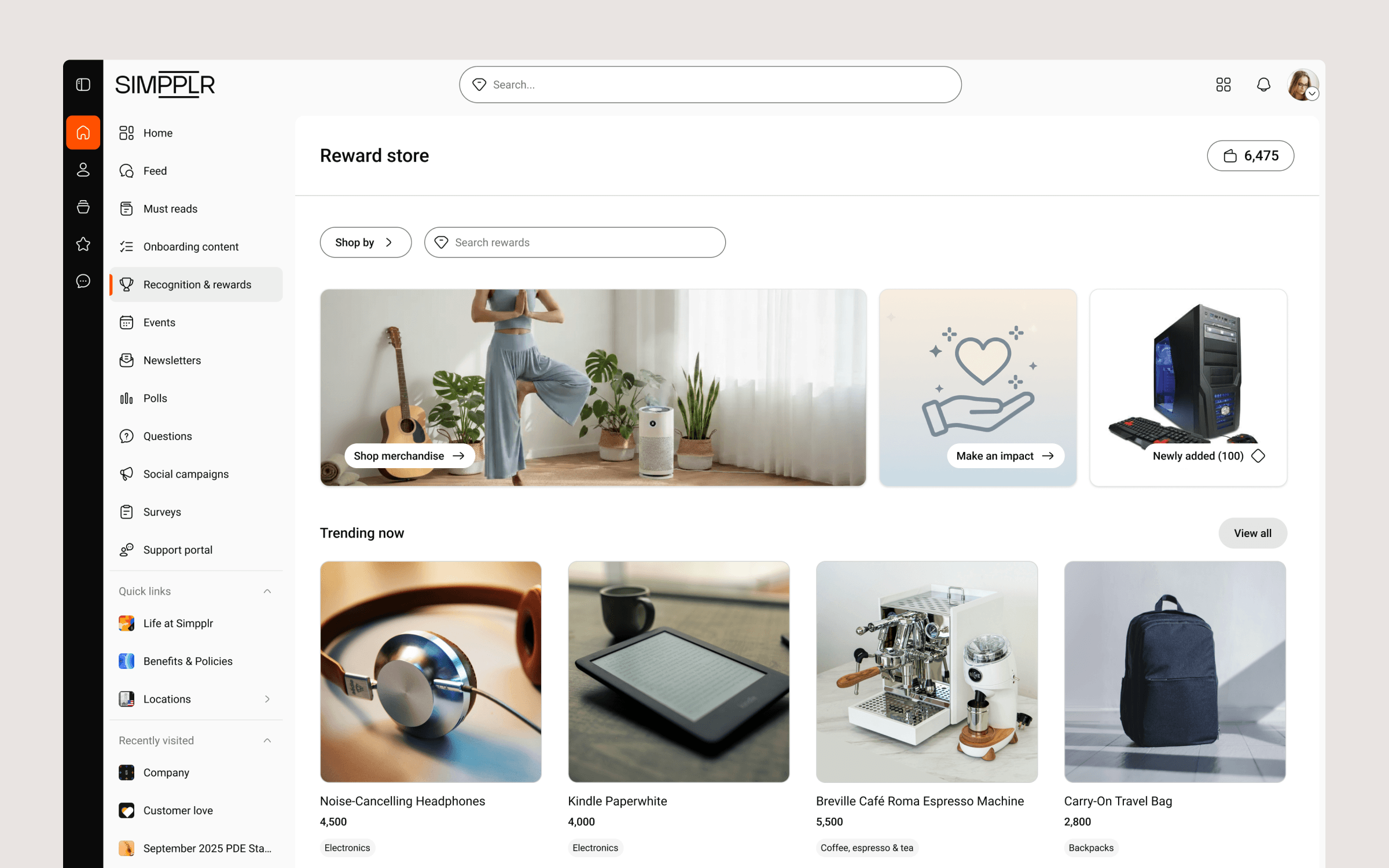
For many HR and IC leaders, recognition often becomes a part of a crowded to-do list. Simpplr addresses this problem by embedding recognition right within the employee experience
Rather than adding one more tool to log into, Simpplr weaves recognition and rewards into your digital workplace. Employees can celebrate a colleague mid-task, without extra steps or a separate sign-in. What’s even better, Simpplr’s reward store allows employees to redeem points through a global catalog of more than one million items: physical products, digital and prepaid gift cards, and charitable donations, all inside the intranet they already use.
Furthermore, public recognition feeds lift a single thank-you into a shared moment the whole team joins, and analytics show leaders where recognition is thriving and where it is missing. Recognition stops being episodic and starts contributing to sustained employee engagement, retention, and performance.
Ready to strengthen how your organization recognizes its people? Request a demo today and see how Simpplr helps build a culture of appreciation.
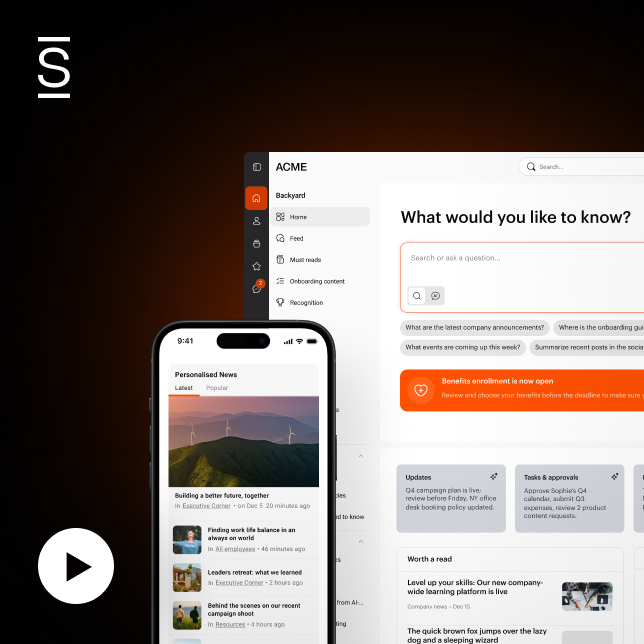
Watch a 5-minute demo
See how the Simpplr employee experience platform connects, engages and empowers your workforce.
- #1 Leader in the Gartner Magic Quadrant™
- 90%+ Employee adoption rate