


Internal communicators working with fragmented tech and limited analytics face real barriers to engaging employees and proving impact. In contrast, high-performing internal communicators use unified employee experience platforms to personalize content, measure key metrics, and connect their work to business outcomes.

10 ways employee experience platforms enhance internal communications
10 ways employee experience platforms enhance internal communications
Table of contents
- 1 Choosing the right employee experience platform
- 2 Advanced analytics and insights
- 3 Audience segmentation and targeting
- 4 Mobile and multichannel reach
- 5 Enterprise search and discovery
- 6 Knowledge management and governance
- 7 Integrated comms tools and community features
- 8 Employee listening and feedback
- 9 Employee self-service and HR support
- 10 AI-assisted content creation
- 11 An end-to-end IC workflow
- 12 From fragmentation to a unified internal comms strategy
Most internal communications teams are working across too many tools. Messages go out through email, Teams, a SharePoint intranet, and none of it connects. Reaching every employee with the right information, measuring whether it landed, and proving the function’s value to leadership remains genuinely difficult when the infrastructure is this fragmented.
Modern employee experience platforms change that equation. By connecting communications, knowledge, and HR services in a single layer, they give internal communications teams the visibility and control that disconnected tools can’t provide. Simpplr research shows that internal communications teams have evolved from reactive support roles into active drivers of organizational culture and change — and a unified platform is what makes that evolution possible.

Choosing the right employee experience platform
Not every platform is the best fit for every organization. Before you start evaluating options, it’s worth getting clear on a few first steps.
Start with your workforce, not your wishlist
Consider who you’re actually trying to reach. Are your employees desk-based, frontline, remote, or distributed across locations? The answer shapes which employee experience platform capabilities matter most.
Also consider what challenges HR and IT need to address, in addition to the internal communications team. The strongest business cases for a new platform address all three functions, not just the one championing it.
Be honest about what your team can sustain
Some platforms require dedicated IT resources to configure, maintain, and update. Others are built so a small comms team can run them without raising a support ticket every time something needs changing.
A platform that creates IT dependency can slow down the work it was supposed to simplify. Capacity is a real constraint, so build it into your evaluation criteria from the start.
With those fundamentals in place, here are 10 features that show exactly how employee experience platforms can enhance the way your internal communications team works.
1. Advanced analytics and insights
For years, internal communications has been told to get better at measuring its work. The problem is that most teams are still measuring activity — sends, opens, page views — rather than outcomes.
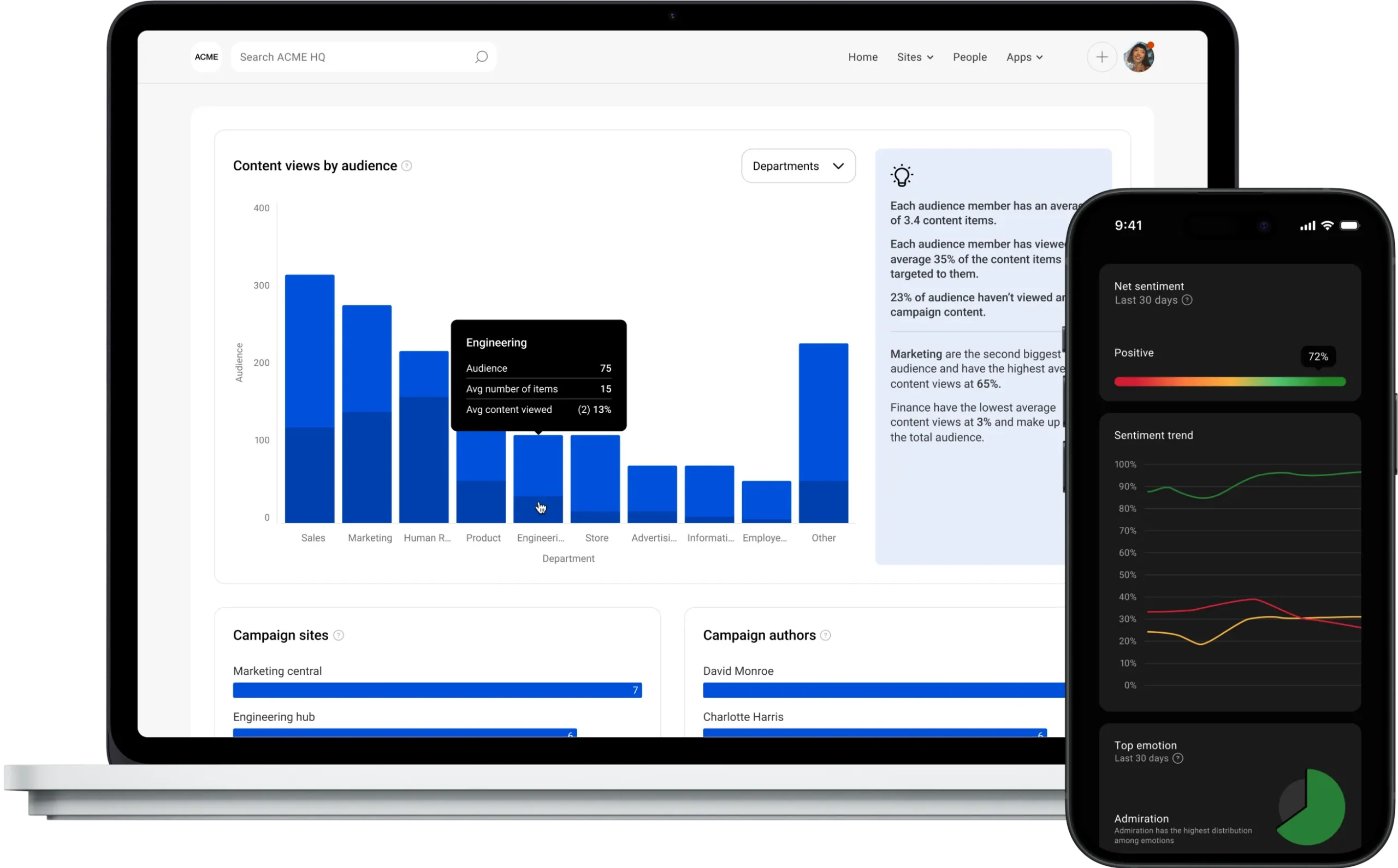
An employee experience platform changes what’s possible. People analytics including channel statistics, content engagement data, sentiment signals, and search behavior all feed into a single view so you can understand not just what employees read but what landed and with whom.
63% of survey respondents cite advanced analytics as one of the most useful capabilities of purpose-built intranet solutions (Simpplr research).
The bigger opportunity is connecting that data to business outcomes. When you can show leadership what changed — not just what went out — you have the evidence to influence decisions rather than just report on activity.
According to Gallagher’s State of the Sector, “Thriver” internal communicators are more likely to have a strong grasp of data and to have shared KPIs with their strategic partners like IT and HR, such as customer satisfaction or sales.
2. Audience segmentation and targeting
Not every message is for everyone. A policy update for warehouse employees, a leadership announcement for managers, or a compliance reminder for a specific region each have a defined audience. Sending them to the whole organization creates noise that trains people to tune out.
47% of employees say the company communications they receive are unrelated to their day-to-day work (Harvard Business Review).
Personalizing employee communication gives IC teams the ability to make that call deliberately. Target by role, department, location, or any combination without raising a request with IT every time.
Organizations using all-in-one intranet solutions report that message targeting is significantly easier than those on custom-built systems (60% vs. 39%) (Simpplr research).
When segmentation is built into the platform, every send becomes a considered decision. Instead of defaulting to all-company distribution, internal communicators can reach the right audience deliberately, and employees receive fewer messages that have nothing to do with them.
3. Mobile and multichannel reach
For organizations with remote, hybrid, or frontline workers, reaching every employee through one channel isn’t realistic. The tools to solve it have often been patchwork — a separate app, a website workaround, text messaging, or hoping managers pass along what they need to know. This creates inconsistent experiences and makes it harder to know whether critical messages reached and resonated with employees.
Half of communicators are dissatisfied with their channels’ ability to reach all employees, regardless of location or work type (Gallagher).
A modern employee experience platform publishes across mobile, desktop, Microsoft Teams, Slack, email, and integrated digital signage from a single place. The message stays consistent across every channel. When reach and measurement live in the same platform, multichannel reach stops being a coordination problem and becomes a genuine strategic advantage.
4. Enterprise search and discovery
Most employees visit an intranet with one purpose: to find something. When search is poor, they leave empty-handed. They either ask a colleague, raise a ticket with IT or HR, or give up entirely.
47% of workers report struggling to find the information or data they need to do their jobs effectively (Gartner).
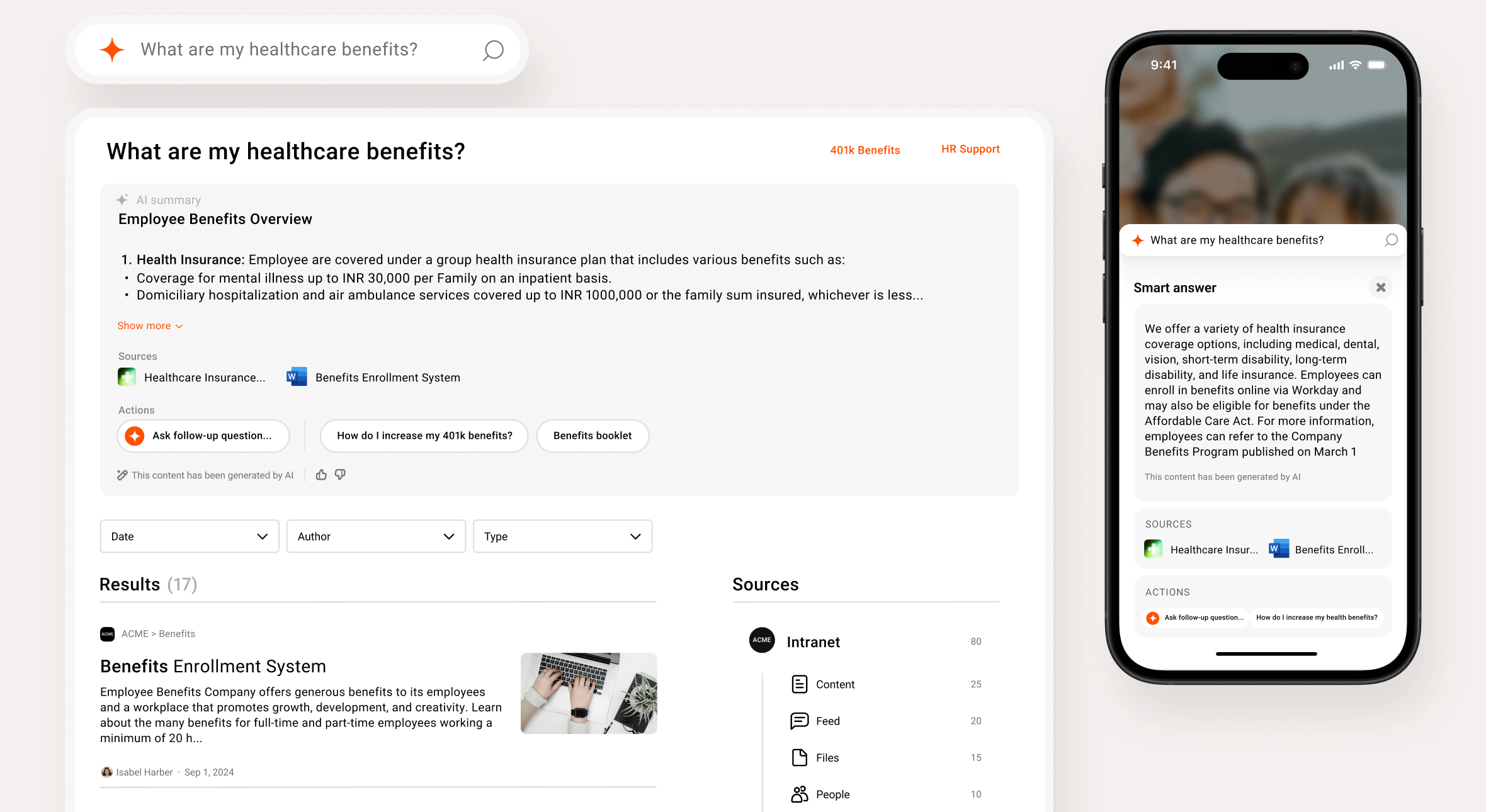
Modern employee experience platforms with AI-powered enterprise search understand intent and prioritize results from across connected business systems. Employees get relevant content and resources based on existing permissions, along with smart answers and recommended actions — without needing to know which system holds the information.
The relevance of search results improves as employees interact with the platform. When employees consistently find what they need when they need it, they’re more likely to return to the platform, increasing the return on investment.
5. Knowledge management and governance
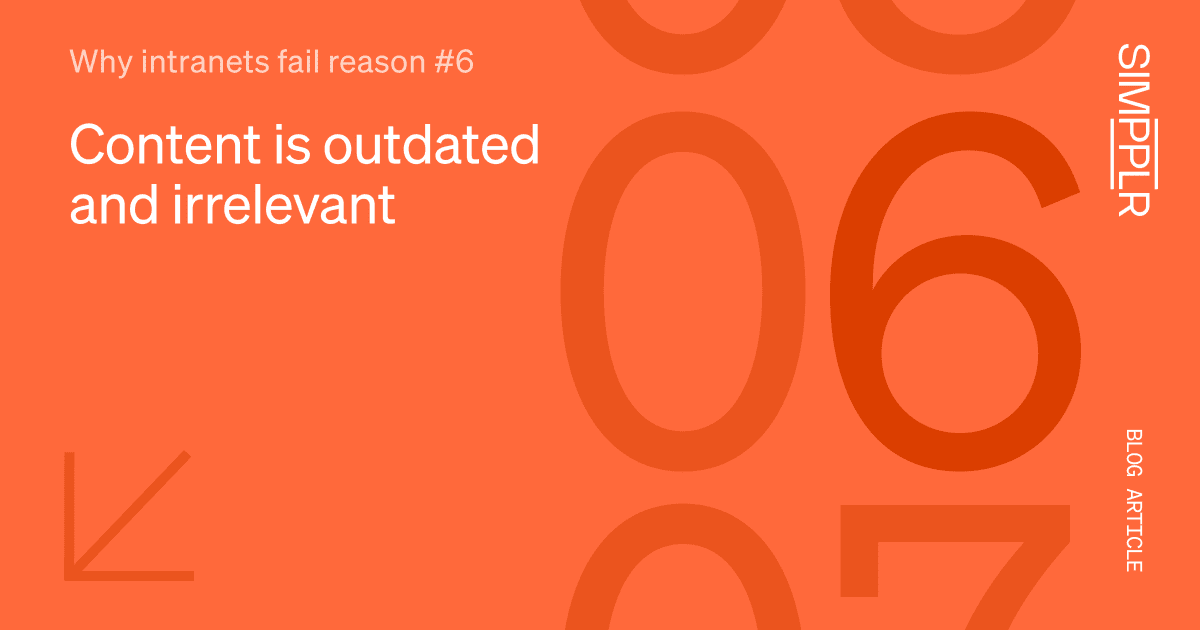
Publishing content is the visible part of internal communications. Maintaining it is what determines whether employees trust the platform enough to keep coming back.
Outdated policies, superseded announcements, and stale resources don’t just create confusion — they erode confidence in the intranet as a reliable source of information. When employees can’t count on finding what they need, they stop looking and start asking, which puts the burden back on IC, HR, and IT.
A modern employee experience platform addresses this through content governance features: ownership rules, review cycles, and expiration schedules that keep content accurate without requiring IC teams to manually audit everything they’ve ever published. When content has a defined owner and a review date, accountability is built in rather than left to chance. The platform stays trustworthy, and employees keep returning to it.
6. Integrated comms tools and community features
Internal communications has never been purely about sending messages. The function also owns the conditions that make messages land, including employee connection, cultural alignment, and the sense that leadership is accessible.
An employee experience platform brings the internal communication tools that support those outcomes into the same environment where content gets published.
Newsletters, intranet pages, and posts sit alongside recognition, comments, reactions, and community features. Communicators no longer have to toggle between platforms to manage the full range of their work.
Organizations with a modern intranet report significantly stronger employee connection: 75% say employees feel connected to their coworkers, compared to 58% without one (Simpplr research).
When the publishing and engagement layers live in the same place, IC can move faster, maintain a consistent voice across formats, and build the kind of ongoing employee connection that makes individual communications more effective.
7. Employee listening and feedback
Effective internal comms should flow in two-way dialogue. Sending messages is only half the job. Understanding how employees experience the organization is what allows IC to respond with relevance rather than assumptions.
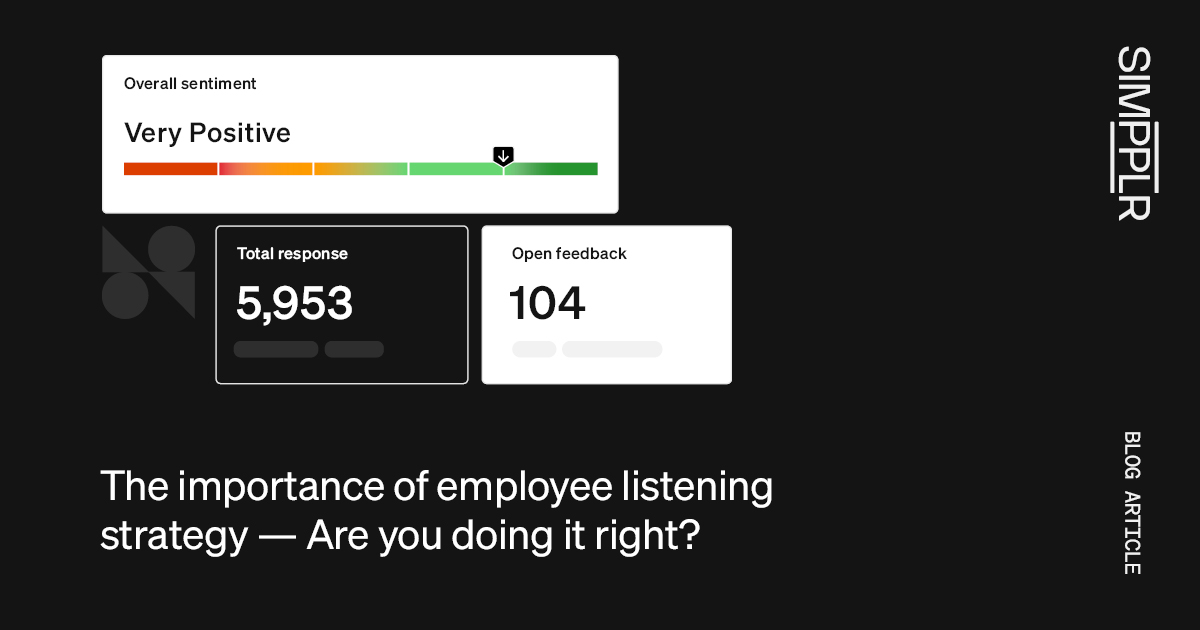
An employee experience platform builds structured employee listening into the same environment where communications are planned and published. Surveys, pulse checks, and feedback tools give IC teams a direct line to employee sentiment without relying on anecdotal signals or waiting for engagement scores from a quarterly survey.
36% of employees surveyed by Axios want the opportunity to provide feedback to their organization’s leadership.
For internal communications teams, the value lies in being able to connect feedback to specific communications, campaigns, or moments of the employee journey. When listening is integrated into the platform, the gap between what IC sends and what employees think closes faster.
8. Employee self-service and HR support
Internal comms teams tend to think of the intranet primarily as a publishing tool. But when employees can complete routine tasks, check HR policies, and get answers to common questions, the whole organization benefits.
67% of employees find it difficult to get a timely answer from HR.
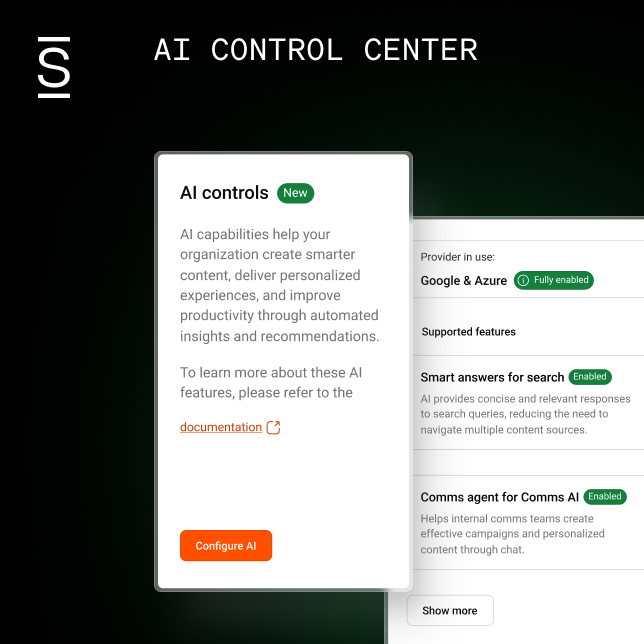
A modern employee experience platform provides an AI-powered assistant that guides employees through common HR and IT requests, such as policy lookups, PTO, onboarding, benefits, and troubleshooting. Employees get answers without raising a ticket. HR and IT spend less time on routine requests and more time on work that requires their professional judgment.
65% of respondents cite employee self-service and HR support as the most useful capability of a unified intranet solution (Simpplr research).
For internal communications teams, the case for self-service is straightforward. Fewer unanswered questions circulating among employees means fewer gaps IC has to fill. It also gives IC a concrete way to demonstrate the wider value of the platform they’re championing to HR, IT, and business leadership.
9. AI-assisted content creation
Creating content at the pace internal communications demands — across formats, channels, and audiences — is one of the function’s most common operational challenges. A modern employee experience platform addresses this with AI writing assistance built directly into the tools IC already uses.
Rather than switching between the intranet and a separate AI tool, communicators can draft and refine content where it gets published. Pages, posts, and newsletters are created in the platform’s drag-and-drop editor. AI assistance is available in context for drafting, adjusting tone, summarizing longer content, or refining a message before it goes out.
10. An end-to-end IC workflow
The capabilities covered so far improve individual parts of the internal communications function. But what IC teams need above all else is a more cohesive workflow for comms campaigns.
Most IC teams plan in spreadsheets, draft in separate docs, chase approvals through email, and publish across platforms manually. Every handoff loses context. Every tool switch adds friction. The coordination overhead compounds across every campaign.
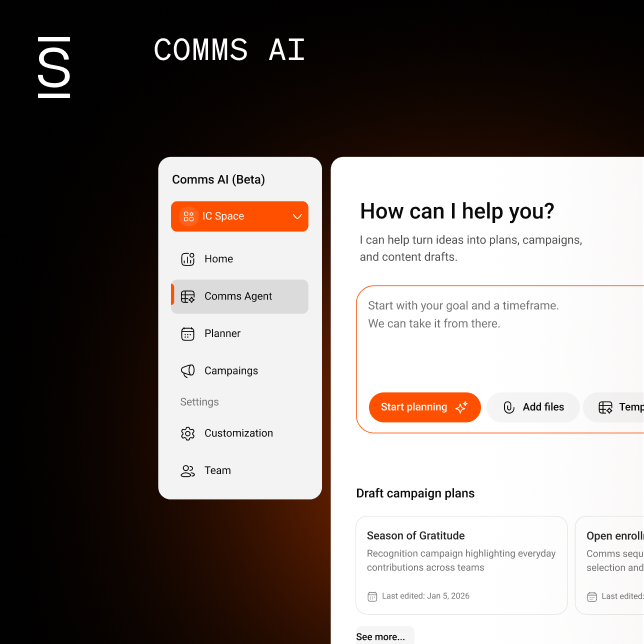
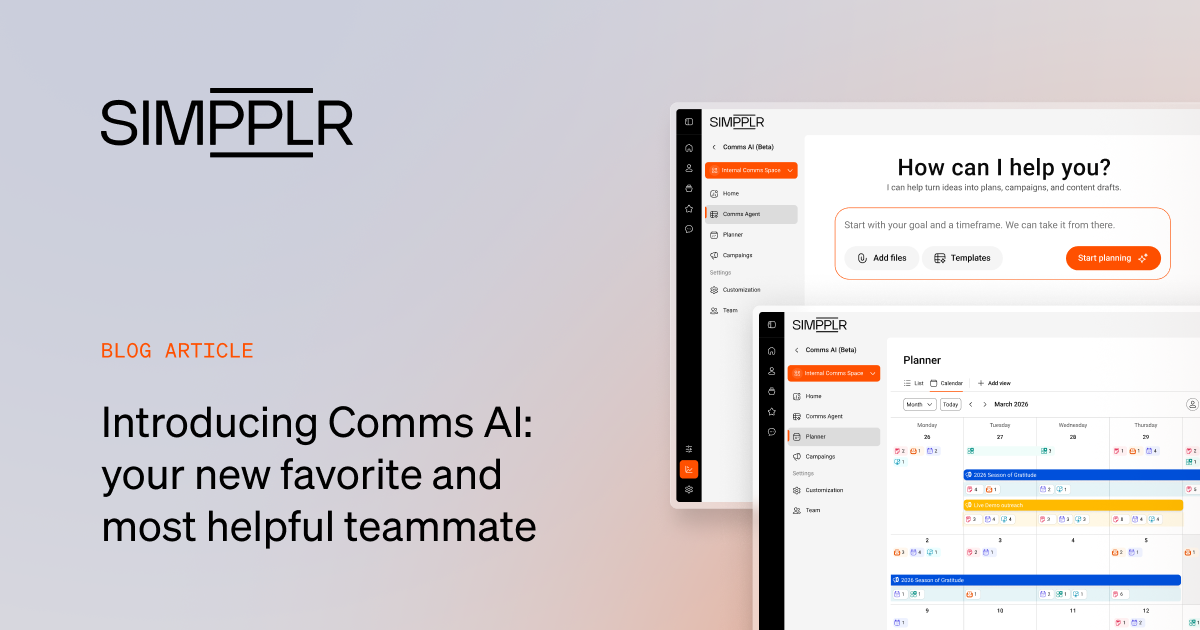
That’s why Simpplr created Comms AI, a workspace for internal communications built directly into the platform.
Campaigns get planned, drafted, approved, and published all in one place. AI is embedded in the full workflow. It helps structure campaigns and drafts content that matches a sender’s voice. Comms AI keeps approvals moving and coordinates delivery across channels. Context carries through from planning to publish because everything happens in the workspace.
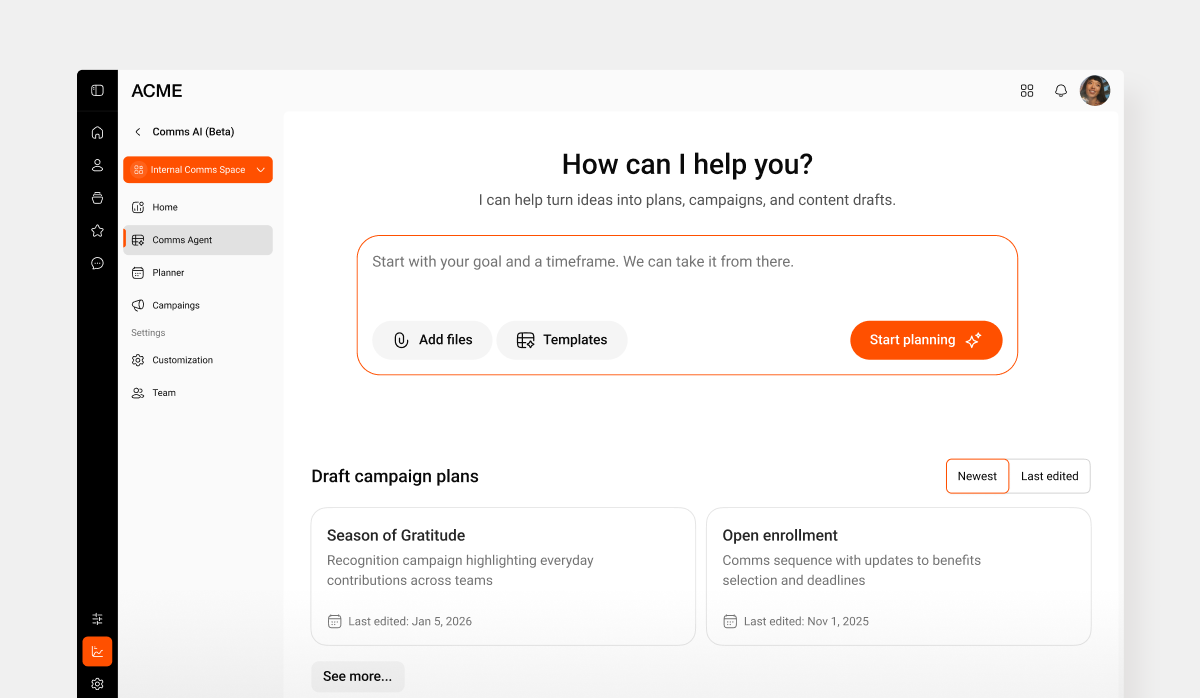
Instead of spending so much time on logistics, communicators can focus on the judgment calls that require their expertise — what to say, when to say it, and how to frame it for a specific audience in a specific moment.
From fragmentation to a unified internal comms strategy
These capabilities aren’t independent features to check off a list. They describe what it looks like when internal communications has the infrastructure to operate as a strategic function rather than a publishing operation.
When communications, knowledge, search, listening, and workflow all operate in the same environment, the value compounds. Sentiment data informs content decisions. Search analytics reveal what employees can’t find. Governance keeps the platform trustworthy. That connected intelligence is what fragmented technology stacks can’t replicate, regardless of how capable individual tools might be.
Simpplr’s AI-powered employee experience platform brings these capabilities together in one secure, integrated environment — built for the way internal communications work happens.
Ready to find out how Simpplr can help you improve your internal comms workflow? Request a demotoday.
Watch a 5-minute demo
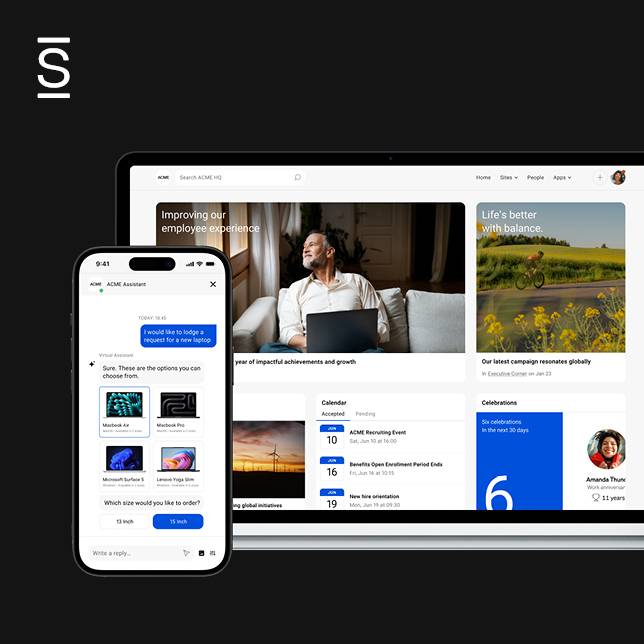
See how the Simpplr employee experience platform connects, engages and empowers your workforce.
- #1 Leader in the Gartner Magic Quadrant™
- 90%+ Employee adoption rate